Longo 'disappointed' as Cboe exit sparks new ASX competition fight
Plus: TikTok borrowing hacks force Macquarie to pause trust lending; House prices hit new record, first buyers lead sharpest gains since 2023; Seven boss faces remuneration revolt.


Good morning. Here's what happened overnight and what you need to know today.

1.
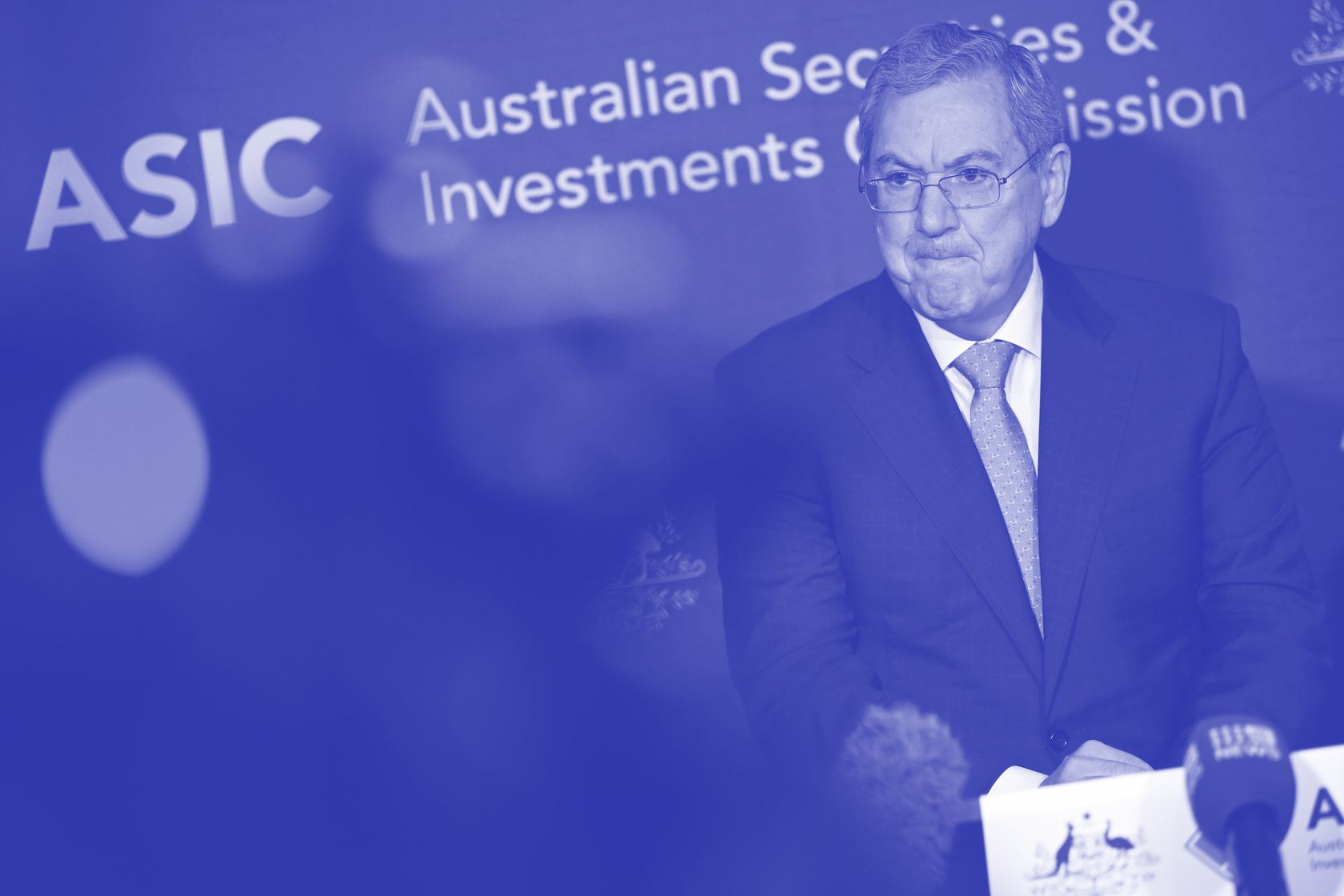
Cboe exits: Cboe Global Markets has begun a sale process for its Australian and Canadian operations, just weeks after its local arm was granted a licence to handle new listings in a decision ASIC and Treasurer Jim Chalmers had promoted as a key step towards increasing competition with the ASX. The Chicago-based group said the move will allow it to focus on core operations and other growth opportunities. That will have implications for brokers and investment banks that route just over 20% of equities trades through Cboe Australia. “This gives people pause but certainly the [Australian] management committee have reaffirmed their commitment to the business and whoever the new owner is,” Cboe Australia President Emma Quinn told The Australian Financial Review. “The business is profitable, it’s in a strong competitive position so we are expecting potential buyers.” ASIC chairman Joe Longo told the publication that “on the face of it, sure, it’s disappointing that they’ve made this decision,” but that the Chicago-headquartered exchange operator had been "very good for competition in Australia.” The regulator also referenced the ASX’s “well known” operational issues and appeared hopeful a buyer will emerge, adding it intends to work closely with Cboe to ensure an orderly transition. (Cboe)(AFR)
2.
Mac Tik: Macquarie stopped approving new home loans to trusts and companies after a spike in social media content showing Australians how to boost their borrowing capacity using those structures. In an email to mortgage brokers last week, the bank said it was “pausing all new lending” to trusts and companies, pointing to “strategies on social media aimed at maximising lending” through them. A source familiar with the matter told Capital Brief Macquarie had seen a sharp rise in social media channels promoting the approach in the past month and no longer had the risk appetite to assess such borrowers. One TikTok video by a Melbourne buyer’s agent with over 100,000 views claimed Australians could access “unlimited loans” by borrowing from multiple banks using trusts and companies. While banks still assess factors like income and serviceability, the strategy is promoted as a way to sidestep risk controls, especially as property financial advice is unregulated and doesn’t require qualifications. Macquarie said the pause would help improve loan processing times, especially with new AML rules expected to complicate verification. CBA, NAB and the other majors continue to lend to these structures. (Capital Brief)
3.
Deposit drive: Australian home prices rose 1.1% in October, the fastest pace in more than two years, with values up across every capital city, according to Cotality. Perth led with a 1.9% gain, followed by Brisbane (1.8%), Darwin (1.6%), Melbourne (0.9%) and Sydney (0.7%). National values climbed 6.1% over the year to a record median of $872,538. Growth was concentrated in the lower and middle segments, while the upper quartile lagged across most cities. The rebound follows three RBA rate cuts and an expanded 5% deposit scheme for first home buyers, with investor activity also rising. Advertised supply was 18% below average, while sales were 3.1% above the five-year average. “Stronger housing demand at the lower price points is likely a culmination of serviceability constraints eroding purchasing power, persistently higher than average levels of investor activity, and what is likely a pickup in first home buyers taking advantage of the expanded deposit guarantee,” said Cotality’s research director Tim Lawless. (Capital Brief)(Cotality)
4.
Remuneration rumble: Seven West Media CEO Jeff Howard has been thrust into the firing line of investors ahead of the company’s AGM meeting this week, after proxy advisory firm CGI Glass Lewis recommended shareholders vote against the FY2025 remuneration report. In a report obtained by Capital Brief, the firm criticised the “high” fixed remuneration awarded to Howard, which nearly doubled to $1.25 million when he was promoted last year. CGI Glass Lewis said the figure is “difficult to justify”, noting that peers cited by Seven (Nine Entertainment and EVT ) “operate at materially larger scale and market capitalisation”, while Seven’s performance has “deteriorated further” in FY2025. The report said maintaining fixed pay above the S&P/ASX 250–300 median of $775,000 was hard to support, and recommended a staged or performance-contingent adjustment. The scrutiny over Howard’s pay comes as Seven closes in on a controversial merger with Southern Cross Austereo, which would see Southern Cross shareholders take 50.1% of the new entity and Howard continue as CEO. Sandon Capital, which owns 11.3% of Southern Cross, has pledged to continue its campaign to spill the board. (Capital Brief)
5.
Buffet’s buildup: Berkshire Hathaway let its cash pile swell to a record USD381.7 billion ($583.3 billion) in the September quarter, as Warren Buffett continued to sell stocks and avoided buybacks ahead of stepping down as CEO. The conglomerate was a net seller of stocks for a 12th consecutive quarter and did not repurchase any of its own shares for the fifth straight quarter. Operating earnings rose 34% to USD13.5 billion, helped by a rebound in insurance underwriting profits, which more than tripled to USD2.4 billion. Net income increased 17% to USD30.8 billion, while revenue rose just 2%. The results come ahead of Buffett stepping down as CEO at the end of 2025 after more than 60 years, to be succeeded by Greg Abel. Shareholders are watching closely how Abel will deploy Berkshire’s growing cash reserves. Since Buffett announced his exit in May, Berkshire’s Class A shares have fallen about 12%. (FT)(Reuters)(Bloomberg)(Berkshire Hathaway)
6.
Glut watch: OPEC+ said it will pause oil output hikes for January, February and March 2026, citing “seasonality”, after agreeing to a 137,000 barrel-per-day increase in December (the same as in the previous two months.) The decision was made during a Sunday virtual meeting by eight producers, including Saudi Arabia, Russia, the UAE and Iraq. The pause comes as analysts and agencies warn of a growing oil surplus. The International Energy Agency forecasts a supply excess of more than 3 million barrels a day this quarter, and nearly 4 million in 2026. JPMorgan and Goldman Sachs also expect further price declines. Brent crude is down about 13% in 2025, settling below USD65. New US and UK sanctions on Russian firms Rosneft and Lukoil have added uncertainty to supply forecasts, but were not mentioned in OPEC+’s statement. The full 22-member group is scheduled to meet on 30 November to review 2026 production levels. (Opec)(Reuters)(WSJ)(NYT)(Bloomberg)
7.
Trade rewind: The US and China agreed to establish direct military communication channels to prevent conflict, US Defence Secretary Pete Hegseth said in a post on X on Sunday local time. Hegseth said both sides agreed that “peace, stability, and good relations are the best path” and that officials would now work out how the communication would function. The announcement followed his meeting with Chinese Defence Minister Dong Jun in Kuala Lumpur and Trump’s summit with Xi Jinping in South Korea. On Saturday, the White House released details of what Trump and Xi agreed to during that meeting, including halting a threatened 100% US tariff on Chinese goods. The US will also halve the fentanyl-related 20% tariff on Chinese goods to 10% and pause an expanded Commerce Department blacklist of companies restricted from buying US technology. China will pause its new rare earth export controls for one year, resume purchases of US soybeans and sorghum, and suspend retaliatory tariffs and the non‑tariff countermeasures it has imposed since March. Both sides will also pause new port fees targeting each other’s vessels. (Bloomberg)(Reuters)(Pete Hegseth)
8.
Vicious and sweet: Also over the weekend, the Trump administration announced a new military strike in the Caribbean, threatened action against Nigeria, and confirmed a pending visit to Washington by Syria’s new president. The US carried out its 15th boat strike since early September on Saturday, killing at least three in the Caribbean and bringing the campaign’s death toll to about 65, according to the New York Times. Hegseth said the target was involved in drug smuggling, though the administration has provided limited evidence. Meanwhile, Trump threatened military action and a cut in US aid to Nigeria, accusing its government of failing to protect Christians. In a social media post, Trump warned that if the US attacks, “it will be fast, vicious, and sweet.” The Nigerian president rejected the characterisation of his country as religiously intolerant. Separately, the US confirmed that Syria’s new president Ahmed al-Shara – formerly the head of an Al Qaeda-linked group – will visit Washington this month. The visit is expected to focus on Syria joining the global coalition against Islamic State and post-war reconstruction, according to US and Syrian officials. (NYT)
