Markets roar in trillion-dollar rally on Trump tariff pause
Plus: Trump lifts China tariffs to 125%; Yields fall after Trump tariff pause; Chalmers denies recession risk in debate.

Good morning. Here's what happened overnight and what you need to know today.

1.
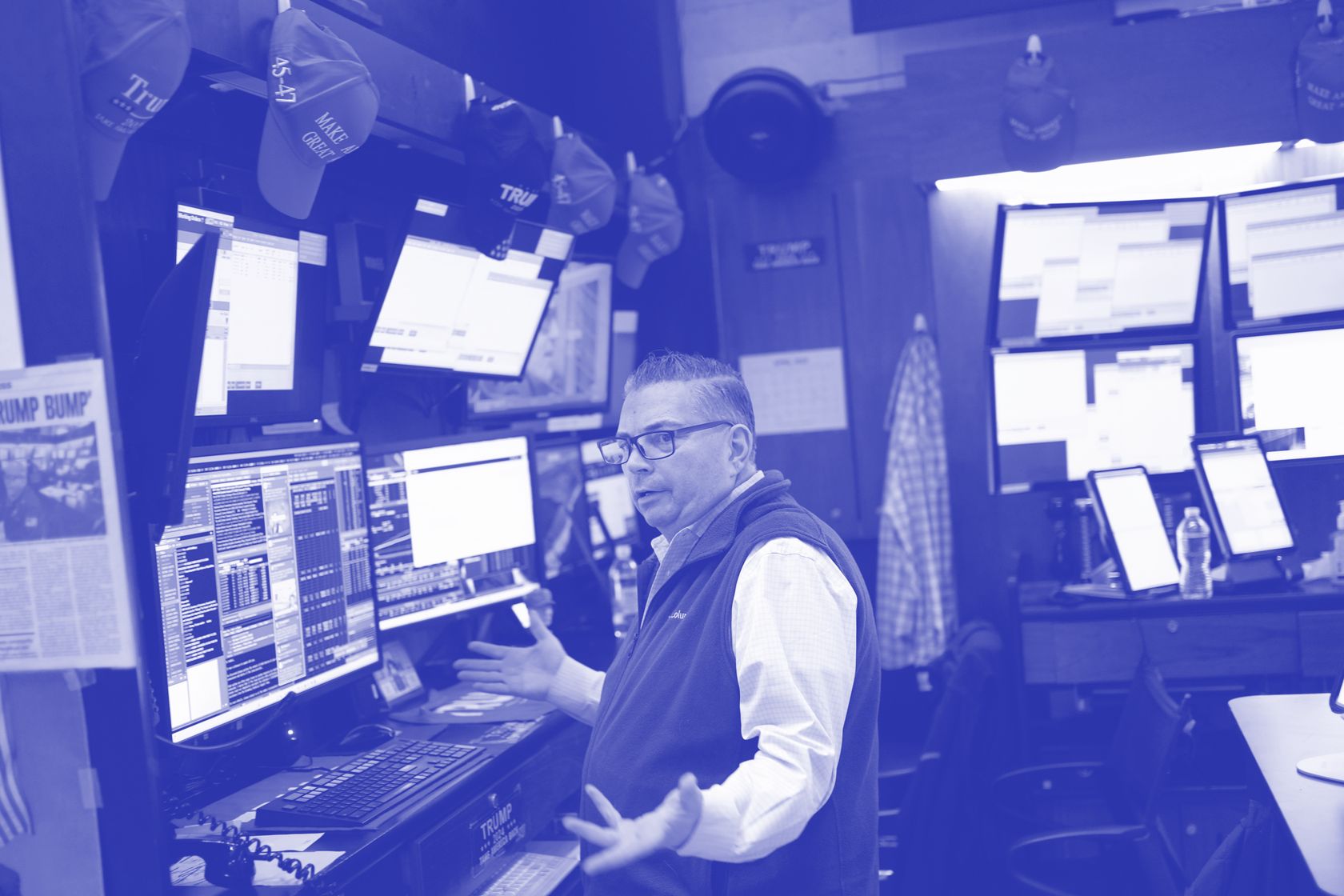
Market explodes: US stocks rocketed higher after President Donald Trump paused high “reciprocal” tariffs on non-retaliating countries for 90 days, triggering the strongest rally since 2008. After starting the session in the red, the S&P 500 swung up as much as 10.8% to be trading 9.52% higher in late trading. The Nasdaq 100 was 12% higher, with top tech stocks seeing record-breaking value gains. Nvidia’s 18% intraday surge wadded about USD500 billion to its market cap — the largest single-session gain in history — while Apple and Microsoft were gaining over USD450 billion and USD290 billion respectively. Earlier, global markets had plunged. In Europe, the Stoxx 600 fell 3.5%, while in Asia, China’s CSI 300 closed 1% higher and the Hang Seng rose 0.7% following steep losses earlier in the week. (Bloomberg)(FT)
2.
China targeted: Donald Trump raised tariffs on China to 125%, declaring on Truth Social, “Based on the lack of respect that China has shown to the World’s Markets, I am hereby raising the Tariff charged to China by the United States of America to 125%, effective immediately.” Simultaneously, he announced a 90-day pause and reduction to a 10% tariff for countries that had not retaliated, calling it a chance for “good faith” negotiations. Hours earlier, China’s Ministry of Finance said it would impose 84% tariffs on US imports, effective Thursday AEDT, calling the US' previous move to raise tariffs to 104% a “mistake on top of a mistake” and warning the WTO it threatened to destabilise global trade. Earlier on Wednesday the EU approved tariffs on around €21 billion ($38.7 billion) of US goods in response to Trump’s 25% steel and aluminium tariffs. Before his tariff reprieve announcement, Trump took to Truth Social to say “THIS IS A GREAT TIME TO BUY!!! (Bloomberg)(Reuters)(China Ministry of Finance)(Capital Brief)
3.
Bond ride: US government bonds also staged a sharp rebound after Donald Trump lowered tariffs on non-retaliating countries for 90 days, with prices surging and yields falling from earlier highs. Earlier in the day, Treasuries had sold off heavily as investors rushed to cash and hedge funds unwound trades. The 10-year yield had spiked to 4.51% before easing to 4.35% after the president’s announcement and a strong USD39 billion auction that saw record demand from foreign buyers. Analysts had warned the sell-off may reflect waning confidence in Treasuries as a safe haven. Goldman Sachs had increased the odds of a US recession to 65% due to tariffs — including a projected 1% GDP decline and 5.7% unemployment — but rescinded that view after the pause. The sharp drop in yields after Trump’s post helped soothe market fears, and the US dollar eased slightly against major currencies as investors returned to risk assets. Germany’s 10-year Bunds held gains, remaining a rare haven. (Barron’s)(FT)(Bloomberg)(Capital Brief)
4.
Debate Jabs: Treasurer Jim Chalmers says Australia is not heading for a recession, accusing opposition leader Peter Dutton of “lying” about the risk. In Wednesday’s Sky News Treasurers’ Debate, Shadow Treasurer Angus Taylor pressed Chalmers on recession concerns, citing Dutton’s remarks as a response to Chalmers’ comments on interest rates. Chalmers noted investors had lifted bets on a 0.5% rate cut at the RBA’s May meeting, reflecting recession fears. He paused campaigning this week to meet with RBA governor Michele Bullock and bank leaders over the impact of Trump-era tariffs. The debate follows a fiery US hearing, where Democratic Senator Mark Warner grilled trade chief Jamieson Greer on why Australia was hit with 10% tariffs. Greer said the US “should be running up the score” on Australia, criticising beef and pork bans despite a free trade agreement. Industry Minister Ed Husic praised Warner’s stance: “Good on him. I like the cut of his jib.” (Capital Brief)(Capital Brief)
5.
Fresh debt: BlackRock has backed Adani Group as the conglomerate closes in on its acquisition of an Indian construction firm, according to Bloomberg. The Adani Group has raised around USD750 million ($1.24 billion) through an offshore private placement bond, with roughly a third (USD250 million) subscribed to by BlackRock alongside other investors. The new bond issuance will support the purchase of ITD Cementation India by the Dubai based Renew Exim DMCC. The borrowing is around four times as large as Adani’s private loan for its coal port unit in Northern Queensland, suggesting lenders are becoming more comfortable dealing with giant after the US indicted Gautam Adani over a bribery plot last year. The Group renewed its plans to fund nuclear and utilities projects in the US last month. (Bloomberg)(Adani)
6.
Retail orders: Walmart scrapped its first-quarter operating income guidance, citing uncertainty from new tariffs. It had previously projected adjusted income growth of 0.5% to 2.0% and said it wants to “maintain flexibility to invest in price as tariffs are implemented”. “While in the short term we’re not immune, we’re positioned to play offense,” CEO Doug McMillon said. “Nothing about the current environment impacts our confidence in our business or our strategy.” Meanwhile, Amazon.com Inc is considering a USD15 billion ($24.62 billion) warehouse expansion for nearly 80 new logistics facilities in US cities and rural areas, Bloomberg reported, citing unnamed sources. Most sites would be delivery hubs, with some large, multi-storey fulfilment centres packed with robots. Amazon is seeking capital partners and willing to lease the facilities for 15 to 25 years. The requests preceded Donald Trump’s “liberation day” tariff announcements. Separately, Amazon has cancelled multiple product orders from China and other Asian countries without warning, leaving vendors to cover costs. (Walmart)(Bloomberg)
7.
Dinner deal: The Trump administration has reversed course on plans to restrict exports of Nvidia’s H20 AI chips to China after CEO Jensen Huang attended a USD1 million ($1.62 million) a-head dinner at Mar-a-Lago last week, NPR reported. The export controls had been in the works for months and were ready to be implemented as soon as this week, according to the sources. The change came after Nvidia promised new US investments in AI data centres. The H20 is the most cutting-edge AI chip US companies can legally sell to China. It is widely used by firms including ByteDance, Alibaba and Tencent, which placed at least USD16 billion in orders for the chips in the first three months of 2025, according to The Information. Despite mounting political pressure to broaden export controls to cover the H20 chip, the regulatory process has encountered delays, in part due to a lack of staff at the Bureau of Industry and Security, which was affected by federal cuts and restructuring under Trump. (NPR)
8.
AI race: Anthropic introduced a new Max plan for its Claude chatbot, priced at USD100 ($162.9) or USD200 per month, for customers who use its generative AI models extensively. The USD100 option gives users the ability to send five times as many queries to Claude as its current USD18-per-month Pro plan, while the USD200 option offers 20 times as much usage. Pro users can generally send at least 45 messages over a five-hour period. Anthropic said Max plan users will also have priority access to its newest features and models, more substantial responses, and priority when Claude experiences peak traffic. “The top request from our most active users has been expanded Claude access,” it said in a blog post. The pricing is similar to OpenAI’s USD200-per-month subscription for its ChatGPT chatbot. (Anthropic)(Bloomberg)
