Musk calls Trump’s spending bill ‘disgusting abomination’
Plus: South Korea elects liberal Lee in post-martial law vote; US job openings unexpectedly rise in April; OECD forecasts stronger Australian growth, global slowdown.
Good morning. Here's what happened overnight and what you need to know today.
Get Standup in your inbox Signed up to Standup
1.
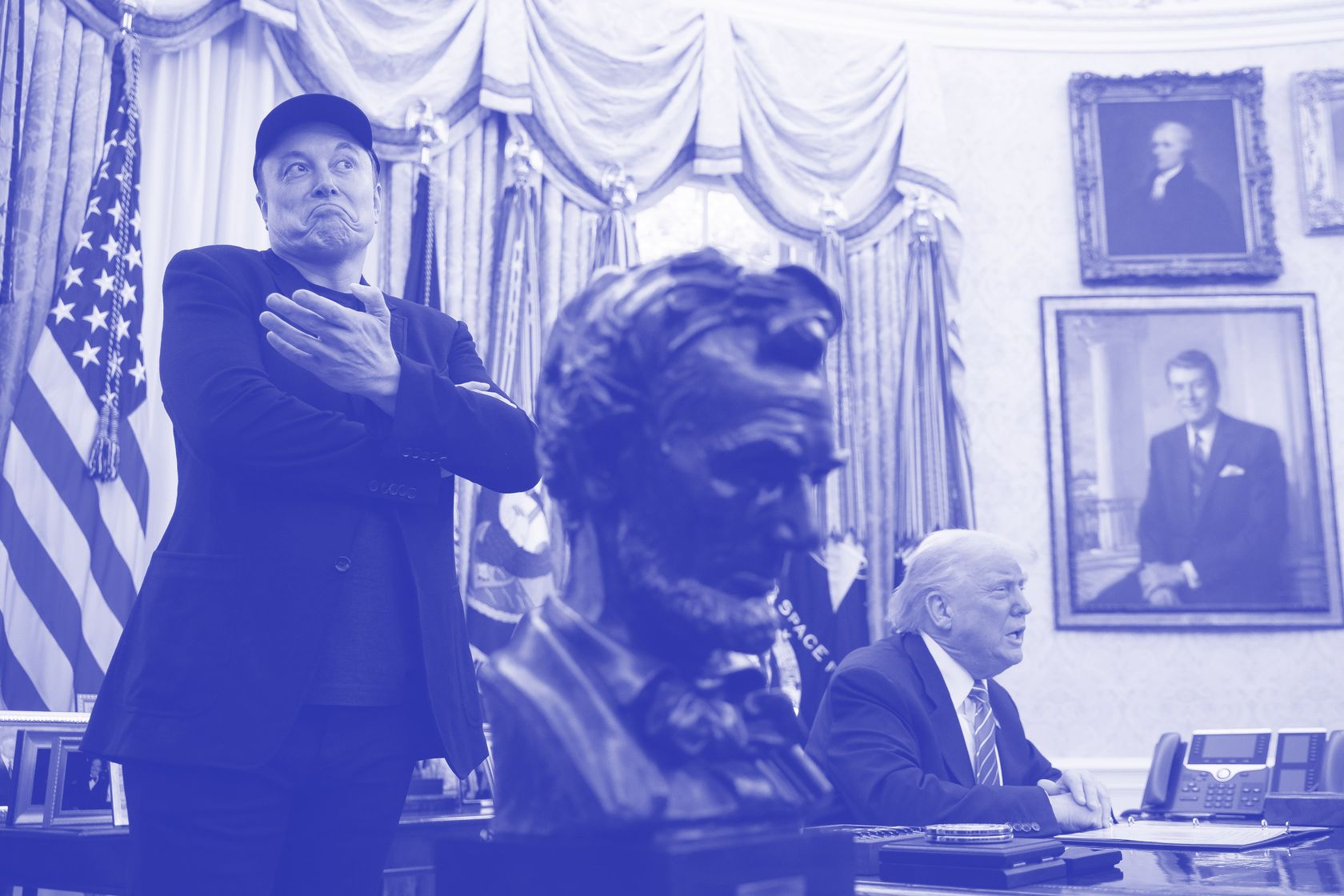
Trump’s abomination: Elon Musk called Donald Trump’s sweeping tax and spending bill a “disgusting abomination,” saying it will “massively increase the already gigantic budget deficit.” Musk wrote on X: “I’m sorry, but I just can’t stand it anymore. This massive, outrageous, pork-filled Congressional spending bill is a disgusting abomination,” adding, “Shame on those who voted for it: you know you did wrong.” The bill, which Trump calls his “one big, beautiful bill,” passed the House last month by one vote and is now before the Senate. It is forecast to add USD3.8 trillion ($5.9 trillion) to the national debt. Musk, who recently left his role leading the Department of Government Efficiency, has said the bill threatens the initiative’s savings. Trump has remained publicly unmoved by Musk’s criticism, with his press secretary saying he “already knows where Elon Musk stood on this bill”. Meanwhile, Trump is expected to sign an order today doubling US steel and aluminium tariffs to 50%, while trade partners were asked to submit their best offers by Wednesday, ahead of the 9 July tariff reprieve deadline. (Reuters)(Bloomberg)(WSJ)
2.
Lee wins: Liberal opposition candidate Lee Jae-myung is set to become South Korea’s next president after conservative rival Kim Moon Soo conceded and exit polls projected a clear win for Lee. With almost 95% of ballots counted, Lee led 48.8% to Kim’s 42%. An earlier joint exit poll put Lee at 51.7% and Kim at 39.3%. Voter turnout was nearly 80%—among the highest since 1997. The vote follows the impeachment of President Yoon Suk Yeol, ousted after imposing a short-lived martial law last December. Lee will replace acting president Han Duck-soo and be sworn in for a full five-year term. Kim congratulated Lee, who pledged unity, economic revival and renewed inter-Korean dialogue. (Capital Brief)(AP)(Bloomberg)(Reuters)(WSJ)
3.
Vacancies surprise: US job openings unexpectedly rose to 7.39 million in April, up from a revised 7.2 million in March, defying economists’ forecasts of a fall to 7.1 million, Labor Department data showed. Hiring climbed by 169,000 to 5.573 million, the highest in nearly a year, while layoffs rose by 196,000 to 1.786 million. Quits fell, and the ratio of job openings to unemployed workers held at 1. Private-sector gains were strongest in professional and business services and health care, while manufacturing and hospitality declined. The stock market rose after the data, which reflected the resilience of the labour market despite uncertainty from President Trump’s trade policies and cuts to the federal workforce under Elon Musk’s past efforts at the Department of Government Efficiency. The figures come ahead of Friday’s nonfarm payrolls report for May, which is expected to show 130,000 new jobs and a 4.2% unemployment rate.(Capital Brief)(BLS)
4.
Economic outlook: The OECD is forecasting Australia’s GDP growth to reach 1.8% in 2025 and 2.2% in 2026, with unemployment to remain low and inflation within the target band. Its interim report expected 1.9% growth in 2025 and 1.8% in 2026. There has been a downgrade in expectations on an international basis on the back of US President Donald Trump’s tariffs, with the OECD now expecting global growth to decline to 2.9% in 2025 and 2026. In its new economic outlook, the OECD anticipated that rate cuts by the RBA should continue in the coming quarters, adding that the fiscal priorities now needed to be long-term focused including demographic and climate change challenges and improving the efficiency of the tax system. “The OECD is making it clear that the Australian economy is turning a corner as the rest of the world takes a turn for worse,” Treasurer Jim Chalmers said in a statement. (Capital Brief)
5.
Coalition crumbles: Geert Wilders pulled his Dutch Freedom Party (PVV) from the right-wing coalition on Tuesday, prompting emergency talks and the resignation of Prime Minister Dick Schoof. Wilders pulled the PVV due to a dispute over the government’s position on asylum, after it failed to adopt his proposed hardline plan to cut migration. The remaining coalition members will explore forming a coalition in some other form, but should the talks fail a snap election will be called. Schoof told reporters he “will continue undaunted” as government caretaker, while condemning Wilders’ action as “irresponsible and unnecessary.” The Netherlands will now be without a leader for the June NATO summit to be held in The Hague. ING Groep NV CEO Steven van Rijswijk said that the government collapse risks slowing decisions related to Europe’s planned investment spree as the bloc embarks on its biggest security initiative since the Cold War and tariff uncertainties. (Capital Brief)(FT)(Wilders’ X post)(Politico)(Bloomberg)(Bloomberg)
6.
Circling the drain: KKR pulled out of a planned deal to pour £4 billion ($8.4 billion) in equity into Thames Water over growing concerns of political interference in operating the UK utility. Sources cited by the FT said that the UK Prime Minister’s key adviser Varun Chandra called KKR chief Henry Kravis to try to salvage the deal, but KKR remained concerned about scope for policy changes under Keir Starmer’s administration. Tough government rhetoric relating to the sector had also spooked the private equity firm, one FT source added. Thames Water is currently drowning in roughly £19 billion in debt and was relying on the offer from KKR to secure its future. The utility, which currently serves around 16 million people in London and surrounds, secured court approval for a £3 billion emergency funding package in March. The UK government has said that it is prepared should Thames Water require temporary nationalisation to continue operating. (FT)(Capital Brief)(Thames Water)(Reuters)
7.
Defence drive: NATO wants EU member states to expand ground-based air-defence capabilities fivefold in response to the threat of Russian aggression, according to sources cited by Bloomberg. The fivefold target is reportedly a collective objective for the EU states, with individual nation levels to be varied. A timeline has not been made clear but is set to be discussed at a NATO gathering in Brussels on Thursday. Later this week, ministers are due to approve a bold strategy for boosting weapons stocks as part of European and Canadian efforts to mitigate reliance on US defence. Prompted by Trump’s call to pick up defence spending, NATO members are working toward a target of spending 5% of economic output; 3.5% on core defence and 1.5% on defence-related outlays. A NATO official told Bloomberg that air and missile defence, long-range arms, logistics and land forces “are among our top priorities.” (Bloomberg)
8.
Israel conflict: 27 Palestinians were killed by Israeli soldiers near a Gaza aid centre on Tuesday according to the local health ministry. The incident is the third deadly attack on Palestinians in three days tied to US-backed Gaza Humanitarian Foundation, recently selected to run new aid distribution hubs in the enclave. Gaza’s health ministry said dozens more were injured in the shooting while they waited to receive aid in the southern city of Rafah. The IDF said its soldiers opened fire when they saw several suspects moving toward them “deviating from the designated access routes.” Elsewhere in the Middle East, Iran’s foreign minister Abbas Araghchi said that the US proposal for a nuclear deal with Iran contains “a lot of issues” and that “continuing enrichment on Iranian soil is our red line. It’s a reality all countries have come to understand.” Earlier this week Trump said his administration will not allow uranium enrichment. (IDF)(FT)(Reuters)(Bloomberg)