New US Fed chair Kevin Warsh picks a fight with inflation
Plus: Rate hike bets stop Wall St’s rally; Warsh launches five task forces to overhaul US Fed; Binance says still committed to Australian market.


Good morning. Here’s what happened overnight and what you need to know today.
1.
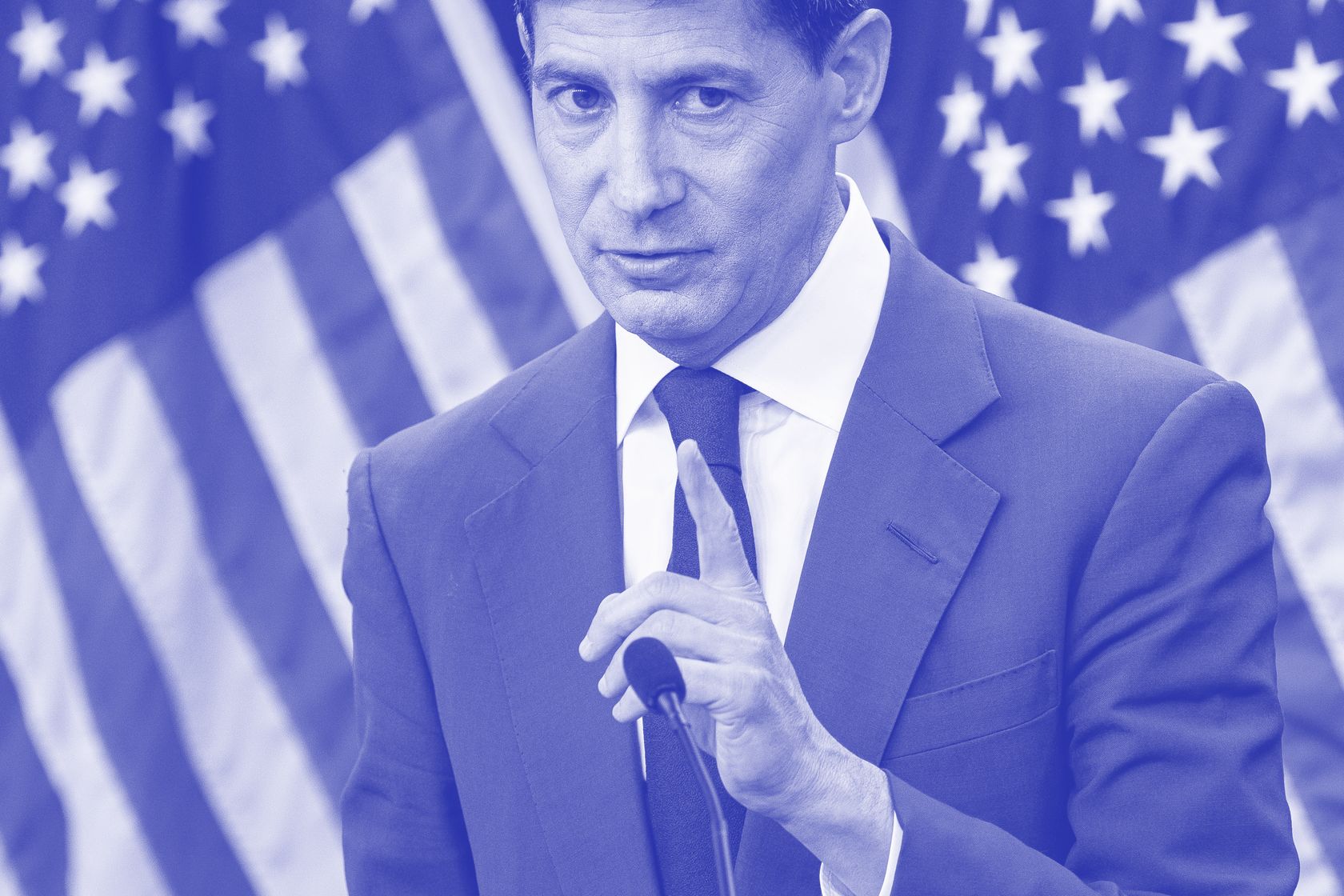
Hawkish debut: Kevin Warsh used his first meeting as US Federal Reserve chair to steer the central bank in a hawkish direction, dropping its bias towards lower rates as policymakers contend with inflation fuelled by the Iran war. “Persistent high prices are a burden for the American people. But the recent past need not be prolonged. I am pleased to report that members of the FOMC are unambiguous and unanimous. This committee will deliver price stability,” Warsh said. He added the committee had “a good family fight” over the rate decision for a couple of days before reaching a unanimous hold at the 3.5 to 3.75% range. Nine of the 18 officials who submitted projections now expect to raise rates this year, a view none held three months ago, the Fed’s summary of economic projections showed. Warsh, a longstanding critic of forward guidance, declined to submit his own in an early sign of the “regime change” he campaigned on. “I did not submit a dot. For me, it’s not helpful in the conduct of policy”, he said. The FOMC also stripped its post-meeting statement back by almost two-thirds, removing any guidance about future rate moves altogether. (US Fed)(FT)(Reuters)(Bloomberg)(Capital Brief)
2.
Market rout: Stocks on Wall Street fell after the US Federal Reserve signalled the possibility of higher rates, with money markets fully pricing in a rate hike by October. The S&P 500 fell 1.21%, the Nasdaq lost 1.34% and the Dow fell 0.98% after new Fed chair Kevin Warsh’s repeated assurances that “price stability” would be the central bank’s guiding principle. The yield on two-year Treasuries climbed 16 basis points to 4.21% and the dollar advanced. “There was clearly a hawkish tilt to the Fed’s statement and Chair Warsh’s comments at the press conference,” Michael James at Rosenblatt Securities told Reuters. Traders now see a 37% chance of two rate hikes this year, up from 17% the previous day, according to the WSJ. The sell-off came even as US retail sales data showed a 0.9% rise in May, well above the 0.5% forecast, adding to evidence of economic resilience despite the Iran war oil shock. Elsewhere, Reuters reported that Saudi Aramco is considering selling a stake in its sulphur business in a deal that could raise up to USD7 billion, part of a broader asset sale program worth as much as USD50 billion. (Reuters)(WSJ)(Bloomberg)
3.
New era: During the press conference Warsh announced five task forces to review how the Fed conducts its business, covering its communications, balance sheet, reliance on existing data sources, productivity and jobs in an era of transformation, and inflation frameworks. He said he was enlisting “some of the very best minds, both inside and outside the economics profession”, with the work to begin within weeks and most concluding by year end. He flagged a broader communications review by year end spanning press conferences, dots, meetings, transcripts and minutes. “The institution wants to figure out how we can do better,” he said. Warsh signalled press conferences would be shorter and possibly less frequent, telling reporters that when you hold one “you want to make sure you have something important to say.” He defended the pared-back statement as “a bit shorter, a bit simpler”, saying forward guidance was “not well suited to the current policy conjuncture.” (Reuters)(Bloomberg)
4.
Path finder: Binance could be kicked out of European markets amid reports its operating licence application will be rejected, but local CEO Richard Teng told Capital Brief he is “confident of our path” in Australia. Speaking on the sidelines of the Digital Economy Conference, Teng said the world’s largest cryptocurrency exchange is “committed to work very closely with regulators to uphold the rule of law”, as its local subsidiary is put through an external audit ordered after AUSTRAC flagged “serious concerns” with its compliance with anti-money laundering laws. He said “Australian regulators are very sophisticated regulators” who will judge Binance on its own merits, rather than reacting to the reported European development. Reuters reported Binance was set to lose permission to operate in the EU in July following objections from Greece’s market regulator. Binance head of APAC SB Seker said the local business has been prepared to reapply for an AFSL for months (it lost its previous AFSL in 2023) and that despite the regulatory headwinds the company is “bullish in the market”. The external audit is expected by September or early October. (Capital Brief)(Reuters)
5.
Enforcement action: ASIC said it is preparing to take legal action against a private credit fund following several investigations into operators in the sector. Speaking to Capital Brief, ASIC commissioner Simone Constant said she “would be unsurprised to see some of those active investigations culminate in formal enforcement action, whether it’s compliance or court-based enforcement, and we’ll start to see that in some of the back part of the year”. Earlier this year, Capital Brief revealed ASIC had ramped up its scrutiny of the sector, with enforcement officials rifling through documents and accessing boxes of information at some private credit firms. Constant said ASIC has commenced a second round of surveillance looking at around 24 retail and institutional private credit funds. She said a recent voluntary survey of 22 fund managers covering around $76 billion in AUM revealed a slow but certain deterioration of credit due to a rise in defaults, impairments and loan amendments. “We will continue to throw everything we have at this,” Constant said. She added that funds which declined to participate in the survey “we might look more closely at”. (Capital Brief)
6.
Blind spots: Two new reports tell the Australian startup and venture capital story from very different perspectives. The first, from seed fund Side Stage Ventures using Dealroom data, charts a decade of growth that has made Australia one of the most efficient startup markets in the world. It’s ranked first globally for decacorn (valuation of $10 billion+) creation per dollar invested, third for unicorns, and delivering a five-year pooled return of 24.4%, almost double the equivalent US figure. The second, from non-profit Equity Clear, documents what that decade has failed to move: in 2025, all-women founding teams received 2% of total venture capital deployed in Australia, down from 4% the year before. But the two reports share a founding conviction, that the ecosystem has been flying partly blind, and that you cannot fix what you cannot measure. Equity Clear founder Noga Edelstein writes that Australia currently has no shared system for tracking who enters investor pipelines, who progresses through due diligence, or where founders drop out. Scale Investors managing partner Samar Mcheileh frames the gap in investment terms, noting that the sector is “a high-performance asset class currently trading at a significant discount due to structural blind spots”. A Deloitte Access Economics analysis cited in the report puts the macroeconomic cost at a 3.2% loss in productivity per capita. (Capital Brief)
7.
Banking lobby: Bank bosses and regulators used the Australian Banking Association’s tentpole event in Melbourne to warn that multiple threats are escalating in an increasingly chaotic world. And a few mishaps crept in. Opening the event, ANZ chief executive Nuno Matos warned that growing social division, wealth inequality, concerns over living standards and technological change demanded a distinctly different response, saying Australia “needs to take a more entrepreneurial approach to be less risk averse if we want to succeed in this new world order”. APRA chair John Lonsdale said geopolitical unrest and an over-reliance on a handful of tech providers exacerbated cyberattack risks, and that it was “pretty easy” to imagine a “polycrisis” quickly unfolding in Australia. The event’s theme of “banking boldly” was misspelt on screen as “boldy” for much of the day, and Lonsdale’s warning was punctuated by a ringtone of Queen’s “Bohemian Rhapsody” ringing out from the floor. New ASIC chair Sarah Court reminded banks that “there’s no point in being bold and innovative and creative…if you’re bungling the basics”, and that ASIC is “very rarely in court dealing with bold new innovation”. (Capital Brief)
8.
Red meat: Pauline Hanson’s highly anticipated speech to Canberra’s National Press Club yesterday was a tour de force for a politician who has built a 30-year career on grievance. The One Nation leader, who polls indicate is building strong support across the country, had little to say that was new, but in what sounded like an extended stump speech she was combative, uncompromising and effective at tossing huge chunks of red meat to her supporters. The speech was a catalogue of the aspects of 21st-century Australia she dislikes, including migration, the United Nations, SBS, the ABC, the NDIS and what she calls the “transgenderism insurgency”. Capital Brief’s Matthew Franklin writes there was more than a hint of Donald Trump in Hanson’s populist posture, along with a thread of the reactionary race politics practised by Nigel Farage and his UK Reform Party. Hanson also threatened journalists, telling Guardian reporter Sarah Martin “you will be banned” and SBS reporter Anna Henderson “you are going to be without your job”. Activist group GetUp lowered a protest banner behind Hanson mid-speech, a stunt that handed her the grievance narrative she thrives on. (Capital Brief)
