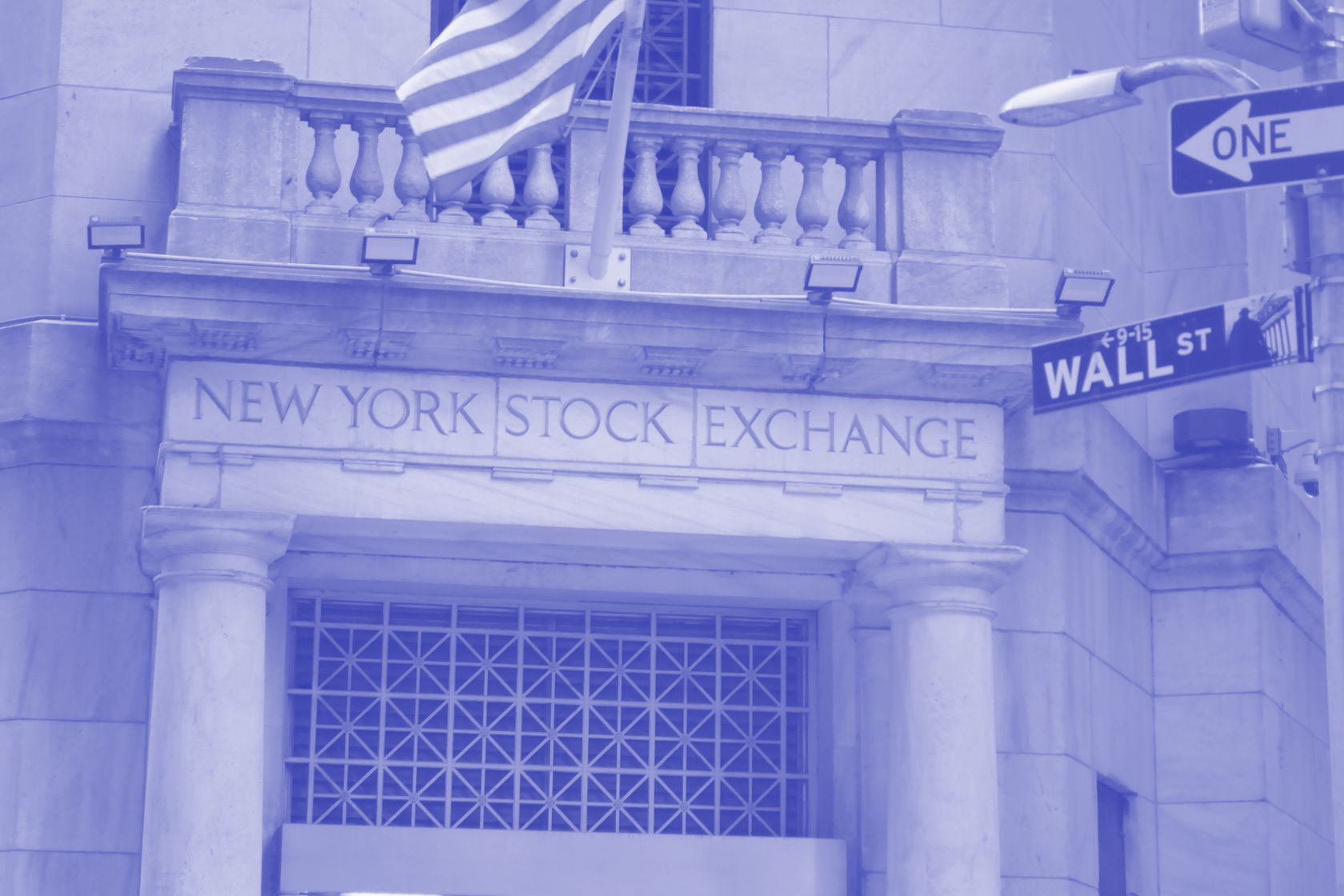
Nvidia boom turns bust on Wall Street
Plus: US jobs rise, jobless rate climbs and Fed left guessing amid patchy data; US warns Australia over streaming content law; Walmart dumps NYSE in move to Nasdaq, raises outlook.

Good morning. Here's what happened overnight and what you need to know today.

1.
Market whiplash: Stocks on Wall Street gave up sharp early gains as Nvidia’s earnings-driven rally lost steam and investors reconsidered the likelihood of a December rate cut. The Dow reversed a 700-point surge to trade down 0.7% in afternoon trading, while the S&P 500 was 1.2% lower after rising almost 2% earlier in the session. The Nasdaq was 1.6% lower. Nvidia shares, which jumped as much as 5% after reporting strong results and “off the charts” AI chip demand, later fell as much as 2.5% and were down 2.2%. Wall Street’s “fear gauge”, the CBOE Volatility Index, jumped more than 15% and is up over 50% for November. The long-delayed September jobs report showed 119,000 new positions (more than double forecasts) but the unemployment rate rose to 4.4%, the highest since 2021, adding to uncertainty over whether the Federal Reserve will cut rates in December. Bitcoin also fell to its lowest level since April, dipping below USD87,000. (Bloomberg)(WSJ)(Reuters)
2.
Nuanced data: US employers added 119,000 jobs in September, topping expectations with the strongest payroll gain since April, according to delayed data from the Bureau of Labor Statistics. The report was nearly seven weeks late due to the 43-day US government shutdown. The September gain was more than twice the 50,000 jobs economists had forecast, with job growth sharply concentrated on healthcare, social assistance and leisure and hospitality. The unemployment rate rose to 4.4%, its highest level in almost four years, as 470,000 people entered the labour force. Payrolls in August were revised to a loss of 4,000, and July’s figures were adjusted down to a 72,000 gain, trimming previous totals by 33,000. Average hourly earnings increased 0.2% for the month and 3.8% over the year. Continuing claims for unemployment benefits rose by 28,000 to 1.974 million, the most since November 2021. The next full jobs report is due on 16 December, covering both October and November data. (Capital Brief)(BLS)(Bloomberg)(AP)(WSJ)
3.
Closed doors: The Trump administration privately raised concerns over Labor’s plans to force US streaming platforms to invest in Australian content, as the Albanese government works to push the bill through the Senate before the end of the year. Officials from the US embassy raised concerns about the policy with the Australian government in recent weeks, two sources told Capital Brief. The quotas were announced on 4 November, and a bill to legislate them was introduced to the House of Representatives in Parliament on 6 November. Under the legislation, global streaming platforms including Netflix and Amazon Prime Video will be required to invest at least 10% of their total Australian expenditure, or 7.5% of their revenue, in new local educational programs. Republican congressman Lloyd Smucker called on the Albanese government to “reverse course” on the policy. Major streamers have also warned the policy could contravene Australia’s free trade deal with the US. (Capital Brief)
4.
Nasdaq leap: Walmart will move its stock listing from the NYSE to Nasdaq in two weeks (9 December), the biggest defection in the NYSE's history. The world’s biggest retailer said the shift aligns with its “technology-forward approach” and came as it raised its full-year net sales forecast range to 4.8% to 5.1%, up from previous expectations of 3.75% to 4.75% and its second outlook upgrade this year. That would follow a 5.8% year-on-year increase in third-quarter revenue to USD179.5 billion and a 34% rise in net income to USD6.1 billion. Comparable US store sales rose 4.5% in Q3, supported by growth in groceries, health and wellness, and a 27% jump in e-commerce sales. CFO John David Rainey said higher-income households were spending steadily, while lower-income shoppers showed “some moderation.” Walmart said it currently has about 7,400 temporary price reductions in place, known as rollbacks, in the US, with more than half on grocery items. It reported US grocery inflation at its stores of 1.3%, less than half the national rate. Walmart shares rose more than 6%. (Capital Brief)(Walmart)(Reuters)(Bloomberg)(FT)
5.
Elite? Stay. The UK proposed a new immigration system that would allow high earners and entrepreneurs to settle permanently after three years, while significantly extending the wait for most other foreign workers. Under the plan released for public consultation, people earning more than GBP125,000 ($253,470) or holding Global Talent and Innovator Founder visas would be eligible for indefinite leave to remain (ILR) after three years. That compares with the five years most migrants currently wait before becoming eligible for permanent status. Those earning between GBP50,000 and GBP125,000 would continue to wait five years, as would NHS doctors, nurses and certain senior public sector workers. Low-paid workers, including the 616,000 who arrived via Health and Care visas between 2022 and 2024, would face a new 15-year baseline. Applicants must meet conditions including a clean criminal record, three years of National Insurance contributions, no debt to the state, and English language ability to at least A-level standard. Penalties that extend the waiting period could push the total wait to as long as over 30 years. Home Secretary Shabana Mahmood described the changes as the “biggest overhaul of the migration model in 50 years”. (Bloomberg)(FT)(Reuters)
6.
Internal combustion: Opposition defence spokesman Angus Taylor was left blindsided after leader Sussan Ley’s office briefed details of a major defence speech to the media on Thursday night before alerting his office. During Ley’s Robert Menzies Lecture, she reiterated the Coalition’s desire to increase defence spending to 3% of GDP and launched an impassioned defence of multilateral organisations. But multiple Liberal sources told Capital Brief that Taylor, a presumed leadership rival, was kept in the dark over its content and only alerted after details ran in the media. The speech signalled Ley would back creating a sovereign satellite defence system and a “greater ability to rapidly build, deploy, and resupply unmanned and autonomous weapons systems”. The news comes after Mark Speakman stepped down as NSW opposition leader on Thursday afternoon, following consistently poor polling and long-term criticism from colleagues that Speakman was failing to cut through with voters. (Capital Brief)(The Australian)
7.
Regulatory overreach: Global crypto exchange OKX urged the government to refrain from directly regulating digital assets like stablecoins but welcomes draft legislation that introduces financial licensing arrangements for products like digital wallets or exchanges that hold assets for customers. OKX Australia chief Kate Cooper told Capital Brief that targeting the tokens themselves would add an unnecessary regulatory burden, particularly for under-resourced startups. OKX is supportive of the proposed licensing requirements for "digital asset platforms" and "tokenised custody platforms" led by Treasury. However, the setting of minimum regulatory standards relating to asset holding, transactional and settlement functions, among others, have been left to ASIC to define. Cooper told Capital Brief that the approach taken in the draft bill is more likely to enable industry to “continue to innovate” and to “bring the best of our products that we have globally onto Australian shores”, whereas ASIC’s approach could be "stifling innovation”. Elsewhere, Perplexity AI launched a mobile version of its Comet browser for Android, embedding AI-powered search and voice assistants directly into mobile browsing in a direct challenge to Google. (Capital Brief)
8.
Big byte: Chinese venture capitalist Kathy Xu’s firm, Capital Today bought a block of ByteDance shares at a valuation of USD480 billion ($741.21 billion), according to sources cited by Bloomberg, as the parent company of TikTok continues to garner strong investor interest. Capital Today, won out over several other interested parties to acquire equity from Bank of China Group Investment, an early institutional investor in ByteDance. The block of stock had been priced at around USD200 million at a USD360 billion valuation, but with several bidders participating in the auction, the price quickly rose to see Capital Today pay roughly USD300 million for the stake at a USD480 billion valuation. While a potential forced sale of TikTok had loomed over the company, as the Trump administration pushed to shift majority ownership to US investors, the current deal being discussed could see ByteDance gain around half the profit from the platform’s US operations. (Bloomberg)(Capital Brief)
