US and Iran end ‘intense and serious’ talks in Geneva
Plus: Nvidia results fail to steady AI nerves; Hillary Clinton tells GOP-led House panel she has no info on Epstein; BlueScope fires public shot at bidders.

Good morning. Here’s what happened overnight and what you need to know today.

1.
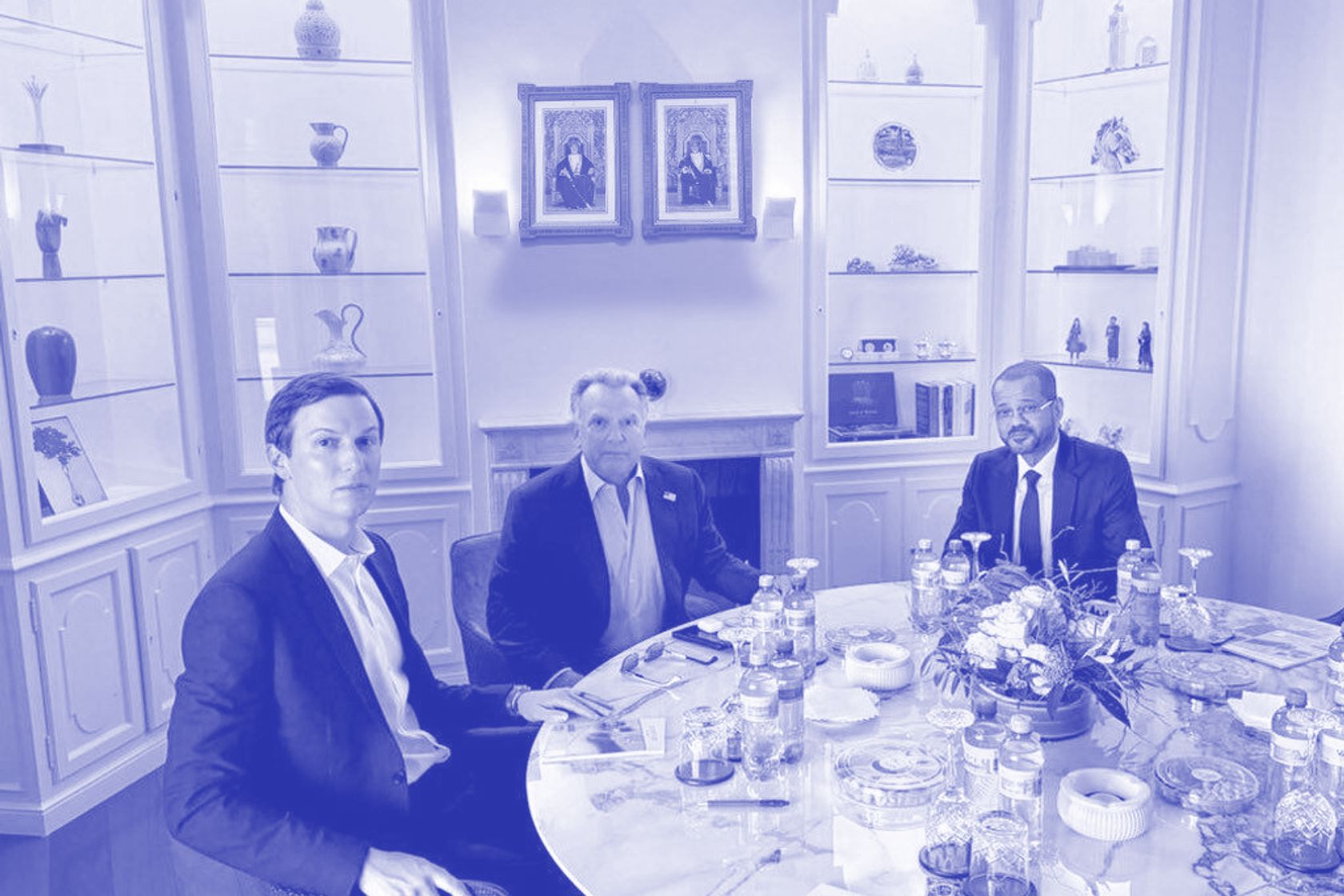
Intense and serious: US and Iranian negotiators resumed a third round of indirect nuclear talks in Geneva on Thursday where they exchanged “creative and positive ideas”, according to Oman’s Foreign Minister Badr Albusaidi, who’s mediating the talks. The meeting ended “after significant progress in the negotiation between the US and Iran,” he said. The talks will resume next week in Vienna, he added. Iran’s foreign ministry spokesperson Esmaeil Baghaei earlier told Iranian state TV the roughly three-hour morning meeting had progressed “very intensely and very seriously”. He added: “Both in the nuclear field and on the lifting of sanctions, very important and practical proposals were put forward, and both sides pursued the discussions with great seriousness. We are confident. We must continue and see. This is a process.” The New York Times earlier reported, citing four unnamed Iranian officials that Iran is expected to offer a proposal to suspend nuclear activity and uranium enrichment for three to five years, after which it would join a regional nuclear consortium while maintaining enrichment at 1.5% for medical research. The officials said Iran would also offer to dilute its 400 kilograms of highly enriched uranium in phases and allow inspectors from the United Nations atomic agency to oversee the process and monitor compliance. (NYT)(Reuters)(Bloomberg)(FT)
2.
Chip chill: Nvidia’s blockbuster quarter failed to calm mounting AI jitters, sending its shares down about 5% and dragging the Nasdaq sharply lower overnight. The chipmaker logged a jump in profit and record income, but its stock was trading about 5% lower on Thursday afternoon New York time, weighing on the Nasdaq composite, which skidded about 1.5%. The S&P 500 was trading 0.65% lower. Elsewhere, Salesforce shares rose after a better-than-expected quarter, and Accenture shares also gained after a multi-year deal with Mistral AI. Paramount Skydance shares jumped about 10% after earnings and a revised USD31-a-share bid for Warner Bros Discovery the target company said “could reasonably lead to a better proposal”. Netflix shares were also higher. Meanwhile, weekly jobless claims rose to 212,000, below expectations, and oil prices reversed earlier losses as markets tracked the latest round of US-Iran talks in Geneva. Elsewhere, Google unveiled a faster, upgraded version of its viral AI image generator Nano Banana, expanding access to features previously limited to paid users as it pushes to keep pace with competitors.(WSJ)(Bloomberg)(Reuters)
3.
Clinton testifies: Hillary Clinton told a Republican-led House Oversight Committee she had “no information” about Jeffrey Epstein’s criminal activities and did “not recall ever encountering Mr Epstein” as she sat for a closed-door deposition in New York, accusing Republicans of using her testimony to “distract attention from President Trump’s actions”. In a prepared opening statement, she said “I never flew on his plane or visited his island, homes or offices. I have nothing to add to that,” she said. She also said the Trump administration had “gutted” a State Department office focused on international sex trafficking. The deposition was briefly halted after Republican Representative Lauren Boebert leaked a photograph from inside the hearing room to right-wing commentator Benny Johnson, prompting Clinton’s lawyers to object and pause proceedings. House Oversight Chair James Comer said ahead of the session that “no one is accusing at this moment the Clintons of any wrongdoing” and that transcripts would be made public. Bill Clinton is scheduled to testify on Friday. (NYT)(WSJ)(The Guardian)
4.
Get a Clue(scope): BlueScope chair Jane McAloon’s latest public spat with suitors SGH and Steel Dynamics was interpreted by the market as a signal the takeover deal is slipping away. In a sharply worded letter lodged on the ASX on Thursday, McAloon outlined the ASX-listed steelmaker’s objections to the bidders’ latest proposal, arguing the “best and final offer" of $34 per share was effectively worth $31 per share once dividends the company has already promised to pay were taken into account. A source close to the situation told Capital Brief the letter was BlueScope’s attempt at saying “we want to be constructive”. King & Wood Mallesons M&A partner Daniel Natale echoed the observation, saying that the letter is unusually “frank” given that scheme transactions, as opposed to takeovers, tend not to take place in public and suggested that McAloon’s letter could be interpreted as BlueScope offering a path forward. (Capital Brief)
5.
Worldwide Epstein Fallout (WEF): President and chief executive of the World Economic Forum (WEF), Børge Brende, stepped down from his role following a WEF investigation into his ties to the late convicted sex offender Jeffrey Epstein. Without mentioning Epstein or the WEF probe, Brende said he has decided to step down after careful consideration following 8.5 years in the post. Swiss businessman Alois Zwinggi will serve as interim president and chief executive. A tranche of documents released by the US Department of Justice revealed that Brende had arranged to meet at the financier’s home in New York for dinner in 2018 and 2019. When the WEF opened the probe into its chief’s ties to Epstein, Brende said he was unaware of Epstein’s past but admitted he should have investigated him more thoroughly. WEF co-chairs André Hoffmann and Larry Fink said: “His dedication and leadership have been instrumental during a pivotal period of reforms for the organisation.” (WEF)(Capital Brief)(FT)(Bloomberg)
6.
Competition kick-start: Tanarra principal and founder John Wylie’s Policy Institute Australia (PIA) warned that competition in Australia has declined and has called for a fresh $20 billion war chest to drive a revamped National Competition Policy reform package as part of the government’s upcoming productivity-focused budget. Some key measures of competition, including in relation to industry concentration and profit share have worsened to “around historic pre-Covid lows”, according to the think tank. PIA CEO and former managing director of PwC’s Scyne Advisory, Amy Auster, told Capital Brief that “it’s very hard in a market-based economy to achieve productivity growth without competition”. Auster said the Albanese government made a “good push” to improve productivity in its first term of government, but there needs to be an “even bigger push” to fully translate the ambition spelled out at the Treasurer’s economic roundtable in August 2025 into outcomes through an extra $20 billion injection over the next 10 years to deliver what the PIA calls National Competition Policy 2.0. (Capital Brief)
7.
Split opinions: Economists are split on whether Labor’s potential move to reduce the capital gains tax (CGT) discount in the May budget will level the property playing field, despite widespread public support for the proposal. According to DemosAU polling conducted exclusively for Capital Brief, 40% of respondents support a reduction of the CGT discount from 50% to 25%, which has been floated by the federal government ahead of the productivity-focused budget in May. As first reported by the AFR, Treasury has been modelling a 33% CGT deduction. PwC chief economist Amy Lomas told Capital Brief limiting the CGT discount to new dwellings could help boost supply while increasing tax receipts and is pushing for the government to consider leaving the CGT discount in its current form for investors in new properties. Budget watcher and independent economist Saul Eslake is supportive of a limited CGT discount change but would prefer a complete overhaul. (Capital Brief)
8.
Across the ditch: Former New Zealand prime minister Jacinda Ardern and her family are relocating to Australia, joining a growing wave of Kiwis moving across the Tasman. “The family has been travelling for a few years now,” her office told the Guardian. “For the moment they’re basing themselves out of Australia — they have work there, and it brings the added bonus of more time back home in New Zealand.” The confirmation followed speculation in Australian media that Ardern, her husband Clarke Gayford and their daughter Neve attended open home inspections in Sydney’s northern beaches. Official data cited by Bloomberg showed more than 60,000 New Zealand citizens left in 2025, with 61% headed to Australia. Ardern resigned as prime minister in 2023, saying she did not have “enough in the tank to do it justice.” Since leaving office she has taken up fellowships at Harvard, joined the board of Prince William’s Earthshot prize and released a memoir in 2025. (The Guardian)(Bloomberg)(NYT)
