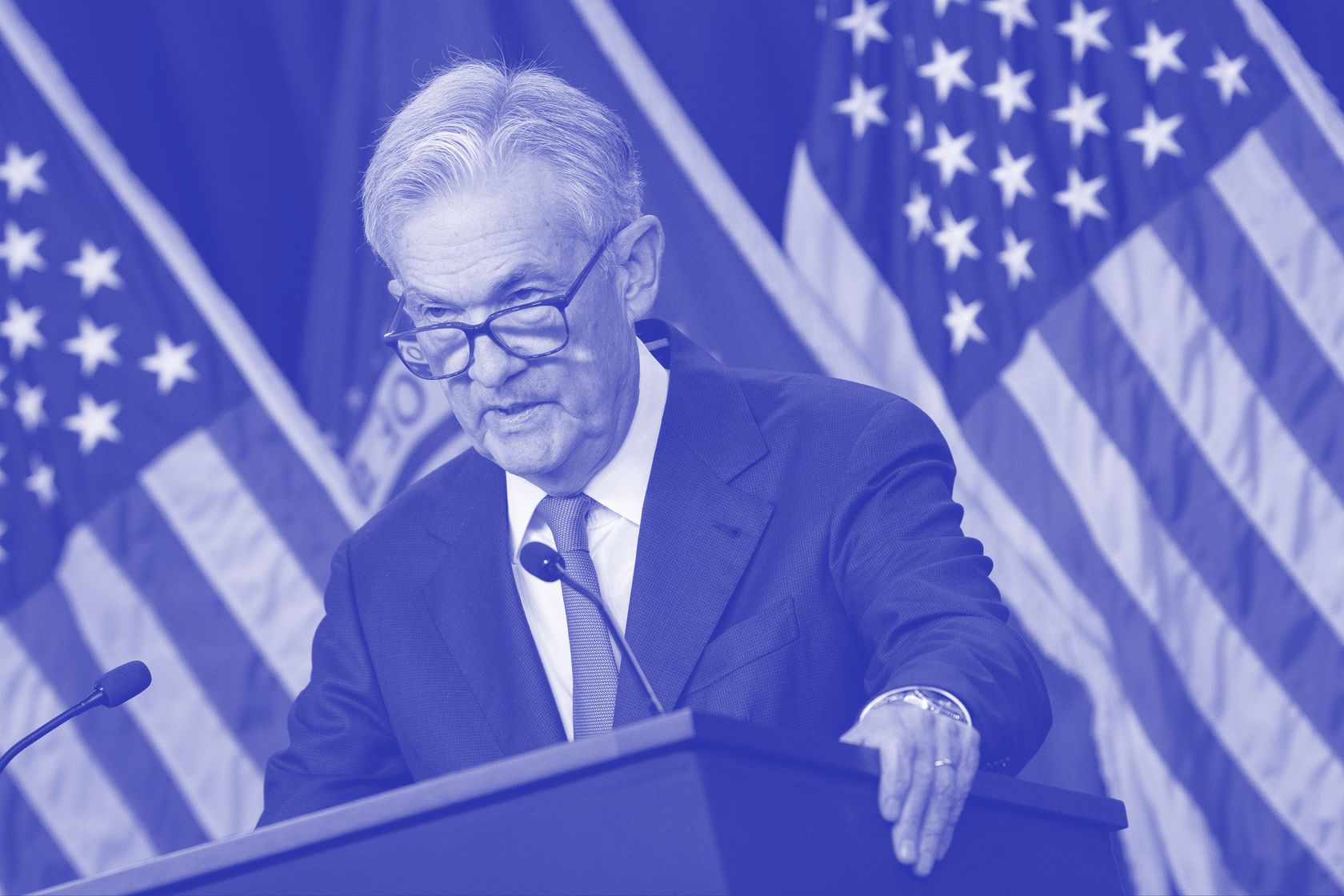
Powell holds rates steady, signals three rate cuts in 2024
Plus: Tencent doubles buybacks after revenue slump; Huawei-linked firms face US blacklist; French watchdog slaps Google with €250m fine.
Good morning. Here's what happened overnight and what you need to know today.
Get Standup in your inbox Signed up to Standup
1.
Sticky inflation: The US Federal Reserve has left rates unchanged for a fifth consecutive meeting. The Federal Open Market Committee (FOMC) voted unanimously to leave rates within the range of 5.25%-5.5%. The Committee also stated that it intends to make 0.75 percentage points worth of interest rate cuts during the year. The FOMC explained that while it expects to cut rates three times, it does not plan to begin cutting rates until it has greater confidence that inflation is moving sustainably toward its 2% target. The language echoes that used in the Fed’s January statement, which reinforces thinking that the Committee is in no rush to lower rates until they are certain of the inflation trajectory. According to their median rate projection, policymakers see the federal funds rate reaching 4.6% by the end of 2024. The central bank reiterated its intention to continue reducing its balance sheet by as much as USD95 billion ($145.16 billion) per month. (Capital Brief)(US Federal Reserve)(Bloomberg)
2.
Gaming pullback: China’s Tencent has announced plans to double its share buybacks this year after posting weaker than expected fourth-quarter revenue figures as its gaming revenue contracted. The company reported a 7% rise in Q4 revenue on Thursday, at 155.19 billion yuan for the three months ending 31 December 2023. Its core gaming business saw revenue in China slump 3% to 27 billion yuan, while international gaming revenue grew just 1%. Tencent also intends to at least double its share repurchases from $9.59 billion in 2023 to over $19.57 billion in 2024, as well as raising its annual dividend by 42%. A slew of tech companies including Alibaba and JD.com have announced plans to boost dividends or share repurchases after posting weaker than expected results for the December quarter. (Tencent Q4 results press release)(Reuters)
3.
Black list: The US government is weighing the sanctioning of firms associated with Huawei Technologies following the telecom giant’s advanced 7 nanometre chip breakthrough last year. According to sources cited by Bloomberg, most of the Chinese semiconductor firms which would be affected by the sanctions have been identified as chipmaking facilities acquired or being built by Huawei. The companies named include Qingdao Si’En, SwaySure, and Shenzhen Pensun Technology Co. Despite a US sanction, Huawei’s launch of the Mate 60 device powered by a 7 nanometre chip in August last year caught the US by surprise as Washington officials had thought it was beyond Huawei's capabilities. It is unclear as to when the administration will decide whether or not to add the companies to the banned ‘entity list.’ (Bloomberg)(Capital Brief)
4.
Another pénalité: The French competition regulator has fined Google for breaching agreements on remuneration for media outlets for reproducing their online content. The Autorité de la concurrence (ADLC), fined Google €250 million for the failure, having previously hit the tech giant with a €500 million penalty for prior offences. The watchdog said that Google has breached its obligation to comply with commitments made in June 2022, which include building fair agreements with media outlets for publishing links to their content, such as using the outlets’ press articles to train AI technology without informing them. The ADLC continued that Google trained its AI chatbot, Bard (now named Gemini) on press content without providing publishers nor the regulator with the required notification. In a blog post responding to the fine, Google said that it considers the amount to be “disproportionate in view of the breaches noted by the ADLC.” (French competition regulator statement)(Google Blog post)(Le Monde)
5.
EV rules: The Biden administration has enacted stringent vehicle emissions rules to push the US car industry toward a majority of electric vehicle sales by the beginning of the next decade. The rules released by the Environmental Protection Agency will have a more gradual rollout than initially proposed, giving carmakers more time to comply, citizens more time to warm to EVs, as well as allow for infrastructure like charging stations to be installed. In effect, the rules require that fully-electric cars account for about 60% of new-vehicle sales by the 2030 model year. The new rules apply to light-duty vehicles for model years 2027 through 2032. In order to hit the targets, an estimated 31% to 44% of new light-vehicle sales would need to be electric, rather than the 60% mark originally proposed. (Wall Street Journal)
6.
Spending spree: Intel is planning to spend USD100 billion across four US states to build and expand factories as it extends it AI manufacturing efforts. The tech giant recently secured USD19.5 billion in federal grants and loans and hopes to gain another USD25 billion in tax breaks. Over the next five years, Intel plans to revamp sites in New Mexico, Oregon, and Arizona, as well as building the ‘largest AI chip manufacturing site in the world’ in Ohio. Intel is hoping to make a comeback in the chip-making industry, after losing its manufacturing edge to rivals during the 2010s. CEO Pat Gelsinger said that he expects a second round of US funding will be needed to cement the US as a semiconductor manufacturing leader, stating: "It took us three-plus decades to lose this industry. It's not going to come back in three to five years of CHIPS Act [funding]." (Reuters)
7.
Damaging data: Short seller Hindenburg Research has taken a short position in Equinix, alleging that the data centre firm which operates as a real estate investment trust (REIT), is selling an “AI pipe dream” and is manipulating accounting. Hindenburg says the almost USD80 billion REIT manipulates its accounts for the profitability metric – adjusted funds from operations – overstating that figure by at least 22% in 2023. The short seller said that even if Equinix’ financials are taken at face value, they are training at elevated levels. After Hindenburg disclosed its short position in the company, Equinix shares dropped almost 7% in premarket trading in New York, before seeing losses settle at around 4%. (Hindenburg Research)(CNBC)
8.
Temu triumph: Chinese ecommerce group PDD has more than doubled quarterly revenues, calling 2023 a pivotal year which saw its discount marketplace Temu achieve staggering growth. PDD reported revenues of 89 billion yuan in the three months to December, a 123% increase from the year prior and well above expectations. Temu is still considered to be unprofitable as it continues aggressive growth, having launched a multibillion dollar online advertising blitz to scoop up more US market share. According to PDD’s results, since its launch in 2022 Temu has spent $21.55 billion on sales and marketing across its businesses. Chair and CEO Chen Lei said: “2023 represents a pivotal chapter in our corporate history […] We saw growing demand driven by encouraging consumer sentiment.” (Financial Times)