Powell says Fed can ‘wait and see’ on rates despite Iran inflation risk
Plus: Canva co-founder’s post sparks staff fears of mass layoffs; Trump zigzags between Iran diplomacy and destruction threats; Hastie lights a fuse under Liberal gas orthodoxy.

Good morning. Here’s what happened overnight and what you need to know today.

1.
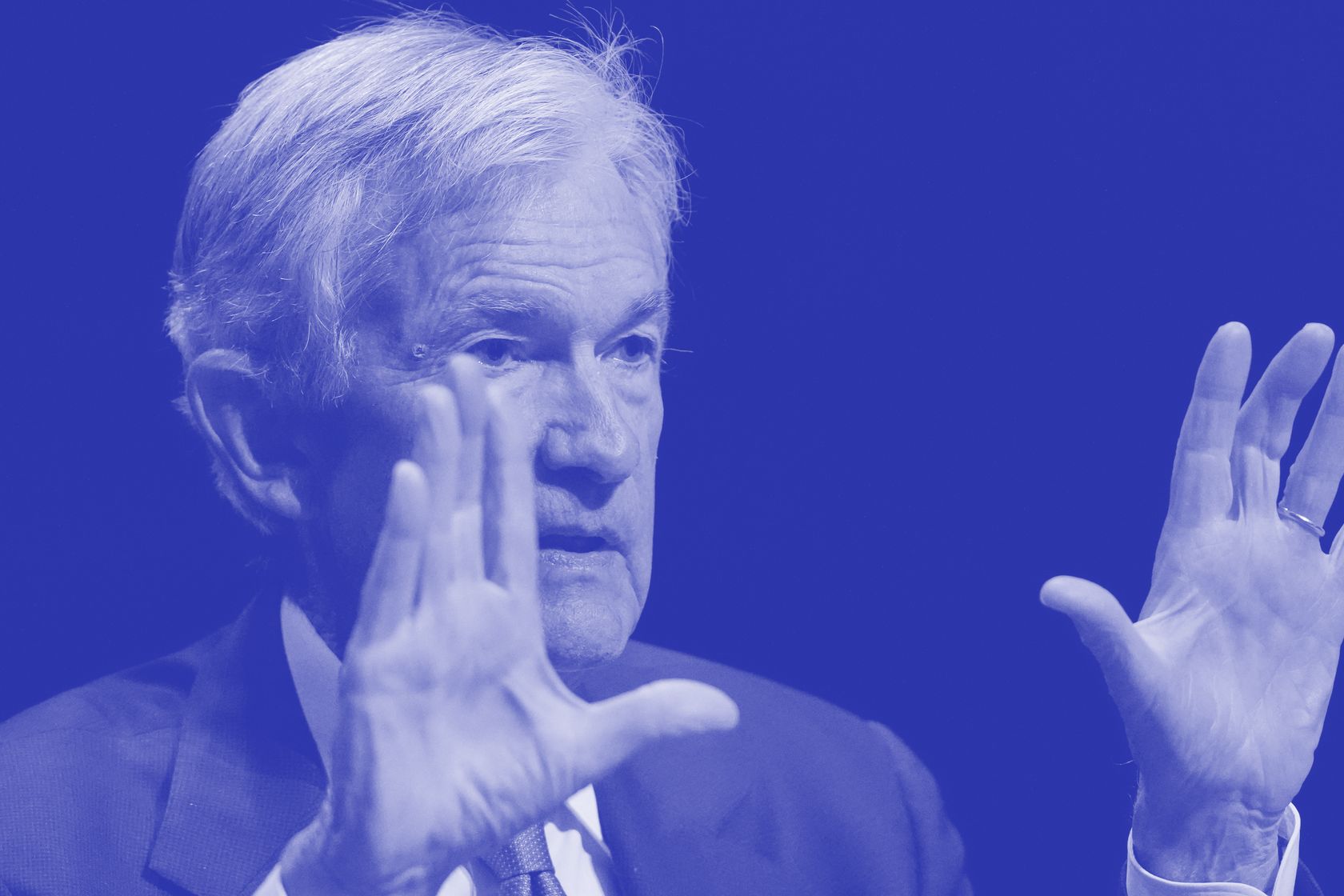
Wait and see: US Federal Reserve chair Jerome Powell said the Fed can afford to “wait and see” how the US-Israel war against Iran affects the economy, saying monetary policy is well positioned despite growing inflationary pressures. Powell told a Harvard University economics class that tariffs are currently adding between half and a full percentage point to inflation, and the Iran conflict risks complicating the path back to the Fed’s 2% target (a goal that has gone unmet for five years). While he said inflation expectations appear “well anchored beyond the short term,” Powell warned repeated supply shocks risk causing businesses and households to start expecting higher inflation as a permanent condition. Markets have moved to price out any Fed rate cuts this year since the war began. Two- and 10-year Treasury yields each fell around 10 basis points on the day, though most of the move occurred before Powell spoke. On private credit, Powell said the Fed is watching the sector “super carefully” but saw no systemic threat, only a correction. Asked about advice for his nominated successor Kevin Warsh, Powell said, “it is very, very important to stick to your knitting,” and resist pressure to use the Fed’s tools beyond its core mandates. (American Banker)(Bloomberg)
2.
Panic brewing: Canva co-founder Cliff Obrecht had an urgent message for staff at the design software giant last week. “This is the new bar,” Obrecht wrote in a Slack message viewed by Capital Brief. “If we are not working at this velocity we are not going to be competitive.” In his message Obrecht had linked to a viral social media post highlighting AI market leader Anthropic’s rapid product development velocity ‒ it had shipped 73 releases in just 52 days between February and March. He also attached a screenshot of a Google search showing the company behind Claude employs between 2,300 and 2,500 people, with the figure highlighted. Canva’s workforce is roughly double Anthropic’s. Staff took the note to imply that half the workforce could be doing the same job and that cuts could follow. The fear then spilled onto the anonymous workplace platform Blind, where posts reflected widespread alarm about redundancies. Obrecht’s post was swiftly deleted, following staff feedback, and Canva has since said it has no plans to lay off staff. On redundancies, a Canva spokesperson told Capital Brief: “We’re fortunate to be in a very strong position as a business and have no plans for layoffs.” (Capital Brief)
3.
Iran war: Donald Trump zigzagged between claims of diplomatic progress and renewed threats of destruction, sending fresh shocks through global markets as he sought to pressure Iran into a deal to end a monthlong war showing little sign of letting up. In a social media post, the US president hailed "great progress” in talks with a “new and more reasonable regime” in Tehran. He also warned, however, he would conclude America’s “stay” in Iran by obliterating its power plants, oil wells, Kharg Island and possibly desalination plants if no deal was reached by next Monday. Trump told the New York Post Iranian parliamentary speaker Mohammad Bagher Ghalibaf was one of the officials his administration was speaking to, saying he would know within a week whether he could be trusted. Ghalibaf has denied taking part in any talks with the US. Meanwhile, Israel’s largest oil refinery in Haifa was struck on Monday local time by a missile. It was not immediately clear whether it was fired from Iran or Hezbollah, who were both attacking at the same time. Elsewhere, two more UN peacekeepers were killed in southern Lebanon, the second fatal incident in 24 hours. The IMF warned in a blog post that the war’s economic impact would hit poorer, energy-importing nations hardest, declaring “all roads lead to higher prices and slower growth.” (IMF)(Capital Brief)(Bloomberg)(NYT)(WSJ)(FT)
4.
Tax schism: Angus Taylor assumed the Liberal leadership declaring the party needed to “change or die”. It’s now clear that did not include changing the way Australian gas exports are taxed. “If you whack a tax on something, you get less of it,” Taylor told reporters in Canberra on Monday. Calls for higher taxes on multinational energy giants extracting and exporting Australian natural gas have only grown louder as the Middle East war sends energy prices skyrocketing. But on Monday, Taylor was not pushing back on the Greens or Pocock — but one of his own frontbenchers. Andrew Hastie, who Taylor edged as the conservatives’ choice to replace Sussan Ley, lit a fuse under Liberal orthodoxy. Hastie told Insiders that multinationals had “lost their social licence and made no effort to recover it”, declaring himself “open-minded” about a 25% tax on gas companies. The pair’s contrasting comments on tax lay bare an emerging schism in the Coalition as it seeks to define itself in an era of deep economic angst. (Capital Brief)
5.
Launch pad: Nasdaq will introduce a fast-entry rule from May allowing newly listed large-cap companies to join its Nasdaq-100 index after just 15 days of trading, down from a process that can currently take up to a year or longer, as richly valued companies including SpaceX and OpenAI prepare to go public. Under the new rule, stocks will be evaluated on their seventh trading day and fast-tracked into the index if they rank within the top 40 members by market capitalisation. Nasdaq also scrapped the minimum 10% float requirement for eligibility, drawing criticism during industry consultations that removing it could see demand from passive funds overwhelm supply. Critics including Big Short investor Michael Burry flagged concerns, with Wall Street veteran George Noble, whose post Burry described as a “must read”, characterising the proposal as a “shameless” manipulation of the index that would force passive investors into untested, illiquid stocks and benefit IPO insiders at the expense of ordinary investors. With SpaceX expected to file confidentially for an IPO as soon as this month, Reuters reported Morgan Stanley’s E*Trade is in talks to lead the retail share offering. (Nasdaq)(Reuters)(Bloomberg)
6.
Crude bear: US stocks extended their losing streak on Monday as more US troops arrived in the Middle East, deepening fears that the conflict has no clear end in sight. WTI futures have risen about 50% since the US and Israel began bombing Iran, with Brent hitting USD116 before settling around USD114. The S&P 500 has dropped nearly 9% from its 27 January high while the Nasdaq 100, is down over 11% from its October record. Both indices were edging lower in afternoon trading in New York at the time of writing. The focus seemed to be shifting to the vulnerability of alternative oil routes. Saudi Arabia has partly bypassed the effective closure of the Strait of Hormuz via its east-west pipeline, but analysts warn any Houthi attempt to disrupt flows through the Red Sea and Bab el-Mandeb Strait would be “catastrophic” for regional oil supplies. Morgan Stanley’s Michael Wilson said the sell-off is “getting closer to its ending stages,” and Goldman’s trading desk flagged signs of hedge fund capitulation, estimating trend-following investors would be buyers in every scenario over the coming month. Shares in Fannie Mae and Freddie Mac jumped over 39% after Bill Ackman said the mortgage giants were “stupidly cheap,” adding they “could be a 10X and it could happen soon.” And Alcoa shares jumped 10% after Iranian attacks on Middle Eastern aluminium facilities hit two regional peers, with investors betting on the US miner as a beneficiary of supply disruptions. (Bloomberg)(Reuters)(WSJ)
7.
No Kap: Despite the prospect of a protracted war in the Middle East prompting global markets to spiral, Kapstream Capital pressed on with the biggest local IPO of the year on Monday. “We’re pretty happy with the timing,” Kapstream managing director and portfolio manager Dylan Bourke told Capital Brief. Kapstream, which is owned by NYSE-listed asset manager Janus Henderson, floated its new listed investment trust with a $205 million raise — the bottom end of its $200–300 million target band. Shares opened for trading at $2 at 1pm AEDT and closed 2.3% lower at $1.96. It had already secured $145 million in cornerstone investments, surpassing its initial target of $100 million. Backers include institutional investors, private banks and financial advisers. “We were very pleased with that,” said Bourke. “We thought that was a good underwrite for the trade in terms of providing that certainty to go forwards.” (Capital Brief)
8.
Out of range: Telstra will be forced to remove one million square kilometres from its coverage areas, after the Albanese government set limits on how telecommunications companies advertise and calculate the scale of their networks. The new rules, set to be announced today by Communications Minister Anika Wells, according to the AFR, follow reports that Telstra overstated the size of its network and that its representations about the size of its coverage created a false sense of security for emergency services. In 2025, The Australian reported that Vodafone accused Telstra of overstating its mobile coverage claim by about one million square kilometres. From June 30, telecommunications companies will be required to publish maps showing their 4G and 5G signal with the markers “good”, “moderate”, “basic” and “no coverage” under the new ACMA guidelines. Telcos will be required to update coverage maps every three months and must provide maps to any company that uses their network. “This will help to ensure telecommunications services are working for Australians and supports our ongoing work to strengthen access to and oversight of Triple Zero,” Wells said in a statement. (AFR)(The Australian)
