Putin agrees to halt energy strikes after Trump call
Plus: Wall Street wobbles as cash hoarding spikes; Nasdaq expands in Texas; BYD shatters records with five-minute EV charge, Tesla shares hit.

Good morning. Here's what happened overnight and what you need to know today.
1.
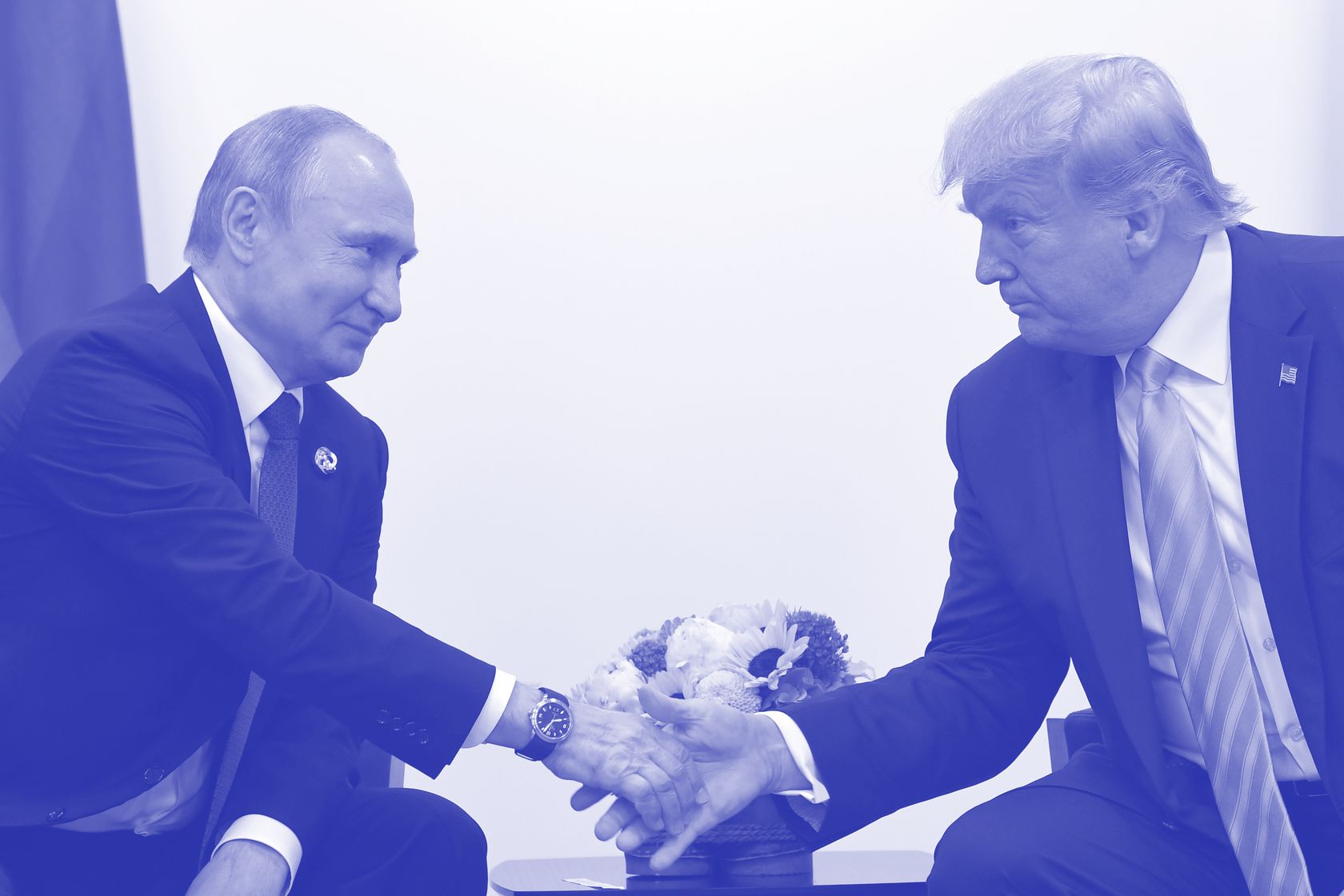
Truce energy: Russian President Vladimir Putin agreed to halt attacks on Ukrainian energy infrastructure for 30 days but rejected a broader ceasefire after a call with US President Donald Trump. The call lasted about two and a half hours, according to TASS, and focused on a US-proposed 30-day truce, which Ukraine had already accepted. The Kremlin said a lasting ceasefire would require halting foreign military aid and intelligence to Ukraine and Kyiv stopping troop mobilisation. The White House said Trump and Putin agreed to an “energy and infrastructure ceasefire” and to start immediate negotiations in the Middle East on a "maritime ceasefire in the Black Sea, full ceasefire and permanent peace." They also discussed US-Russia relations, non-proliferation and Iran. Russia and Ukraine will exchange 175 prisoners each, including 23 gravely wounded Ukrainians, according to TASS. In Finland, Ukrainian President Volodymyr Zelenskiy said “pressure is needed to finally make Moscow accept that their war must be brought to an end.” (Capital Brief)(Reuters)(Bloomberg)
2.
Tech blues: US stocks slid overnight as heavy selling hit Wall Street’s largest technology companies ahead of the Federal Reserve’s rate decision. The Nasdaq was 1.3% lower in late afternoon trading, the S&P 500 down 0.85% and the Dow 0.48% down. Nvidia was 1.93% lower despite announcing plans to develop 6G networks and partner with General Motors on self-driving cars. Bank of America’s latest survey showed the biggest-ever drop in US stock allocations, with investors raising cash holdings. At Nvidia’s annual GTC conference, CEO Jensen Huang defended the company’s AI lead, unveiling new AI chips called Rubin. (Bloomberg)(WSJ)
3.
Y’all street: New York stock exchange operator Nasdaq Inc is the latest in a string of companies seeking to capitalise on the lower taxes and looser regulations of Texas, unveiling plans to open a regional headquarters in Dallas. Nasdaq said that it currently generates over USD750 million ($1.18 billion) in revenues in Texas and the Southeast, with around 800 clients based in Texas. Over 200 of Nasdaq’s listings have headquarters in Texas, representing USD1.98 trillion in market capitalisation as of December 2024. Adena Friedman, chair and CEO of Nasdaq said: “Nasdaq is deeply ingrained in the fabric of the Texas economy, and we look forward to maintaining our leadership as the partner of choice for the state’s most innovative companies.” The Wall Street Journal reports that Nasdaq’s new headquarters will also house part of the exchange’s technology and financial crime management businesses. (Nasdaq)(WSJ)(Capital Brief)
4.
Charging ahead: BYD shares hit a record HK$401.40 ($81.2) in Hong Kong on Tuesday, rising 4%, after founder Wang Chuanfu unveiled a charging system that adds 470km of range in five minutes. Set to debut in two SUVs from April, the system will be supported by 4,000 ultra-fast chargers across China, though BYD did not specify a rollout timeline or investment details. Tesla shares fell over 6%, extending a nine-week slump, as analysts warned of growing competition from BYD and others in China. The country is expected to install 460,000 new public EV chargers this year, bringing the total to 2.1 million, Omdia estimates. Meanwhile, RBC cut Tesla’s price target by USD120 to USD320, while Mizuho slashed its 2025 delivery forecast to 1.8 million. Tesla’s China sales plunged 49% last month, despite the market growing 85%. This is the first time megawatt-level charging has been achieved, Wang said. (Capital Brief)(Reuters)(FT)
5.
Shattered ceasefire: Israel launched a series of airstrikes across Gaza early Tuesday morning killing hundreds and bringing an end to an almost two-month ceasefire with Palestinian group Hamas. Palestinian health authorities said that over 400 people were killed and over 500 injured in the Hamas-controlled region by the air strikes. A ceasefire agreed in January had been faltering in recent weeks as Israel sought to revise terms of a second stage which had been designed to release the final hostages and end the war. Israeli Prime Minister Benjamin Netanyahu said Israel launched the strikes in response to Hamas’ refusal to release the hostages, and accused Hamas of rejecting proposals from mediators to extend the ceasefire. White House spokesperson Karoline Leavitt told Fox News that President Trump’s administration was consulted by Israel on Monday ahead of its strikes on Gaza. (Reuters)(Bloomberg)(Capital Brief)
6.
DOGE deal: Atlassian has secured a Federal Risk and Authorisation Management Program (FedRAMP) certification, a baseline security requirement that cloud companies must meet in order to work with US federal entities. The company said that the FedRAMP authorisation is a “major milestone” and validates its readiness for “mission-critical government applications,” allowing the company to “accelerate productivity and innovation across US government agencies.” US federal, state, and local government entities, as well as their industry partners, will now be able to adopt Atlassian Government Cloud, helping drive the mandate of President Donald Trump’s Department of Government Efficiency to cut trillions of dollars from US public sector spending. US agencies that are currently using Atlassian Data Center will now also be able to migrate to Atlassian Government Cloud. Atlassian CTO Rajeev Rajan said the accreditation will help to “unleash the potential of every team, including the ones in highly regulated industries.” (Atlassian)(Capital Brief)
7.
Tech takeover: Google parent Alphabet has agreed to buy cybersecurity startup Wiz for USD32 billion ($50.2 billion). The all-cash transaction will be the largest of 2025 so far, and will extend an additional retention bonus to employees which could be worth an extra USD1 billion, according to the Financial Times. Google says the acquisition represents an investment by Google Cloud to accelerate two large and growing trends in the AI era: improved cloud security and the ability to use multiple clouds. Once the deal is completed, Wiz will join Google Cloud. The sale is likely to face regulatory scrutiny from the US Federal Trade Commission (FTC), as new FTC chair Andrew Ferguson has maintained his predecessor’s guidelines which allow the agency to block large deals. Adding Wiz's cybersecurity offerings would help Alphabet compete with its larger cloud competitors, Amazon Web Services and Microsoft's Azure. (Google)(WSJ)(Reuters)(Bloomberg)(Capital Brief)
8.
Innovation suffocation: Labor’s plans to introduce broad new digital competition rules targeting tech giants would stifle innovation and hinder productivity, Amazon argues in its submission to a Treasury consultation process on a new 'ex-ante' framework. Announced by Assistant Treasurer Stephen Jones late last year, the proposed framework aims to curb anti-competitive behaviour among major digital market players. Amazon’s submission, seen by Capital Brief, argues that Australia’s regulatory plans are modelled on “broad, novel and largely untested” regimes overseas and could deter investment in the country’s digital economy. “Highly productive countries with high rates of digital investment and innovation do not have broad ex-ante regimes [for the tech industry],” the Amazon submission reads. Amazon’s submission emerges as the first among a string of corporate responses to Labor’s plans, adding a new dimension to Australia’s ongoing battle with major US tech firms, including Meta and Alphabet-owned Google. (Capital Brief)
