Reports of US-Iran ceasefire extension drive markets to record highs
Plus: BofA, MS set equity trading records; Australia’s defence spending to rise by $53b over ten years; Ticketmaster’s parent Live Nation found to hold illegal monopoly.

Good morning. Here’s what happened overnight and what you need to know today.

1.
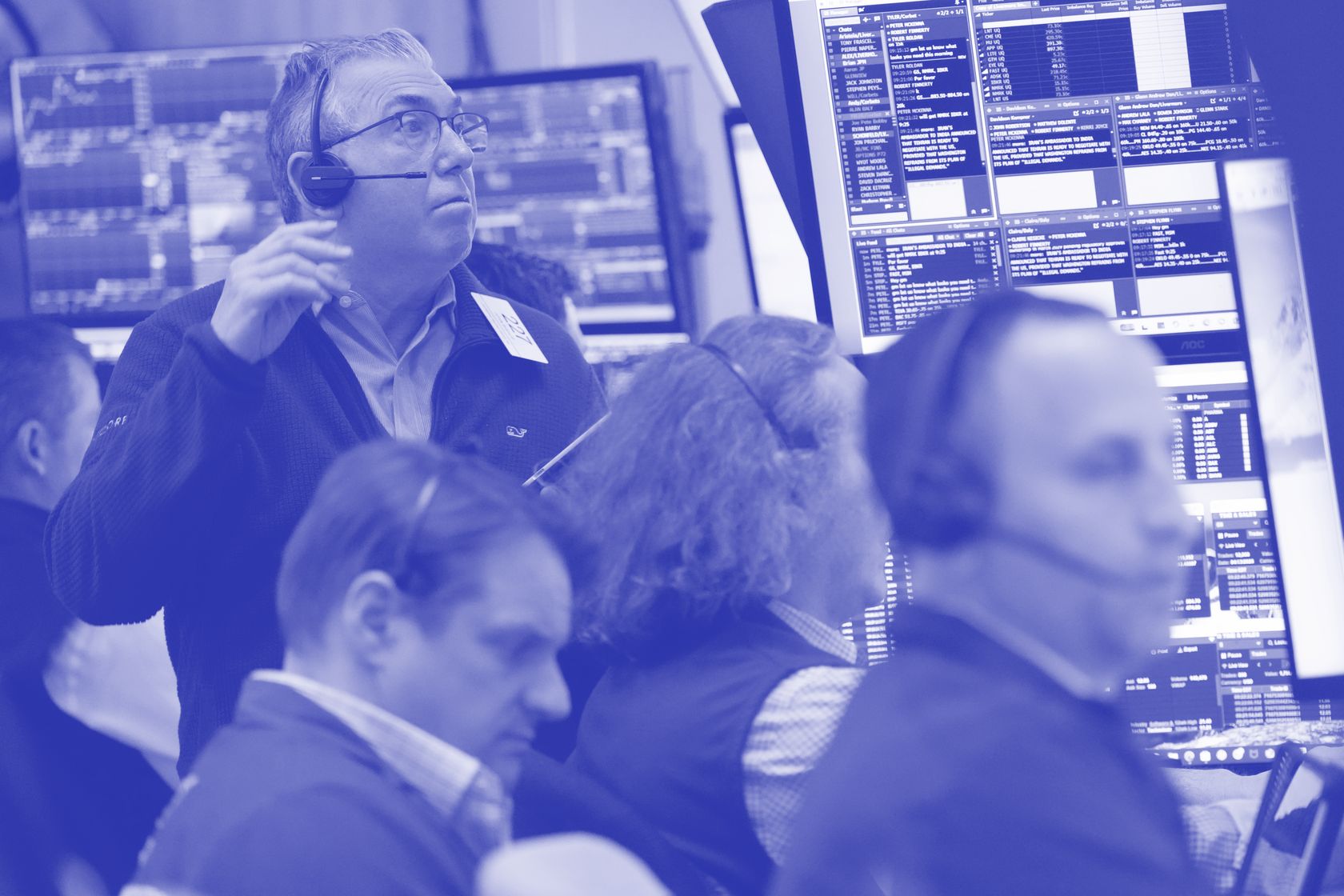
Peace pumping: The S&P 500 hit its first record since the Iran war began, lifted by unconfirmed reports that the US and Iran are considering a two-week ceasefire extension, although the White House press secretary Karoline Leavitt said reports that US President Donald Trump wanted to extend the ceasefire were “not true at this moment.” She then added “we feel good about the prospects of a deal.” US Treasury Secretary Scott Bessent said the US would not renew temporary waivers allowing sales of Russian and Iranian crude, and warned two unnamed Chinese banks of secondary sanctions if Iranian money was found flowing through their accounts. The S&P 500 rose 0.80% and the Nasdaq rallied 1.59%. The Dow Jones Industrial Average, however edged 0.15% lower. Shares in footwear maker Allbirds surged more than 400% after the company announced plans to pivot to AI computing infrastructure and rebrand as NewBird AI, funded by a USD50 million convertible financing deal. (Bloomberg)(WSJ)(Reuters)(NYT)
2.
Bank round out: Bank of America and Morgan Stanley capped Wall Street’s strongest quarter in years, with both banks setting equity trading records as the Iran war and market volatility delivered a windfall that pushed earnings well past analyst forecasts. BofA’s equity trading rose 30% to USD2.8 billion while commodities trading surged 60%, driven by oil and gold volatility. Net income rose 17.3% to USD8.16 billion, beating analyst estimates. Similarly, Morgan Stanley’s equity trading hit a record USD5.15 billion, up 25%, helped by relaxed capital rules that freed up resources deployed into its prime brokerage and macro trading desks. Profit of USD3.43 per share also beat the USD3 LSEG consensus. Across the six biggest US banks, first-quarter trading revenue rose 17% from a year ago to USD45 billion, on WSJ numbers. M&A advisory fees also surged, with Goldman Sachs and JPMorgan both up more than 80% to around USD1.5 billion and USD1.3 billion respectively. Morgan Stanley’s investment banking fees rose 36% to USD2.12 billion, while Bank of America’s rose 21% to USD1.8 billion. The strong results came alongside a record USD33 billion in share buybacks across the biggest banks, the FT reported, with JPMorgan, Goldman and Citi each setting repurchase records. (WSJ)(Capital Brief)(FT)(Bloomberg)
3.
Defence borrowing: Australia’s defence spending is set to increase by $53 billion over the next ten years, as the federal government seeks to respond to intensifying global risks. The government will today release the 2026 National Defence Strategy, aiming to map out the defence capabilities the country will require to meet challenges facing Australia’s strategic landscape. Defence Minister Richard Marles will release it during an address to the National Press Club which will state that access to private capital will be central to achieving the strategy’s key objectives. The government intends to pursue “every avenue of increasing defence capability quickly”, including “off-budget” spending programs for the ADF, through the use of private capital investments in major projects, Marles will say. The new funding will raise Australian defence spending to roughly 3% of GDP by 2033 using a new method to calculate the quantum, which when measured using NATO’s methodology, includes defence-adjacent spending. That pushes the percentage of GDP on military spending closer to the 3.5% level that has been requested by US President Donald Trump. (ABC)(The Guardian)(SMH)(The Australian)(Capital Brief)
4.
Live monopoly: Ticketmaster’s parent company Live Nation has been found by a jury to hold an illegal monopoly over the concert industry in the US, opening the door to the possible breakup of one of the world’s most powerful entertainment giants and leaving millions of overcharged fans potentially in line for compensation. The verdict came after four days of deliberations and a six-week civil trial. The jury found Live Nation illegally monopolised the market for ticketing services, concert ticketing and amphitheater use, and illegally tied its venues to its concert promotion services. US District Judge Arun Subramanian will determine damages and how to remedy the illegal conduct. Concertgoers overpaid by USD1.72 per ticket as a result, an expert appointed by the plaintiff said. Shares in rival platforms jumped on the verdict, with StubHub rising 3.5% and Vivid Seats climbing 9.3%. Live Nation shares fell 6.3%. (Bloomberg)(BI)(CNN)
5.
On wealth: A new filing revealed Google owned a 6.11% stake in SpaceX as of end-2025, worth USD122 billion ($170 billion) at the company’s targeted USD2 trillion IPO valuation. After SpaceX’s February merger with Musk’s xAI, that stake has likely been diluted to roughly 5%, but still worth around USD100 billion, according to Bloomberg. Speaking of wealth, Saudi Arabia’s near-USD1 trillion Public Investment Fund unveiled a new five-year strategy that will see 80% of its investments stay within Saudi Arabia, down from a high of 30% going overseas, while narrowing its focus to just six priority sectors. PIF governor Yasir al-Rumayyan said that The Line (the futuristic 100-mile steel and glass structure that was meant to be the showpiece of Saudi Arabia’s NEOM mega-development) is no longer a priority. It comes as Capital Economics forecast Saudi Arabia’s economy could contract by as much as 6.8% this year because of the Iran war. Elsewhere, Donald Trump again threatened to fire the Fed chair Jay Powell if he does not vacate his board seat when his term ends on 15 May and ruled out dropping a criminal investigation into him over the renovation of the Fed’s Washington headquarters. Meanwhile, the Fed’s Beige Book showed the Iran war was cited as a “major source of uncertainty that complicated decision-making around hiring, pricing and capital investment.” (Bloomberg)(Reuters)(FT)
6.
Super warning: Australia’s largest super funds have taken the extraordinary step of seeking regulatory approval to share sensitive intelligence as concerns mount over rising cybersecurity risks from Anthropic’s powerful new AI model Mythos. Capital Brief can reveal the industry’s peak body, the Association of Superannuation Funds of Australia (ASFA), is seeking authorisation from the ACCC to allow its members to share criminal intelligence and co-ordinate their responses to cyber-attacks as they try to protect Australian retirement savings from bad actors. If granted by the competition regulator, the application — unreported until now — would allow Australian super funds to alert each other to specific cyber-attacks they’ve identified and allow the industry to collectively respond, significantly increasing their ability to manage emerging fast-moving threats. ASFA’s membership base includes the biggest names in the $4.5 trillion sector, including industry funds AustralianSuper, CBUS and Hostplus as well as retail providers such as AMP, MLC and Vanguard. (Capital Brief)
7.
Dial up: Voice AI startup Phonely has raised USD16 million ($22.31 million) in a Series A to scale AI agents that handle business phone calls in a way that 90% of callers can’t tell they aren’t speaking to a human, according to co-founder and CEO Will Bodewes. The San Francisco-based company was co-founded by Bodewes and Nisal Ranasinghe, who runs its technology operations from Melbourne. The round was led by Base10 Partners with participation from Y Combinator, TSA Group, Etech Global Services and Engage CX, bringing total funding to USD19 million, the company said in a statement. Three of those investors (TSA, Etech and Engage CX) are also paying customers. Engage CX drove more than USD10 million in insurance policy sales using Phonely in the first four months of 2026 alone, the company said. According to the AFR, the raising values the company at USD100 million. “I think that you’re going to see 90-plus per cent of enterprises adopting voice AI in two to three years in some form,” Bodewes told the paper. “You are probably going to see a very significant reduction in low-level call centre staff,” he added. (Capital Brief)(Phonely)(Axios)(AFR)
8.
Luckey contracts: High-profile US startup founder Palmer Luckey’s defence tech play Anduril nearly doubled its revenue in Australia in 2025, as it benefits from lucrative government contracts to build Ghost Shark autonomous submarines for the Navy and counterdrone systems for the Air Force. Filings with the corporate regulator on 7 April show its Australian revenue nearly doubled to $213.3 million in the 2025 calendar year, of which more than 90% is tied to government contracts. Revenue came in at $111.8 million in 2024. While the company’s gross profit lifted 47.2% year on year to $126.6 million, its after-tax profit fell by 65.4% to $3.6 million. The company is set to receive even more business from the federal government for its Ghost Sharks under the National Defence Strategy that will be released today. Anduril has also signed a $7.6 million three-year contract to provide “situational awareness equipment” to the Defence Department and delivering a $30 million counterdrone detection system at the RAF base in Darwin. (Capital Brief)
9.
Revenue addicts: Anti-gambling campaigners accused state and territory governments of allowing Indigenous communities to be saturated with poker machines to produce tax revenue as the Albanese government rebuffs ongoing pressure for a federal regulator to police the activity. As new data showed the Northern Territory is more reliant on gaming taxes than other state and territory governments, the Alliance for Gambling Reform has warned significant harm is being caused by poker machines in Indigenous communities. Earlier this month, Anthony Albanese announced new limits on gambling advertising during sporting broadcasts in response to the You Win Some, You Lose More report by a parliamentary committee led by the late Labor MP Peta Murphy, but dismissed another of the committee’s recommendations — the creation of a federal gaming regulator. Alliance for Gambling reform chief executive officer Martin Thomas told Capital Brief state and territory governments were compromised on tackling gambling harm because they were “addicted” to the taxation revenue it produces. (Capital Brief)
