SEC questions whether OpenAI misled investors
Plus: US Core CPE rose in January; Tech giants inject US$675m into robot workers; Ukraine warns that Russia could break through defences in coming months.

Good morning. Here's what happened overnight and what you need to know today.

1.
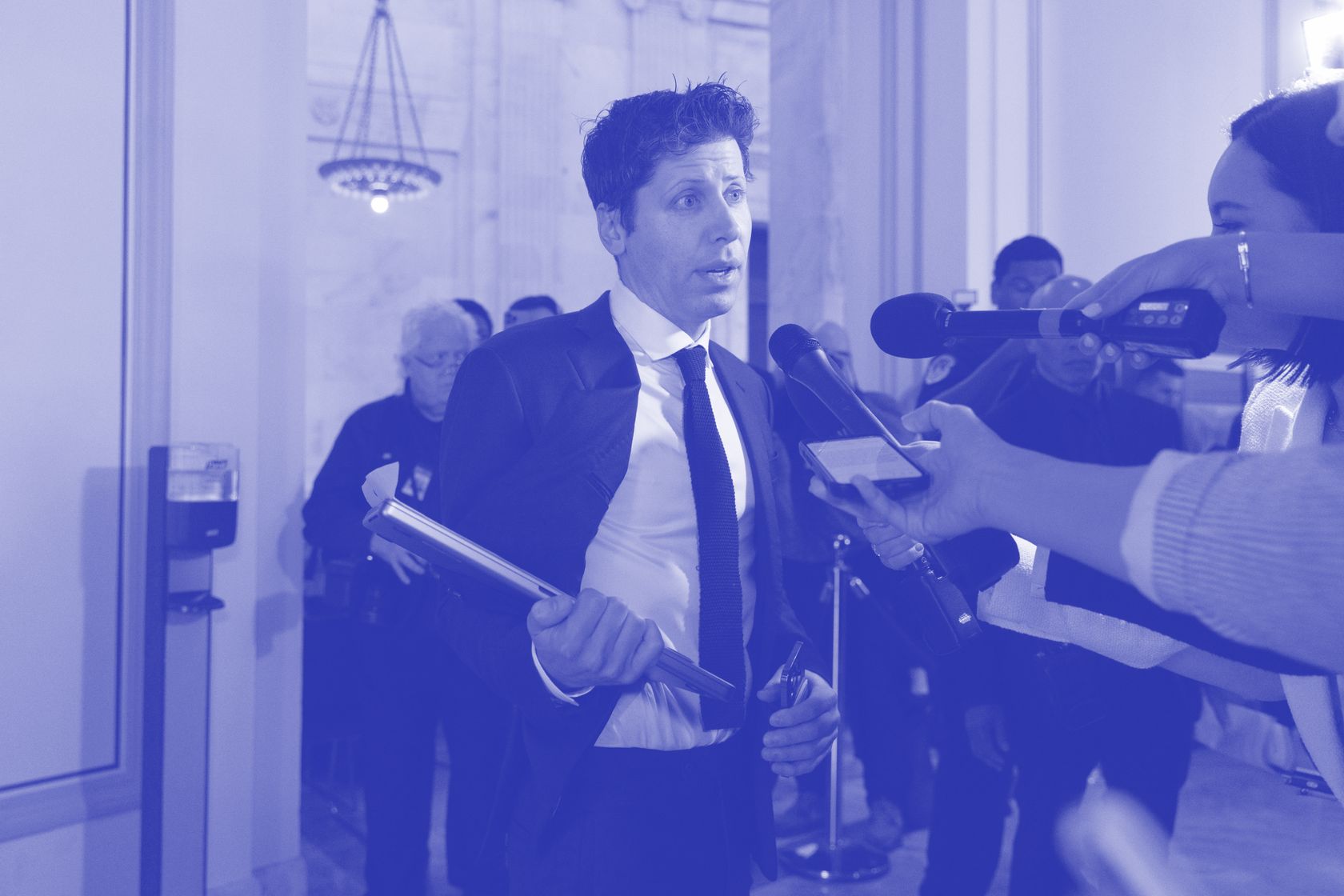
Under the microscope: The US Securities and Exchange Commission is investigating whether investors in the generative-AI giant, OpenAI, were misled during the company’s tumultuous leadership shakeup in November. According to unnamed sources cited by the Wall Street Journal, the SEC is examining internal communications of CEO Sam Altman as part of the investigation and have asked that certain senior OpenAI officials preserve internal documents. Last year, the OpenAI board decided to fire Altman as CEO and remove him from the board, alleging that Altman had not been “consistently candid in his communications.” After significant backlash, and some back and forth employment offers from Microsoft, Altman was reinstated as CEO and the board was reconstructed without Altman as a member. (Wall Street Journal)(Bloomberg)
2.
Taming inflation: The US’ core personal consumption expenditures price index (Core PCE) rose during January, at the fastest rate in almost a year. Core PCE, which removes the more volatile food and energy components, increased 0.4% from December. From a year ago, it advanced 2.8%. Economists consider core PCE to be a better gauge of underlying inflation than the overall index. This is the final PCE report that US Federal Reserve officials will see before they meet again in late March for their next rate decision, which is widely expected to see rates held steady by the central bank. Markets are anticipating US rate cuts to begin from June this year. (Commerce Department's Bureau of Economic Analysis)(Bloomberg)
3.
Robot workers: Tech giants Microsoft, OpenAI and Nvidia are backing a Silicon Valley-based startup, Figure AI, that seeks to transform the global labour market by building AI powered robots for the workforce. The USD675 million ($1.4 billion) funding round backed by the tech players values the company at USD2.6 billion. Shared via a post on X, Figure added that the funding round will be used to ramp up Figure’s timeline for the deployment of the commercial robots, and will specifically target AI training, manufacturing, deploying more robots, expanding engineering headcount, and advancing commercial deployment efforts. The post added that Figure will use Microsoft Azure for its AI infrastructure, training and storage. (Figure AI X post)(Financial Times)
4.
Ukraine warning: Ukrainian officials are concerned that advances by Russia in the coming months could break through Ukraine’s defences as early as the European summer. According to unnamed sources cited by Bloomberg, internal assessments of the battlefield situation are becoming increasingly negative as Ukrainian forces struggle with a lack of ammunition. Earlier on Thursday, Ukrainian army chief Oleksandr Syrskyi said via Telegram that shortcomings in decision making by Ukrainian commanders added to the problems facing Ukraine’s Avdiivka defences which were captured by Russia in February. This is contributing to concerns that defences around Kyiv may not be able to hold. Zelenskiy recently urged the US to push through almost USD60 billion ($92.1 billion) of funding which has been held up by Republican opposition over the past few months. (Bloomberg)(Reuters)
5.
Plastic closures: The country’s largest plastics maker, Qenos, is planning to shutter its manufacturing plants by the end of 2024, according to sources cited by The Australian. The closures could see hundreds of workers lose their jobs, adding pressure on the government as the latest in a string of collapses across industry and construction. Over the past six months, around 1650 manufacturing and construction businesses have entered insolvency. While the reports have not been formally confirmed, nor has the company notified workers of any closures, plant shutdowns could have a knock-on impact across other manufacturers who rely on the polyethylene produced by Qenos. (The Australian)
6.
CEO options: Uber CEO Dara Khosrowshahi has received options to buy Uber stock totalling USD136 million after hitting his performance target of reaching a USD120 billion valuation. The award was set before the ride-hailing app’s 2019 listing and had for a long time seemed unattainable as the company struggled rein-in hefty losses. However, Uber disclosed in an SEC filing that the target had been met after its equity value averaged at least USD120 billion on a fully diluted basis over 90 trading days (ending 6 February). Uber’s stock has jumped almost 150% over the past year, reaching a market valuation in excess of USD160 billion. (Financial Times)(SEC Filing)
7.
Animal testing: The US Food and Drug Administration has found issues with quality controls for animals and problems with record keeping at Elon Musk’s Neuralink facility. Neuralink, which focuses on inserting AI-powered microchips into human brains to control computers by thought, was given approval to test its implants in humans during February – it has carried out one such procedure that has been made public. According to Reuters, the FDA’s inspections were carried out in June last year, and found that the company’s California animal research facility was missing calibration records for instruments used in experiments. Neuralink conducts experiments on hundreds of animals. Inspections of Neuralink’s Texas facility did not find any problems. (Reuters)
8.
Predatory behaviour: Canada’s antitrust regulator will expand its investigation into whether Google is engaging in predatory pricing. The Competition Bureau said that it will extend its four year probe into the tech giant’s practices around online advertising, and that its has obtained an order from the Federal Court of Canada compelling Google to produce records and information. The investigation originally focused whether Google was impeding the success of competitors, and will now also consider whether it is using its market power across display-advertising-technology services to harm competition, and whether it is setting prices at a low level, with the aim of eliminating or weakening rivals (predatory pricing). (Wall Street Journal)(Competition Bureau Canada)
