Secret Service chief resigns over Trump attack
Plus: ASIC to expand private market oversight, targets market leaks; Spotify posts record Q2 profit; Top Democrats back Harris as polls show marginal lead over Trump in 2024 race.


Good morning. Here's what happened overnight and what you need to know today.

1.
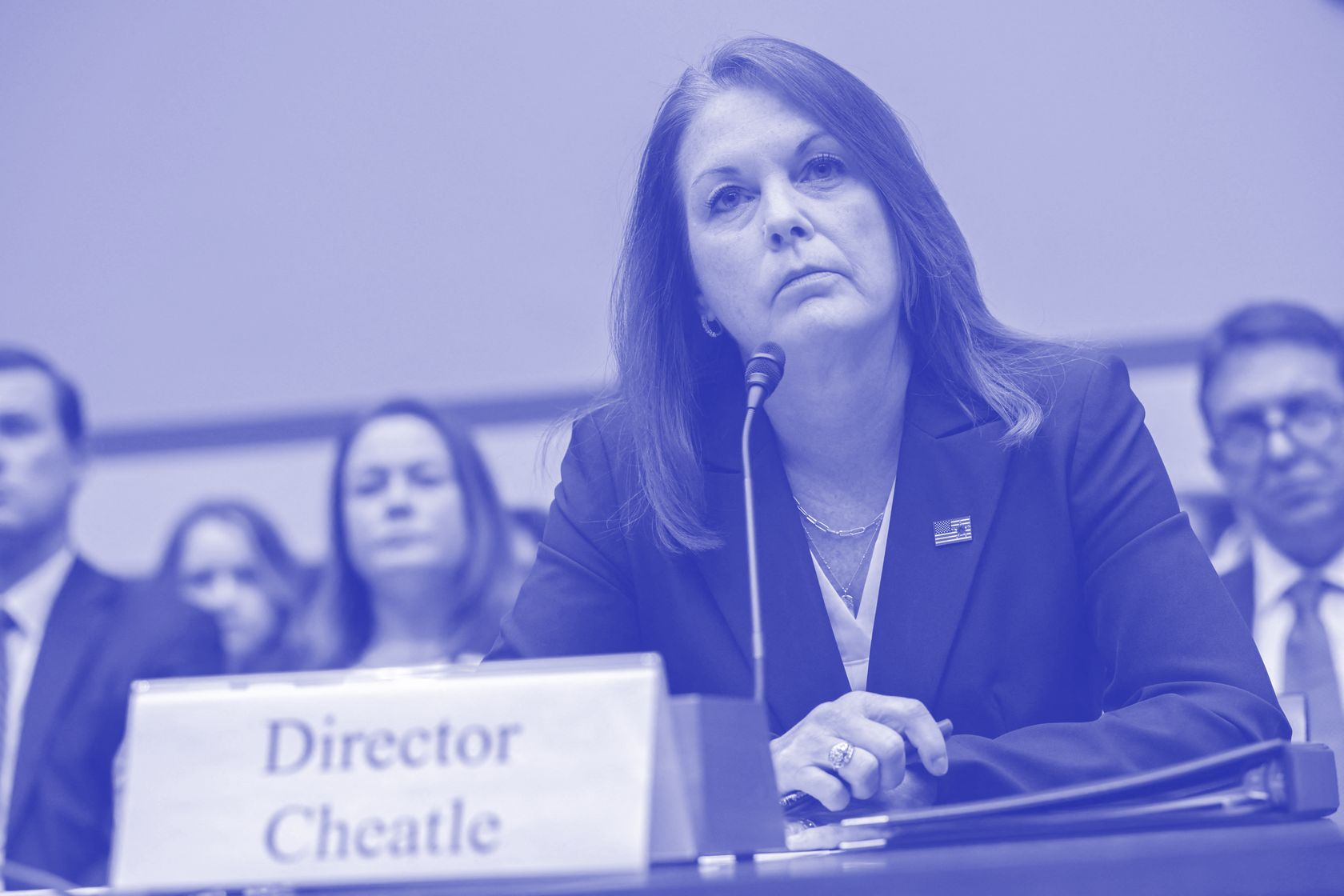
Security resignation: Secret Service Director Kimberly Cheatle resigned on Tuesday amid growing calls for her to step down over security lapses surrounding the attempted assassination of former President Donald Trump during a campaign rally. In an email to employees on Tuesday, Cheatle cited the agency's failure to protect Trump and the Pennsylvania rally attendees as the reason for her departure. “I do not want my calls for resignation to be a distraction from the great work each and every one of you do towards our vital mission,” the email announcing her departure says. President Joe Biden acknowledged her resignation and commended her for taking “full responsibility.” Cheatle faced heated criticism from lawmakers at a House Oversight Committee hearing on Monday, where she declined to provide specific details about the incident and an internal investigation. Biden said he would appoint a new director soon. (The New York Times)
2.
Leak patrol: The securities regulator ASIC will expand its market monitoring activities to private markets and consider techniques to discourage media leaks, following its review of Australia's listed equity markets. The review, covering 1 November 2018 to 30 April 2024, found Australia's markets to be among the cleanest globally despite temporary declines during the COVID-19 pandemic and late 2023. Anomalous trading accounts averaged 0.56% during the review period, with 4.75% of volume ahead of major public statements and announcements (MPSAs). The telecommunications sector was the cleanest and the real estate sector the least clean. The temporary declines in market integrity were driven by increased trading activity and media reports ahead of major announcements, the regulator said. The regulator plans to enhance misconduct detection using advanced data analytics tools and will expand its monitoring activities to private markets, including debt markets, as these have become more active and their interaction with public markets has grown, heightening the risk of insider trading. It is also considering techniques used in other jurisdictions to discourage media leaks from corporate advisers, companies and investors. (Capital Brief)
3.
Sound gains: Spotify shares surged to their highest level in over three years after reporting a record second-quarter profit and strong subscriber growth. The Swedish audio-streaming giant posted operating income of €266 million ($436 million), surpassing analysts expectations and reversing a €247 million loss a year earlier. Paid subscribers rose 12% to 246 million, and monthly active users increased 14% to 626 million, both exceeding estimates. CEO Daniel Ek pointed to innovations like fan-interactive features and automation as key growth drivers. Profitability boosting measures included workforce reductions, decreased podcast production and price hikes. The company forecast 639 million active users and 251 million paid subscribers for the next quarter, with projected operating income of €405 million. Shares jumped over 16% to $343.40 in New York. (Bloomberg)
4.
Harris hustle: US Senate Majority Leader Chuck Schumer and House Democratic leader Hakeem Jeffries backed Vice President Kamala Harris’ 2024 presidential candidacy, paving the way for her official nomination next month. Harris has garnered nearly every major Democrat's endorsement following Joe Biden’s announcement ending his re-election bid and has raised a record-breaking USD100 million ($151 million) between Sunday afternoon and Monday evening. With the backing of the two most powerful Democrats in Congress and a majority of delegates, Harris’ status as the Democratic presidential candidate is virtually assured ahead of a virtual vote expected by 7 August. She has taken over Biden’s campaign operations and USD96 million in cash on hand. “She is ready, she is willing, she is able to energetically and emphatically lead America into the future,” Jeffries said at a joint news conference. Meanwhile, a Reuters/Ipsos poll showed, Harris, who launched her campaign in the battleground state of Wisconsin on Tuesday, was leading Republican candidate Donald Trump 44% to 42% in a poll conducted Monday. (The New York Times)
5.
Biden address: US President Joe Biden will give an address from the Oval Office on Wednesday night (Thursday 10:00am AEST) to explain his decision to withdraw from the presidential campaign and outline his plans for the remaining six months of his term. Biden, who has not been seen in public since testing positive for Covid, returned to Washington on Tuesday after recovering at his vacation house in Delaware. In a social media post, he said he would discuss “what lies ahead, and how I will finish the job for the American people.” He intends to campaign for Vice President Kamala Harris and advance his domestic and foreign priorities. His travel schedule for the week was cancelled but will meet with Israeli Prime Minister Benjamin Netanyahu at the White House on Wednesday. It will be his fourth prime-time Oval Office address, with the most recent condemning the assassination attempt on former President Trump. (POTUS X account)(Politico)
6.
Brain gains: Some employees at Elon Musk's Neuralink are preparing to sell stock after the company's valuation surged post its first human trial, Reuters reported. Neuralink is expected to launch a tender offer next month to buy back shares from staff wishing to sell, according to sources cited by the news agency. The company's valuation in secondary market trades, is estimated at up to USD8 billion ($12 billion), double last year's value. Neuralink's initial human trial involved fixing an issue with implant threads on the patient's brain, the agency reported. More trials are planned in Britain and Canada. Employees given shares at the company's 2016 launch or soon after at a fraction of their current value are in for a windfall, with some buyers offering up to USD50 per share, which was also up from the USD35 per share price around when the trial began in January, the publication said. (Reuters)
7.
Llama update: Facebook’s parent Meta Platforms released the latest version of its Llama 3 artificial intelligence models on Tuesday, featuring 405 billion parameters – which compared to OpenAI’s one trillion parameters – and multilingual capabilities, advanced code generation and problem-solving. The models are available for free to developers, in a bid to foster innovation and increase engagement on Meta's networks, though some investors question the costs involved. Meta claims Llama 3 nearly matches, and occasionally surpasses, competitors like OpenAI's GPT-4o and Anthropic's Claude 3.5 Sonnet on key benchmarks. Meta also hinted at future multimodal versions incorporating image, video and speech capabilities, expected to compete with Google's Gemini and Claude Sonnet. (Reuters)
8.
Gaza crisis: Israeli tanks advanced deep into eastern Khan Younis in the southern Gaza Strip on Tuesday, forcing tens of thousands of Palestinian residents to flee, Reuters reported. Gaza health officials reported 80 Palestinian deaths since Monday, adding to a total of over 39,000 in nearly 10 months of conflict. The Israeli military said Hamas and other groups used the areas targeted to renew attacks, including firing rockets. It also said dozens of militants were killed, with weapon caches and tunnels destroyed. UN officials described “impossible” conditions, saying there was nowhere safe in Gaza. Israeli Prime Minister Netanyahu told hostage families in Washington that a potential deal for hostage release was near. Senior Hamas officials, meanwhile, told Reuters Netanyahu was “still stalling” on ceasefire deal negotiations. Palestinian rivals, Hamas and Fatah, agreed to form a unity government at talks hosted by China, Reuters reported citing a Chinese readout. The deal, meant to deliver a post-war Gaza administration, was quickly rejected by Israel, which won’t accept a Hamas-led government. (Reuters)
