Senate passes hate speech bill as Coalition fractures
Plus: Netflix offers all-cash offer to outbid Paramount for Warner Bros; Greenland’s PM asks citizens to prepare for unlikely US invasion; Stocks slide as Trump’s Greenland push and Japan fears spark bond sell-off.

Good morning. Here's what happened overnight and what you need to know today.

1.
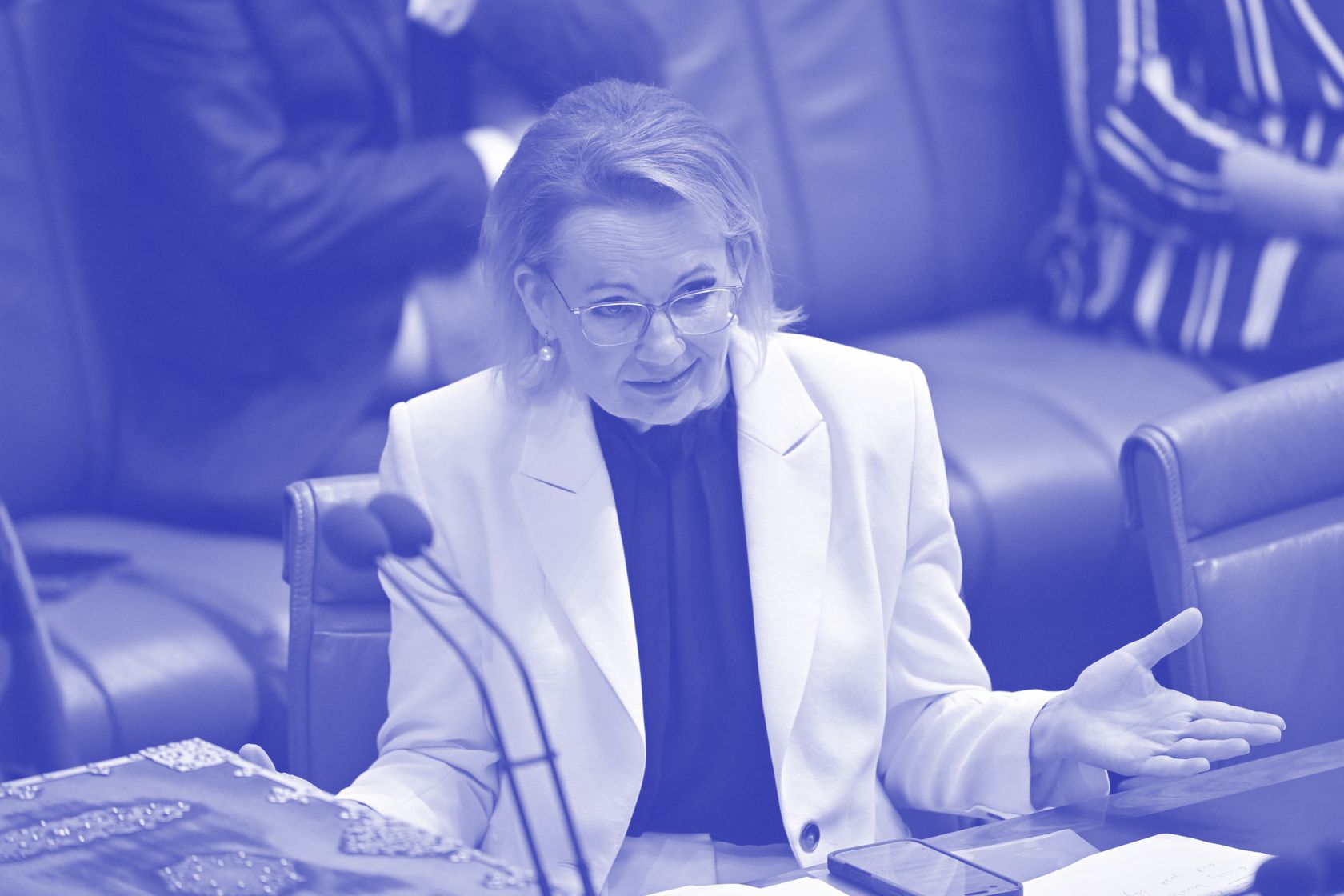
Bill breakdown: Labor’s contentious hate speech laws passed the Senate 38 votes to 22 in a late-night sitting on Tuesday, with the Liberals and Nationals dramatically splitting over the bill and raising questions about the future of the Coalition. The laws were introduced in response to the 14 December Bondi terror attack and give the minister powers to designate “hate groups”, make it easier to cancel or refuse visas for individuals spreading extremist views, and create new aggravated offences for religious leaders who preach hate or advocate violence. After initially declaring Labor’s plan “unsalvageable”, Opposition Leader Sussan Ley secured amendments to the plan in exchange for the Liberals’ support on Monday, including ASIO backing for banning groups, opposition leader consultation, a two-year review, and the removal of a racial vilification provision. But on Tuesday evening, Nationals leader David Littleproud said his party would oppose the bill if its push to refer it to a committee for further scrutiny failed. After the Liberals rejected the amendment in the Senate, the Nationals followed through and voted against the bill in its entirety. Littleproud said the decision “does not reflect on the relationship within the Coalition”. (Capital Brief)(APH)(AFR)(The Guardian)
2.
Sweetened deal: Netflix sweetened its bid to buy Warner Bros’ studios and HBO Max streaming business to an all-cash offer. The companies said that they expect the new offer to enable Warner shareholders to vote on the deal by April. The all-cash deal of USD27.75 ($41.23) per Warner Bros share replaces the previous cash-and-stock deal first submitted by Netflix in early December. The new offer reduces the amount of Warner Bros debt being placed on the Discovery Global unit by USD260 million. Having lined up more debt from US banks, Netflix now has USD42.2 billion in bridge loans in place. Netflix’s sweetened offer is aimed at expediting the sale process and addressing concerns by rival bidder Paramount Skydance that its hostile takeover bid is superior. Paramount last week threatened to launch a proxy fight for Warner Bros board seats. Netflix is due to release Q4 earnings at ~8:45am AEDT this morning. (Netflix-Warner Bros)(SEC filing)(Bloomberg)(Capital Brief)(WSJ)
3.
Arctic aggression: Donald Trump’s escalating push to take control of Greenland led Greenland’s Prime Minister Jens-Frederik Nielsen to call on citizens and authorities to prepare for a possible military invasion, even as he said it remains unlikely. Speaking in Nuuk, Nielsen announced a taskforce and new guidelines, including a recommendation for households to store five days’ worth of food. The US president yesterday posted AI-generated images of himself planting a US flag on Greenland, after warning he would impose tariffs on eight European NATO allies starting 1 February unless a deal is reached for the US to purchase the island. Denmark has deployed more troops and expanded its Arctic defence exercises, while European leaders in Davos denounced Trump’s approach. French President Emmanuel Macron called the tariffs unacceptable and said Europe would not give in to pressure. Late Monday, Trump threatened to impose 200% tariffs on French wines and champagnes in response to Macron’s refusal to join his Board of Peace initiative for Gaza. Meanwhile, tens of thousands protested in Nuuk and Copenhagen, many wearing “Make America Go Away” caps. EU and NATO leaders have scheduled meetings after Davos. (Reuters)(WSJ)(Bloomberg)
4.
Treasury tumble: Wall Street’s main indexes slid Tuesday and global markets fell into risk-off mode amid Donald Trump’s escalating dispute with European allies over his intention to take over Greenland. The Dow was 1.36% in afternoon trading, the S&P 500 down 1.64% and the Nasdaq 1.88% lower, as big technology stocks declined and the Nasdaq broke below its 50-day moving average. Gold reached an intraday record of USD4,754.20 a troy ounce, and silver jumped more than 8% to a record USD95.78. The US dollar fell and Treasury yields climbed to the highest since September, as investors reacted to Trump’s tariff threats over Greenland, a selloff in Japanese government bonds, and news that Denmark’s AkademikerPension would exit its entire USD100 million holding in US Treasurys due to concerns over the US fiscal outlook. Japanese government bond yields surged, with long-term rates hitting record or multi-decade highs, driven by expectations that its snap election could pave the way for tax cuts and expanded fiscal stimulus. The VIX jumped 23.39% to 19.57, its largest intraday rise since October. Meanwhile, shares in 3M were over 8% lower after it posted a weaker-than-expected outlook and warned Trump’s proposed tariffs could lead to an up to USD40 million hit this year. RAPT Therapeutics jumped nearly 64% after GSK agreed to acquire the US-based biopharmaceutical company for around USD2.2 billion. (Bloomberg)(Reuters)(WSJ)
5.
Quantum CTRL: An Australian company says it has solved commercial flight GPS jamming with quantum technology, achieving what it calls "actual commercial quantum advantage" — and it's betting the long-awaited computing revolution is only two to three years away. Q-CTRL's quantum-powered navigation systems deliver GPS-like accuracy without relying on satellite signals. "This is the first time since atomic clocks in the 60s and 70s that quantum systems are really delivering a net advantage in a commercially relevant application," Michael Biercuk, Q-CTRL CEO, told Capital Brief. The company has secured contracts across enterprise, defence and aerospace sectors, and deployed systems with the Pentagon and UK defence forces. First shipments begin this calendar year, starting with drones and unmanned systems. But quantum sensing technology, which is distinct from quantum computing in both physics and timeline, represents only one track of the company's strategy. Q-CTRL has also applied quantum machine learning to vehicle frame design optimisation, which despite being small-scale, is an indication of progress. (Capital Brief)
6.
Defence drills: Canada’s armed forces modelled a hypothetical US military invasion, a rare exercise driven by rising tensions after Donald Trump repeatedly suggested Canada could become the 51st state, The Globe and Mail reported. The conceptual model assumed US forces would overwhelm Canada’s land and sea positions within two days to a week, according to unnamed senior government officials cited by the Globe. In response, planners envisaged unconventional warfare, including ambushes, sabotage, drone warfare and improvised explosive devices, drawing on tactics used in Afghanistan by the mujahedeen and later the Taliban. A senior Defence Department official said Canada would have up to three months to prepare, with early warning signs including a breakdown in NORAD cooperation, the joint Canada-US aerospace defence agreement. Foreign Minister Anita Anand told Bloomberg Canada is strengthening its Arctic presence. “Canada will never be the 51st state,” Anand said. “We will always ensure that we stand foursquare behind our NATO allies.” Unnamed senior officials and multiple experts cited by The Globe and Mail and Bloomberg said a US invasion of Canada is considered highly unlikely and the scenario is purely conceptual. (The Globe and Mail)(Bloomberg)
7.
Flight to advice: Australia’s biggest superannuation funds are ramping up investment in advice as competitive outflows accelerate, particularly among members approaching retirement. Capital Brief analysis of the latest APRA data shows eight of the 10 biggest funds recorded negative net rollover figures last financial year, many for the second consecutive year, indicating members were jumping ship. In FY25, industry funds Cbus, Rest, Australian Retirement Trust and HESTA each lost more than $1 billion in so-called competitive flows — losing more money from members switching out than they gained from members switching in — even as they continued to grow balances and overall members. Aware and AustralianSuper lost between $300 million and $400 million on the measure, while Hostplus was broadly flat. UniSuper was the only major fund to clearly buck the rollover trend, adding $1.1 billion. While low fees and strong returns remain the north star of the superannuation industry, there is growing appetite for tailored advice as Australians age. (Capital Brief)
8.
Tariff limbo: The US Supreme Court did not issue a ruling Tuesday on the legality of President Donald Trump’s global tariffs, meaning it will likely be at least another month before the case is resolved. The court is heading into a four-week recess and is not expected to release opinions until 20 February. Arguments heard on 5 November suggested a majority of justices were doubtful Trump had authority under a 1977 law granting emergency powers. A ruling against him could deliver his most significant legal loss since returning to the White House and may lead to more than USD130 billion ($193 billion) in refunds, according to Bloomberg calculations. Separately, US Treasury Secretary Scott Bessent said Trump could announce his choice for Federal Reserve chair as early as next week. The final contenders are believed to be Rick Rieder, Kevin Hassett, Christopher Waller and Kevin Warsh. Bloomberg, citing unnamed sources, has reported Rieder has gained traction. The nomination could be complicated by the Trump administration’s probe into the Fed’s renovation and Powell’s comments to Congress, as Republican Senator Thom Tillis has threatened to oppose any nomination until the case is resolved. (Bloomberg)(Reuters)
