Seoul in crisis as Yoon declares martial law
Plus: China hits back at US with key metals export ban; BlackRock buys HPS in $18b private credit play; ASIC tables digital asset guidance for meme coins and digital wallets.


Good morning. Here's what happened overnight and what you need to know today.

1.
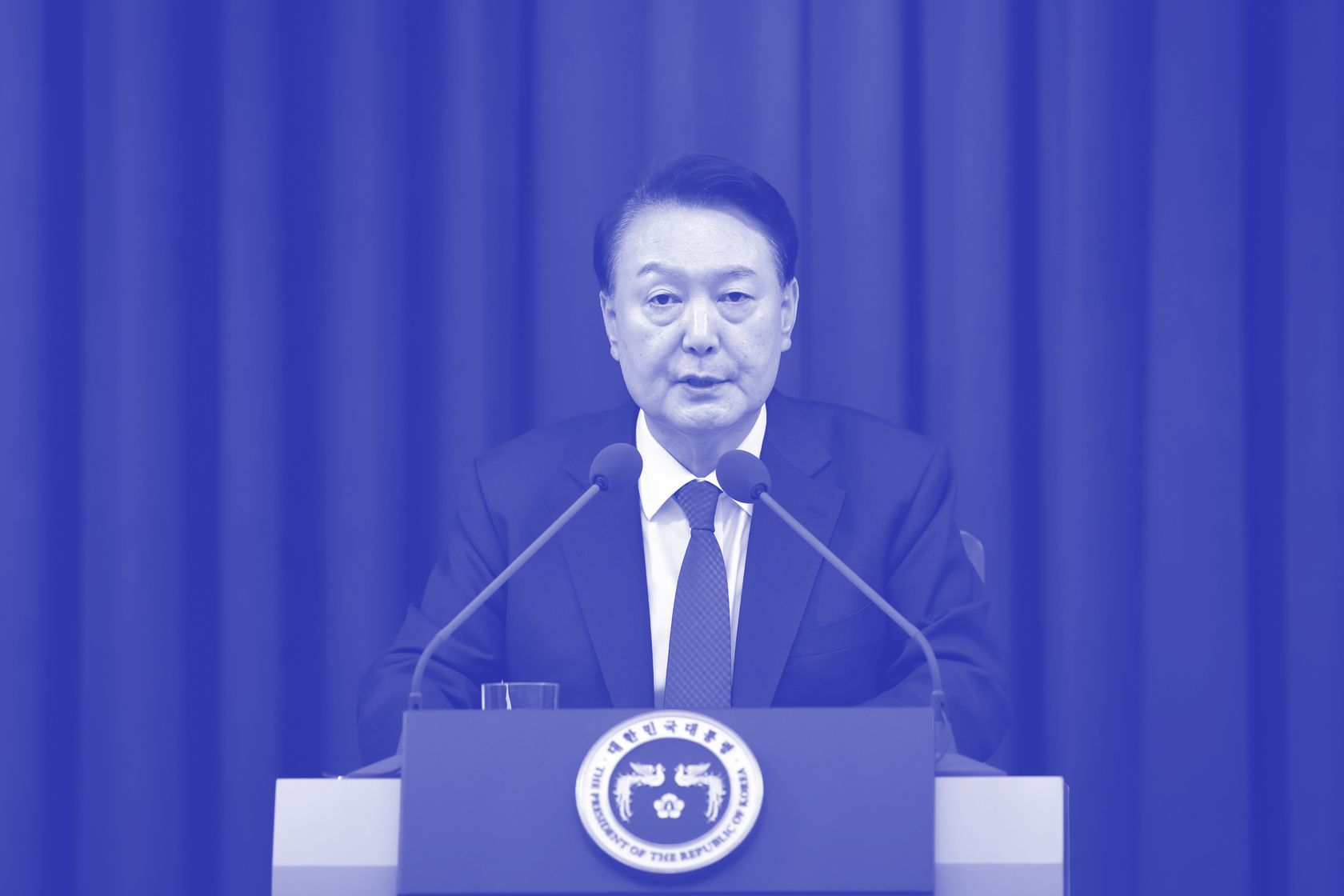
Martial law: South Korean President Yoon Suk Yeol declared martial law late Tuesday night, citing opposition parties’ alleged anti-state actions and support of North Korea. The announcement, made during a live broadcast, triggered a swift backlash, with troops briefly attempting to enter parliament. Lawmakers scaled fences and passed a 190-0 vote early Wednesday to reject the first martial law declaration in the country since 1980. Yoon claimed it was necessary to safeguard constitutional order and eradicate "pro-North Korean forces," but faced criticism from his own party leader, Han Dong-hoon, who called it unconstitutional. After the vote, the military said it would nonetheless uphold the martial order. The Korean won plunged and South Korea-linked ETFs also fell sharply. (Reuters)(Bloomberg)(Capital Brief)
2.
Tit-for-tat: China imposed an immediate export ban on minerals and metals used in chip making and for military applications to the US, including gallium, germanium, antimony, graphite and superhard materials—resources it overwhelmingly dominates globally. The move came a day after Washington unveiled the latest sanctions targeting China’s semiconductor sector and blacklisting over 100 Chinese firms over national security concerns. China produces 98.8% of the world’s gallium supply, 60% of germanium, and 48% of globally mined antimony, used in the production of ammunition, infrared missiles, nuclear weapons, batteries and photovoltaic equipment, so the escalating tit-for-tat measures further threaten a squeeze of critical supply chains. “To safeguard national security… China has decided to strengthen export controls on dual-use items to the US,” it added. Meanwhile, the Asian nation removed the last remaining sanctions on Australian abattoirs. (Capital Brief)(SCMP)(FT)(Bloomberg)(Reuters)
3.
Credit due: BlackRock will acquire HPS Investment Partners in an all-stock deal valued at approximately USD12 billion ($18.48 billion). It marks BlackRock’s third major private markets acquisition in 2024, following deals to buy Global Infrastructure Partners and Preqin. The deal will increase BlackRock’s alternative AUM by over 25% to nearly USD600 billion, The Wall Street Journal noted, boosting its private credit portfolio to USD220 billion. “Combining public and private credit is the future of fixed income,” BlackRock CFO Martin Small told the publication. HPS was carved out of JPMorgan in 2016 and manages USD148 billion in assets, specialising in direct lending and asset-backed financing. BlackRock will pay about 9.2 million shares valued at USD9.4 billion as of Monday's close, with 2.9 million more shares payable later under specific conditions. As part of the deal, expected to close by mid-2025, a new private financing solutions unit led by HPS leadership will be formed. (Blackrock)(HPS)(Reuters)(WSJ)
4.
Crypto path: ASIC released draft guidance on digital assets, outlining how existing financial product definitions may apply to 13 examples, including digital wallets and meme coins. Commissioner Alan Kirkland said it was impossible to offer complete regulatory certainty but said ASIC’s new guidance aligns with standards in Singapore, the EU and the UK. Industry leaders like Binance and BTC Markets welcomed the step but called for balanced regulations to promote innovation. Legislative reforms from Treasury are not expected before the next federal election, but ASIC’s finalised guidance is expected by mid-2025. (Capital Brief)
5.
Labor trend: US job openings increased to 7.74 million in October, up from a revised 7.37 million in September and more than economists expected. The Bureau of Labor Statistics JOLTS report showed layoffs in the US decreased to 1.633 million, the lowest since June, while quits rose to 2.1%, the highest since May, reflecting worker confidence. Hiring dropped by 269,000 to 5.313 million, attributed to disruptions from hurricanes and strikes. Professional and business services, as well as accommodation and food services, drove the rise in openings. The rise in job openings followed a sharp September decline. Hurricanes and strikes impacted October hiring, with economists anticipating a strong rebound in November. A Reuters survey shows they project 200,000 jobs were added last month with the unemployment rate slightly increasing to 4.2%. The data comes as Federal Reserve officials weigh another interest rate cut later this month. (Capital Brief)(BLS)(Reuters)(Bloomberg)
6.
Amazon chips: Amazon Web Services unveiled new AI hardware at its re:Invent conference, including the Trainium2-based Ultraserver and Project Rainier, a supercomputer built with Anthropic. Anthropic, backed by a USD4 billion ($6.17 billion) investment from Amazon, will use the supercomputer in 2025, which AWS says will be one of the world’s largest AI clusters. An Apple executive said the company is testing Trainium2 chips, expecting 50% cost savings, while AWS CEO Matt Garman said AWS’ next generation AI chip that is expected to increase power fourfold, the Trainium3 would debut next year. It comes as AWS aims to reduce AI costs and its reliance on Nvidia, a key partner that holds 95% of the USD117.5 billion AI chip market. “Today, there’s really only one choice on the GPU side, and it’s just Nvidia,” said Garman. “We think that customers would appreciate having multiple choices.” (Amazon)(Reuters)(WSJ)
7.
Musk’s bonus: Tesla CEO Elon Musk’s multibillion pay package was again rejected by Delaware Chancery Court Chancellor Kathaleen McCormick. Despite 84% of Tesla shareholders in June reapproving the package - now worth around USD101 billion - McCormick found the board had failed to prove the compensation was fair and criticised Tesla’s “ratification” strategy as violating settled law. Tesla plans to appeal the ruling, which also ordered the company pay USD345 million in legal fees. McCormick said Tesla made several material misstatements in its proxy statement regarding the vote and could not claim the vote was a “cure-all” to justify Musk’s pay. Critics, including Musk, argued shareholder votes are being disregarded. (CNN)(Reuters)
8.
Cbus gap: A Deloitte independent review of industry superannuation fund Cbus found deficiencies in its compliance with the best financial interests duty (BFID). The report identified a lack of consistency, appropriate process, governance and necessary rigour, making it impossible to conclude whether expenditure decisions were made for the "sound and prudent management of the trustee's business operations" or achieved their intended purpose. Despite those issues, all directors on the Cbus board met the "fit and proper" test. APRA, which imposed additional licence conditions in August following allegations regarding serious misconduct within the CFMEU, received the report on 29 November. Cbus has committed to addressing these issues through an APRA-approved action plan.(Capital Brief)
