Singapore’s Prime Minister to step down
Plus: Western leaders warn Israel against retaliation; Tesla to sack 14,000 workers in layoffs; Lockheed Martin secures US$17.7b missile contract.

Good morning. Here's what happened overnight and what you need to know today.

1.
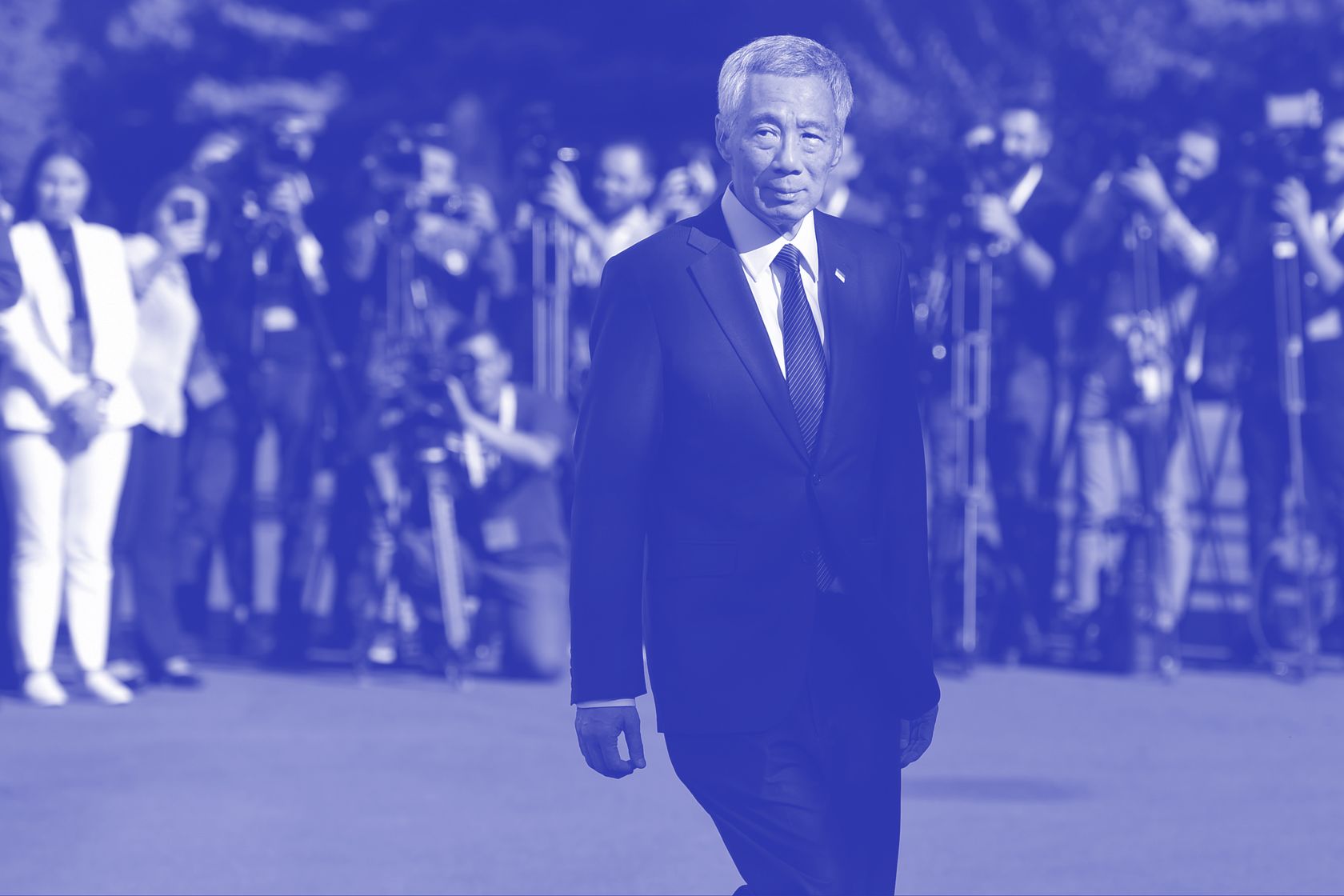
So Loong, farewell: Long-standing Prime Minister of Singapore, Lee Hsien Loong, has announced his plans to step down after 20 years at the helm. Lawrence Wong, Deputy Prime Minister and finance minister will become Singapore’s leader on 15 May, having been named as the heir apparent in the People’s Action Party’s (PAP) succession plan in 2022. The PAP has ruled Singapore since it achieved independence, but the party has been struggling to build public support to bolster the financial hub’s status since its poor election results in 2020. Lee is the son of Singapore’s founding leader, Lee Kuan Yew, and his departure will mark the country’s third leadership transition in its recent history. The 72-year-old Lee had originally planned to step down before turning 70, however those plans were delayed by the Covid-19 pandemic. (Capital Brief)
2.
Middle-East conflict: Israel’s War Cabinet reconvened on Monday to discuss its response to Iran’s drone and missile attack on the weekend, as Western leaders ramp up pressure on Israel to exercise restraint. French President Emmanuel Macron said Israel must avoid worsening the situation in the Middle East, UK foreign secretary David Cameron said the UK has made clear it won’t be involved in retaliatory strikes, and German Chancellor Olaf Scholz condemned Iran’s actions. The comments follow Biden’s call for Israel to “take the win,” having intercepted almost all of the over 300 projectiles launched by Iran. The oil market has remained calm on the back of Iran’s attack, with Brent crude even dipping below USD90 per barrel, in a surprise reaction to events which would usually send prices higher. Bloomberg reports that traders seem to have concluded, at least for now, that the attack was intended as a limited retaliation for a strike on its diplomatic compound, rather than the start of a region-wide escalation. (Bloomberg)
3.
Flat battery: Tesla will reduce its headcount by over 10% as demand for electric vehicles slows across the globe, hitting the world’s largest automaker. At the end of 2023, Tesla had over 140,000 employees globally, meaning the layoffs are likely to impact around 14,000 employees. The company reported its first year-on-year decline in quarterly deliveries since 2020 earlier this month. CEO Elon Musk sent an email to Tesla employees on Monday announcing the news, according to a report by the Wall Street Journal, explaining the company’s need to reduce costs and increase productivity as reasons for the layoffs. Musk said that Tesla had rapidly expanded and scaled up factories across the globe which lead to a duplication of roles and job functions. “As part of the effort, we have done a thorough review of the organization and made the difficult decision to reduce our headcount by more than 10% globally,” Musk’s email reads. “There is nothing I hate more, but it must be done.” (Wall Street Journal)
4.
Defence spending: Aerospace and defence giant, Lockheed Martin, has secured a USD17.7 billion ($27.48 billion) US missile defence contract according to unnamed sources cited by Reuters. The contract to develop the next generation of interceptors to guard the US against intercontinental ballistic missile attacks is expected to be confirmed as soon as Monday by the US Missile Defense Agency, which is already developing the Next Generation Interceptor (NGI) to modernise the current Ground-Based Midcourse Defense program. The first interceptor is planned to be operational in 2028. In 2023, sales of US military equipment to foreign governments rose 16%, to a record USD238 billion. (Reuters)
5.
Golden results: Goldman Sachs’ first quarter earnings published on Monday revealed that the group’s underwriting and trading divisions helped it post its highest earnings per share since 2021. The Wall Street giant recorded a 28% jump in net income during the first quarter of this year at USD4.1 billion, up from USD3.2 billion a year earlier and almost USD1 billion ahead of Bloomberg analyst forecasts. Shares in GS were up over 3% by mid-trading session on Monday. The results come as a relief for CEO David Solomon, who faced backlash in 2023 over his management of the bank and was forced to rethink the bank’s strategy and “play to our core strengths.” Goldman’s trading business was the bank’s clear leader for the quarter, with fixed-income traders delivering USD4.32 billion in revenue, and equity-trading revenue reaching USD3.31 billion, both coming in above expectations. Goldman’s asset and wealth management division reported an 18% increase in revenue from 12 months ago, reaching USD3.8 billion. (Capital Brief)
6.
Trump’s trials and…more trials: Presidential hopeful Donald Trump’s hush-money trial commenced on Monday in New York, with jury selection for the case expected to take at least a week. The case involves the alleged coverup of a payment to buy p*rn star, Stormy Daniels’ silence, as part of a scheme to bury stories that Trump feared could hurt his 2016 Presidential campaign. The case is the first time a former president has stood trial on criminal charges, as he fights 34 felony counts of falsifying business records. Jury selection is expected to be challenging as the judge, prosecutors and defence lawyers are expected to question hundreds of prospective jurors in what is a strongly Democratic state. In the 2020 election, Biden won 87% of the vote in New York. On his arrival to the courthouse on Monday, Trump told the media: “This is political persecution” and that the case “should have never been brought.” (Associated Press)(Wall Street Journal)
7.
Chipping-in: The Biden administration has awarded Samsung USD6.4 billion in grants to boost its chip production in Texas. The US Department of Commerce said on Monday that the funding from the 2022 CHIPS and Science Act will strengthen the resilience of the US semiconductor supply chain, advance US technology leadership, and fuel US global competitiveness. The investment will expand Samsung’s existing presence in the state, with two new fabrication plants, an R&D fabrication plant, a packaging facility and expansion of Samsung’s Austin facility. On the news, President Joe Biden said: “This announcement will unleash over $40 billion in investment from Samsung, and cement central Texas’s role as a state-of-the-art semiconductor ecosystem, creating at least 21,500 jobs and leveraging up to USD40 million in CHIPS funding to train and develop the local workforce.” (Department of Commerce press release)
8.
Fintech comeback: UK fintech Revolut’s valuation has seen a 45% raise by its shareholder, Schroders, which disclosed a £2.45 million writeup for its Revolut holding on Monday. Schroders’ writeup brought the valuation of the stake held by Schroders Capital Global Innovation Trust to £7.88 million as of December 31, from £5.44 million a year earlier. The stake gives Revolut a new and improved valuation of USD25.7 billion, up from USD17.7 billion last year. The raised valuation adds to hopes that the fintech sector is beginning to rebound, as the past 12 months have seen fintech funding decline as much as 70%, and valuations have struggled to come close to previous peaks. Revolut, like many fintechs, received its highest valuation of USD33 billion during a funding round in 2021. (Bloomberg)
