SpaceX Polaris crew in first ever private spacewalk
Plus: US data in line with Fed rate cut hopes; Albanese to join Quad allies for Indo-Pacific talks; UAE seen investing in OpenAI as “Strawberry” unveiled.


Good morning. Here's what happened overnight and what you need to know today.

1.
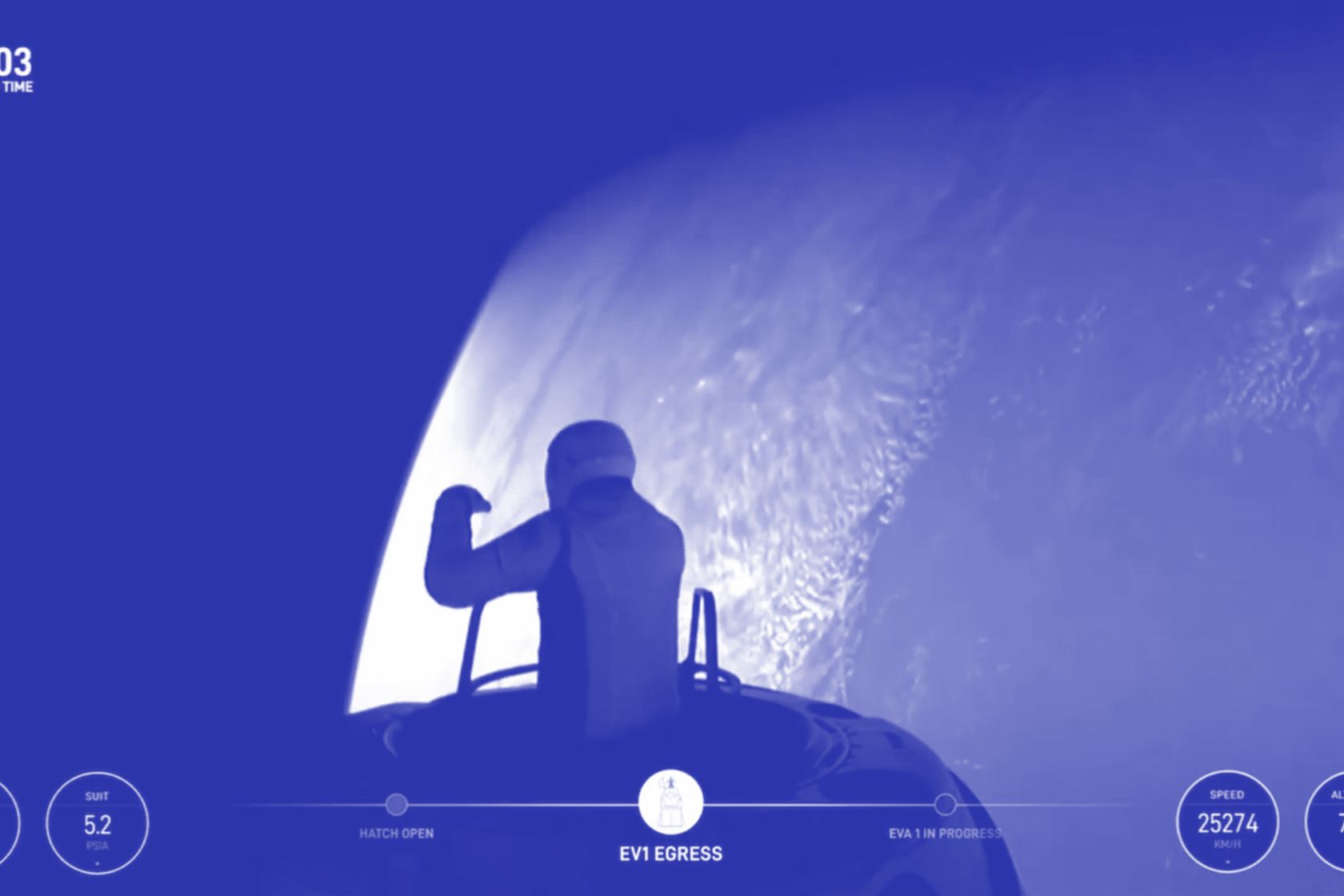
Space history: US billionaire Jared Isaacman and SpaceX engineer Sarah Gillis completed the first-ever private “spacewalk” on Thursday, marking a major milestone for the Elon Musk company and the growing commercial space industry. “Back at home, we all have a lot of work to do, but from here, Earth sure looks like a perfect world,” Isaacman said while standing in the hatch of the SpaceX Crew Dragon capsule framed against Earth’s glowing horizon. Bankrolled by Isaacman, founder of payments firm Shift4, in collaboration with SpaceX, the Polaris Dawn mission tested spacesuits and capsule depressurisation at an altitude of about 450 miles (730 kilometres). Isaacman and Gillis each spent less than 10 minutes tethered outside the capsule, conducting mobility tests while holding a hatch structure called “skywalker”. Isaacman hasn't disclosed the cost, but Reuters estimates the mission likely cost hundreds of millions, based on SpaceX’s USD55 million ($82 million) Crew Dragon seat price. (Capital Brief)
2.
Fed watch: US producer prices rose 0.2% in August while jobless claims increased slightly, reinforcing expectations for a 25-basis point rate cut from the Federal Reserve next week. The PPI move was larger than the 0.1% rise expected by economists polled by Reuters. Core PPI, which excludes volatile food and energy categories, climbed 0.3%, the same as in July, and 3.3% year-on-year. Applications for US unemployment benefits ticked up to 230,000, a marginal 2,000 increase but the first in three weeks. The total number was in line with expectations. Both the PPI and jobless claims data are consistent with the trend of mild but easing inflation and an orderly slowdown of the labour market. The data didn’t move expectations of a 25-basis point rate cut on 18 September. (Capital Brief)
3.
Quad squad: Anthony Albanese will attend a Quad leaders’ summit in US President Joe Biden’s hometown of Wilmington, Delaware, to discuss challenges and strategic priorities in the Indo-Pacific region. The 21 September summit will include Indian Prime Minister Narendra Modi and outgoing Japanese Prime Minister Fumio Kishida. It will be the final time Biden and Kishida participate, as neither leader is seeking to extend their leadership in upcoming elections. The allies plan to deliver “concrete” outcomes at the summit, CNN reported citing a Biden administration official. That will include a “major” initiative in health and health security, a humanitarian and natural disaster response collaboration. The summit will also focus on efforts to build on the existing Indo-Pacific Partnership for Maritime Domain Awareness, which aims to counter China's aggression in the South China Sea, the official said. In a statement, Albanese said the leaders would “discuss important challenges facing the Indo-Pacific and strengthening the Quad’s cooperation.” (Capital Brief)
4.
OpenAI oasis: The UAE’s state-backed MGX fund, which specialises in artificial intelligence projects, is in talks to invest in OpenAI as part of its latest fundraising round, The Wall Street Journal reported citing unnamed sources. The ChatGPT maker is expected to raise up to USD6.5 billion ($9.67 billion), potentially valuing OpenAI at USD150 billion, nearly doubling its USD86 billion valuation from last year. Thrive Capital has committed USD1 billion, with talks ongoing involving Microsoft, Apple and Nvidia. OpenAI CEO Sam Altman, who is reportedly courting UAE leaders for chip-building initiatives, is considering altering its corporate structure to remove a profit cap on investor returns, the sources said. Though currently unprofitable, OpenAI’s annualised revenue has reached USD4 billion, the sources added. Meanwhile, the company introduced a new AI model, internally called "Strawberry" and officially named o1, designed to handle more complex reasoning tasks such as multi-step math and coding problems. (OpenAI blog post) (WSJ)
5.
Moderna plunge: Moderna stock plunged by 11.95% after the biotech firm slashed its R&D budget by USD1.1 billion ($1.64 billion) and lowered its 2024 sales guidance. The company now expects sales of USD2.5 billion to USD3.5 billion, down from a prior range of USD3 billion to USD3.5 billion, its second expectation cut this year. It pushed back its cash flow break-even point by two years to 2028 citing regulatory setbacks for key products, including flu and cancer vaccines. The company's share price has fallen over 50% since its 2024 peak in May. Moderna said it expected to launch 10 new drugs by 2027, including next-generation Covid and flu vaccines, but said it would deprioritise multiple programs, including a heart disease drug co-developed with AstraZeneca and its RSV vaccine for infants. (Moderna)(Investor’s Business Daily) (Reuters)
6.
Auto allies: General Motors and Hyundai have agreed to look for areas to collaborate on vehicle development, supply chains and clean-energy technologies. The companies signed a non-binding memorandum of understanding to leverage their complementary strengths, reduce costs and accelerate product delivery, they said in a statement. The collaboration can include electric, hydrogen and internal combustion engine vehicles, as well as combined sourcing of materials like batteries and steel, they said. Both GM and Hyundai have ambitious electric vehicle production plans but face challenges, including rising costs and slower-than-expected sales. The partnership comes after GM scrapped a similar agreement with Honda.(Joint statement)(Reuters)(NYT)
7.
Rate cut: The European Central Bank (ECB) cut its key deposit rate by 25 basis points to 3.5%, in its second reduction this year amid receding inflation but also emerging concerns about the economy. Growth forecasts were lowered for 2024 to 0.8%, down from 0.9%, with projections for 2025 and 2026 also trimmed. Like other central banks, the ECB is now more confident that inflation is returning to its target range, but the eurozone's economy is weakening due to sluggish household spending and declining external demand. ECB President Christine Lagarde said the decision to cut was unanimous, noting there were downside risks to growth while service inflation remained a concern. Markets are fully pricing in a quarter-point rate cut by year-end but are cautious about further reductions. (Capital Brief)(ECB)
8.
Jain’s trim: Ajit Jain, Berkshire Hathaway’s long-serving insurance executive, sold over half of his Class A shares in the conglomerate, Reuters reported citing a regulatory filing. Jain sold 200 Class A shares on 9 September for about USD139.1 million ($206.90 million), averaging USD695,418 per share. Of these, 104 shares were directly held, while 96 were owned by family trusts. The reason for the sale was not disclosed. Berkshire’s share price peaked above USD727,000 just days before the sale, as its market valuation topped USD1 trillion. CFRA Research analyst Cathy Seifert told Reuters the sale might reflect personal reasons rather than concerns about Berkshire’s prospects. Jain, who joined Berkshire in 1986, still holds 166 Class A shares and oversees 124,308 Class B shares through his nonprofit foundation. (Reuters)
