Supreme Court rejects Sacklers’ immunity in Purdue Pharma settlement
Plus: Chalmers to launch reforms to boost new economy; US Supreme Court rules on SEC powers, abortion and environment but Trump immunity pending ahead of debate; Massive Louisiana LNG project cleared.


Good morning. Here's what happened overnight and what you need to know today.

1.
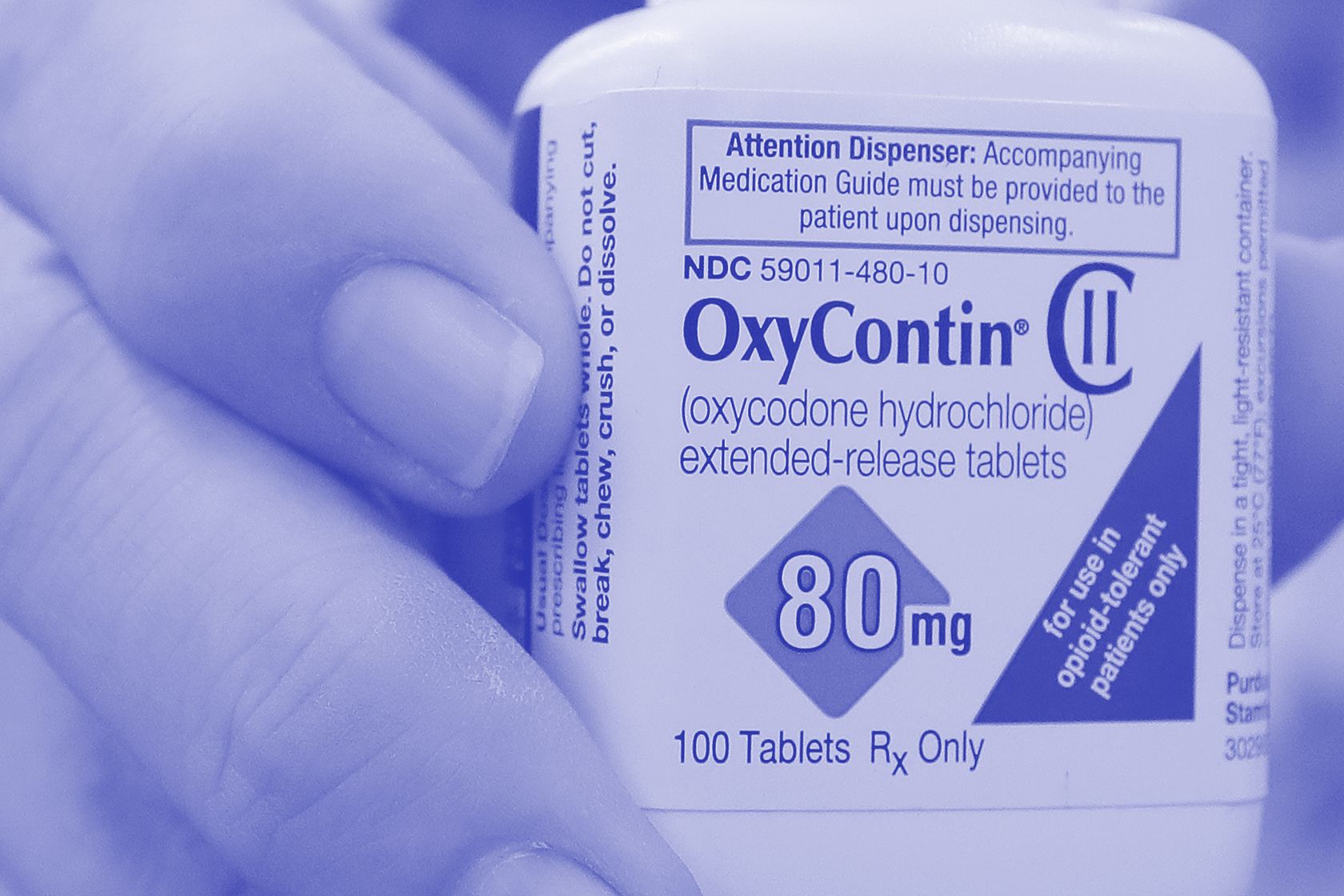
OxyContin block: The US Supreme Court blocked a USD10 billion ($15 billion) bankruptcy settlement deal involving Purdue Pharma and the Sackler family, ruling the owners of the company behind the addictive painkiller OxyContin cannot be shielded from lawsuits over their role in the opioid crisis. The narrow 5-4 decision, authored by Justice Neil Gorsuch, ruled that bankruptcy courts lack the authority to block lawsuits against third parties who haven't filed for bankruptcy themselves. It also criticised the Sacklers for seeking extensive protections without fully leveraging their assets. Purdue Pharma filed for bankruptcy in 2019 and negotiated a deal requiring the Sacklers, who had not declared bankruptcy, to contribute up to USD6 billion over 18 years to an overall deal valued at up to USD10 billion. That was earmarked for states, local governments, tribes and individuals, to address the opioid crisis, but granted the family immunity from future lawsuits. Justice Brett Kavanaugh, dissenting, said the ruling was “devastating” for over 100,000 opioid victims and warned of broader implications for other bankruptcy settlements involving mass injury claims. While 95% of claimants supported the settlement, the remaining objected to the Sacklers retaining part of their wealth while evading further accountability. (NPR)(Financial Times)(The Guardian)(The New York Times)
2.
Future fuel: Treasurer Jim Chalmers will release consultation papers on production tax credits today, aiming to introduce reforms that spur investment in Australia's new economy. In prepared remarks to address the Citi A50 Australian Economic Forum, Chalmers says the papers seek input on the reforms' design and implementation. "Our production tax credits will incentivise investment in renewable hydrogen, boost production of critical minerals, and create jobs and opportunities for Australians," Chalmers will state. He will also reveal May's financial statement, to be released today by the Department of Finance, will confirm the Albanese government is on track for a second consecutive surplus. The government will introduce the Future Made in Australia legislation to Parliament next week. The legislation will outline a national interest framework to identify sectors with a comparative advantage or economic security needs and introduce a new assessment process to remove investment barriers. (Capital Brief)
3.
Blockbuster Thursday: The US Supreme Court issued rulings on three other cases besides Purdue's, involving the environment, SEC enforcement powers, and abortion rights. However, it did not address the immunity case concerning former President Donald Trump before the first presidential debate. In a 6-3 decision, the court ruled against the SEC’s use of internal tribunals for fraud cases, following an appeals court decision that deemed these tribunals unconstitutional under the Seventh Amendment. The case was initiated by George Jarkesy, who challenged an SEC ruling that fined him and his company for alleged fraud. Additionally, the court allowed abortions in medical emergencies to continue in Idaho for the time being and temporarily blocked an EPA air pollution rule. The court still has six pending cases, including Trump’s attempt to avoid prosecution for trying to overturn the 2020 election results, with more opinions expected on Friday, Monday, and possibly beyond. (The New York Times)(Bloomberg)
4.
LNG greenlight: US regulators approved the construction of a highly controversial USD10 billion ($15 billion) LNG project in Louisiana, despite opposition from environmental groups. The Federal Energy Regulatory Commission (FERC) voted 2-1 in favour of the private equity-backed Calcasieu Pass 2 LNG plant, with outgoing Commissioner Allison Clements dissenting due to concerns over significant greenhouse gas emissions. The Venture Global LNG project, which environmentalists have dubbed a “carbon bomb,” aims to supply 20 million metric tons of liquefied natural gas annually to customers in Europe, Japan, China and US exporters. The project paves the way for Venture Global to become the second-largest US LNG exporter. It's the first plant to win a construction authorization since the Biden administration in January put a pause on future LNG export permits to review economic and environmental implications. The project still requires approval from the US Department of Energy before it can proceed to construction. (Reuters)(Financial Times)
5.
Boeing bungle: The US National Transportation Safety Board (NTSB) has sanctioned Boeing for “blatantly violating” investigative regulations by disclosing non-public details to reporters regarding an ongoing investigation into why a door panel blew off an Alaska Airlines jet mid-flight in January. The NTSB said Boeing violated protocols by briefing media on Tuesday, 25 June, even though “few entities know the rules better than Boeing,” given their involvement in “many” NTSB investigations over the past decades. Elizabeth Lund, Boeing’s recently appointed head of quality for commercial aeroplanes, conducted the briefing, revealing that missing paperwork had led to bolts not being installed on the door plug of the 737 MAX jet, resulting in its mid-air blowout. The briefing, held under embargo for Thursday publication, was intended to discuss quality improvements at Lund’s division. Boeing will remain a party to the ongoing investigation into the incident but will lose access to unpublished information and will not be allowed to ask questions at an investigative hearing in August. The NTSB is also referring Boeing's conduct to the Justice Department, which is weighing criminal charges against the company. Boeing said it regretted the comments overstepped the NTSB's role as the source of investigative information. (NTSB statement)(CNN)(Reuters)
6.
Stay safe: Taiwan advised its citizens to avoid non-essential travel to China, Hong Kong and Macau unless absolutely necessary, due to rising tensions. The warning follows Beijing's move last week to criminalise Taiwanese "separatism," including a threat of the death penalty for “diehard” Taiwan independence separatists. Taiwan's Mainland Affairs Council spokesperson Liang Wen-chieh said China’s new guidelines represent a serious threat to Taiwanese citizens' safety. Beijing views Taiwan as its territory and has increased pressure since President Lai Ching-te, seen as a "separatist," took office last month. Despite offers for talks, China has rejected dialogue, asserting its sovereignty over Taiwan. (Reuters)
7.
Dragon cartel maze: A global money laundering network involving Chinese underground banks and Mexican drug cartels is fuelling the fentanyl crisis in the US and expanding organised crime in Europe, the Financial Times reported. Chinese organised crime groups have significantly expanded their operations globally due to surging fentanyl revenues, using encrypted communications and mirror transfers via Chinese bank accounts to evade surveillance. The network sells cartel dollars to wealthy Chinese looking to bypass capital controls, integrating laundered money into the legitimate economy by purchasing luxury goods and property. Law enforcement agencies worldwide, including those in Italy and the UK, are investigating similar collaborations, the paper said. Recent arrests and some increased international cooperation indicate a heightened focus on combating these operations. However, the capital flight from China, driven by political tightening and economic uncertainty, has exacerbated the situation, creating vast demand for the laundering services. (Financial Times)
8.
AI letdown: Shares in chipmaker Micron Technology dropped as much as 7.9% on Thursday, US time, after the company's Q4 revenue forecast of USD7.6 billion ($11.43 billion), plus or minus USD200 million, failed to meet high investor expectations despite strong AI-driven demand. Micron, a key provider of high-bandwidth memory (HBM) chips for advanced AI systems, had seen its stock rise 67% this year. However, analysts highlight that even strong performance can seem insufficient when share prices have nearly tripled in 18 months. Peers Nvidia, Broadcom, Intel and Qualcomm were also seeing declines before the close. Some analysts remain optimistic about Micron's market position, suggesting the stock's dip is a buying opportunity, given Micron's 12-month forward price-to-earnings ratio stands at 17.07, below Nvidia's 40.22 and the industry median of 23.46. (Reuters)
