Third day of Israel-Iran conflict rocks markets
Plus: Amazon to invest $20b in Australian AI and cloud; Albanese to push back on US tariffs and AUKUS pressure at G7; US-China trade deal left key issues unresolved, Reuters reports.

Good morning. Here's what happened overnight and what you need to know today.

1.
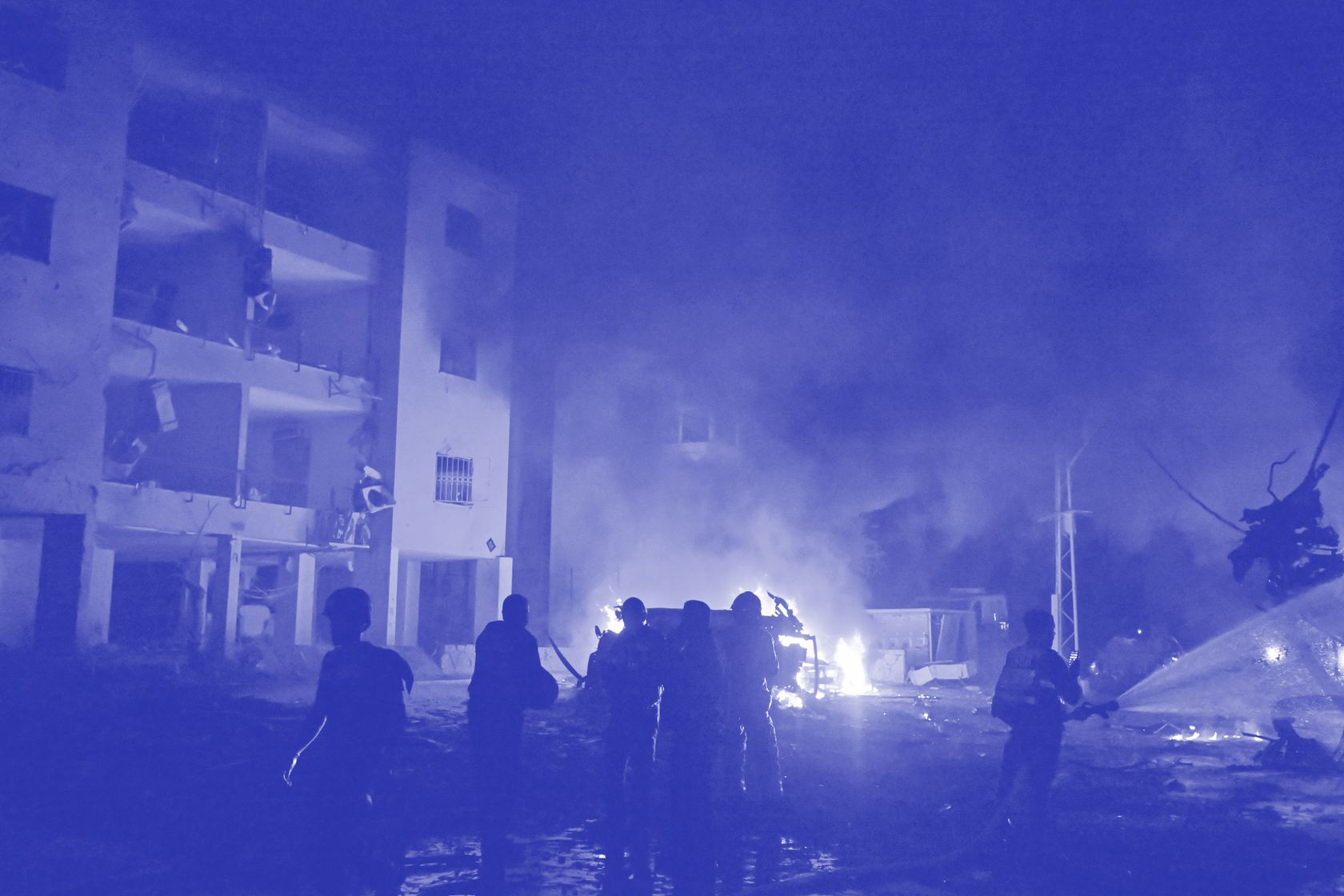
Mid-east conflict: Israel and Iran have bombarded each other for a third day, raising fears the conflict could spread across the key oil-producing region. Israel launched “Operation Rising Lion” on Friday, striking nuclear and military sites, killing top commanders and scientists. Iran responded with missile barrages. Iran said 78 people were killed on Friday, at least 60 on Saturday and more have died since. Israeli emergency services reported at least 14 deaths from Iranian strikes. Amid the escalation, unnamed US officials told media that Donald Trump vetoed an Israeli plan to kill Iran’s Supreme Leader Ayatollah Ali Khamenei, as it would destabilise the region. Trump warned Iran not to strike US targets, and predicted Iran and Israel “will make a deal.” Netanyahu said “Iran will pay a very heavy price” for the deaths of civilians. Oil prices surged as much as 14% on Friday before settling near USD73 a barrel, and further volatility is expected as the conflict escalates. Nuclear talks between the US and Iran scheduled for Sunday were cancelled. (Capital Brief)(Reuters)(AP)
2.
Deal downunder: Amazon will invest $20 billion to expand, operate and maintain its data infrastructure in Australia from 2025 to 2029, working to boost the country’s artificial intelligence capabilities. PM Anthony Albanese said the investment “is the largest … our country has seen from a global technology provider, and is an exciting opportunity for Australia to build AI capability using secure, resilient infrastructure.” The tech giant said it will invest in three new solar farms in Victoria and Queensland, run by European Energy, to support the expanded local cloud infrastructure. Amazon said it remains the largest corporate purchaser of renewable energy globally. Capital Brief gained an inside look at the Austin, Texas offices of Annapurna Labs, the chip design company Amazon acquired in 2015 for a reported USD350 million ($539.7 million), for a clearer picture around AWS’ silicon (Trainium2 processors) and how their ‘bang-for-buck’ product holds up next to Nvidia. (Capital Brief)(Capital Brief)
3.
G7 summit: Anthony Albanese will meet Donald Trump face-to-face for the first time on Tuesday at the G7 summit in Canada, where he will push back on calls to lift Australia’s defence spending and seek relief from US tariffs. The meeting follows a Pentagon review of the AUKUS pact to ensure it meets Trump’s “America first” agenda. Albanese will argue Australia is already providing substantial support and will emphasise the agreement’s mutual defence benefits. He also plans to raise concerns over 50% tariffs on Australian steel and aluminium, a 10% levy on other goods, and biosecurity rules affecting US beef imports. He will offer guaranteed critical minerals supply and make the case for free trade. Leaders at the summit are also expected to press Trump on Israel-Iran tensions, with European governments seeking clarity on US strategy and possible de-escalation. No joint communiqué will be issued, in a bid to avoid conflict among G7 members. (AFR)(Reuters)(The Guardian)
4.
Sticking point: The trade agreement struck by the US and China last week left key issues on export restrictions tied to national security unresolved, Reuters reported citing unnamed sources. The omission could threaten a more comprehensive deal between the nations. The report found that China did not commit to granting export clearance for select rare-earth magnets needed by US military suppliers in fighter jets and missile systems. The US maintains export curbs on China’s purchases of advanced artificial intelligence chips due to concerns that they have military applications. At the London talks, US officials reportedly signalled that they may look to extend existing tariffs on China for a further 90 days beyond the 10 August deadline which had been agreed to in Geneva last month. China also reportedly promised to fast-track approval of rare-earth export applications from non-military US manufacturers for which thousands of applications are currently pending. (Capital Brief)(Reuters)
5.
No kings: A manhunt remains underway in the US after the killing of a Democratic politician and her husband in Minnesota and the shooting of a second lawmaker and his wife on Saturday. Law enforcement says that a man impersonating a police officer fatally shot Minnesota representative Melissa Hortman and her husband in their home. The same suspect, Vance Luther Boelter, allegedly also shot senator John Hoffman, a Democrat, and his wife. Authorities found a list of public officials in Boelter’s vehicle and Minnesota Governor Tim Walz has called the shootings acts of targeted political violence. The attacks came during a weekend of widespread ‘No Kings’ marches across the US, with millions of people gathering across the country to oppose the Trump administration. Organisers said that over 5 million protesters participated, on the same day that Trump staged a USD45 million ($69.4 million) military parade in Washington to commemorate the US Army’s 250th anniversary. (WSJ)(Reuters)(Bloomberg)(FT)
6.
Funding drop: Funding for Australian HR tech and edtech startups has plunged, according to a new report by venture capital firm Giant Leap and data provider Cut Through Venture. Investment in HR and DEI startups dropped from $535 million in 2022 to $155 million in 2024, with deals falling from 27 to 13. Edtech funding declined from $344 million to $54 million, with just two deals in 2024. Giant Leap partner Rachel Yang attributed the drop to a slowdown in hiring, wider economic challenges and a recent “DEI kind of backlash.” In contrast, startups tackling social and environmental problems remained more resilient. Impact startups accounted for 41.5% of early-stage investment in 2024, up from 38.9% in 2022. Climate and health tech companies drew more than a quarter of all deals and half of total funding in the first quarter of 2025. (Capital Brief)
7.
War in Ukraine: Russian forces carried out an overnight attack on the Kremenchuk oil refinery, which supplies fuel to Ukraine’s military forces in the Donbas region. Russia’s defence ministry said via Telegram that it struck the target early Saturday morning, with “precision-guided air and sea-based weapons, as well as unmanned aerial vehicles.” Ukraine’s military said that no-one was hurt in the attacks and that Ukrainian air defence shot down the majority of missiles and drones. Russia previously targeted the key refinery and nearby areas in April – June 2022, just months after it first invaded Ukraine. Another 1,200 bodies of soldiers killed in action were returned by Russia, the Ukrainian prisoner exchange coordination office said on Sunday, as part of the agreements reached in Istanbul earlier this month. Last week Ukrainian Prime Minister Volodymyr Zelensky said that the current round of prisoner swaps should be completed on 20 or 21 June. (Reuters)(Bloomberg)(Telegram)
8.
Bad attitude: The Lowy Institute Poll for 2025 found that Australian citizens’ feeling of safety and optimism have fallen to the lowest levels in the poll’s 21-year history, as global conflict and economic uncertainty drag on sentiment. 51% of Australians feel either “safe” or “very safe” when considering the state of the world, while just 52% of Australians feel any level of optimism about the country’s economic performance over the next five years. Australians remain wary of China, with just 20% saying they feel some level of trust toward the country. Australians are almost evenly split on whether China is more an economic partner (50%) or security threat (47%). However, a majority (69%) continue to think it likely that China will become a military threat to Australia in the next 20 years. The poll found that support for buying nuclear-powered submarines under AUKUS remains strong, with 67% favouring the deal. (Capital Brief)
