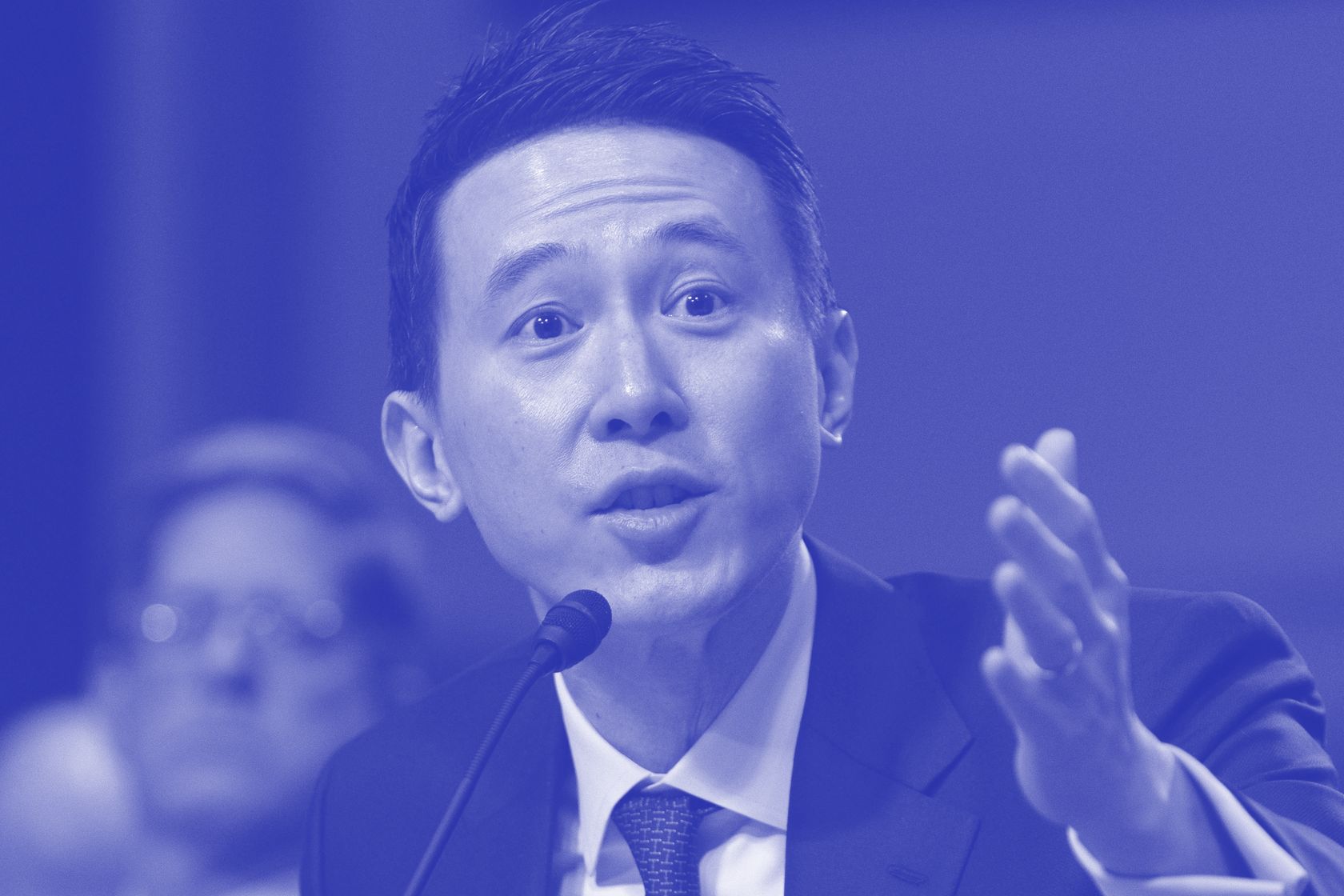
TikTok sues US government over ban
Plus: Israel threatens an escalation in Rafah offensive; The federal budget will focus on housing supply; The US revokes Huawei export licences.
Good morning. Here's what happened overnight and what you need to know today.
1.
Ban drama: TikTok has filed a lawsuit against the US government challenging a recently passed law that will force its Chinese parent company ByteDance to sell the popular video app or face a nationwide ban by January 2024. The company argues the law violates the Constitution by stifling free speech and will devastate its over 1 billion global users, 7 million business partners, and USD24 billion ($36.4 billion) annual US economic contribution. The company spent USD1.5 billion moving its US operations to domestic data centres under the oversight of Oracle, but failed to convince lawmakers of sufficient data security. It sets up a potential prolonged legal battle requiring national security evidence disclosure as ByteDance resists a forced sale with the looming divestiture deadline. (Bloomberg)
2.
Rafah incursion: Israel threatened to escalate its military offensive in the Gaza Strip after its forces seized the Rafah border crossing with Egypt, defying international mediators attempting to negotiate an end to the seven-month conflict. Prime Minister Benjamin Netanyahu rejected a draft ceasefire proposal from Hamas that would have led to an initial six-week pause and release of hostages, stating it fell short of Israel's requirements. However, Israeli negotiators traveled to Cairo to continue indirect talks mediated by the US, Qatar and Egypt. Defence Minister Yoav Gallant vowed the operation in Rafah to "eliminate Hamas" would intensify until hostages are freed, warning of expanding the assault across Gaza. The incursion drew condemnation from the EU, Arab states and UN aid agencies. The Biden administration has informally held up some precision weapon shipments to Israel amid criticism of its conduct, according to anonymous sources speaking to the Financial Times. (Financial Times)(Bloomberg)

3.
House proud: The upcoming federal budget will focus heavily on addressing housing affordability and supply issues, according to The Australian, with Labor's pledge to build 1.2 million new homes by 2029 taking centre stage. Significant measures include wage subsidies for construction apprentices to incentivise training and fight high dropout rates, fast-tracking skills assessments for 1,900 British and foreign tradespeople with comparable qualifications to work in Australia, allocating $62.4 million for 15,000 new fee-free TAFE places in housing-related trades, and $26.4 million for 5,000 pre-apprenticeship program places. Additionally, $1.8 million is earmarked to streamline skills recognition for potential migrant workers, prioritising assessments for 2,600 individuals in targeted trades. These initiatives aim to alleviate labour shortages in the construction sector, a key barrier to boosting housing supply. (The Australian)(Capital Brief)
4.
Chip wars: The US has revoked export licences that allowed Intel and Qualcomm to supply semiconductors to Huawei, intensifying pressure on the Chinese telecommunications company. The Commerce Department's move impacts the supply of chips for Huawei's laptops and smartphones, reflecting the Biden administration's concerns about national security threats posed by Chinese technology. Republican lawmakers had urged tougher action, citing Huawei's ability to develop advanced chips despite sweeping export controls introduced in 2022. The revocation comes amid alarm over Huawei's recent release of a smartphone with an advanced chip and reports of Huawei laptops using Intel chips. (Financial Times)
5.
Hush money: Adult film star Stormy Daniels testified on Tuesday at Donald Trump's criminal trial. Daniels alleges that she had an affair with Trump, and the $130,000 payment to her from Trump's lawyer Michael Cohen is at the heart of the prosecution's case. Prosecutors allege Trump falsified records to conceal the payment. Daniels provided colourful details about her encounter with Trump and negotiations around her silence, while Trump's lawyers objected, accused her of inflaming the jury, and unsuccessfully sought a mistrial over her explicit testimony. Though this trial is not considered the most important of the criminal cases against Trump, it is the only one that is happening prior to the US election. (Wall Street Journal)(New York Times)
6.
Plane wrong: The manufacturer of Boeing's 737 Max fuselage, Spirit AeroSystems, is burning through cash rapidly as tighter quality controls required by Boeing have caused delays in deliveries. After a door panel blew out on an Alaska Airlines 737 Max in January, Boeing instituted more rigorous inspections at Spirit's factory, leading to a buildup of undelivered fuselages. This caused Spirit to use USD416 million ($630.9 million) in cash for operations in Q1 2024, compared to USD46 million a year ago, with its net loss widening to USD617 million. The news compounds troubles this week for Boeing and its suppliers, after it was forced to postpone its Starliner crewed space flight yesterday due to a mechanical fault. It was also reported that Boeing is facing a new inquiry from US regulators on the inspection protocol for its 787 Dreamliner planes. (Financial Times)(BBC)
7.
Profit stream: Disney's streaming business achieved profitability for the first time since the launch of Disney+ in 2019. Despite incurring losses exceeding USD11 billion ($16.7 billion) since its inception, the streaming unit earned USD47 million in profit during the second fiscal quarter, compared to a USD587 million loss a year earlier. However, Disney's stock plunged 10% as the surprise streaming profit was overshadowed by an 8% decline in traditional TV revenue to USD2.77 billion and a 22% drop in operating profit. Overall, Disney reported a net loss of USD20 million, largely due to goodwill impairments, but its adjusted earnings exceeded Wall Street's expectations. CEO Bob Iger, who instituted USD7.5 billion in cost cuts, said the path to profitability "will not be linear." (Reuters)
8.
Tablet renaissance: Apple unveiled revamped iPad models, marking the first major redesign of the line since 2018. The new 13-inch iPad Pro is Apple's thinnest product ever at 5.1mm and features an OLED display, lighter weight and a faster M4 chip with AI capabilities. Aimed at reinvigorating sluggish tablet sales, the updated iPads boast significant performance and display upgrades geared towards AI and creative workflows. iPad sales slumped 17% last quarter, but it remains the global tablet leader at 32% market share. The focus of the announcement on the chip's AI capabilities foreshadows Apple's June software conference, which it is believed will heavily focus on the company's approach to bringing AI to its users. (Bloomberg)