Trade talks heat up as US tariff deadline approaches
Plus: OpenAI urges Albanese government to offer AI adoption tax breaks; Key lapses exposed in NRF audit but gets governance pass; Google signs deal to buy fusion energy.

Good morning. Here's what happened overnight and what you need to know today.

1.
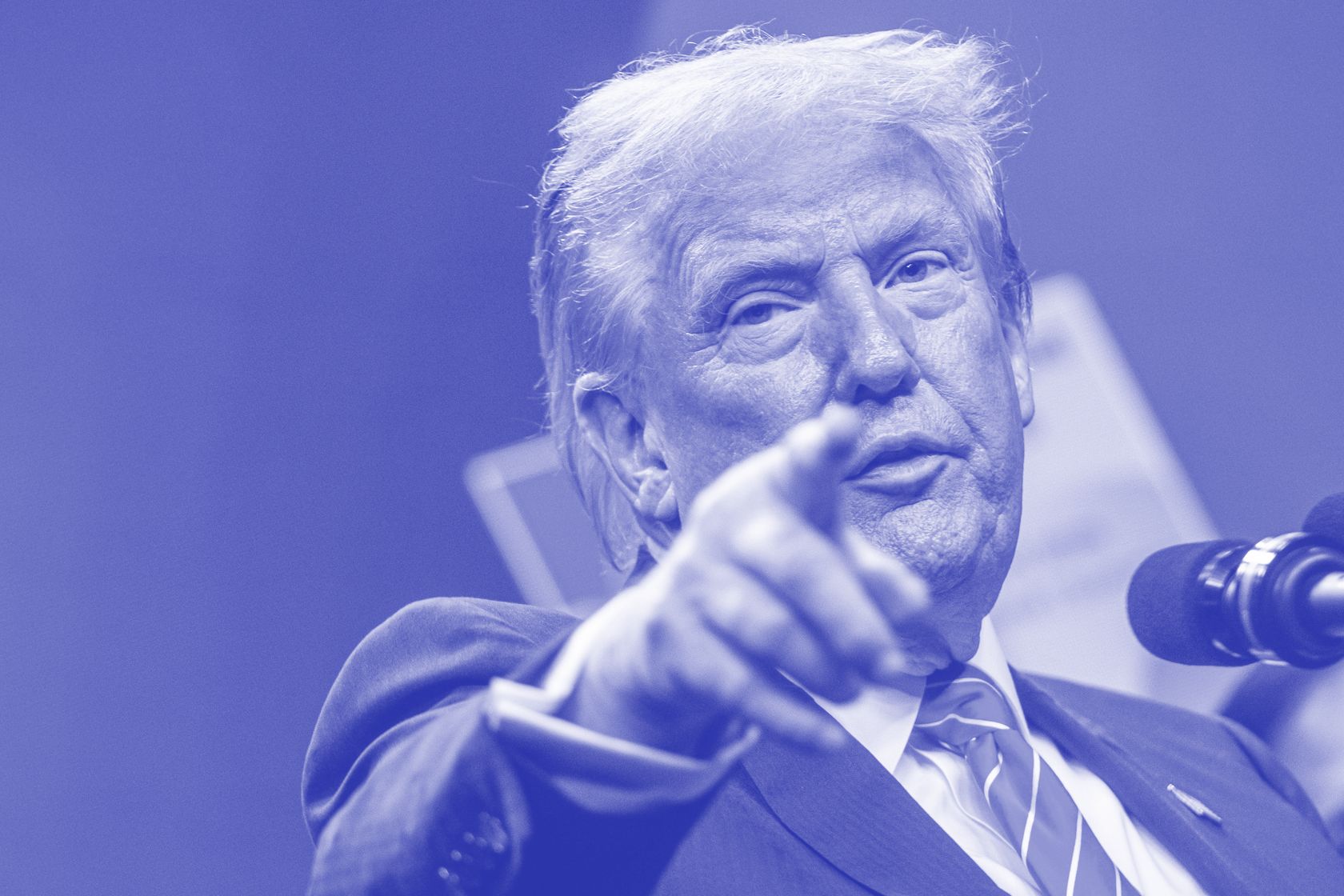
Tariff talks: The EU is willing to accept a US trade arrangement with a 10% universal tariff on many of its exports but is seeking lower rates on key sectors such as pharmaceuticals, alcohol, semiconductors and commercial aircraft, Bloomberg reported. As countries rush to reach deals before the 9 July deadline, the EU is also pushing for quotas and exemptions to effectively reduce tariffs of 25% on automobiles and car parts and 50% on steel and aluminium. If talks fail, tariffs on nearly all its exports to the US are set to jump to 50%. In parallel, the EU is preparing countermeasures should talks fail. Meanwhile, US-Canada trade negotiations resumed after Canada dropped its digital services tax, while President Trump threatened Japan with higher tariffs over what he said was its refusal to accept US rice exports, posting, “they won’t take our RICE, and yet they have a massive rice shortage. In other words, we’ll just be sending them a letter.” (Bloomberg)(Capital Brief)(NYT)
2.
AI call: OpenAI is urging the Albanese government to introduce tax breaks for businesses adopting artificial intelligence, releasing a report that claims AI could make the economy $115 billion larger by 2030. The report, co-authored with Mandala, says the financial benefit would come from $80 billion in productivity gains, $25 billion from improved output quality, $6 billion from new businesses and $4 billion from new jobs. OpenAI chief economist Ronnie Chatterji has been meeting with cabinet ministers in Canberra, calling for targeted tax incentives, grants for AI investment, more generous deductions for medium and large firms, national AI training for workers and students, and secure access to government data for public interest AI use. Early studies cited in the report show AI is complementing workers and boosting productivity. Weekly ChatGPT usage in Australia has more than doubled over the past year. (AFR)(AAP)
3.
Flagship fail: The National Reconstruction Fund has been rebuked for failing to adopt a formal financial strategy and for not obtaining conflict of interest disclosures from its external investment advisors before it deployed hundreds of millions in taxpayer funds on its first wave of deals. The Australian National Audit Office last week released its first performance report for the NRF, finding that its governance arrangements were "largely sound". But the report also raised several questions about the NRF's operations, Capital Brief reports, including its risk management protocols and procurement processes. It revealed the NRF "is yet to develop a financial strategy" and "did not obtain conflict of interest declarations and confidentiality agreements from suppliers who assisted with investment due diligence." The report found that the fund's board failed to develop the financial roadmap needed to transition from government funding to self-sufficiency by 2025-26, when taxpayer appropriations are scheduled to end. (Capital Brief)
4.
Big tech: Google has inked a deal to buy 200 megawatts of power from Commonwealth Fusion Systems when its fusion power plant in Virginia comes online in the early 2030s. Google will also make its second investment into the company, with Commonwealth co-founder and CEO Bob Mumgaard telling TechCrunch that the funding round is “comparable” to its USD1.8 billion ($2.75 billion) Series B in 2021. Commonwealth, an MIT spinoff, is catering to soaring demand for cheap, carbon-free energy as big tech increasingly relies on massive amounts of power to train and run AI. Elsewhere in AI, Microsoft has built an AI-powered tool it claims is four times more successful than human doctors at diagnosing complex illnesses. Microsoft says its AI Diagnostic Orchestrator is the first tool developed by the company’s AI health unit, helmed by Mustafa Suleyman and packed with staff poached from Google’s DeepMind. (Commonwealth)(Bloomberg)(TechCrunch)(CNN)(Capital Brief)(FT)
5.
Agenda pivot: A fresh report analysing 299 listed companies’ annual filings has uncovered a rapid turnaround in focus for corporate Australia, with inflationary pressures and higher interest rates mentioned significantly less last year than in 2023. Instead, the gender pay gap, artificial intelligence and scope 3 emissions took centre stage. “Gender pay gap” was mentioned 176 times in annual reports in 2024, up from 69 in 2023, the biggest increase of any term measured. Mentions of “artificial intelligence” increased to 84, up from 52, and “data centre” jumped to 185 from barely any in 2023. “Scope 3 emissions” rose by almost 40%. Mentions of “net zero 2050” and employee culture terms declined. The report found “no evidence of an inability to pass-on cost increases”, with gross profit margins in 2024 almost identical to previous years. (Capital Brief)
6.
Property raid: Former Domain chief executive Jason Pellegrino will be appointed president of Domain under a new leadership structure that would see the property portal delisted from the ASX should CoStar’s bid to acquire the company succeed. Domain said via an ASX filing after market close on Monday that CoStar entered into a consultancy service agreement with Pellegrino to provide advice on CoStar’s business and market strategies for Homes.com. Pellegrino stepped down as Domain CEO in October 2024 after six years in the role. CoStar said it has not made any other decision with respect to Domain’s management team, but intends to conduct a review of management. Domain said its board and Nine Entertainment (which holds a 60% stake in Domain) will vote in favour of the sale to CoStar at $4.43 per share when it meets on Monday 4 August. The deal values Domain at $3 billion. (Capital Brief)
7.
Sustained gains: Australian property prices rose across almost every broad region in the second quarter of the year, registering a 1.4% quarterly rise and 0.6% over the month of June, according to Cotality. Cotality's Home Value Index indicates that housing values marked their fifth consecutive month of gains in June. This follows a 0.9% lift in the first quarter of 2025 and a -0.3% dip in the fourth quarter of 2024. The growth in dwelling prices comes against a backdrop of relatively low house sales and advertised stock levels. Every capital city and rest-of-state region recorded a monthly increase except for Hobart (-0.2%). The national median house price as at 30 June 2025 was $837,586, with Sydney featuring the highest median of $1.21 million followed by Brisbane at $926,243. Cotality research director Tim Lawless said falling interest rates have been a catalyst for renewed house price momentum. (Capital Brief)
8.
Ripple effect: Research by DataWeave for Reuters has found that the cost of goods made in China sold via e-commerce platform Amazon increased 2.6% between January and mid-June – a faster pace than overall inflation. An analysis of 1,400 different products found that price increases for those goods accelerated from May, signalling that tariffs imposed by Trump are starting to reach consumers. For the six months through May, US core goods CPI (which excludes services) rose by 1%, implying a 2% annualised rate. Both US federal data and DataWeave's study show that goods prices have trended upward in recent months as tariffs begin impacting prices. DataWeave focused on the 1,407 products sold on Amazon as they clearly list China as the country of origin. DataWeave chief Karthik Bettadapura explained that while seasonal dynamics could play a role, the timing and the rate of the increases suggest that cost shocks are impacting the retail supply chain. (Reuters)(Capital Brief)
