Trump announces new global reciprocal tariffs
Plus: US producer prices climb but jobless claims ease; Musk threatens to withdraw OpenAI bid over non-profit status; Vaccine sceptic RFK Jr confirmed as US health chief.

Good morning. Here's what happened overnight and what you need to know today.

1.
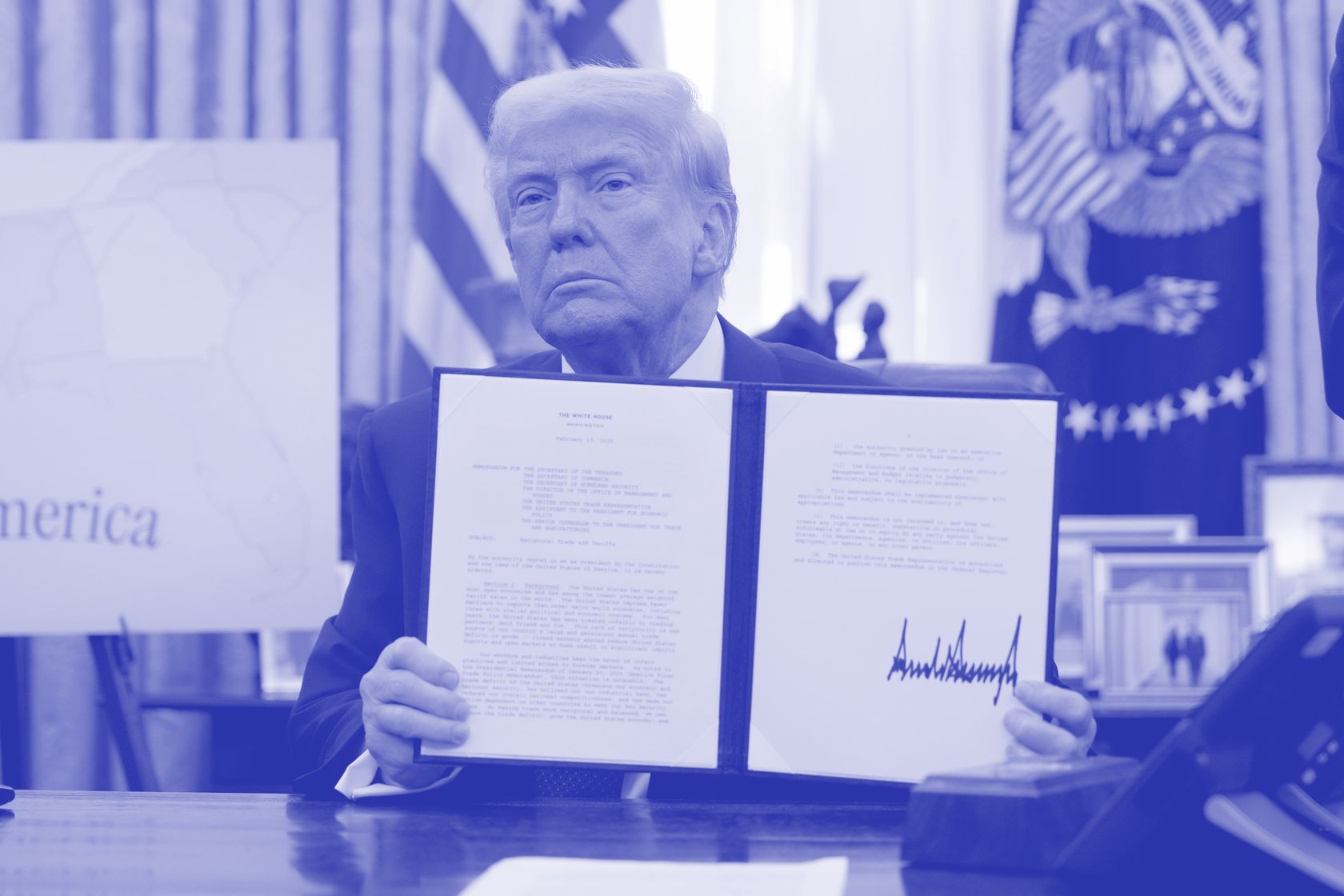
Tariff promise: US President Donald Trump said he will announce reciprocal tariffs on Thursday afternoon (Friday morning AEDT), saying on social media that “today is the big one.” The tariffs, which would target countries that impose duties on US imports, will not take effect immediately, but may go into effect in April, according to media reports. Sources told Bloomberg the US Trade Representative would be charged with overseeing the process, which could take weeks or months. The announcement was scheduled to come ahead of Trump’s meeting with Indian Prime Minister Narendra Modi, whose country imposes some of the highest tariffs on US exports. India recently reduced tariffs on certain American goods, including motorcycles. Trade experts warned of major challenges in implementing the so-called global reciprocal tariffs, citing legal constraints and the complexity of matching thousands of tariff rates across different nations. (Bloomberg)(Reuters)(NYT)
2.
Price pressure: US producer prices rose 0.4% in January, slightly above the 0.3% forecast, following a 0.5% increase in December, the Bureau of Labor Statistics said. Year-on-year, prices were up 3.5%, reinforcing concerns that inflation pressures—amid tariffs and other policy shifts—could delay Federal Reserve rate cuts. Goods prices climbed 0.6%, driven by a 1.7% rise in energy and a 1.1% jump in food, including a 44% surge in egg prices. Services rose 0.3%. But several components feeding into the Fed’s preferred PCE price index declined, including most healthcare items and airfares. Separate data showed jobless claims fell by 7,000 to 213,000, with continuing claims dropping to 1.85 million. The data followed a CPI report showing inflation accelerating at its fastest pace since March 2023. Meanwhile a federal judge ruled the massive downsizing of the US government’s workforce could proceed, with some agencies already laying off recent hires. (Capital Brief)(US DOL)(US BLS)(Reuters)
3.
(Un)charitable intentions: Elon Musk threatened to withdraw his USD97.4 billion ($155.4 billion) bid for OpenAI's non-profit arm if the board blocks its conversion to a for-profit company. A court filing submitted by the billionaire’s lawyers on Thursday reads: “If [the] OpenAI board is prepared to preserve the charity’s mission and stipulate to take the ‘for sale’ sign off its assets by halting its conversion, Musk will withdraw the bid.” The filing continues that if OpenAI does not drop its plans, then it must be compensated by what an “arm's-length buyer” would pay for its assets. Earlier this week, OpenAI CEO Sam Altman rejected the consortium bid led by Musk to buy out the non-profit entity, which controls the owner of ChatGPT. Meanwhile, The New York Times reported the State Department paused a USD400 million purchase of Tesla Cybertrucks, denying suggestions the purchase was designed to benefit Musk. (Reuters)(Capital Brief)
4.
Kennedy’s shot: The US Senate confirmed Robert F Kennedy Jr as Secretary of Health and Human Services in a 52-48 vote. Every Democrat opposed him and Senator Mitch McConnell, a polio survivor, was the lone Republican to vote no, citing Kennedy’s “record of trafficking in dangerous conspiracy theories.” Kennedy, a longtime vaccine skeptic and former presidential candidate, will now oversee a department that includes the FDA, CDC and NIH—agencies he has called corrupt. His stated priorities include tackling chronic disease, removing ultra-processed foods and investigating vaccine safety, though he has provided few specifics. Some Republicans expressed concerns about his vaccine views but supported him after he pledged to base recommendations on data-driven and medically sound research. Kennedy’s first TV interview as secretary will air on Fox News. (WSJ)(NYT)
5.
Markets watching: Wall Street advanced as investors parsed inflation data and awaited further details on President Donald Trump’s tariff plans. The S&P 500 was 0.5% higher in afternoon trading, the Nasdaq 100 up 0.8% and the Dow Jones Industrial Average 0.3% higher, with tech stocks leading gains. The yield on 10-year Treasuries fell nine basis points to 4.53%, and the Bloomberg Dollar Spot Index dropped 0.5%. Trump’s moves to start negotiations with Russia’s Vladimir Putin lifted European stocks and currencies. Apple shares were higher as CEO Tim Cook teased a product launch. Cisco Systems gave an upbeat sales forecast, citing AI-driven demand and Robinhood’s revenue more than doubled, boosted by crypto trading. Elsewhere, Unilever picked Amsterdam for its €8 billion ice-cream spinoff, and Thomson Reuters will shift its US stock listing to Nasdaq from 25 February. (Reuters)(WSJ)(Bloomberg)(Capital Brief)
6.
Bank letdown: Barclays shares fell in London on Thursday after the bank left its earnings guidance for 2026 unchanged despite a strong fourth-quarter performance. Traders leveraged US election volatility for their best Q4 performance in a decade, with equities trading revenue surging 40% and fixed income trading up 29%. Pretax profit exceeded estimates at £1.7 billion for 4Q and £8.1 billion for FY24, with a 10.5% return on tangible equity. Advisory and underwriting fees climbed 20%. The bank’s annual report revealed UK regulators are probing its anti-money laundering controls and has set aside £90 million for potential car finance mis-selling costs. CEO CS Venkatakrishnan pledged to improve diversity, targeting 33% female representation in senior roles by 2025, diverging from rivals that have scaled back similar efforts following Donald Trump’s rise to the White House. It reaffirmed plans to return £10 billion to shareholders between 2024 and 2026, including a £1 billion buyback. (Barclays results)(Bloomberg)(Capital Brief)
7.
Stalled deal: Nissan and Honda board members have voted to end merger talks, raising questions about Nissan’s future. The failed USD60 billion ($95.36 billion) tie-up would have created the world’s third-largest automaker but fell apart in early February over disputed terms. Notably, Honda proposed making Nissan a subsidiary rather than forming a joint holding company as initially planned. Nissan remains in a weak position as it pushes through a turnaround plan involving 9,000 job cuts and a 20% reduction in production capacity. Its outdated product lineup has forced steep discounts, and it faces potential US-Mexico tariffs. According to Bloomberg sources, private equity giant KKR is in the early stages of considering an equity or debt injection. (Honda Nissan Joint Statement)(Bloomberg)(Capital Brief)
8.
Hostage Holdout: Hamas said it will release at least three Israeli hostages on Saturday as previously scheduled, in an attempt to avoid a crisis that threatened to unravel the Gaza ceasefire. The group had earlier warned it would delay the release, accusing Israel of failing to meet obligations on aid deliveries, including prefabricated housing, tents, medical supplies and fuel. After talks with Egyptian and Qatari mediators, Hamas reaffirmed its commitment to the agreement. Israel denied the truce included provisions for certain aid shipments. Avi Dichter, a member of Israel’s security cabinet said Hamas reversed its position because of US-backed Israeli warnings of a potentially more intense offensive in Gaza than before the ceasefire. Donald Trump had warned Israel should “let hell break out” if hostages were not freed by noon Saturday. It comes as Egypt and other Arab nations are working on a plan to rebuild Gaza without displacing Palestinians, following Trump’s proposal for the US to take over the strip. (AP)(Reuters)
