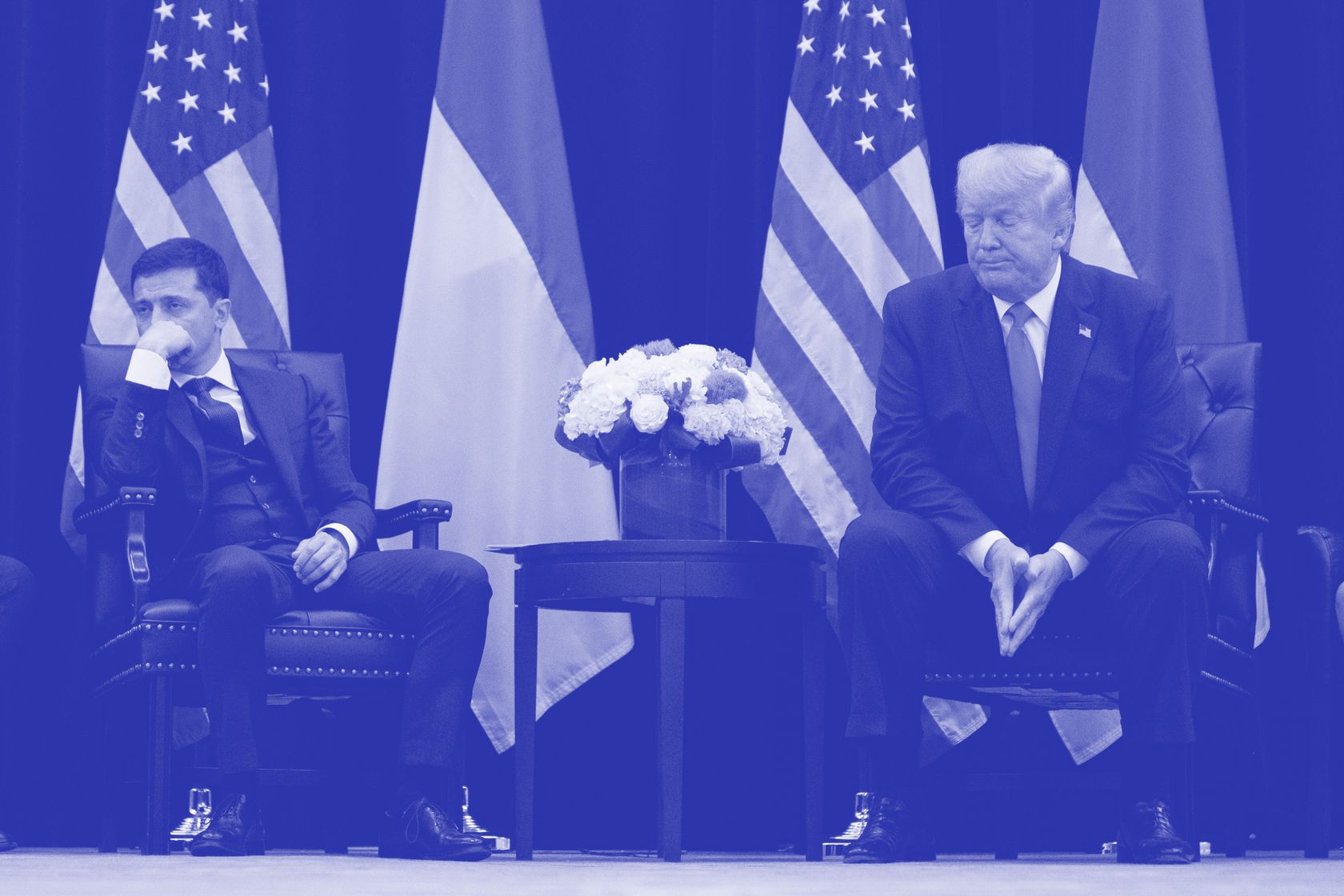
Trump calls Zelensky a ‘dictator without elections’
Plus: Labor steps in to save Whyalla steelworks; X hunts US$44b valuation as Musk rides Trump wave; KKR lobs $7.9b bid for majority stake in UK Thames Water.

Good morning. Here's what happened overnight and what you need to know today.

1.
A dictator: Donald Trump called Ukrainian President Volodymyr Zelensky "a dictator without elections" and said he must "move fast" to secure peace or he would "not have a country left." The remarks, posted on social media, came after Trump suggested Ukraine started the war and that Zelensky’s approval rating was just 4%. That prompted Zelensky to push back, saying Trump “unfortunately lives in this disinformation space,” and citing a February Kyiv International Institute of Sociology poll showing 57% trust in him. Russian President Vladimir Putin praised bilateral US-Russia talks in Saudi Arabia that excluded Ukraine, saying trust between Moscow and Washington was key to a peace deal. Trump's envoy, Keith Kellogg, arrived in Kyiv on Wednesday for a three-day visit. That same day, Russian drone strikes hit Ukraine’s energy infrastructure, leaving at least 160,000 people in Odesa without heat or power. Earlier, Trump told reporters he plans to introduce tariffs of around 25% on autos, semiconductors and pharmaceutical imports in April. (NYT)(WSJ)(Reuters)
2.
Steel rescue: The Albanese government will help fund up to $500 million of green upgrades to the Whyalla steelworks if it’s sold to new owners, according to The Australian and AFR. The news comes after the South Australian government forced the steelworks into administration and seized control from owners GFG Alliance on Wednesday. The rescue package will see the federal and state governments equally investing up to $500 million over six months to keep the plant running. Further investment to replace ageing infrastructure will be required in the long term and will position the project for future green steel manufacturing. Prime Minister Anthony Albanese is scheduled to visit the Whyalla steelworks on Thursday when the "transformation plan" will be unveiled. The state appointed KordaMentha as administrator after losing confidence in GFG’s ability to pay its bills and to fund ongoing operations. SA Premier Peter Malinauskas said the government was forced to intervene in Whyalla steelworks as the situation was becoming “irredeemable.” Media reports are circulating that Bluescope could step in as a potential ‘white knight.’ (AFR)(State Government Press Release)(Financial Times)(The Australian)(Capital Brief)
3.
X factor: Elon Musk’s X is reportedly in talks to raise funds at a USD44 billion ($69.3 billion) valuation—the same price he paid for the company, formerly Twitter, in 2022. Sources told Bloomberg and Reuters the discussions are ongoing and details could change. It would be X’s first known funding round since Musk took it private and a striking turnaround. As of December, Bloomberg reported, Fidelity had marked down its X stake by about 70%. X has not commented. The talks come as valuations of Musk’s other companies rise since Donald Trump’s election. X’s capital structure is also strengthening—Morgan Stanley is finalising the sale of USD3 billion in X debt at face value. Elsewhere in tech, Apple introduced a budget version of its iPhone 16. Dubbed iPhone 16e, it will be the cheapest handset from the tech giant that supports its artificial intelligence capabilities. (Bloomberg)(Reuters)(Capital Brief)
4.
Life raft: KKR has lobbed a £4 billion ($7.93 billion) bid for a majority stake of the beleaguered UK Thames Water, according to sources cited by Bloomberg. The alternative asset manager said it does not plan to sell any of the utility’s assets, nor make structural changes should it gain control. Thames Water is drowning in over £16 billion of debt and is on the edge of falling into a state-supervised ‘special administration’ as a provider of critical services. Earlier this week a £3 billion emergency loan from existing senior creditors was approved, allowing Thames Water to operate until the end of March when it expects its cash to dry up. The USD77 billion KKR has been extending its reach into infrastructure across the globe, and plans to combine its infrastructure and real estate assets under the same leadership to capitalise on synergies across the units. (Bloomberg)
5.
Threat assessment: ASIO foiled a plot by a foreign intelligence agency to murder an individual on Australian soil within the last year, Director-General Mike Burgess has revealed. This is the first time Burgess has disclosed a plot to commit violence on Australian soil. During his annual national threat assessment, Burgess declared Australia has “never faced so many different threats at scale” and that there was “no single threat” being managed by ASIO as the threat landscape is becoming more complex and intertwined. Burgess mentioned we have “close allies” who are dealing with state-sponsored murder and murder attempts, describing their evidence as “compelling.” Foreign powers, including some Australia would consider friends, are "relentlessly seeking information” on its military capabilities and may undermine community support for AUKUS, Burgess warned. Burgess also fears that recent antisemitic attacks “have not yet plateaued” as tensions over the Middle East conflict played out in Australia. (Capital Brief)
6.
Record IPO: Indian firm Hexaware Technologies beat expectations on its market debut, with shares rising as much as 10% after its USD1 billion ($1.57 billion) initial public offering. The stock listed at 745.50 rupees ($13.51), higher than its offer price of 708 rupees. Shares in the company rose to 778.4 rupees, valuing it at 473 billion rupees, higher than the target 430 billion rupees. Hexaware is a global technology and business process services provider offering AI powered solutions, and was acquired by private equity firm Carlyle in 2021. With a total issue size of USD1 billion, it was the largest IT technology services IPO globally in over a decade, and the largest technology services IPO and largest sponsor-owned IPO in India, to date. “Hexaware’s IPO is the largest technology services IPO globally over the last decade and marks an important milestone in the company’s journey,” said Patrick McCarter, co-head of global technology at Carlyle. (Carlyle Press Release)(Hexaware Press Release)(Reuters)(Capital Brief)
7.
(G)Rate big mistake: Some economists believe the Reserve Bank’s decision to cut rates on Tuesday was a serious error, warning that the call could spell serious consequences across the economy. EQ Economics founder Warren Hogan, told Capital Brief that Governor Michele Bullock’s hawkish statement on monetary policy released alongside the announcement “doesn’t make sense with a rate cut…It assessed the labour market to be tighter and consumption growth to pick up.” Hogan suggested that the RBA may have felt that going against widespread expectations for a rate cut would have drawn intense scrutiny ahead of the federal election, and that the reputational and economic costs of that negative attention would be "much higher than the costs of easing rates". UNSW Professor Richard Holden argued that despite better-than-expected inflation data in the December quarter, the numbers simply do not support a rate cut. He also warned that property prices could spike as a result. (Capital Brief)
8.
Biotech battle: Novo Nordisk is seeking up to USD830 million ($1.3 billion) in damages from KBP Biosciences, arguing it was misled by the biotech about the effectiveness of an experimental drug, ocedurenone. Novo paid as much as USD1.3 billion for the drug in 2023, and announced an impairment loss for USD5.7 billion after a clinical trial showed the treatment to treat hypertension and kidney disease failed less than one year later. A ruling by Singapore’s International Commercial Court released this week agreed to freeze the assets of KBP as well as its founder, Huang Zhenhua, and the matter will now proceed in New York. Judge Philip Jeyaretnam said: “Arguably, KBP knowingly failed to disclose material information, including interim analyses of Phase 2 clinical trial results showing Ocedurenone’s inefficacy, and information concerning quality and compliance issues at a single test site that produced anomalous positive results. Likewise, Dr Huang arguably knew and participated in these misrepresentations.”(Singapore Court Ruling)(Bloomberg)(Capital Brief)
