Trump claims credit as fragile Israel-Iran ceasefire holds
Plus: Wall Street nears records, oil plunges after Trump greenlights China-Iran crude; Trump questions NATO defence commitment, again; Fed in no rush but ready to move.

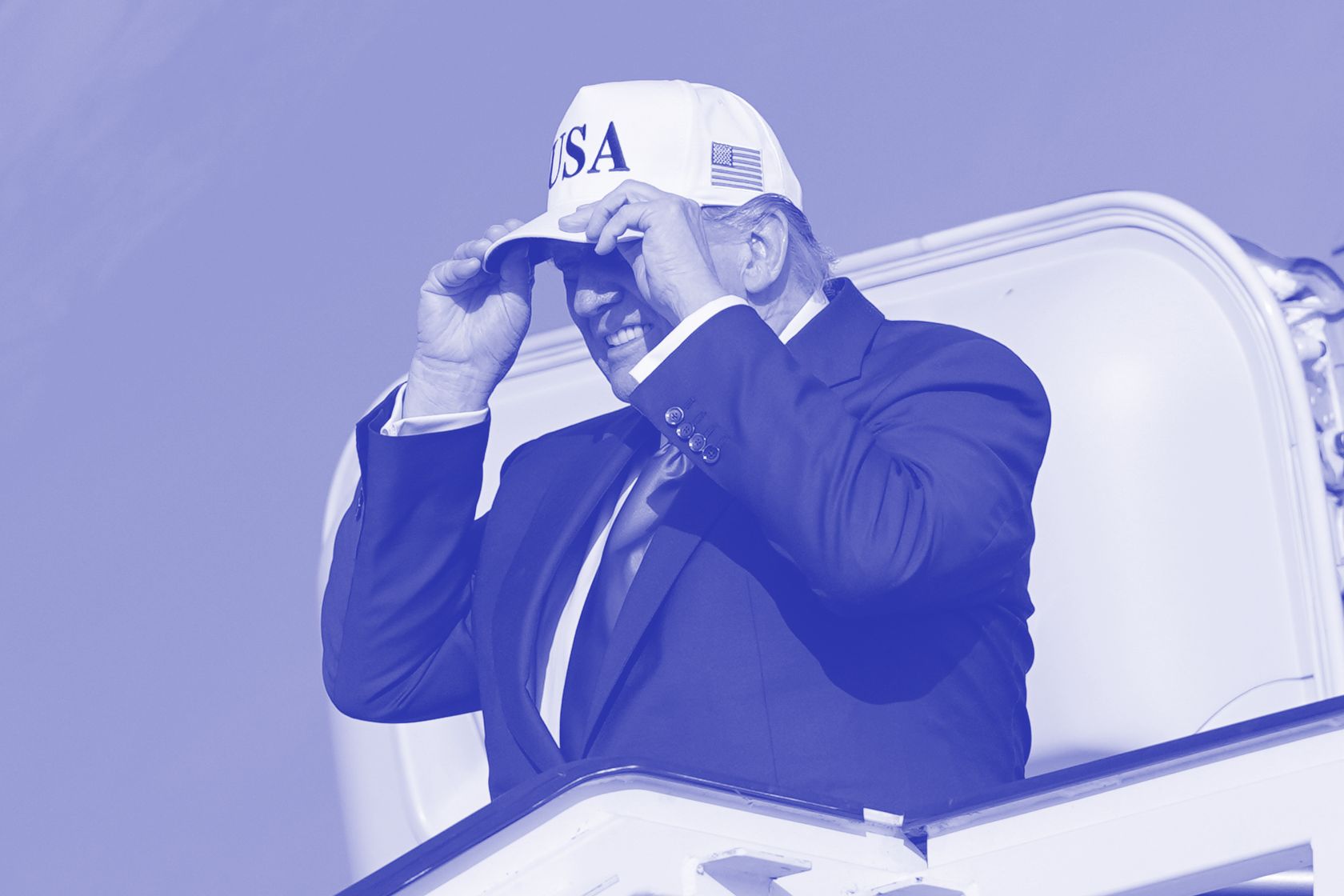
Good morning. Here's what happened overnight and what you need to know today.

1.
Victory lap: A shaky ceasefire began to take hold between Israel and Iran under pressure from US President Donald Trump. Trump scolded both sides for early violations of the truce he announced, directing especially strong criticism at Israel. “Iran and Israel had been fighting so long and so hard that they don't know what the f**k they're doing," he said. Netanyahu’s office acknowledged Israel bombed a radar site near Tehran in response to Iranian missiles fired after the ceasefire was due to begin, then held off further strikes following a call with Trump. Iran denied launching missiles and said Israeli attacks continued for an hour and a half beyond the start time. President Masoud Pezeshkian hailed a “great victory” and said Iran would not violate the ceasefire unless Israel did. The ceasefire’s terms remain unknown. Trump posted: “It was my great honor to Destroy All Nuclear facilities & capability, and then, STOP THE WAR!” (AP)(Reuters)(WSJ)(Bloomberg)(Capital Brief)
2.
Approaching records: Wall Street climbed for a second straight session as investors welcomed the fragile ceasefire between Israel and Iran and assessed Federal Reserve Chair Jerome Powell’s wait-and-see message on rates. The Nasdaq jumped 1.43% and the S&P 500 rose 1.11%, bringing it within 1% of its all-time closing high from February. US oil prices slid nearly 15% across the last two sessions, dropping below levels seen before the conflict began, after President Trump said China could continue buying Iranian crude. The Cboe Volatility Index tumbled over 12% as fears of a prolonged Middle East conflict receded. Gold fell 1.8% and Treasury yields declined after June consumer confidence fell to 93, reversing May’s gain.(Bloomberg)(Reuters)(WSJ)
3.
NATO baiting: President Donald Trump cast doubt over the United States' commitment to defending its NATO partners, suggesting there were “numerous definitions” to Article 5, the alliance’s mutual defence clause, ahead of a NATO summit in the Netherlands. NATO Secretary-General Mark Rutte said, “I have no doubt that the US is totally committed to NATO, totally committed to Article 5.” Trump is pressing allies to adopt a goal of spending 5% of GDP on defence. Spain says it won’t get there, and Slovakia says it reserves the right to decide for itself. Trump posted a screenshot of a private message from Rutte praising his “decisive action in Iran” and for making Europe “pay in a BIG way… You will achieve something NO American president in decades could get done,” Rutte gushed. Prime Minister Anthony Albanese will not attend the summit after initially suggesting he might, pulling out when it became clear a one-on-one with Trump was not guaranteed. (AP)(Bloomberg)(Reuters)(Politico)(Capital Brief)
4.
On edge: US Federal Reserve chair Jerome Powell told Congress the central bank is still in no rush to cut interest rates, citing a strong labour market and uncertainty over the inflationary effects of President Trump’s tariffs. He said inflation is expected to begin rising over the northern summer, with upcoming data for June and July key. “We do expect [inflation] to move [up] in the summer... if we see it not happening, we will learn from that,” Powell said. He added the Fed is “perfectly open” to the idea that the pass-through to consumers “will be less than we think.” The testimony comes amid falling US consumer confidence, Trump’s calls for immediate rate cuts, and an emerging split in the Fed over a July cut. Before his testimony, Trump posted on social media: “I hope Congress really works this very dumb, hardheaded person, over. We will be paying for his incompetence for many years to come.” Powell also said upcoming changes to a key bank capital rule, the enhanced supplementary leverage ratio, could help banks better intermediate in the US Treasuries market. (Capital Brief)(US Fed)(Conference Board)(Reuters)(Bloomberg)
5.
Tech moves: A US judge ruled for the first time that Anthropic’s use of books to train its Claude AI system was legal “fair use” under copyright law, siding with tech companies on a pivotal industry issue, but found its copying and storage of over 7 million pirated books infringed copyright. Anthropic said the company was pleased that the court recognized its AI training was "transformative" and "consistent with copyright's purpose in enabling creativity and fostering scientific progress." Meanwhile, AI tool Xbow topped a US security leaderboard for finding vulnerabilities in software from major firms and raised USD75 million. Pangram, founded by former Tesla and Google engineers, also raised about USD4 million to expand its AI-text detection tools. And, Vladimir Putin signed a law authorising a state-backed messaging app, aiming to reduce reliance on WhatsApp and Telegram. Elsewhere, the BIS issued its starkest warning yet on stablecoins, saying they pose “a risk to financial stability and monetary sovereignty,” and urged central banks to pursue tokenised currencies. (Reuters)(Bloomberg)
6.
Competition ctrl: The UK’s Competition and Markets Authority (CMA) may require Google to loosen its grip on its search engine under new digital market rules. The CMA’s investigation, launched in January, is looking into whether Google’s position in search is delivering good outcomes for consumers and business in the country. Under the new Digital Markets Competition Regime, the CMA is proposing to designate Google with “strategic market status”, which would allow the watchdog to introduce targeted measures addressing aspects of how the tech giant operates in the UK. Google said that while the CMA designation would not imply that anti-competitive behaviour has taken place, “this announcement presents clear challenges to critical areas of our business in the UK.” Google is concerned about the scope of the CMA’s considerations being “broad and unfocused” and that while the UK has historically benefitted from early access to Google innovations, “punitive regulations could change that.” (CMA)(Capital Brief)(Google)(FT)(BBC)
7.
Transparent as Teal: ‘Teal' independents have emerged as a significant force in Australian politics over the last two federal elections, in part due to their campaigning over transparency and accountability. But only one Independent backed by the Climate 200 movement (who doesn't use the teal colour in her branding) opted to subject her policies to the Parliamentary Budget Office’s red pen: Helen Haines. Capital Brief reports that what has surprised some is that while the teal platform has been one of transparency and accountability, they're not putting their hand up to take part in additional independent scrutiny when there's the opportunity. This includes PBO costings of election commitments. Haines has had her policies costed by the PBO for the past two election campaigns. She told Capital Brief in a statement that her decision to do so is part of her commitment to “ensuring rigour and accountability”. (Capital Brief)
8.
Doc duel: OpenAI is moving more directly into competition with Microsoft and Google, having designed features that let users collaborate on documents and chat in real time through ChatGPT, The Information reported citing unnamed sources. Internally discussed nearly a year ago, the tools were not developed at the time due to staffing constraints, according to the report. In October, OpenAI launched Canvas, a ChatGPT feature for drafting documents and code with AI, seen as a first step toward broader collaboration tools. It also built, but hasn’t released, software allowing multiple users to communicate about shared work within ChatGPT. A notetaking tool that records calls or meetings and adds notes to Canvas has also launched, though it remains limited without file storage. OpenAI says revenue from companywide ChatGPT subscriptions is growing, with forecasts rising from USD600 million in 2024 to USD15 billion by 2030, and has recently offered discounts to boost uptake. (The Information)
