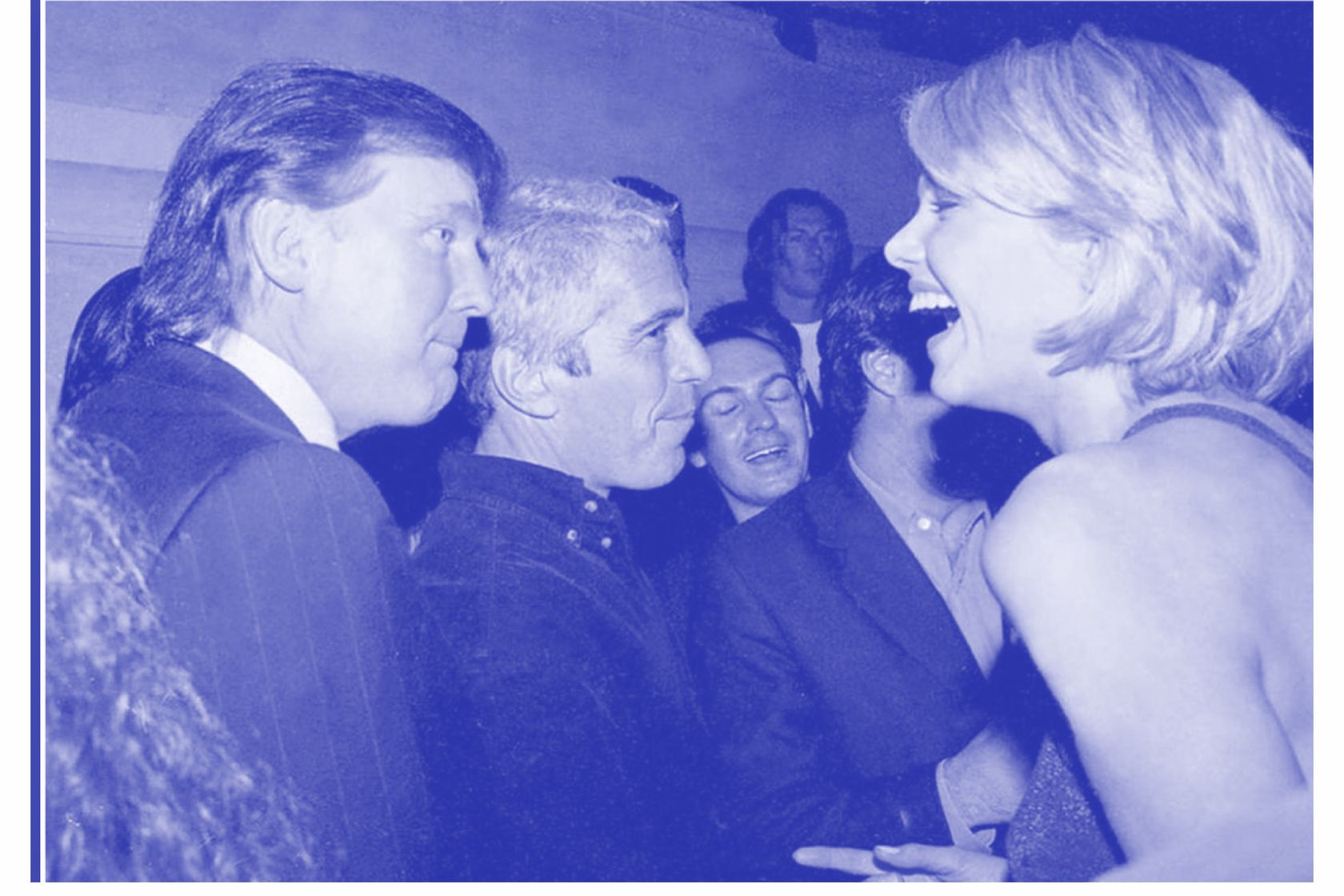
Trump, Clinton feature in new Epstein photos
Plus: Stocks slump as investors flee AI trade; Oracle denies delay to OpenAI data centres; Russia launches lawsuit over frozen assets.

Good morning. Here's what happened overnight and what you need to know this weekend.

1.
Raw images: US Democrats released a selection of 19 new photos from the estate of disgraced late financier Jeffrey Epstein, including images of US President Donald Trump and former US president Bill Clinton. The images are from a tranche of 95,000 photos provided by the late sex offender's estate to Congress's House Oversight Committee. While the full context of the images is not provided, other prominent figures who feature in the pictures include former treasury secretary Larry Summers, Bill Gates, filmmaker Woody Allen and former Trump adviser Steve Bannon. The Committee is reviewing the full set of 95,000 images, which included “thousands of photographs of women and Epstein properties” and will continue to release photos to the public. A Republican spokeswoman told the WSJ that “Democrats are cherry-picking photos and making targeted redactions to create a false narrative about President Trump.” Ranking Member Robert Garcia said: “It is time to end this White House cover-up”. (House Oversight Committee)(FT)(WSJ)(CBS)(ABC)(Capital Brief)
2.
AI slump: Major US stock indexes declined on Friday, with the Nasdaq sliding lower as Broadcom shares led losses on the tech-heavy index. After shares in Oracle plummeted on Thursday, Broadcom closed down over 11% as investors shifted away from AI positions and into value areas of the market. The S&P 500 fell 1.07%, the Nasdaq declined 1.69% and the Dow Jones closed out Friday trading down 245.96 points, or 0.51%. Visa, Mastercard, UnitedHealth and GE Aerospace saw a boost on the shift away from tech, with sports apparel retailer Lululemon climbing 11% during the session following the resignation of its CEO. The US 10-year treasury yield inched higher to 4.19%. Shares in fintech Wealthfront opened flat on their Nasdaq debut on Friday, which valued the company at USD2.63 billion ($3.95 billion). Meanwhile, Trump told the WSJ that he was leaning toward choosing either former Fed governor Kevin Warsh or National Economic Council Director Kevin Hassett to lead the Federal Reserve next year. (WSJ)(Reuters)(CNBC)(Bloomberg)
3.
Oracle overextends: Oracle denied a report that said the company will delay completion of data centres for OpenAI in 2028, rather than 2027, after sources told Bloomberg that shortages of labour and materials would lead to the delays. “Site selection and delivery timelines were established in close coordination with OpenAI following execution of the agreement and were jointly agreed,” an Oracle spokesperson told CNBC. “There have been no delays to any sites required to meet our contractual commitments, and all milestones remain on track.” Disappointing earnings reported by Oracle on Wednesday saw its shares slump 16.5% after the company warned that its capital expenditures for fiscal year 2026 are now expected to be USD15 billion ($22.54 billion) higher than it estimated in September. The earnings update fuelled concerns about frothy AI valuations and a possible bubble. Oracle has been working to deliver a USD300 billion contract to supply the computing power to train and run OpenAI’s models over the next five years, a deal it agreed to in September. (CNBC)(Bloomberg)(Reuters)(Capital Brief)
4.
Asset freeze: Russia’s central bank launched legal action against Euroclear in Moscow over frozen state assets, as it warned the bloc that any use of the frozen funds by the EU would be met with a global campaign of retaliation. A statement released by the Bank of Russia on Friday announced it is filing a lawsuit for recovery of damages with the Moscow City Arbitration Court. Russia has around €210 billion ($370.58 billion) of its assets frozen in the EU, and €185 billion of that is held by Euroclear, which has been held since Russia's 2022 invasion of Ukraine. Russia’s central bank also warned that it will challenge unauthorised use of the assets by the European Commission, “with all available competent bodies” and seek enforcement of court decisions in UN member states. Meanwhile, Germany accused Russia of an air traffic control cyber-attack in 2024 and of seeking to influence and destabilise the country's federal election in February this year. (Bank of Russia)(BBC)(Reuters)(Reuters)(Capital Brief)
5.
Testing the limit: Intel tested chipmaking tools from a toolmaker with deep roots in China and two international units that were targeted by US sanctions, according to sources cited by Reuters. Intel reportedly got the tools from California-based producer of chipmaking equipment, ACM Research. Two ACM units, based in Shanghai and South Korea, were among a number of firms barred last year from receiving US technology over claims they have supported the Chinese government’s efforts at harnessing commercial technology for military use and making advanced chips or chipmaking tools. ACM denies the allegations. The outlet reported that the so-called wet etch tools which are used to remove material from silicon wafers that are transformed into semiconductors were tested for possible use in Intel’s most advanced chipmaking process. Elsewhere in chipmaking, Nvidia told Chinese clients that it is considering boosting production capacity for its H200 AI chips after orders exceeded its current output levels. (Reuters)
6.
Big spend: The federal government, in partnership with state and territory governments, will add an additional $10 billion in spending to drive the construction of 100,000 homes for sale to first home buyers, alongside billions more in additional spending related to election promises. The government will expand access to 5% deposits to all first homebuyers as promised ahead of the 2025 federal election alongside the additional home building funds. Additional commitments include: $1.1 billion for more free mental health services and additional training places; $1 billion for an Economic Resilience Fund; $956 million for infrastructure and local projects; $98 million to fast track qualifications of 6,000 tradies and to establish a National Training Centre in New Energy Skills. The new spending commitments in the mid-year economic and fiscal outlook (MYEFO) come alongside billions in additional pressures across disaster relief, age pension and defence benefits and entitlements, all of which will weigh on the government’s fiscal position. (Capital Brief)
7.
Activist arrested: Iranian security forces “violently arrested” the 2023 Nobel Peace Prize winner and women's rights activist Narges Mohammadi on Friday, her foundation, Narges Foundation, said. The 53-year-old Mohammadi was detained in the city of Mashhad, in northeast Iran, along with other activists after giving a speech at a memorial service for lawyer Khosrow Alikordi. The Nobel Committee said it is “deeply concerned by today’s brutal arrest” and called on the Iranian authorities to immediately release her. Mohammadi was awarded the Nobel Prize for her three decades of campaigning for democracy in the Islamic Republic and has spent the majority of the last 20 years in Tehran’s Evin prison. In December 2024 her prison term was suspended for three weeks after a leg surgery in November, but she had remained on furlough until Friday’s arrest. Mohammadi has been sentenced to multiple terms totalling 31 years on charges of acting against national security and spreading propaganda. (Narges Foundation)(Nobel Committee)(WSJ)(CNN)(BBC)
8.
Flat battery: Federal Energy Minister Chris Bowen is set to unveil drastic changes to the government’s battery subsidy scheme today amid claims that most of the $2.3 billion budget has been spent in just six months, the ABC reports. Bowen is expected to outline the policy changes when he addresses solar and battery installers in a briefing arranged on Friday. The program which was announced before the election in April came into effect in July, and allowed households and small businesses to claim rebates off the upfront cost of batteries. The policy was intended to reduce the purchase price of a battery by about 30%, a roughly $4,000 saving when buying a typical system with 10kWh of storage. Industry sources told the ABC that poor design has fuelled a rush towards much bigger systems up to the maximum eligible size of 50kWh. While the government anticipated that the budget would last until 2030, analysts say it will be exhausted by mid-2026. (ABC)
