Trump cuts India tariffs, says Modi agreed to halt Russian oil
Plus: Wall St stocks rally as metals keep falling; Square Peg begins investing $650m from new funds; Sarah Court appointed ASIC chair.

Good morning. Here's what happened overnight and what you need to know today.

1.
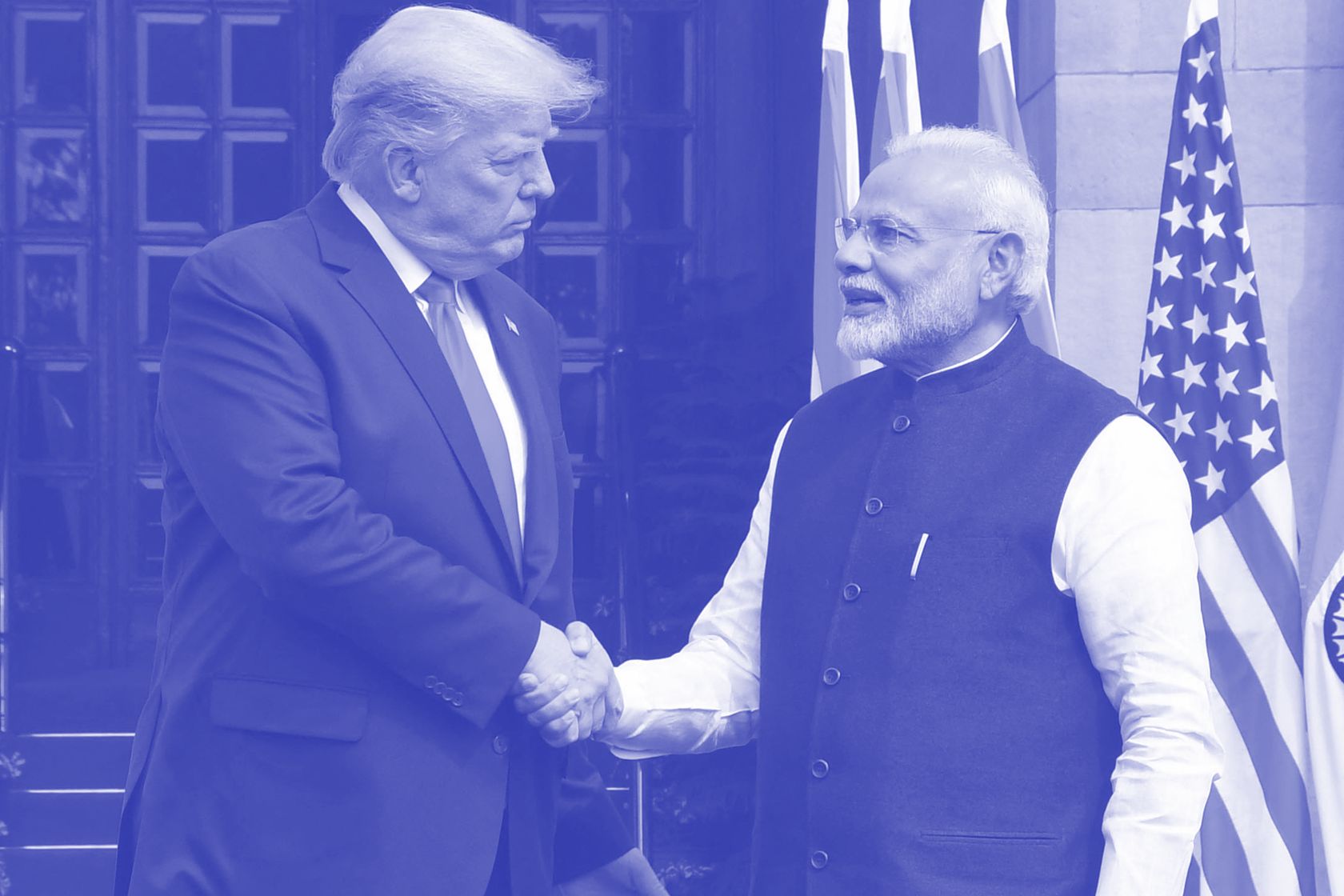
Modi operandi: The US will lower tariffs on Indian goods to 18% after Prime Minister Narendra Modi agreed to halt Russian oil purchases and increase imports from the US and potentially Venezuela, US President Donald Trump announced. The change not only reduces the current 25% reciprocal tariff to 18%, but also rescinds a punitive 25% duty that the Trump administration had imposed on all Indian imports over its purchases of Russian oil (a levy stacked on top of the 25% reciprocal tariff), a White House official told Reuters. Trump said the agreement was reached “out of friendship and respect” following a phone call with Modi, and would take effect immediately. Modi posted on X that he was “delighted” with the tariff cut. Trump also said India had committed to buying over USD500 billion of US energy, technology, agricultural and other goods, and would work to reduce its tariffs and non-tariff barriers on US imports to zero. The deal follows months of tense trade talks after Trump doubled tariffs on Indian goods last August. (Donald Trump)(Narendra Modi)(FT)(WSJ)(Reuters)
2.
Herd pressure: A sharp selloff in commodities and strong US factory data drove a volatile start to the week on Wall Street, as stocks rallied and precious metals extended historic losses. The ISM’s January manufacturing index rose to 52.6, its highest since August 2022 and the first expansion in a year. Gold and silver remained volatile Monday, following Friday’s historic plunge triggered by Donald Trump’s nomination of Kevin Warsh as Federal Reserve chair. Prices clawed back some losses during the session, but pressure persisted after CME Group raised margin requirements on metals contracts. The Dow was over 1% higher in the afternoon, the S&P 500 up 0.7% and the Nasdaq up 0.89%. Brent crude dropped 5% to USD66.01 after Trump’s comments over the weekend that Iran was “seriously talking” with the US. Bitcoin touched USD74,553, its lowest since April 2025, before recovering to around USD78,000. Disney shares fell after the company warned of slower growth this quarter, citing a drop in international visitors to its US theme parks. Tyson Foods reported a 76% fall in profit, driven by surging cattle costs and the smallest US herd since 1951. And the January US jobs report, due on Friday, will be delayed due to a partial government shutdown. (Reuters)(FT)(Bloomberg)(WSJ)
3.
Well pegged: One of Australia's 'big three' venture firms, Square Peg Capital, navigated the difficult fundraising environment to complete the first close for its latest vintage of funds, locking in $650 million from new and returning institutional investors. The Melbourne-based firm told Capital Brief it is now investing from its Fund 6 and Opportunities Fund 3 ahead of a final close, with the final raise amount yet to be determined. Via the new vehicles, Square Peg recently participated in flagship portfolio company Airwallex's USD500 million ($719.2 million) Series G round, which valued the Melbourne-founded payments platform at USD8 billion. While the global VC industry remains mired in a prolonged capital-raising drought, Square Peg is the third major Australian VC firm to raise a new fund vintage in the last year. Acknowledging the global slowdown in VC fundraising, a Square Peg spokesperson said: “We are incredibly fortunate” for the support received. (Capital Brief)
4.
Longo gone: ASIC’s deputy chair and chief enforcer Sarah Court will take over from Joe Longo as the watchdog’s new chair following the completion of Longo’s term on 31 May. Court, who has held her current position since June 2021, will be the first woman to lead ASIC since its formation over 30 years ago. Prior to joining the corporate regulator, Court was a commissioner at the ACCC and a senior lawyer at the Australian Government Solicitor. Treasurer Jim Chalmers said that ASIC has delivered some of its strongest enforcement results on record under Court’s leadership, “lifting standards across the financial system, and reinforcing the integrity of Australia's markets.” Also on Monday, Chalmers urged Longo to remove the residential addresses of directors from its public-facing database after ASIO raised privacy and security concerns following the Bondi terror attack, according to a letter seen by the AFR. (Capital Brief)(ABC)(AFR)
5.
Cashing in: Australian startups experienced their third biggest funding year on record, with the last quarter of 2025 seeing the strongest funding allocation since 2021, according to a new report by Cut Through Venture and Folklore Ventures. The report found $5.1 billion in funding was raised across 390 deals, with more than $1 billion allocated to AI-native startups. The next largest segments were fintech, biotech/medtech and climate tech. Median deal size increased across the board. Later-stage deals saw increased activity for rounds between $20 million and $50 million, from 27 in 2024 to 42 in 2025. However, there were fewer raises above $100 million. Startups with native AI technology saw greater success in fundraising in 2025, with companies building with AI in their stack attracting 61% of total funding. The share of total deals with a female founder fell from 28% to 24%. (Capital Brief)
6.
Quantum deal: Quantum computing startup Diraq secured a $20 million strategic equity investment from the National Reconstruction Fund to support deployment of its prototype systems in data centres by the end of 2026. The funding is part of a USD75 million ($108.46 million) extended Series A round, which also includes investments from Hostplus, NGS Super and existing investor UniSuper. Diraq was founded by Andrew Dzurak at UNSW and spun out in 2022. It now employs more than 70 staff and is hiring 10 to 15 more as it scales its engineering and commercial teams in Australia. Dzurak told Capital Brief the company is in “quite advanced discussions” with data centre operators, primarily in Australia, to begin testing remote cloud access and integrating its silicon-based quantum computing systems with classical computing and AI. Unlike larger systems, Diraq’s racks are designed to fit existing data centre infrastructure. Its technology is under review by the US Defense Advanced Research Projects Agency and was shortlisted for the second stage of the Quantum Benchmark Initiative in November 2025. (Capital Brief)
7.
Critical stockpile: Donald Trump is set to launch a USD12 billion ($17.2 billion) strategic stockpile of critical minerals, in a bid to insulate US manufacturers from supply shocks and cut reliance on China, Bloomberg reported citing unnamed government officials. The initiative, called Project Vault, will combine a USD10 billion loan from the US Export-Import Bank with USD1.67 billion in private capital, the sources said. It will stockpile minerals such as gallium and cobalt that are used in iPhones, jet engines and batteries, in the first such effort targeting the needs of civilians rather than the defence industry. The Trump administration has already signed cooperation agreements with Australia, Japan, Malaysia and other countries and will reportedly push for more during a summit of dozens of nations set to take place in Washington on Wednesday local time. Bloomberg said that more than a dozen companies had also already signed on, including GM, Boeing, Stellantis, Corning, GE Vernova and Google. Commodities traders Hartree, Traxys and Mercuria will handle raw material purchases. The Ex-Im Bank board is set to vote Monday on the 15-year, USD10 billion loan underpinning the project, which would be the largest ever authorised by the bank. (Bloomberg)(Capital Brief)
8.
High Court docket: The High Court gets down to business today with a challenge to Victoria’s electoral funding laws, the first in a series of political communication cases for 2026. A group of independents led by Werribee candidate Paul Hopper is arguing that the $4,850 cap on donations from any individual or entity over four years is unfair because of an exemption for “nominated entities”. That exemption covers the fundraising arms of major political parties. Hopper argues it gives them an unfair advantage and infringes the implied freedom of political communication. The donations challenge will be heard by all seven justices and has been given priority because Victoria’s state election is due in November. The hate speech laws passed after the Bondi massacre are also expected to find their way to the nation’s top court, with civil liberties groups and pro-Palestine activists already flagging challenges. (Capital Brief)
