Trump doubles India tariffs over Russian oil
Plus: Apple boosts US footprint with extra US$100b pledge; Airtree secures $650m fund with global institutional support; ASIC nears decision to end ASX monopoly.
Good morning. Here's what happened overnight and what you need to know today.
Get Standup in your inbox Signed up to Standup
1.
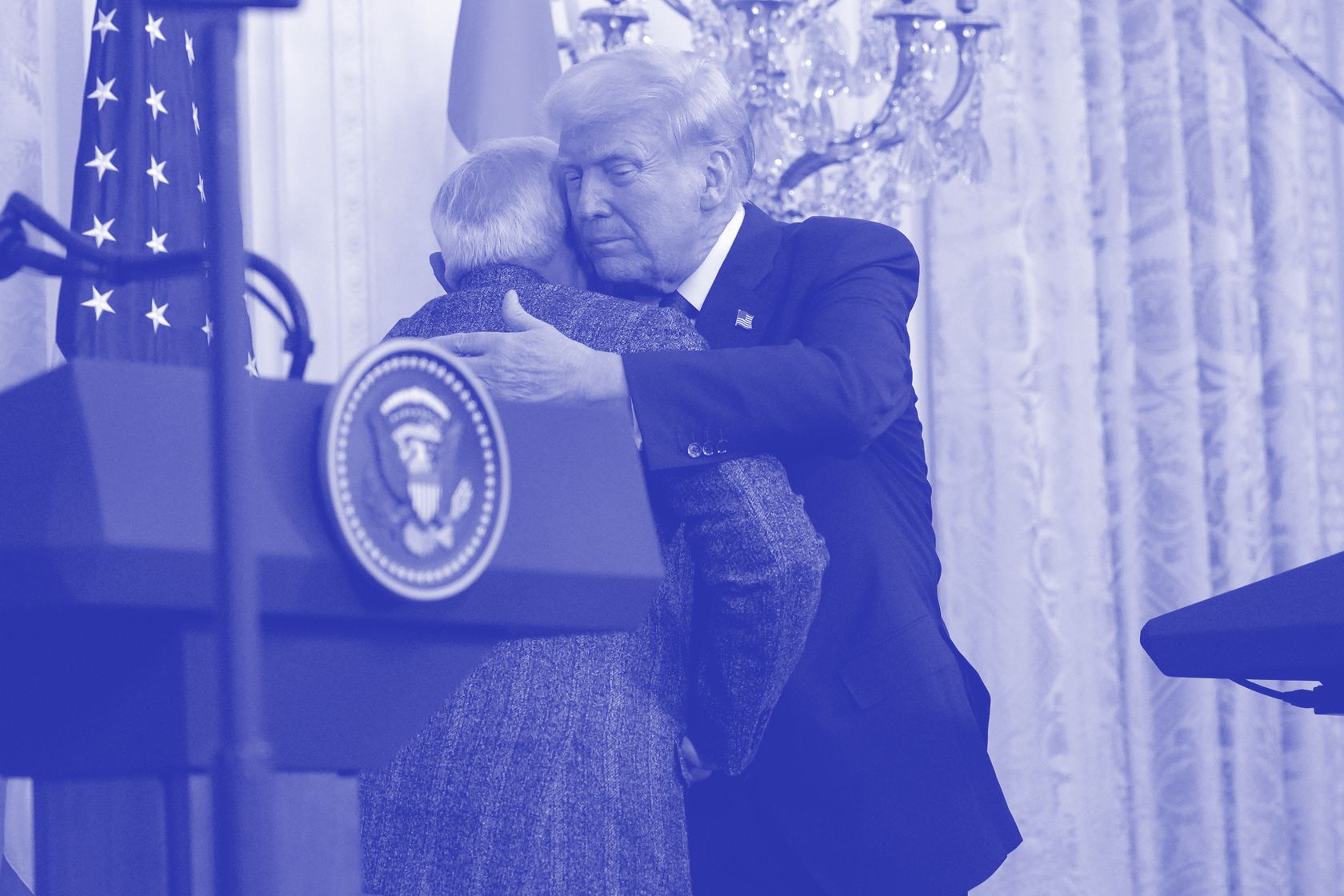
Soviet sanctions: US President Donald Trump imposed an additional 25% tariff on Indian goods over the country’s purchasing of Russian energy, after talks between Washington and Moscow on Wednesday failed to achieve a breakthrough. The new tariff will take effect within 21 days, according to an executive order signed by Trump, and will be imposed on top of a 25% country-specific tariff which is set to be implemented overnight. Trump said that the actions of the Russian government with respect to the situation in Ukraine continue to pose an “unusual and extraordinary threat” to US national security and foreign policy. The White House explained that India’s importation of Russian oil undermines US efforts to counter Russia’s harmful activities and India’s profitable reselling of Russian oil further enables the Russian Federation’s economy to fund its aggression. (White House executive order)(Capital Brief)
2.
Cooked commitment: Apple will announce a US manufacturing pledge of USD100 billion ($153.7 billion) on Wednesday, according to reports citing an unnamed White House official. The plan includes an “American Manufacturing Program” dedicated to bringing more of Apple’s supply chain and advanced manufacturing to the US. Apple CEO Tim Cook is expected to attend a White House event for the formal announcement Wednesday afternoon (Thursday morning AEST). The new commitment follows a USD500 billion pledge Apple made in February, which included AI servers near Houston, a manufacturing academy in Detroit, a new campus in California and Apple Silicon production in Phoenix. The investment will bring Apple’s total US investments in 2025 to USD600 billion. The tech giant is facing escalating costs from Trump’s trade policies, with tariffs costing Apple USD800 million in the June quarter and expected to add about USD1.1 billion in the September quarter. Apple shares rose 5.1%. (Capital Brief)(Axios)(Reuters)(Bloomberg)
3.
Watershed moment: Airtree Ventures closed its fifth fund at $650 million, with more than half the capital coming from global institutional investors in what marks a watershed moment for Australian venture capital. Despite the impressive number by Australian standards, partner James Cameron says the figure represents a deliberate decision to maintain fund size discipline rather than chase a mega-fund. "Fund size inflation can be the enemy of returns in venture and all of the big LPs internationally are very attuned to that," he told Capital Brief. The fundraise marks a significant shift in international LP interest for Australian VC. Some of the previously identified backers of the fund include Harvard Management Company, the University of Wisconsin, and Chicago-based private equity firm Adams Street Partners. But the fund confirmed that MetLife Investment Management (MIM), an arm of one of the biggest insurers in the US, has also committed funds. (Capital Brief)
4.
Monopoly over: ASIC is close to finalising a listing market application from Cboe Australia which, if approved, would break the ASX’s decades-long monopoly and introduce more competition to the Australian sharemarket. Cboe Australia would be able to facilitate public listings of companies on its own market. ASIC said this would be expected to "enhance competition and attract foreign investment, providing more choice for investors and greater international alignment". ASIC is also preparing to recognise Cboe’s US and Canadian exchanges, and the Canadian Securities Exchange (a prospective acquirer of the National Stock Exchange of Australia) as approved foreign markets. That means Australians would be able to trade and invest directly in certain offerings or secondary listings on those platforms, broadening options beyond ASX and helping to integrate Australia more fully into global capital markets. (Capital Brief)(ASIC)(The Conversation)
5.
Apple rally: US stocks climbed on Wednesday, led by gains in big tech, as Apple surged 5.1% ahead of its USD100 billion ($153.7 billion) US manufacturing announcement. The Nasdaq rose 1.2%, the S&P 500 added 0.7% and the Dow gained 0.2%. Shares of AMD fell after its data centre revenue missed expectations, while Super Micro shares lost 18.3% after the company posted underwhelming results in its data centre segment and lowered its fiscal-year revenue forecast. Snap shares also plummeted 17.3% after it acknowledged a slowdown in ad revenue growth due to earlier technical issues. Disney beat forecasts and raised its annual profit outlook on streaming and parks growth, but its stock slipped. McDonald’s shares rose after global sales beat expectations. Lucid shares also fell after posting disappointing earnings and warning of a bumpy road ahead for the EV industry, while Apollo agreed to buy a majority stake in Stream Data Centers, marking its first acquisition in the sector. (Bloomberg)(Reuters)(WSJ)
6.
Prize title: Respected online classifieds executive Cameron McIntyre has emerged as a contender for the vacant CEO position at REA Group, after the News Corp-controlled real estate platform confirmed it would announce the successor to outgoing boss Owen Wilson within the next month. McIntyre, who was most recently the CEO of ASX-listed carsales.com.au owner Car Group, is considered a strong external candidate for the role, according to two people briefed on the situation, who requested anonymity. However, there was no guarantee he would secure the position, the people told Capital Brief, and it is unknown if an agreement has been reached. REA declined to comment, and McIntyre could not be reached for comment. McIntyre is the latest of several internal and external names to surface in recent weeks for the coveted role at the helm of the $33 billion company, one of the Murdoch family's most prized assets. (Capital Brief)
7.
AI appetite: OpenAI is in early-stage discussions about a stock sale that would allow current and former employees to cash out and could value the company at about USD500 billion ($768.6 billion), according to multiple reports citing people familiar with the matter. That would represent a major increase from its latest valuation of USD300 billion, reached in a USD40 billion funding round led by SoftBank, which was reportedly oversubscribed by about five times. OpenAI, backed by Microsoft, has around 700 million weekly active users for its ChatGPT products and is on track to reach a USD20 billion annual revenue run rate by year-end. It comes as it works on a corporate restructuring that would move away from its capped-profit model and open the door for a potential IPO. On Wednesday (Thursday AEST), the company said it would offer ChatGPT Enterprise to all US federal agencies for USD1 a year. (Capital Brief)(OpenAI)(Bloomberg)(FT)(Reuters)
8.
Putin call: Donald Trump said his special envoy Steve Witkoff made “great progress” in a three-hour meeting with Vladimir Putin in Moscow, but acknowledged the Ukraine conflict would likely continue beyond his Friday deadline for a ceasefire. According to a social media post by the US president, Trump told European leaders he plans to meet with both Putin and Volodymyr Zelensky “as soon as next week”. The meetings would involve only the three leaders and would exclude European counterparts, The New York Times reported citing sources. A White House official told media the US is still expected to implement secondary sanctions on countries purchasing Russian oil, including the new 25% tariff on Indian goods. Kremlin aide Yuri Ushakov said “useful and constructive” talks had taken place and that “signals” on Ukraine were exchanged. Russia and Ukraine remain far apart in their positions, but both sides continue to engage. (Donald Trump)(NYT)(Bloomberg)(Reuters)