Trump fires back as EU, Canada flag retaliation
Plus: Stock market's wobbly comeback spurred by inflation data; US CPI slows but tariffs could sting; Atlassian’s Farquhar to lead Tech Council.

Good morning. Here's what happened overnight and what you need to know today.

1.
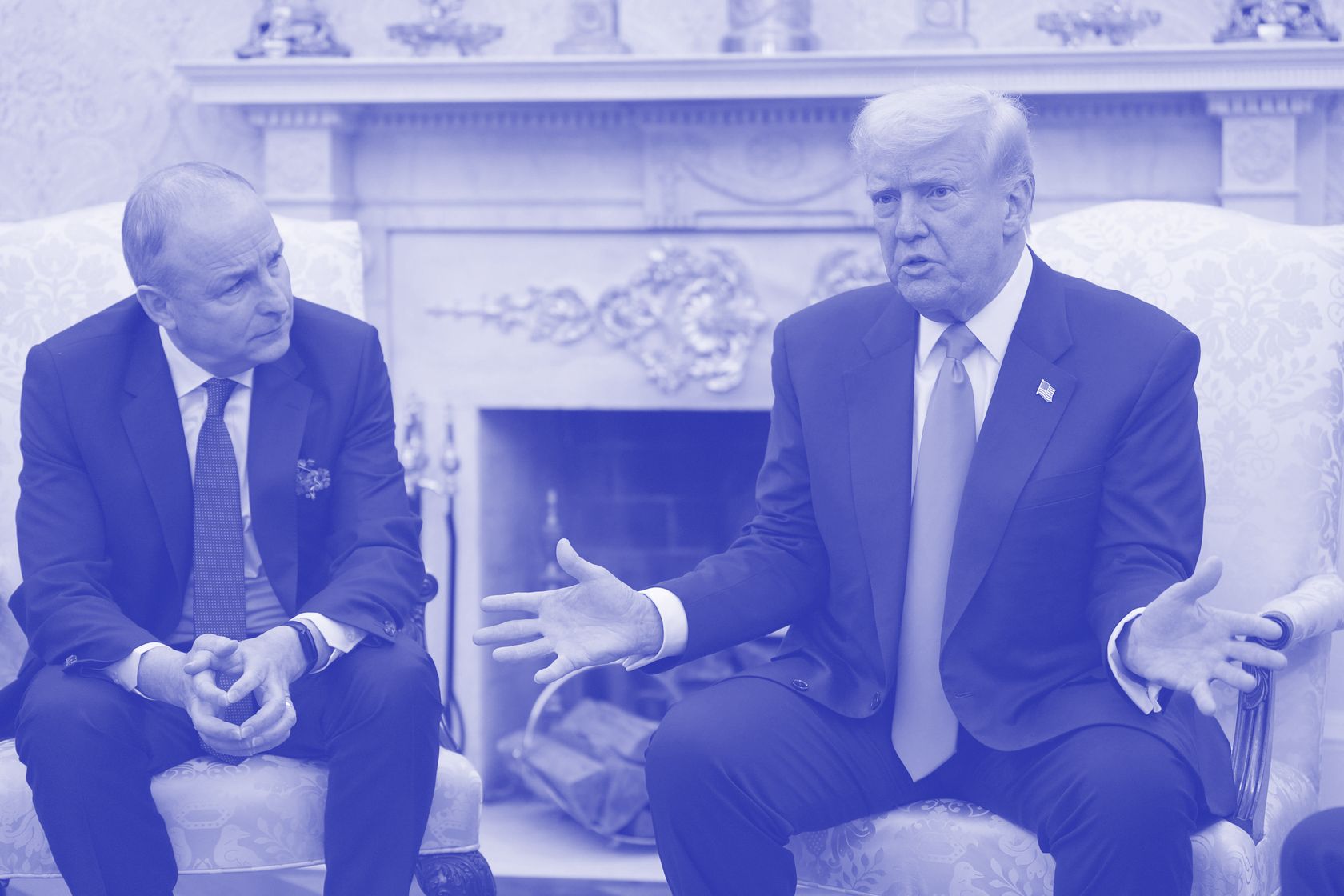
Trade counterplay: Donald Trump vowed to retaliate against the European Union’s countermeasures on US steel and aluminium tariffs. “Of course I’m going to respond,” he said at a White House meeting with Irish Prime Minister Micheál Martin. At the meeting, he highlighted Ireland’s “massive deficit” with the US, claiming that if he had been in office earlier, he would have imposed a 200% tariff on Irish products to deter multinational corporations from relocating there. Trump’s 25% tariffs on all US steel and aluminium imports took effect Wednesday, prompting almost immediate reprisals. The EU announced “swift and proportionate countermeasures” on €26 billion worth of US exports, targeting whiskey, motorcycles and industrial goods. Canada imposed 25% counter-tariffs on C$29.8 billion in US goods starting tomorrow. The UK, Australia, Mexico and Brazil opted for negotiations for now. EU Commission President Ursula von der Leyen called the tariffs “bad for business, and even worse for consumers,” echoing Prime Minister Anthony Albanese, who condemned them as “entirely unjustified” and “economic self-harm.”(Capital Brief)(Reuters)(Bloomberg)
2.
Market breather: US stocks fluctuated Wednesday as investors reacted to softer-than-expected inflation data and escalating trade tensions. The consumer price index rose slightly below forecasts in February, easing concerns over inflation-driven rate hikes. However, President Donald Trump’s 25% tariffs on steel and aluminium took effect, prompting retaliation measures from Canada and the EU. Stocks initially rallied after the inflation data release, but faded quickly, with more than 300 S&P 500 stocks falling within two hours, according to Bloomberg. The S&P 500 was 0.77%, the Nasdaq up 1.397% and the Dow flat in late afternoon trading. Treasury yields climbed, with the 10-year yield at 4.31%. The Bank of Canada cut interest rates by 0.25% to offset weaker consumer spending and trade uncertainty. Analysts noted investor focus had shifted from inflation to growth concerns, amid warnings of recession risks. (Reuters)(Bloomberg)(WSJ)
3.
Inflation ease: US consumer prices rose less than anticipated in February, with the consumer price index (CPI) posting its smallest gain since 2021. CPI rose 0.2%, with core CPI (excludes food and energy) also rising 0.2%. The all items index increased 2.8% year on year. The figures offer a reprieve after CPI advanced at a sharper 0.5% clip in January. The index for shelter rose 0.3% in February, which accounts for almost half of the monthly all items index increase. The rise for shelter was partially offset by a 4% decrease in airline fares, which fell the most since June last year as airlines warned of weaker demand. Despite the softer figures, investors expect that US inflation will creep up again as consumer prices rise on the back of the Trump administration's tariff rollout. The Federal Reserve is expected to hold rates steady at its meeting next week. (BLS)(Capital Brief)
4.
Lobby leader: Scott Farquhar has been tapped to succeed Robyn Denholm as chair of the Tech Council of Australia (TCA) from late March. The co-founder and board director of Atlassian, Farquhar, stepped down from his role as co-CEO in 2024 and is estimated to be worth around $22.9 billion. Farquhar says he plans to expand TCA’s advocacy in critical areas including digital infrastructure, consumer energy, and emerging technology. The decision for Denholm, who also serves as the chair of Elon Musk’s Tesla, to step down comes as questions about her ability to remain as chair of both entities swirled, given their potentially positions on US tech interests and Australia’s digital sovereignty. The pressures came to a head in February when the TCA urged caution regarding Australia's response to the Trump administration's aggressive stance against foreign digital services taxes and tech regulation — a position that aligns with efforts to protect the interests of American tech giants. (Capital Brief)
5.
Putin’s turn: Russian President Vladimir Putin is likely to agree to a ceasefire with Ukraine but will try to stretch out negotiations to ensure his conditions are met, Bloomberg reported citing unnamed sources familiar with the Kremlin’s thinking. One source said Moscow finds the framework agreed upon by a Ukrainian delegation in Jeddah unacceptable and might demand a halt to weapons supplies, Ukraine’s neutrality, a significant reduction in its armed forces and territorial concessions, including land Russia has seized in the war. In return for Ukraine’s acceptance of the US proposal, Washington lifted a freeze on military aid. US envoy Steve Witkoff is travelling to Moscow, and National Security adviser Mike Waltz has today spoken to his Russian counterpart. Putin has pushed back against Trump’s efforts for a quick halt to the war, insisting on a long-term settlement with guarantees for Russia. Meanwhile, European defence ministers are meeting in Paris to coordinate on Ukraine. (Bloomberg)
6.
Flat battery: One of Sweden’s largest battery cell makers for electric vehicles (EVs) has filed for bankruptcy with debt of over USD8 billion ($12.7 billion) as of end-January. Northvolt filed for Chapter 11 bankruptcy in the US last November, and hoped to secure USD1 billion in financing to protect the future of its final existing battery factory near the Arctic Circle. Despite recent production increases and cost cutting, Northvolt said it was unable to secure funding and that a trustee would begin selling its assets. Interim chairman Tom Johnstone said the company hopes to identify financing to continue trading during the Swedish bankruptcy process. Hopes had been pinned on Northvolt becoming Europe’s key player in the EV battery sector, competing with the dominant China. Johnstone said: “It remains key for Europe to have a homegrown battery industry, but it is a marathon to build such an industry.” (Capital Brief)(Northvolt)(Financial Times)
7.
Tab tiff: Iress executives are reviewing their controversial decision to charge customers for an industry standard tech upgrade in the face of mounting opposition from large institutional brokers. The ASX-listed $1.5 billion company held a high-level internal meeting on Wednesday to revisit its strategy of passing on the cost of a multi-million dollar tech upgrade to its own customers following client criticism, sources told Capital Brief. Institutional brokers have joined the backlash with UBS, Morgan Stanley and Goldman Sachs privately airing their frustrations, while other customers declined to attend proposed one-on-one meetings with Iress altogether. The company is widely tipped to be looking for a private takeover after EQT Funds Management walked away from its bid in 2021 – which could explain why the company is reluctant to absorb costs. (Capital Brief)
8.
Banking tech: Industrial and Commercial Bank of China (ICBC), the world’s biggest commercial lender by assets, launched an 80 billion yuan ($17.5 billion) technology and innovation fund to support the private economy, Reuters reported citing a statement. The fund will focus on "hard technology" through equity investment, targeting areas such as semiconductors and advanced manufacturing rather than "soft" technology like internet services. ICBC chairman Liao Lin said the bank would thoroughly implement directives from central leadership by transforming beneficial policies into concrete actions supporting private enterprises. The fund is described as "patient capital" rather than a rush for quick profit. The announcement follows China’s annual parliamentary meeting, where policymakers outlined priorities for 2025, including boosting consumption and achieving technological breakthroughs. Last week, China’s state planner said it would establish a government-backed fund to mobilise 1 trillion yuan from social capital to support technology startups. (Reuters)
