Trump fires sweeping tariffs on Canada, Mexico, China
Plus: Aussie city prices slip again in January; Albanese axes controversial nature laws ahead of election; Musk snags Treasury spending peek via DOGE.


Good morning. Here's what happened overnight and what you need to know today.

1.
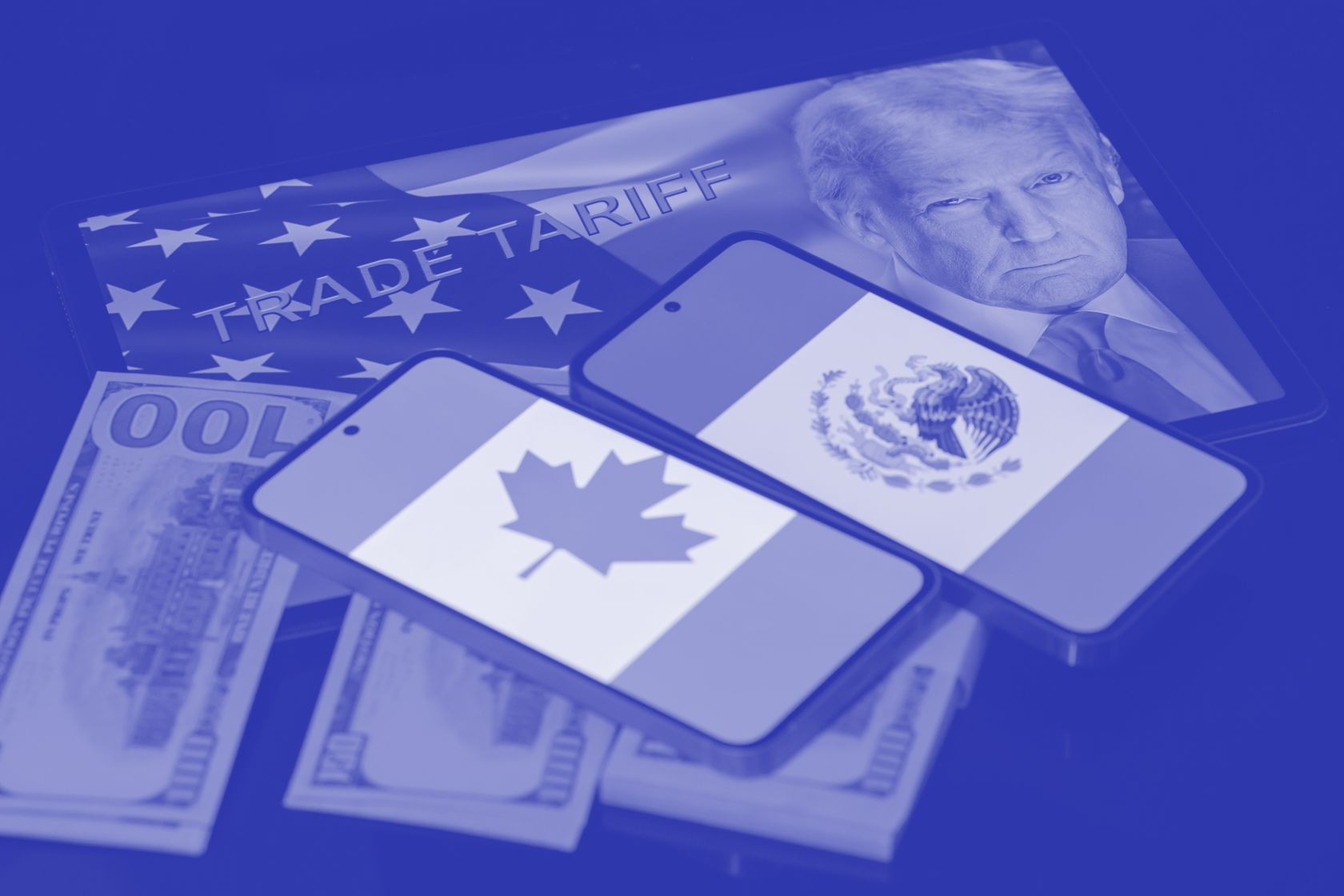
Tariff tempest: Donald Trump unleashed sweeping tariffs on the three largest trading partners of the US, imposing 25% duties on imports from Canada and Mexico and a 10% levy on Chinese products, effective Tuesday, launching a new era of trade wars set to reshape global supply chains. Using the International Emergency Economic Powers Act—a 1970s law never before used for tariffs—Trump justified the measures citing illegal aliens and deadly drugs. In response, Canadian Prime Minister Justin Trudeau announced 25% counter-tariffs on C$155 billion of US-made goods—C$30 billion effective immediately, with the balance in 21 days—while Mexico’s President Claudia Sheinbaum ordered retaliatory measures under a “Plan B,” without specifying the measures. China vowed corresponding countermeasures and a WTO complaint but stopped short of imposing tariffs for now. Bloomberg economists estimate the tariffs will raise the average US tariff rate to 10.7%, potentially costing 1.2% of US GDP and increasing core inflation by 0.7%. The Chamber of Commerce, the National Association of Manufacturers and the United Steelworkers union have spoken out against the tariffs. Trump has also warned Europe too is in his crosshairs. (Capital Brief)(White House fact sheet)(Bloomberg)(FT)
2.
City slump: Australian house prices in major cities declined by 0.2% in January - their second straight monthly decline - with Melbourne down 0.6%, Canberra 0.5% and Sydney 0.4%, CoreLogic data showed. In contrast, regional areas showed modest gains with Adelaide rising 0.7%, Perth 0.4% and Brisbane 0.3%. High interest rates at a 13‐year high of 4.35%, affordability constraints and slower immigration have kept buyers out of the Melbourne-Canberra-Sydney triangle. CoreLogic research director Tim Lawless told Capital Brief that the easing cycle by the Reserve Bank, expected at its February 17-18 meeting, could support prices, though he warned that affordability issues, soft economic conditions and a cautious, gradual rate cut cycle mean a significant growth cycle over the coming year remains unlikely. Regional markets, including Townsville, Central Queensland, Rockhampton, Gladstone, Mackay, Bunbury and Geraldton, have surged throughout 2024 and into 2025. (Capital Brief)(Bloomberg)
3.
Nature binned: Prime Minister Anthony Albanese shelved Labor’s controversial Nature Positive environmental laws ahead of the election after opposition from West Australian Labor Premier Roger Cook and parts of the mining industry. The legislation would have established a federal Environment Protection Agency with powers to issue stop-work notices, fines, audits and enforce environmental laws. Environment Minister Tanya Plibersek on Friday remained hopeful for a “common sense” solution, but in a podcast published by The Conversation on Saturday, Albanese conceded there is no “path to success” this term amid fresh Greens’ demands and an “obstructionist” Liberal stance. He also hinted that reforms on electoral donations and spending might be scaled back to secure passage. The move to drop the reform, part of Labor’s 2022 election environmental platform and originally backed by the Business Council of Australia, follows a reported personal promise from Albanese to Cook before the 8 March state election. (Capital Brief)(The Conversation)
4.
DOGE access: US Treasury Secretary Scott Bessent approved access for representatives of the new Department of Government Efficiency (DOGE) to the US Treasury’s payment system, effectively handing Elon Musk access to a powerful and sensitive tool to monitor and potentially limit government spending, according to media reports. The system disburses trillions in benefits, including Social Security, Medicare payments and tax refunds, and is traditionally managed by career civil servants. DOGE’s access is currently described as “read only” according to a WSJ source, and is intended for reviewing the system’s efficiency rather than blocking payments. The decision followed a standoff with career official David Lebryk, who was placed on leave before he retired. Musk and his team, drawn from a task force originally created to cut federal spending and reduce workforce numbers, have claimed Treasury payment officers approved payments without sufficient scrutiny. Democrats, including Senator Ron Wyden, have raised concerns about politically motivated interference with this sensitive system. (WSJ)(NYT)(AP)
5.
Risky goods: The European Union plans to hold e-commerce platforms including Temu, Shein and Amazon Marketplace liable for dangerous or illegal products sold online, according to a draft proposal reported by the Financial Times. The proposed customs reforms would require platforms to provide data before goods arrive in the EU, to collect the relevant duty and VAT, and to ensure the goods comply with other EU requirements. The changes would shift the importer responsibility from the individual purchaser to the platforms, remove the duty exemption for goods under €150 ($249.56), and call for pooling customs data from 27 national authorities to form a new central EU customs authority (EUCA). The document highlights concerns over a surging volume of products that are unsafe, counterfeit or otherwise non-compliant, and notes that the EU imported 4.6bn lower-value parcels in 2024, with more than 90 per cent from China. (FT)
6.
SEC pause: Lawyers at the US Securities and Exchange Commission have been told to seek permission from the Commission’s politically appointed leadership before formally launching probes, Reuters reported. Under the new leadership since President Trump took office, formal investigation orders now require Commission approval rather than being delegated to lower-level staff, as it was done before. Enforcement staff may still investigate informally. Typically, the agency is independently overseen by five commissioners. But it currently comprises three members – two Republicans and one Democrat – all appointed by the President. The change, affecting enforcement orders needed for subpoenas, is one of the first under Republican acting chair Mark Uyeda, alongside Commissioners Republican Hester Peirce and Democrat Caroline Crenshaw. (Reuters)
7.
Queensland floods: Torrential rains in northern Queensland have triggered severe flooding, leading to the death of at least one person. More than 1,000mm of rain has fallen on parts of north-east Queensland since Friday, with 24-hour totals reaching 300mm, according to the Bureau of Meteorology. A woman died in Ingham when an SES dinghy hit a tree and capsized during a rescue. Meteorologists suggest these could be the worst floods in over 60 years, with rising river levels potentially inundating 1,700 Townsville homes. Thousands have been urged to evacuate as roads become impassable, Townsville airport closes, supermarkets run out of fresh food, and power outages are reported. (BBC)(Reuters)
8.
AI abuse: Britain will ban AI tools that generate explicit child abuse images, becoming the first country in the world to introduce the new AI offence. The new offences – introduced in England and Wales – specifically target the use of AI to “nudeify” real-life images of children. Existing laws already criminalise possessing, taking, making, showing or distributing explicit images of children. According to the Internet Watch Foundation, online criminals have used AI to create child abuse material, with explicit images rising nearly five‐fold in 2024. Britain’s interior minister Yvette Cooper said such online activities can lead to in‐person abuse. The measures also cover possession, creation or distribution of AI tools for producing abuse material and running websites that distribute such content. Authorities will be permitted to unlock digital devices for inspection. (Reuters)
