Trump ices Ukraine intel sharing
Plus: Trump reportedly considering month delay to auto tariffs; US Supreme Court rejects Trump’s USAID funding freeze; UK clears Microsoft’s OpenAI deal.

Good morning. Here's what happened overnight and what you need to know today.

1.
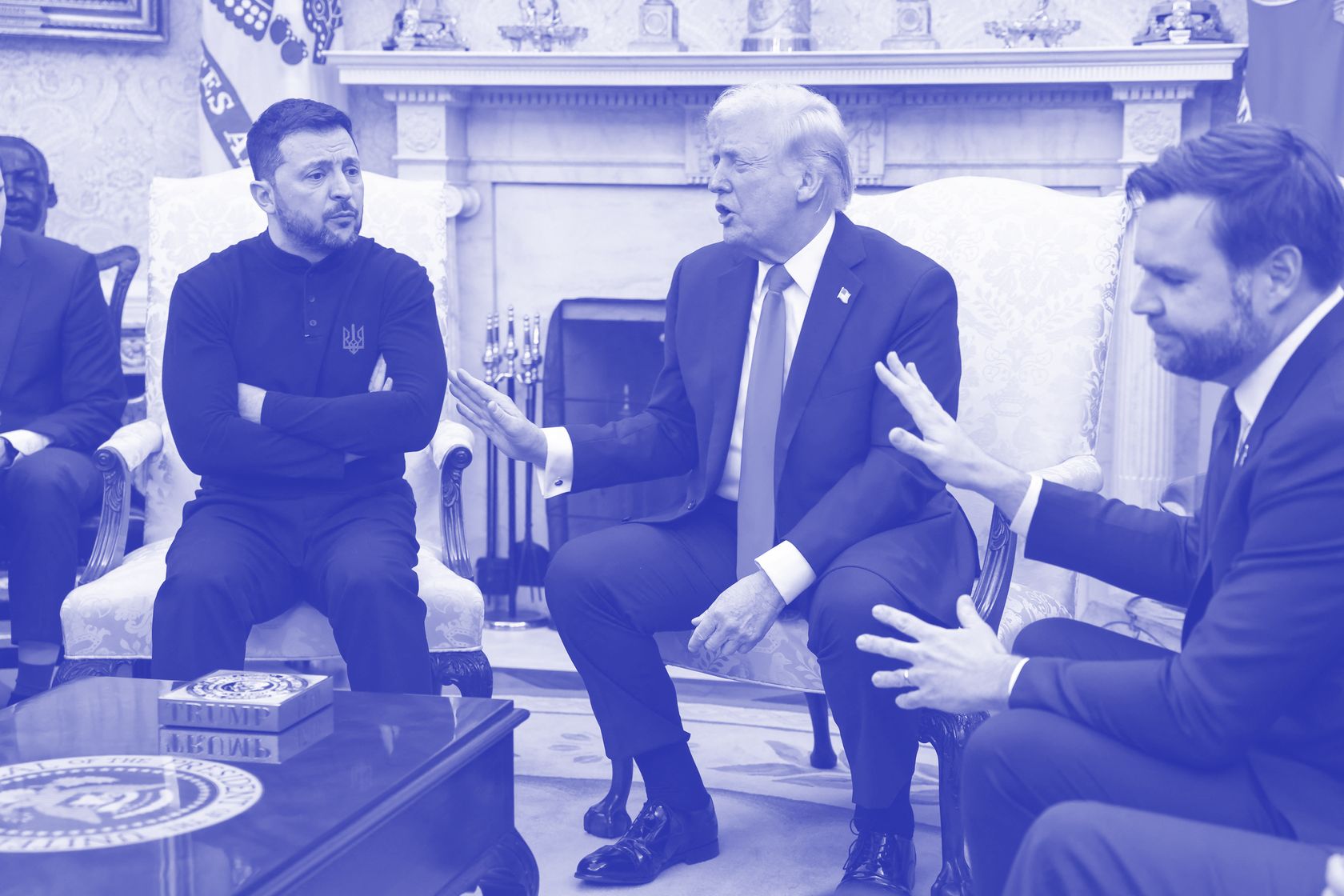
Intel freeze: The US has temporarily halted intelligence-sharing with Ukraine, a move that could hinder Kyiv’s ability to target Russian forces, CIA Director John Ratcliffe confirmed Wednesday (Thursday AEDT). Speaking on Fox Business, Ratcliffe said President Donald Trump had “asked for a pause” in intelligence-sharing after his tense meeting with Ukrainian President Volodymyr Zelensky. Ratcliffe suggested it could resume. This follows the suspension of military aid after the disastrous televised Oval Office meeting between the leaders. Unnamed officials had earlier told the Financial Times that intelligence-sharing had been frozen, though a Reuters source called it only “partial.” Bloomberg reported the halt includes all intelligence except for what Ukraine needs to protect its forces. The Daily Mail said the US also blocked allies from sharing its intelligence. National security adviser Mike Waltz told reporters outside the White House the US is “reviewing all aspects” of its relationship with Ukraine. A Ukrainian intelligence spokesperson declined to comment. (Capital Brief)(Reuters)(WSJ)(FT)
2.
Auto reprieve: The Trump administration is considering a one-month delay on newly imposed 25% auto tariffs on Mexico and Canada, Bloomberg reported, citing sources familiar with the matter. Trump spoke Tuesday (Wednesday AEDT) with the CEOs of General Motors, Ford and Stellantis about the potential delay. Commerce secretary Howard Lutnick earlier suggested the auto sector and others complying with the United States-Mexico-Canada Agreement could receive relief, with an announcement expected today. Bloomberg reported the delay is meant to buy time for automakers to shift more investment and production to the US, a key Trump demand. Discussions on tariff relief with the Big Three automakers are set to continue Wednesday local time. Automakers warn the tariffs could raise car prices by up to USD12,000 ($19,000) and disrupt supply chains. Stellantis told dealers the tariffs would hurt competitiveness but said it was willing to expand US investment. The share prices of Stellantis, GM and Ford rose on the news. (Bloomberg)(Reuters)(Capital Brief)
3.
Trump blocked: The US Supreme Court voted 5-4 to reject President Donald Trump’s request to freeze nearly USD2 billion ($1.59 billion) in foreign aid, upholding a lower court order requiring the funds to be disbursed. Chief Justice John Roberts and Justice Amy Coney Barrett joined the three liberal justices in the unsigned order, directing Judge Amir Ali to clarify how the government must comply with his ruling after the original deadline had lapsed. The ruling is the court’s first major decision on Trump’s policies since he took office on 20 January, amid more than 100 lawsuits challenging his actions. Ali ruled on 25 February that the administration must pay over USD1.5 billion for completed aid work by midnight the next day. Despite his restraining order, the administration largely kept the funds frozen. Justice Samuel Alito, joined by three other conservatives, dissented, saying the order “stunned” him. Ali will hold a hearing on a longer-term injunction. (Capital Brief)(NYT)(US Supreme Court order)
4.
W(ai)ved through: The UK’s Competition and Markets Authority (CMA) ruled that Microsoft’s partnership with OpenAI does not warrant an investigation under UK competition laws. The CMA launched its probe in December 2023 over concerns that Microsoft’s USD13.75 billion ($21.8 billion) investment in OpenAI could give either company undue influence over the other. While the relationship between the two firms has evolved during the investigation, the CMA “does not consider there has been a change of control by Microsoft from material influence to de facto control over OpenAI,” it said. US regulators are also scrutinising the deal, with the Federal Trade Commission examining whether Microsoft’s investment could extend its dominance in cloud computing into the AI sector.(CMA)(Financial Times)(Capital Brief)
5.
Greasing bids: Saudi Aramco is considering bidding for part or all of BP’s Castrol lubricant assets, sources told Bloomberg. Castrol is estimated to be worth around USD10 billion ($15.9 billion). Aramco, which acquired Valvoline’s lubricants business for USD2.65 billion in 2023, is expanding its presence in the premium branded lubricants market. Fast-growing markets like India, where Castrol’s Mumbai-listed subsidiary is valued at around USD2.5 billion, are of particular interest to Aramco, Bloomberg said. BP is undergoing a major restructuring amid activist pressure from Elliott Management. Selling Castrol could help restore investor confidence, given the unit is reportedly among the BP assets that Elliott has earmarked for potential sales. (Bloomberg)(Capital Brief)
6.
Trump sell–off: The Trump administration reversed its decision to list for sale 443 federal properties – including some of the US government’s most iconic ones – less than a day after posting them. On Tuesday (Wednesday AEDT), the General Services Administration (GSA) published the list, which included agency headquarters, historic buildings and taxpayer service hubs across 47 states, Washington DC, and Puerto Rico. Among them were the Old Post Office in Washington, once home to the Trump International Hotel, and skyscrapers in Chicago, Atlanta and Cleveland. The list also featured key government facilities, including a major tax-processing centre, the Food and Drug Administration’s 3.1 million-square-foot research lab and a Northern Virginia campus linked to the CIA. More than 100 properties were removed within five hours, and by Wednesday morning (Thursday AEDT), the entire list was taken down. The GSA has not explained the reversal. (Capital Brief)(Reuters)(Bloomberg)
7.
Cloud-speed migration: Commonwealth Bank is finalising its migration to Amazon Web Services (AWS) Cloud, nine months ahead of schedule, reinforcing its lead in AI and technology among Australian banks. It was the first in the region to partner with AWS on an AI Factory in September 2024 to develop generative AI and has since integrated AI into its engineering functions. Speaking at an AWS event this week, CBA’s chief data and analytics officer, Andrew McMullan, confirmed AWS would become the bank’s primary data platform for AI and data operations. “We go live in May,” he said. “The initial plan was 18 months to migrate all our data platforms. We will deliver that in under nine.” McMullan credited the acceleration to an intensified data foundation program, calling data the fuel for generative AI. (Capital Brief)
8.
Retail deal: KKR and Walmart are selling their stakes in Japanese supermarket chain Seiyu to discount retailer Trial Holdings for 380 billion yen ($4.05 billion). KKR first bought a 65% stake from Walmart in 2021, then acquired an additional 20% from Rakuten in 2023, bringing its holding to 85%. Walmart will sell its remaining 15% stake as part of the deal. KKR said it has worked closely with Walmart to support Seiyu’s growth by improving operations, product quality, profitability and technology adoption. Hiro Hirano, deputy executive chairman of KKR Asia Pacific and CEO of KKR Japan, called Seiyu “an outstanding example” of how global investors with local expertise can help iconic Japanese brands reach their full potential. (KKR)(Trial Holdings)(Capital Brief)
