Trump lauds US-Qatar deals, record Boeing order
Plus: China suspends trade bans on US firms; OPEC cuts oil supply outlook as prices fall; Wall Street rally stalls after 18% gain.

Good morning. Here's what happened overnight and what you need to know today.

1.
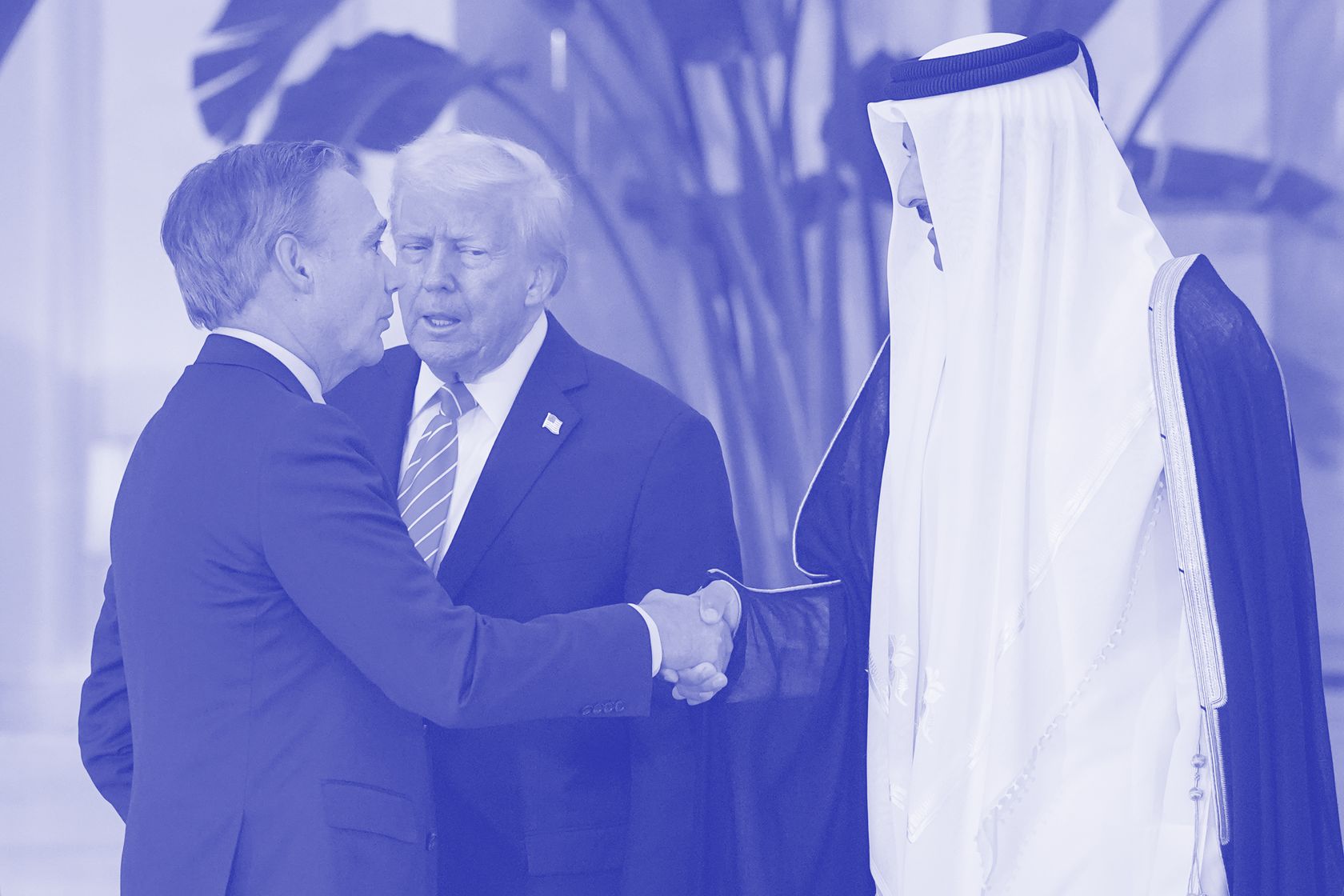
Relations restored: US President Donald Trump announced more than USD244 billion ($380 billion) in deals with Qatar, which the White House said laid the groundwork for a broader USD1.2 trillion economic exchange. The deals include a USD96 billion plan by Qatar Airways to acquire up to 210 Boeing 787 and 777X jets with GE Aerospace engines, described by the White House as the largest-ever widebody order. Earlier in Saudi Arabia, Trump met with Syrian President Ahmed al-Sharaa and urged him to normalise ties with Israel after announcing the US would lift all sanctions on Syria. Trump said Sharaa expressed willingness to eventually join the Abraham Accords – a US-brokered 2020 agreement under which the UAE, Bahrain and Morocco normalised relations with Israel – though Trump noted Syria still had “a lot of work to do”. Trump said he is unlikely to visit Turkey this week during his Mid-East tour. (Capital Brief)(Bloomberg)(FT)(Reuters). (White House)
2.
Rally wobbles: The S&P 500 hovered near flat in late trading after earlier swings, as Wall Street’s rebound from April lows showed signs of fatigue following an 18% gain over 24 sessions. Boeing rose over 3% after the news of Qatar Airways’ jet order, before paring back gains to be 0.5% higher in late trading. AMD shares climbed after announcing a USD6 billion ($9.34 billion) share buyback. American Eagle Outfitters fell after pulling its annual forecast. Trading platform EToro surged as much as 43% in its trading debut after a USD620 million upsized IPO, valuing it near USD6 billion. Roche said Trump’s drug pricing executive order could put its recently announced USD50 billion US investment plans at risk. Novartis said it would maintain its USD23 billion US commitment. (Bloomberg)(Reuters)
3.
Oil slip: OPEC trimmed its forecast for growth in oil supply from the US and other producers outside the wider OPEC+ group this year and said it expects lower capital spending after a decline in oil prices. OPEC said it now expects the global economy to grow 2.9% this year, down from 3%, while 2026 projections remain unchanged at 3.1%. The group said global uncertainty should ease if the US secures deals with trade allies, noting potential agreements with partners like the EU, Japan and South Korea could be achieved in the coming months. “Trade negotiations over the past two months…have shown a potential pathway of de-escalation, supporting the assumption that major trading partners will succeed in achieving lower tariff rates,” the report said. The cartel’s expectations for oil demand growth sits well above that of the International Energy Agency, and concerns of a supply glut are growing as OPEC+ begins its planned output hikes. (OPEC)(WSJ)(Reuters)(Bloomberg)
4.
Tariff pause: China is suspending a trade and investment ban it had imposed on US firms after the world’s two largest economies struck a trade détente earlier this week. China paused non-tariff measures against 17 US entities placed on its unreliable entity list in April, and 28 firms on its export control list, the Ministry of Commerce said. The suspensions started on Wednesday and will last for 90 days. Foreign firms listed as unreliable entities are banned from engaging in import, export and investment in China, and exporters will need to file an application with the Commerce Ministry if they want to export dual-use items to the 28 firms on the export control list. Beijing’s softening on retaliatory US export controls follows a tougher stance it took on the UK earlier this week, reportedly blasting Britain for its US trade deal which it said could squeeze Chinese products out of British supply chains. (Bloomberg)(Reuters)(FT)
5.
Maca’s hubris:ASIC sued Macquarie Securities Australia Ltd (MSAL) in the NSW Supreme Court for allegedly failing to correctly report millions of short sales over 14 years—its first short-selling case and fourth action against Macquarie in 12 months. The regulator alleges MSAL underreported between 298 million and 1.5 billion short sales from 11 December 2009 to 14 February 2024, due to “multiple systems-related issues, many of which remained undetected for over a decade”. ASIC is seeking penalties of up to $780 million and an independent review of MSAL’s regulatory reporting systems, controls and supervisory procedures. Chair Joe Longo said the case reflects “a broad complacency about their compliance, a kind of hubris” and has “really undermined our trust and confidence in the institution”. Macquarie said it self-reported the issues in late 2022, has remediated them, and implemented additional controls. Macquarie shares fell 1.6% after the announcement. (Capital Brief)
6.
Dexit discussions: Tesla’s board formed a special committee to review CEO Elon Musk’s pay packet, which could result in a new stock options package, the FT reports. The committee comprises of chair Robyn Denholm and board member Kathleen Wilson-Thompson. The duo will consider alternative avenues to compensate Musk for past work, should Tesla fail to reinstate his record 2018 pay deal (worth a potential USD98 billion ($152 billion) at the current share price) via an appeal at the Delaware Supreme Court this year. Musk shifted Tesla’s incorporation to Texas last year to escape Delaware’s oversight, with several major public companies now considering a similar ‘Dexit’ transfer. Since the committee’s existence was revealed last month, major investors have been consulted about their views on Musk’s pay and leadership. Tesla’s proxy statement has been delayed, signalling a possible AGM postponement until pay proposals are formulated. Tesla this week resumed shipping car components from China to the US as the trade war de-escalates. (FT)
7.
Gaming boost: Tencent Holdings, China’s biggest tech company, reported 13% year-on-year revenue growth in Q1, its fastest pace in over three years, driven by surging gaming and AI advertising businesses. Revenue reached 180 billion yuan ($38.6 billion), beating the LSEG estimate of 174.6 billion yuan. Domestic gaming revenue rose 24% to 42.9 billion yuan, while international gaming grew 23% to 16.6 billion yuan. Marketing services revenue climbed 20% to 31.9 billion yuan, supported by monetisation of WeChat, which has over 1.4 billion monthly users. Capital expenditure jumped 91%, largely due to AI-related spending, which Tencent said will boost future growth. The company has acquired AI chips to integrate DeepSeek’s R1 model—known for its efficiency and affordability—into WeChat and Yuanbao. (Tencent)(Reuters)(Capital Brief)
8.
Agentic checkout: Perplexity AI said it partnered with PayPal to enable direct purchases within its chat interface, allowing US users to check out instantly with PayPal or Venmo when they ask Perplexity Pro to find products, book travel or buy tickets. The entire process, including payment and invoicing, will occur behind the scenes through PayPal’s account linking and passkey checkout, eliminating “the need for passwords” and aiming to “streamline the experience to a single user query or click.” PayPal will also handle shipping and tracking, the company said. The partnership will expand Perplexity’s commerce tools to PayPal’s more than 430 million active accounts across nearly 200 markets. Perplexity is growing its e-commerce tools in the agentic commerce sector, where AI agents handle transactions autonomously. It previously added shopping for paid US users and integrations with services like Shopify. The announcement comes as it seeks USD500 million ($778 million) in funding, reportedly valuing it at USD14 billion. (Capital Brief)
