Trump rally momentum propels Wall Street to new highs
Plus: Trump picks hardliners for mass deportations job, loyalist for UN; Oil slides as China measures disappoint; Albanese urged to unseal think tank funding review.


Good morning. Here's what happened overnight and what you need to know today.

1.
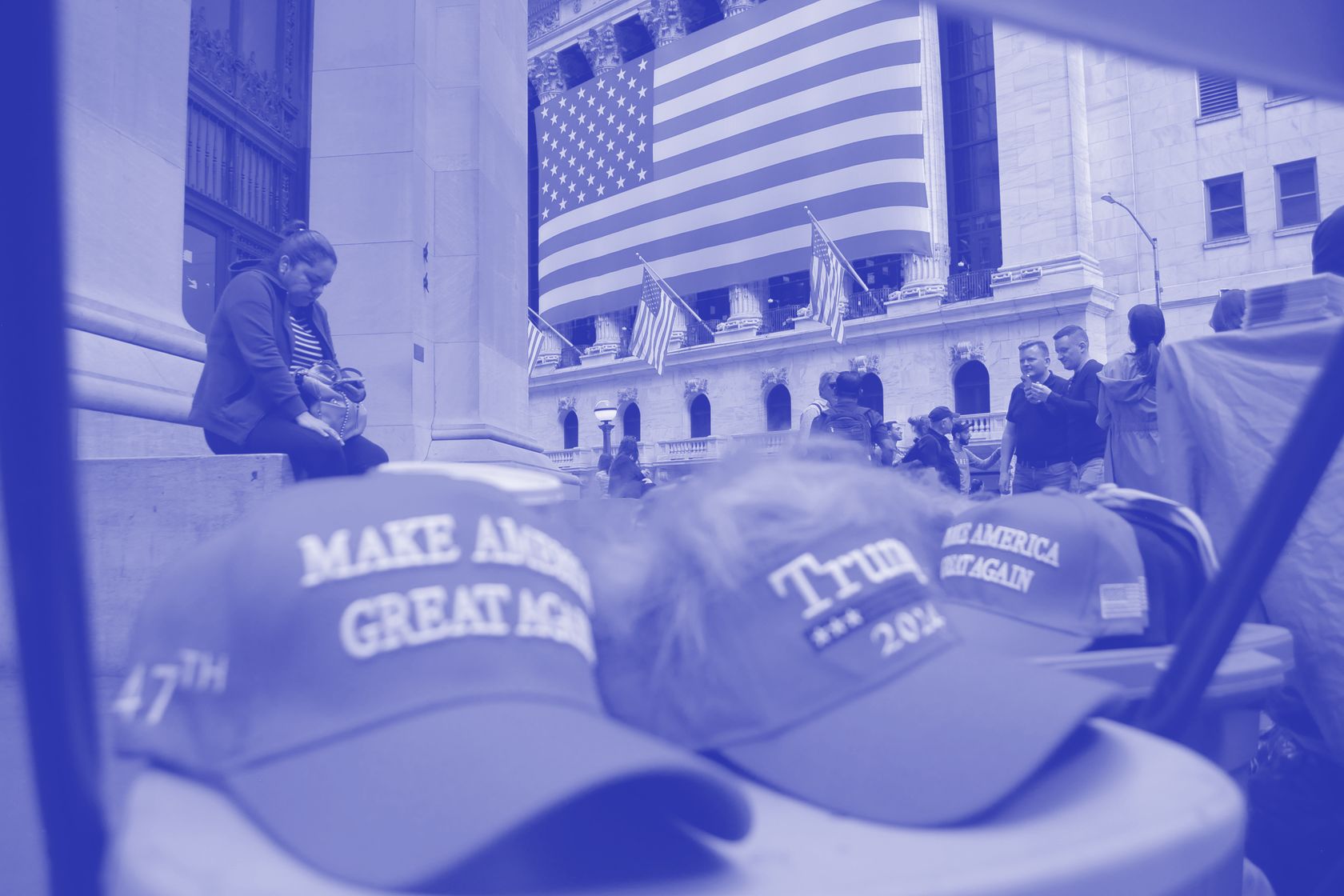
Trump 2.0 rally: Wall Street roared to record highs as President-elect Trump's victory turbocharged markets and Republicans were edging closer to maintaining their majority in the House. The S&P 500 crossed the 6,000 milestone, reaching 6,017.31 points before paring back gains in the afternoon, the Dow also reached a new high, with financial stocks like Goldman Sachs and JPMorgan driving gains, while the Nasdaq eased 0.09% after touching a record. Tesla skyrocketed 11.38%, surpassing a USD1 trillion ($1.52 billion) valuation, before paring back some gains. Bitcoin’s rally past $84,000 boosted related stocks, with Coinbase up 23% and MicroStrategy, one of bitcoin’s biggest corporate backers, also over 22% higher. The ‘Trump trade’ reflected investor excitement over anticipated eased regulation and crypto-friendly policies, such as a proposed Bitcoin stockpile. The Fed’s recent 25-basis-point rate cut added fuel, with some traders eyeing further cuts in December. Markets now await consumer inflation data this week for the next move. (Reuters)(Bloomberg)
2.
Trump 2.0 team: US President-elect Donald Trump named former acting ICE director Tom Homan as “border czar” to lead border security and mass deportations, and appointed staunch House supporter Elise Stefanik as UN ambassador. Trump has promised “the largest deportation program in American history,” aiming to remove 20 million immigrants. Homan, known for strict immigration enforcement during Trump’s first term, including the controversial “children in cages” programme, last month told CBS’ 60 Minutes he would resume workplace raids under the new administration. Stefanik voted against certifying Joe Biden’s electoral votes in the 2020 election, and is also known for her aggressive questioning of college presidents over pro-Palestinian protests. Immigration hardliner and former key adviser to Trump, Stephen Miller, will be named deputy chief of staff for policy, according to media reports that were confirmed by Vice President-elect JD Vance. (Capital Brief)(WSJ)(NYT)
3.
Crude dip: Oil prices fell over 3% on Monday after China's new stimulus measures failed to meet investor expectations for boosting fuel demand. Brent crude dropped to USD71.78 ($109.28) a barrel, while WTI fell to USD68.17. A stronger US dollar, bolstered by anticipation of upcoming inflation data and Federal Reserve commentary, further weighed on prices. Late on Friday, the second-largest economy announced a 10 trillion yuan debt package to help local governments swap “hidden” debts, disappointing markets looking for direct economic stimulus measures. Saudi Arabia's decision to reduce oil exports to China in December contributed to market pessimism as it was taken as a sign of weak demand. Oil prices also eased as concerns over storm Rafael's impact on US Gulf oil supply subsided, even as over a quarter of the region's oil production remained offline, Reuters reported citing the offshore energy regulator. (Capital Brief)(Reuters)
4.
Think silence: Michael Shoebridge, former head of ASPI’s defence program, has urged Prime Minister Anthony Albanese to release the findings of an independent review into national security think tank funding, completed by former DFAT secretary Peter Varghese in August. Shoebridge told Capital Brief Albanese should “unshackle” Varghese and allow the review and its supporting data to be released, adding that keeping decisions on public policy funding secret is more reminiscent of Russia than Australia. The review, initiated by Albanese’s department at the start of the year, is viewed as scrutinising ASPI, which received $8.1 million in government funding last year. While PM&C first assistant secretary Lachlan Colquhoun noted the review had no single driving factor and was supported by multiple departments, the submissions to Varghese remain unpublished. The timeline for the release of the review remains unclear, and Albanese’s office has not responded to whether it will be published before the election.(Capital Brief)
5.
Thule lock: Thule Group, the Swedish outdoor product giant, is acquiring Melbourne-based phone mounting company Quad Lock from Quadrant Private Equity for $500 million (about 3.6 billion Swedish kronor). Founded in 2011 and acquired by the PE firm in 2020, Quad Lock is known for its high-performance phone mounts used by cyclists and adventurers. Thule’s purchase will be financed through cash and credit (79%) and newly issued shares (21%), representing a 1.9% stake in Thule. Quad’s annual global sales as of 31 August reached to 1.4 billion Swedish kronor with a 25% EBITDA margin, Thule said in a statement. The acquisition, pending Australian regulatory approval, is expected to finalise by Q4 2024. Thule CEO Mattias Ankarberg said the acquisition aligns with the company’s growth strategy and goal of SEK 20 Swedish kronor in sales and a minimum EBIT margin of 20% by 2030. (Capital Brief)
6.
Driver’s lens: Amazon is developing smart eyeglasses in a project internally codenamed "Amelia," to help delivery drivers more efficiently navigate routes and buildings, Reuters reported citing sources. The glasses would feature a small display for turn-by-turn navigation and could capture photos of delivered packages for proof. The project could reduce time spent on the usually costly and complicated “last 100 yards” of couriers' routes, according to the sources. The technology, still in development, would gather complete data on each house, sidewalk and driveway, but Amazon has faced challenges with the battery life, according to the report. The project could be shelved if it fails to meet expectations, it added. Amazon reported an 8% increase in Q3 shipping costs, reaching USD23.5 billion ($35.78 billion), as it fights Walmart’s strengthened e-commerce efforts. (Reuters)
7.
Crypto feud: FTX sued Binance and its former CEO, Changpeng Zhao, seeking to reclaim nearly USD1.8 billion ($2.74 billion), alleging a fraudulent July 2021 share repurchase agreement. According to media reports citing filings in Delaware, Binance, Zhao and other executives sold a 20% stake in FTX’s international business back to the company in exchange for crypto tokens valued at USD1.76 billion at the time. The payment was “largely funded” by “secretly and unlawfully” using customers’ money and so should not have taken place, the lawsuit says. FTX’s lawsuit claims Bankman-Fried directed the use of customer funds to finance the deal and misled the market about FTX's financial state. Zhao, who left Binance after pleading guilty to criminal charges related to money laundering controls, is accused of tweets aimed at destabilising FTX ahead of its collapse. The lawsuit is part of FTX’s broader legal strategy to recover funds lost in its collapse. (FT)(Bloomberg)
8.
Active talks: Foxtel's potential sale has intensified speculation about CEO Patrick Delany’s future. News Corp CEO Robert Thomson highlighted “active” talks on Foxtel’s sale during its 1Q earnings call on Friday, reiterating ongoing discussions, first revealed in August when he mentioned evaluating business options after an unsolicited approach. Industry sources link Delany, a 22-year veteran at the company, with a potential bid for the CEO role at Nine Entertainment, though insiders claim Delany remains content at Foxtel. Foxtel reported 4.6 million paid subscribers in Q1, up 1% year-on-year, while EBITDA dropped 3% due to Hubbl-related costs. Foxtel is facing dwindling cable customers as it adapts its streaming strategy, with recent additions of Bloomberg, CNN and select sports to Binge. Telstra, which holds 35%, has expressed willingness to sell but indicated no assurance of a deal timeline. (Capital Brief)
