Trump reclaims US presidency, sets radical agenda
Plus: Biden shields family, Fauci and Cheney from Trump’s retribution with pardons; HSBC reviews Aussie banking exit options, says Bloomberg; Davos faces climate protests as Trump inauguration diverts focus.


Good morning. Here's what happened overnight and what you need to know today.

1.
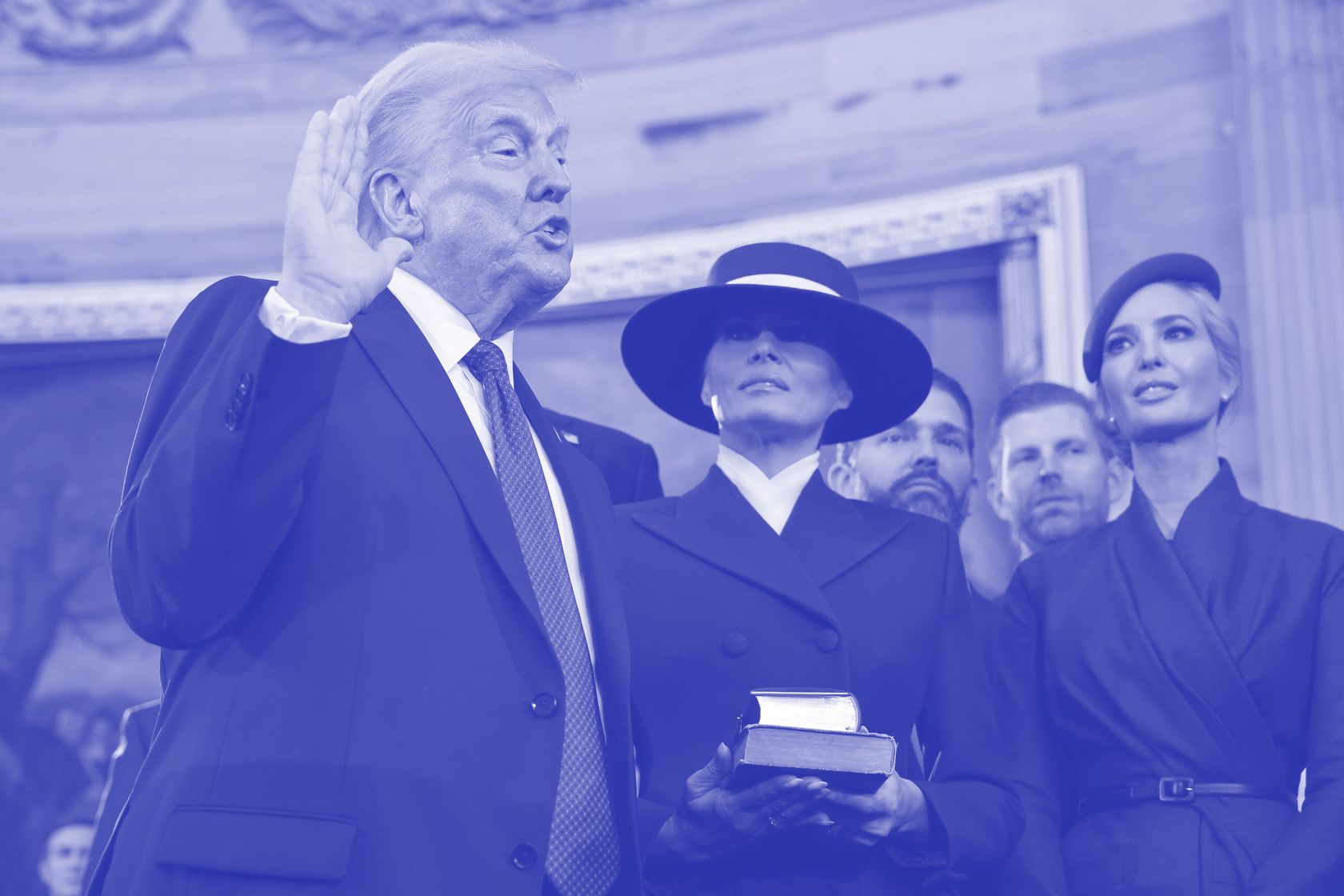
Presidency reclaimed: Donald Trump was sworn in as the 47th president of the United States, marking a historic comeback after an election marked by legal battles and assassination attempts. In his inaugural address, Trump promised a flurry of executive orders on Day One, including declaring a national emergency at the southern border, designating cartels foreign terrorist organisations, declaring an energy emergency to repeal Biden’s green policies and establishing the external revenue service to collect money from planned tariffs, among many others. The ceremony, relocated indoors due to freezing weather, was attended by global elites, including Elon Musk, Mark Zuckerberg, Jeff Bezos, Rupert Murdoch, Mukesh Ambani and TikTok CEO Shou Chew, and political leaders such as Boris Johnson. Former US presidents Barack Obama, George W Bush, and Bill Clinton also attended, though Michelle Obama was notably absent. At 78, Trump is the oldest US president to take office and only the second to reclaim the presidency after a defeat. (Capital Brief)(WSJ)(NYT)(Bloomberg)
2.
Biden shield: In his final hours in office, US President Joe Biden issued unprecedented pre-emptive pardons to shield Dr Anthony Fauci, retired General Mark Milley, and others from retribution promised by incoming President Donald Trump. Issued on Monday local time (Tuesday AEDT), the pardons also covered members of the January 6 congressional committee, including former Representative Liz Cheney, and police officers who testified about the Capitol attack. Biden stressed the pardons did not imply guilt but were meant to protect public servants from “unjustified and politically motivated prosecutions.” Minutes before handing over the office of the presidency to Trump, Biden also pardoned five members of his family to protect them against what he said were political attacks motivated “solely by a desire to hurt me”. (Joe Biden statement)(NYT)(Capital Brief) (Axios)
3.
HSBC study: HSBC Holdings Plc is exploring options for its Australian consumer banking business, including a possible sale, Bloomberg reported citing unnamed sources. The move could see over $32.8 billion in mortgages, credit cards and other household loans change hands. The UK bank intends to retain its commercial banking operations in the country, which support global corporate clients. Discussions are in preliminary stages, and no decision has been made, according to the report. Active in Australia since 1965, HSBC’s consumer banking division comprises over 40 branches and offices. The review is part of CEO Georges Elhedery’s wider restructuring, which includes simplifying operations and creating distinct regional units. HSBC recently sold its Canadian business for USD10.1 billion ($16.15 billion) and exited consumer banking in France and the US. It comes after Citigroup sold its local consumer unit to National Australia Bank in 2022. (Bloomberg)
4.
Davos radar: The World Economic Forum in Davos began against a backdrop of economic, geopolitical fragmentations and environmental protests. Donald Trump’s inauguration overshadowed the forum, as some attendees prioritised monitoring his planned executive orders over participating in Davos. Meanwhile, IKEA CEO Jesper Brodin warned trade tariffs could drive up consumer prices, adding that businesses must act faster on climate change. A WEF survey ranked armed conflict as the top global risk for 2025, with experts citing geopolitical tensions and fragmentation. Climate activists targeted Amazon’s base in Davos with paint and disrupted helicopters to protest fossil fuel subsidies and inequality, demanding taxes on the wealthy to fund climate solutions. Global risks like misinformation and extreme weather persist, with many predicting a fragmented global order. (Reuters)
5.
Tariff plan: Donald Trump will not immediately impose new tariffs on China, Canada and Mexico, but instead will direct federal agencies to evaluate trade relationships and economic policies, according to financial media reports. The directive on trade deficits, unfair trade practices and currency manipulation, while agencies review the 2020 China trade deal and the USMCA with Mexico and Canada, according to the reports. The absence of immediate tariffs, confirmed by incoming administration officials, sparked a rally in global stocks and a decline in the US dollar. Trump has proposed creating an “External Revenue Service” to manage tariff collection, though its structure is unclear. (Bloomberg)(Reuters)(WSJ)
6.
Fee drain: Since 1969, hedge fund managers have taken 49% of gross investment gains—USD1.8 trillion ($2.88 trillion) of USD3.7 trillion—as fees, according to an FT report citing an analysis by LCH Investments, an investor in hedge funds. Fees rose from 30% of gross gains pre-2000 to 50% since, mainly due to higher management fees, now consuming nearly 30% of gains. Multi-manager platforms with “pass-through” cost models further drive fees, with charges of 3–10% of assets and performance fees of 20–30%, according to the report. In 2024, the top 20 hedge funds earned USD93.9 billion in profits, up from USD67 billion in 2023, delivering 13.1% asset-weighted returns against the industry average of 8.3%. Citadel retained the top spot for cumulative net gains, followed by DE Shaw and Millennium Management. (FT)(Reuters)
7.
Metal probe: Belgium has opened a criminal investigation into Apple’s alleged use of "blood minerals" from the Democratic Republic of Congo (DRC), a case tied to accusations of war funding and flawed certification practices. Filed by DRC lawyers, the FT reports the complaint claims Apple buys tantalum, tin, tungsten and gold—so-called 3TG minerals linked to atrocities and environmental damage in eastern DRC—through a certification system alleged to disguise their origin as Rwandan. Apple declined to comment to the FT but has previously disputed the allegations. In December, Apple acknowledged auditors and certification mechanisms were no longer able to perform the due diligence required to meet its standards, and therefore it told its suppliers to suspend sourcing 3TG metals from the DRC or Rwanda.(FT)
8.
Deadly justice: China executed the man who killed 35 people and injured 43 in a deliberate car attack in Zhuhai on 11 November 2024, one of the deadliest public violence cases in recent years. Fan Weiqiu, 62, was convicted of “endangering public safety by dangerous means” after driving his SUV into people exercising near a stadium, reportedly due to dissatisfaction over his divorce settlement. The court condemned his motives as "despicable" and his methods as "heinous." Separately, a second man, Xu Jiajin, 21, was executed for a stabbing spree in Wuxi that killed eight. Both cases are part of a broader rise in public violence in China, with 19 attacks recorded in 2024, often linked to personal grievances like financial losses or family conflicts.(BBC)(SCMP)
