Trump rules out military force, presses Europe to hand over Greenland
Plus: Nationals mass resignation throws Coalition into crisis; US stocks rise then retreat after Trump rules out military action on Greenland; Lagarde walks out as Davos dinner erupts.

Good morning. Here's what happened overnight and what you need to know today.

1.
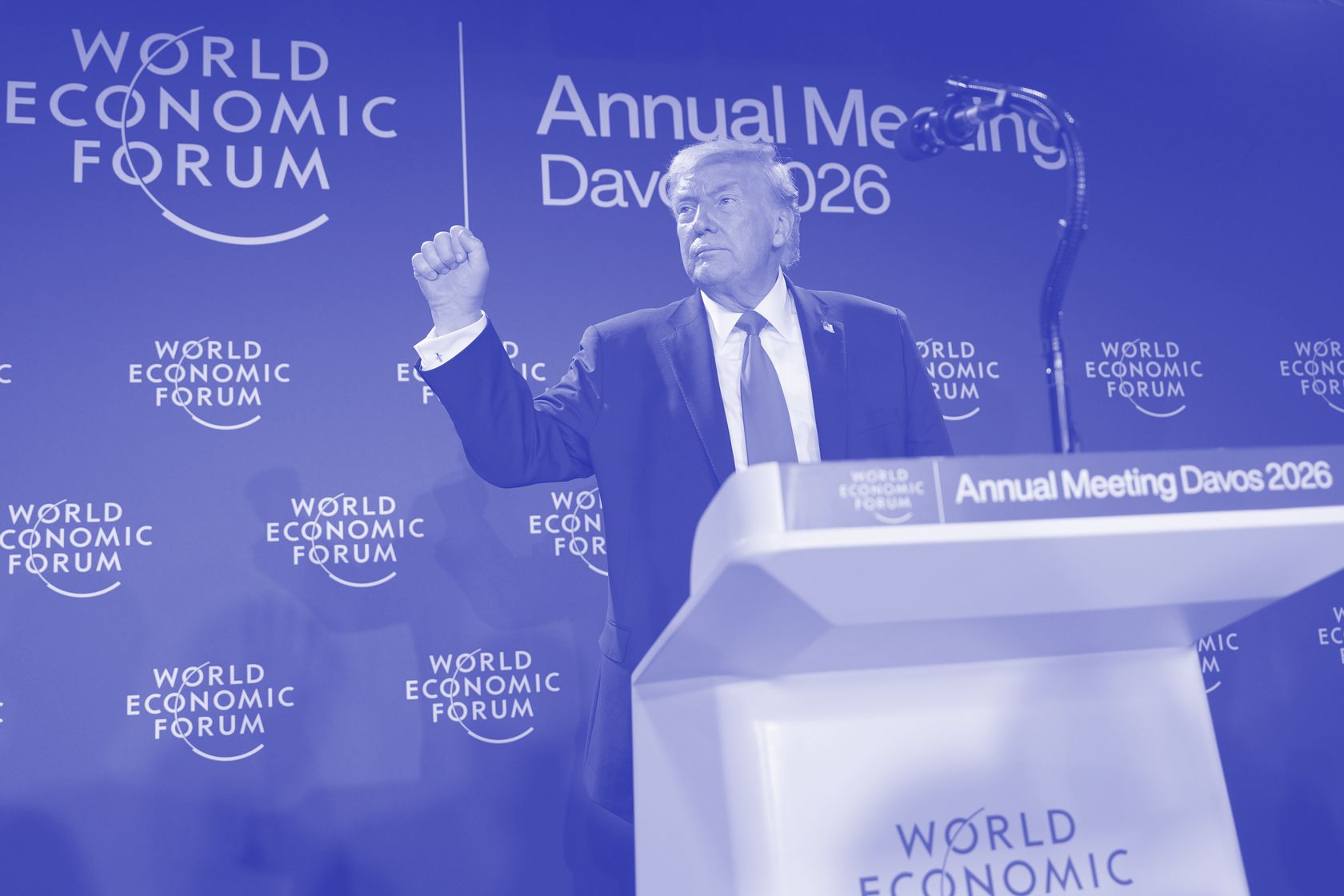
Ruled out: Donald Trump ruled out using military force to take Greenland but used a speech at the World Economic Forum in Davos to renew pressure on Europe to hand over control of the Danish territory, warning allies they would face consequences if they refused. The US president called for “immediate negotiations” and said, “You can say yes, and we will be very appreciative, or you can say no, and we will remember”. He described Greenland as “a piece of ice, cold and poorly located” but said it plays a “vital role in world pace and world protection” and was critical to national security and the deployment of his “Golden Dome” missile defence system. Denmark immediately rejected the demand, with foreign minister Lars Lokke Rasmussen saying, “We will not enter into any negotiations on the basis of giving up fundamental principles.” Trump ruled out using force, repeating, “I don’t have to use force. I don’t want to use force. I won’t use force.” He also said NATO had treated the US “very unfairly” and confused Greenland with Iceland multiple times. (NYT)(Bloomberg)(Reuters)(Capital Brief)
2.
Coalition teetering: National Party leader David Littleproud and the remaining seven National Party members of the shadow ministry quit their positions on Wednesday, after three of their colleagues were dumped from their roles for crossing the floor to oppose hate speech laws in the Senate. The mass resignation of all 11 National Party frontbenchers leaves the Coalition agreement in tatters and Opposition Leader Sussan Ley’s future in turmoil. Ley scrambled to avoid the break-up of the Coalition following the walkout, declaring the additional National resignations unnecessary and urging Littleproud “not to walk away”. Ley said no changes would be made to her frontbench “at this time” to give the junior Coalition partner “time to reconsider” its position, adding that Littleproud has not indicated that the Nationals are leaving the Coalition. As developments moved quickly on Wednesday, Liberal sources told Capital Brief that Ley’s leadership was in danger. One Liberal MP urged against a Coalition split, but said: “If the [Liberal] leader can't keep the Nationals in line, the leadership question answers itself”. (Capital Brief)(ABC)(AFR)(The Australian)
3.
Markets reax: US stocks rebounded after Trump ruled out using military force to acquire Greenland, easing fears following the steepest selloff in months. Markets later pared back gains as investor caution remained, as Denmark rejected Trump’s proposal and the European Parliament, responding to Trump’s tariff threats, suspended ratification of the US-EU trade deal. Speaking in Davos, the US president called for “immediate negotiations” with Denmark and said Europe’s response would influence future US commitment to NATO. The S&P 500 rose 1.1% in the morning, fell to just 0.1% higher at noon, then bounced back to trade 1.12% higher in afternoon trading. Bitcoin fell as much as 2.4% to USD87,188 wiping out all gains posted since the start of the year as investors pulled USD490 million from US-listed bitcoin ETFs. Gold topped USD4800. Netflix shares were lower after the company issued a muted outlook and paused buybacks to help fund its Warner Bros deal. Berkshire Hathaway moved to sell its 28% stake in Kraft Heinz, pushing the stock lower as investors reacted to the post-Buffett exit from a decade-long underperforming bet. (Reuters)(WSJ)(Bloomberg)
4.
Also at Davos: European Central Bank president Christine Lagarde walked out of a VIP dinner after US commerce secretary Howard Lutnick criticised European economies. The event, hosted by BlackRock CEO Larry Fink, was ended early after Lutnick’s remarks drew heckling. Lagarde later told RTL radio that Trump’s behaviour over Greenland and tariffs showed the US was not acting like an ally, and called for Europe to revise its economic model and partner with countries “who play by the same rules as us”. Trump also said he was unsure NATO would defend the US, claiming, “We’ll be there for them 100 percent, but I’m not sure that they’d be there for us.” NATO secretary-general Mark Rutte later assured him, “If ever the US will be under attack, your allies will be with you.” Meanwhile, JPMorgan CEO Jamie Dimon said at Davos he would address concerns about Europe’s weaknesses more diplomatically than Trump. Dimon also warned that the US president’s proposal to cap credit card interest rates at 10% would lead to “economic disaster”, saying it would remove credit for 80% of Americans. Trump, whose travel was delayed by over two hours due to an Air Force One mechanical issue, repeated his call for the cap, arguing it would help people save for a home.(WSJ)(Reuters)(Bloomberg)
5.
OECD advice: The Organisation for Economic Co-operation and Development (OECD) warned that Australia’s national debt is set to rise rapidly unless the government makes significant fiscal adjustments. In its 2026 Australian Economic Survey, the OECD said that strong “spending pressures” are a concern across both federal and state budgets, and given these budgets are projected to be in deficit for years to come, intensified by population ageing and climate transition pressures, “there should be a greater sense of urgency” about improving the public finances. It warned that without a fiscal adjustment, the budget deficit is forecast to balloon and put the debt-to-GDP ratio on a “steep upward path”. It flagged the need for tax changes, recommending Australia consider commissioning a new review to reform the tax system. The OECD also suggested reforming property taxes and rebalancing the tax system away from income taxes by raising GST and making greater use of property and environmental taxes. (OECD)(Capital Brief)
6.
Wise dump: The Australian Foundation Investment Company (AFIC) finally called time on its long-running and highly profitable investment in WiseTech, dumping its entire stake in the logistics software company amid unresolved governance concerns. Releasing its half-year results on Wednesday, AFIC chief executive and managing director Mark Freeman said the almost century-old investment company — which had previously looked past the initial scandal engulfing co-founder Richard White — was done with WiseTech for now. “The company has got those governance and oversight issues and so we just decided to step aside for a while,” Freeman told Capital Brief. While AFIC used an initial blip in WiseTech’s share price to top up its $85 million stake, as controversy surrounding White intensified, WiseTech’s fortunes deteriorated and AFIC’s view of the company soured. AFIC’s latest half-year disclosures show it initially purchased $20 million worth of shares, before later selling down its remaining $66 million holding following “a reassessment of the quality of the company”. (Capital Brief)
7.
Supreme pressure: The US Supreme Court appeared likely to reject Donald Trump’s request to immediately remove Fed Reserve Governor Lisa Cook, after justices from across the ideological spectrum expressed concern about undermining the central bank’s independence. During nearly two hours of arguments, justices questioned whether Cook had been given a fair opportunity to respond to unproven allegations of mortgage fraud that the US president cited as grounds for her dismissal. Several justices, including Brett Kavanaugh and Amy Coney Barrett, raised doubts about whether the president’s actions met the “for cause” standard required under the Federal Reserve Act. Kavanaugh said the administration’s position would “weaken, if not shatter, the independence of the Federal Reserve”. Cook remains in her post while the case proceeds, after lower courts blocked her removal. Trump announced in August that he was firing Cook, who was appointed by Joe Biden in 2022. Every living former Fed chair signed a court brief warning Trump’s move would undermine the central bank’s independence, with some, including Ben Bernanke, seen attending the hearing. A final decision is expected by the end of June. (WSJ)(Reuters)(NYT)(Bloomberg)
8.
Cov-lite, risk-heavy: Large international PE firms expanding into private credit are bringing covenant-lite deals to Australia and Revolution Asset Management says it is among the managers steering clear of such loans. Revolution managing director and CIO Bob Sahota said private credit is now dwarfing the equity arms at firms including KKR, Blackstone, Ares Management and Brookfield Asset Management, which were once focused almost exclusively on equities. “It’s not a bad thing as there’s a requirement for financing and there’s competition for debt. But the issue is when you’ve raised so much money what suffers is a decline in protections,” Sahota told Capital Brief. Sahota said the US has seen a rise in covenant-lite transactions with high leverage and highly flexible documentation — a trend that is now filtering into Australia. Sahota said Revolution, which has $3.6 billion in funds under management, only “reluctantly” gives up covenants for the “best and brightest credits”. (Capital Brief)
