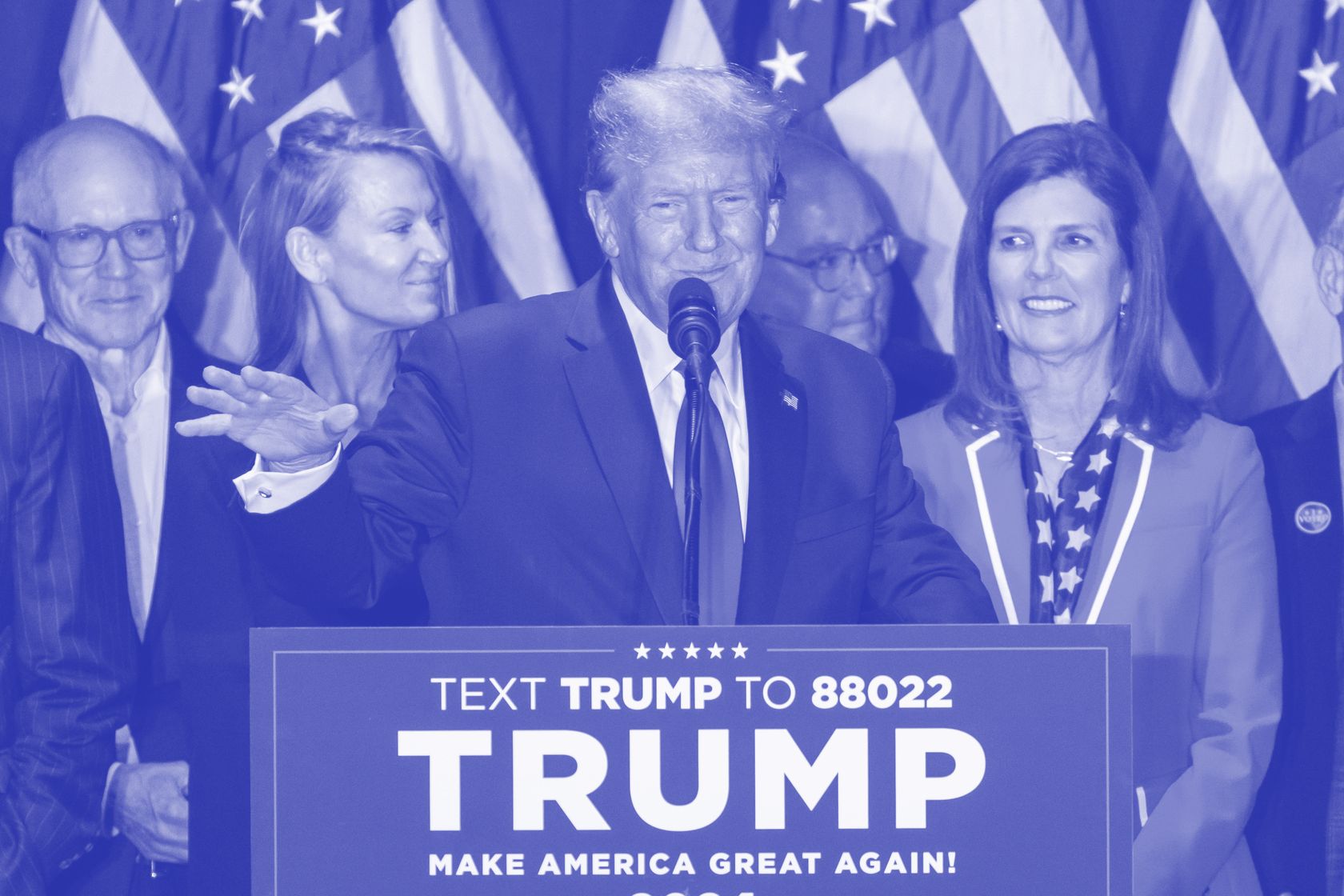
Trump sails past Nikki Haley with South Carolina primary victory
Plus: Trump defeats Haley in South Carolina primary; Zelenskiy says 31,000 Ukrainian soldiers killed during war; Big four lose government contracts amid PwC scandal.

Good morning. Here's what happened overnight and what you need to know today.

1.
Trumped again: Trump defeated rival Nikki Haley in the South Carolina Republican Presidential primary on Saturday, with 60% of the votes to her 49%. Despite Haley’s role as former governor of South Carolina, Trump’s defeat in the state was largely in line with projections. Haley has vowed to remain in the race as the final remaining candidate challenging Trump for the Republican Presidential nomination. In his victory speech delivered in Columbia, South Carolina, Trump said: “On November 5, we’re going to look at Joe Biden, we’re going to look him straight in the eye — he’s destroying our country — and we’re going to say ‘Joe you’re fired! Get out Joe!'” (Associated Press)(Financial Times)
2.
Russia-Ukraine war: Speaking at a press conference in Kyiv yesterday, Ukrainian President Volodymyr Zelenskiy said the country has lost 31,000 soldiers since Russia invaded two years ago. He added that his government does not have precise data on the number of civillian deaths as areas are currently occupied, but said “tens of thousands” have been killed and murdered. The leader did not disclose the total number of wounded Ukrainian soldiers, stating that revealing this information would assist the Russian military. Zelenskiy also took the opportunity to press for US Congress to urgently reach a decision on USD60 billion in military aid which has been delayed for months. (Bloomberg)
3.
Scandal fallout: Australia’s big four consulting firms have seen a decline in the value of contracts awarded to them by the government since the PwC tax scandal rocked the sector. Amid the fallout, federal agencies cut spending with the big four by over 42% to $308.2 million in the six months to 31 December 2023, compared to the same period in 2022. While KPMG Australia, EY, Deloitte and Scyne Advisory failed to secure contracts, other firms including Accenture and McKinsey Pacific Rim have benefitted from an uptick in government contracts – despite the drop in dollar value of these deals. (The Australian)
4.
Houthi attacks: The US and UK, with support from Australia and other countries, launched new air strikes against Houthi forces in Yemen on Saturday. The US Department of Defense said that the strikes targeted 18 locations in Yemen in order to “disrupt and degrade the capabilities that the Houthis use to threaten global trade, naval vessels, and the lives of innocent mariners in one of the world's most critical waterways.” The DoD statement explains that the more than 45 Houthi attacks on commercial and naval vessels transiting the Red Sea and surrounding waterways since November, constitute a threat to the global economy and regional stability, demanding an international response. (US Department of Defense)
5.
Software sale: KKR is closing-in on a USD3.8 billion ($5.8 billion) deal to acquire a software business from Broadcom Inc. Broadcom is selling its end-user computer unit, which it inherited when it bought software maker VMware Inc last year for USD61 billion. According to unnamed sources cited by Reuters, the deal could be announced as early as today. PE firms Thoma Bravo and EQT AB reportedly expressed interest in acquiring the unit previously. (Reuters)(Bloomberg)
6.
Inflationary wage-growth: Confidential Treasury analysis seen by the Australian Financial Review shows decade-high wage growth has pushed the average salary for fulltime Australian workers above $100,000, becoming the biggest driver of consumer price inflation. The analysis undermines claims that corporate profit gouging is to blame for inflation. A freedom of information request made by the newspaper, uncovered that pay rises overtook import prices and supply shocks, accounting for the majority of headline CPI in the June quarter in 2023. The data is at odds with price gouging claims from the Greens (and others) that have prompted a series of inquiries. (AFR)
7.
Nickel crisis: CEO of French mining giant Eramet has said that low-cost nickel suppliers in Indonesia will wipe out rivals in the coming years, bolstering the country’s position as the world’s leading nickel producer. Christel Bories told the Financial Times that within five years, Indonesia could account for over 75% of the world’s highest class of pure nickel, all but guaranteeing major consequences for competitors. Nickel producers are already struggling with falling nickel prices, with mine closures and production cuts plaguing Australian miners. Bories said: “The uncompetitive mines elsewhere will close. I’m not sure there will be so many governments deciding to subsidise big production with a lot of money just to compete with Indonesia production.” (Financial Times)
8.
Cash-heavy: In his annual letter to shareholders, Warren Buffet said that the days of “eye-popping performance” are a thing of the past for Berkshire Hathaway. The letter explained that Berkshire’s cash pile reached a record high of USD167 billion during Q4 as the company struggled to find deals at attractive valuations. Berkshire also reported Q4 operating earnings of USD8.48 billion, compared to USD6.63 billion for the same period the year prior. The annual letter is the first penned by Buffet since the death of his long-time business partner Charlie Munger, and Buffet took the opportunity to remember Munger as both the “architect” of BRK and a cherished partner. (Bloomberg)(Wall Street Journal)
