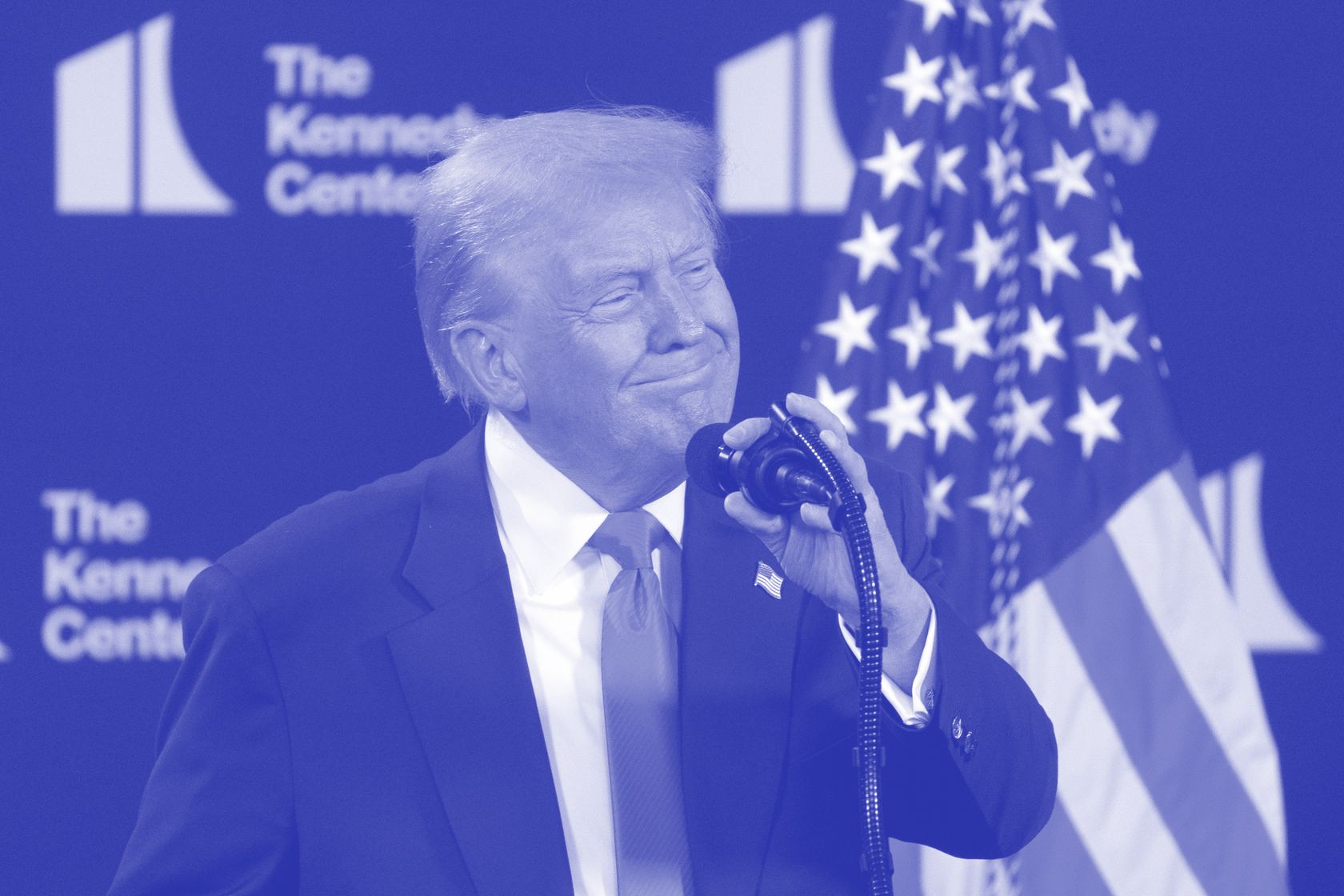
Trump says he may name Fed chair early
Plus: Bessent says Nvidia’s 15% chip deal could be model for others; Peter Thiel-backed Bullish rockets in debut after US$1.1b IPO; Paramount Skydance jumps 60% in meme-style rally.
Good morning. Here's what happened overnight and what you need to know today.
Get Standup in your inbox Signed up to Standup
1.
Bossy Bessent: US President Donald Trump said he may name the next Federal Reserve chair “a little bit early” and is down to three or four potential candidates to replace Jerome Powell, whose term ends in May. Speaking at the Kennedy Center in Washington, Trump also said rates “should be three or four points lower” and called Powell “truly incompetent”. Treasury Secretary Scott Bessent echoed that in a Bloomberg interview, arguing that officials would have cut rates instead of holding them last month if they had been aware of revised labour market data released two days after their last meeting. He said the Fed should start a cycle of rate cuts with a 50 basis point cut in September, adding that “any model” suggests “we should probably be 150, 175 basis points lower”. The comments come as investors cement bets that the Fed will cut rates from September, after unexpectedly muted US inflation data, pushing global stocks higher. (Bloomberg)(Capital Brief)(Reuters)(Bloomberg)(WSJ)(FT)
2.
Trade take: Bessent also said the deal allowing Nvidia and AMD to resume lower-end AI chip sales to China in return for giving the US government 15% of related revenue, could be a model for other industries. Crediting Trump with what he called a “very unique solution” Bessent said proceeds will go toward paying down debt, with a substantial repayment potentially leading to discussions on sending money to taxpayers. “I think we could see it in other industries over time,” Bessent said in the Bloomberg interview. “Right now, this is unique, but now that we have the model and the beta test, why not expand it?” Bessent said he will meet his Chinese counterparts within two to three months and dismissed the possibility that China could get tariff relief in exchange for investments. He also urged European nations to be prepared to join the US in imposing higher tariffs on China and other countries that buy Russian energy, lamenting a cool response when he raised the idea at a Group of Seven meeting earlier this year. (Bloomberg)
3.
Crypto splash: Shares of Bullish soared as much as 218% to USD118 ($180.3) each in the cryptocurrency exchange’s first day of (volatile) trading, after the Peter Thiel-backed company priced its US listing at USD37 a share. That was well above its increased IPO range that raised roughly USD1.1 billion and valued it at USD5.4 billion. Trading under the symbol BLSH on the New York Stock Exchange, the stock closed at USD70, giving Bullish a market capitalisation of more than USD10 billion. Led by former NYSE president Tom Farley, the company allocated about 20% of the offering to individual investors and plans to convert a significant portion of the IPO proceeds into stablecoins. Founded in 2021, Bullish has handled USD1.25 trillion in total trading volume and owns the crypto-industry trade publication CoinDesk. Co-founders Brendan Blumer and Kokuei Yuan hold majority stakes worth over USD3 billion each following the listing. (Capital Brief)(Bloomberg)(WSJ)
4.
Meme feel: Paramount Skydance shares jumped as much as 60% on Wednesday before closing 36.7% higher, extending Tuesday’s 8.4% gain and prompting comparisons to meme stocks. CNBC’s Jim Cramer called the “meme stock” rally “shocking” given the company’s small public float. The company, which began trading under the PSKY ticker last week after the FCC approved the Paramount Global-Skydance Media merger, on Monday said it had acquired the exclusive rights to show all Ultimate Fighting Championship events in the US in a USD7.7 billion, seven-year deal, with all fights available to Paramount+ subscribers and selected CBS broadcasts. The share rally also comes as UFC CEO Dana White said a fight will “definitely” take place at the White House on 4 July next year, during the US’ 250th anniversary celebrations. David Ellison, the company’s CEO, and RedBird Capital control 70% of its roughly 1 billion total shares. (MarketWatch)(Deadline)(WSJ)
5.
Tech dictat: Matt Comyn may have just signed a landmark artificial intelligence deal with one of the giants of Silicon Valley, but the chief executive of Australia's largest listed company still isn’t pulling his punches ahead of next week’s economic roundtable. His familiar message for Australia’s politicians: big tech companies should not be able to dictate terms of engagement or plunder Australian business. Speaking to Capital Brief, the Commonwealth Bank CEO stressed that despite their enormous growth, big tech companies were not contributing proportionally in terms of jobs created and tax paid in Australia, suggesting it was in urgent need of reform. “I think some of the big global tech players should be competing on an even playing field and subject to the same laws. And that would be [in terms of] banking but I could be talking about media just as easily,” Comyn said. (Capital Brief)
6.
Red lines: US President Donald Trump warned he would impose “very severe consequences” if Vladimir Putin did not agree to a ceasefire, after agreeing with Ukrainian President Volodymyr Zelensky and European leaders on five red lines for their Friday meeting in Alaska. The leaders’ conditions include a ceasefire as a prerequisite for further talks, any territorial discussions to start from the current battle lines, binding Western security guarantees that Russia must accept, Ukraine’s participation in the talks, and joint US-European support for any deal, according to media reports. Trump told leaders he would not negotiate territories with Putin. Russia, meanwhile, said its position remained unchanged, reiterating its demand that Ukraine cede Donetsk, Luhansk, Zaporizhzhia and Kherson. (Bloomberg)(Reuters)(WSJ)
7.
Capital recycling: AGL Energy floated plans to sell development assets to raise almost $3 billion required over the next three years to develop an $800 million battery and build out its 900 MW wind generation portfolio. Briefing analysts after delivering a 9% fall in full-year EBITDA, chief executive Damien Nickless said AGL may sell post-final investment wind project developments if required to raise additional capital to fund the batteries. When pressed on the status of a sale of its 20% interest in the Tilt Renewables wind energy platform, for which AGL hired Bank of America infrastructure banker Sam Watson to advise, Nickless did not respond. However, one source familiar with the situation who spoke on the condition of anonymity confirmed that AGL still intended to offload its stake, which it acquired alongside QIC’s global infrastructure fund and other institutional investors whose capital the Queensland corporation manages. (Capital Brief)
8.
Carbon clean-up: The Australian government will allow two new methods to create the Australian Carbon Credit Units (ACCUs) that are OTC and exchange-traded in voluntary and regulatory markets. Two exposure drafts for new legislation covering carbon sequestration will be released, as well as one covering the use of landfill gas. If legislated, these new rules will allow carbon farmers more ways to adjust the use of their land to store carbon in soils or sequester it underground to generate credits which can then be sold to banks and other institutions that trade ACCUs. A third method covering activities that avoid emissions being created, rather than reducing existing ones, covering savannah fire management, is due for release in October. All three new methods are subject to approval from the Emissions Reduction Avoidance Committee. Climate Change and Energy Minister Chris Bowen will announce the new drafts on Thursday morning. (Capital Brief)