Trump says Iran nuclear talks coming but deal not needed
Plus: Fed moves to slash post-crisis capital rules; Wall Street mobilises to block NYC socialist mayoral candidate; Shell denies BP merger talks after WSJ report.

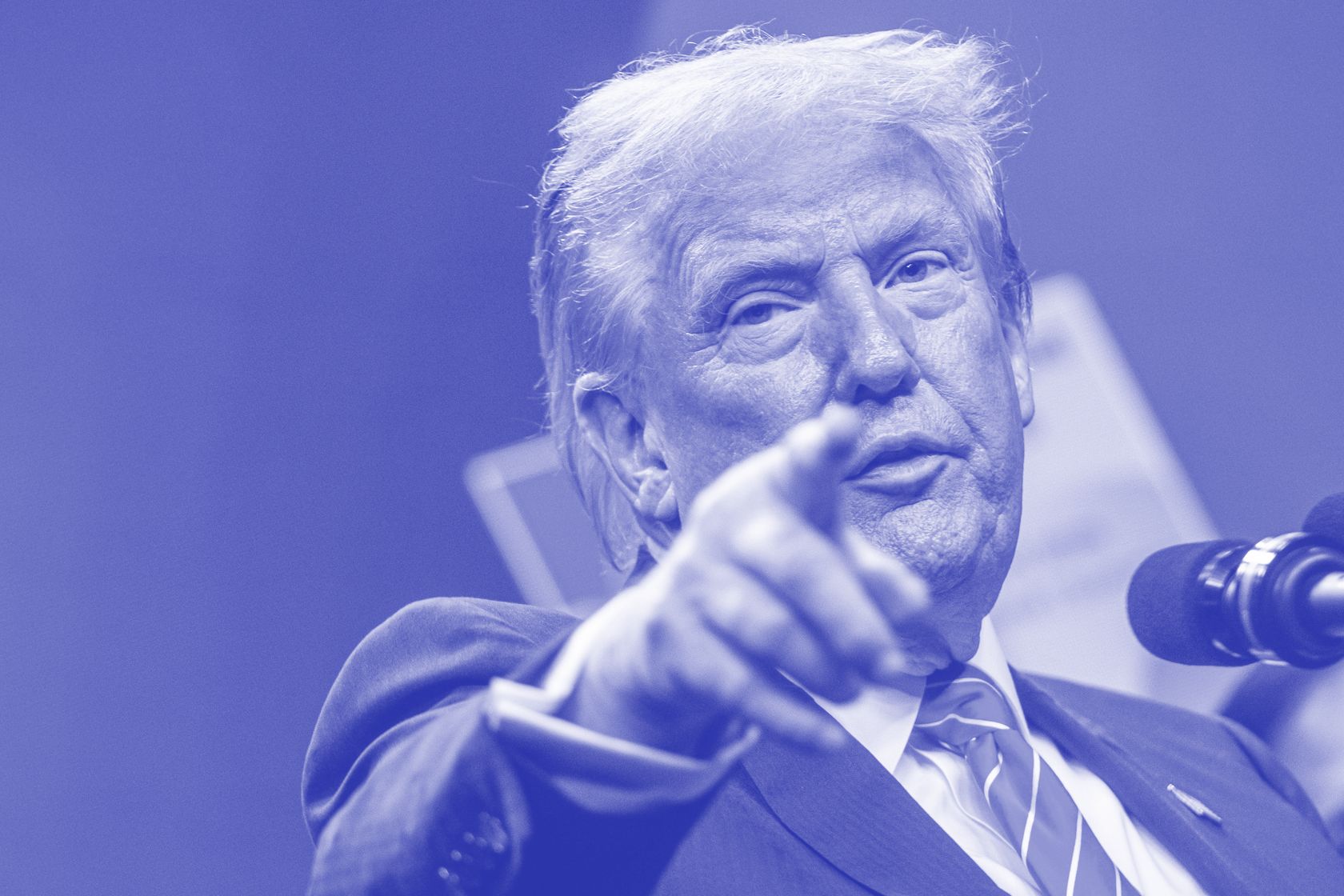
Good morning. Here's what happened overnight and what you need to know today.

1.
Trump’s summit: At the NATO summit in The Hague, US President Donald Trump said the United States and Iran would hold talks “next week”, but downplayed the need for a nuclear agreement, stating, “I don’t care if I have an agreement or not”. That came as US and Israeli officials pushed back on a preliminary intelligence report that said recent strikes only set back Iran’s nuclear program by months. Trump again claimed US strikes on Iran’s nuclear sites had “obliterated” the program and compared the impact to the end of World War II, saying, “I don’t want to use an example of Hiroshima… but that was essentially the same thing”. Secretary of State Marco Rubio, also at the summit, said Trump had achieved what “no American president in decades could get done”. NATO allies pledged to raise defence spending to 5% of GDP by 2035, with Trump declaring “we had a great victory here”. He said the spending would go towards buying American weapons and that the alliance would be “stronger, fairer and more lethal”. (Reuters)(NYT)(WSJ)
2.
Day two: The Fed unveiled a long-anticipated proposal to slash the enhanced supplementary leverage ratio (eSLR) in one of the biggest reductions in US bank capital requirements since the 2008 crisis. The plan would lower the required ratio for the largest bank holding companies from 5% to 3.5-4.5%, and for their subsidiaries from 6% to the same range. Introduced after the crisis, the eSLR has been criticised by banks for discouraging low-risk assets like Treasuries. The proposal was released as Fed Chair Jerome Powell, on his second day of congressional hearings, told the Senate Banking Committee it was “prudent” to revisit the rule. He also warned tariffs could lead to “more persistent inflation” and said the Fed must “manage that risk” by holding off on rate cuts. That same day, President Trump called Powell “terrible” and said he had “three or four people” in mind to replace him. A 60-day public comment period is now open. (Capital Brief)(Senate Banking Committee)(US Fed)(OCC)(Reuters)
3.
Mayor panic: Wall Street financiers are scrambling to stop Zohran Mamdani after the 33-year-old democratic socialist unexpectedly beat Andrew Cuomo in the NYC Democratic mayoral primary, winning 43.5% to Cuomo’s 36.4% in preliminary results. The Financial Times reported hedge funders, PE leaders, lawyers and bankers began coordinating within hours to back a centrist in November. The Partnership for New York City, a lobby group for the city’s corporate elite, raised concerns over Mamdani’s tax plans. Mamdani campaigned on free buses, rent freezes and tax hikes on the rich, pushed by viral videos and tens of thousands of volunteers. “No bueno,” Steven Starker, chairman of investment bank BTIG, texted the WSJ, while Ricky Sandler of Eminence Capital said he’d “likely move” his business and family if Mamdani wins. Cuomo had raised nearly USD25 million with backing from billionaires like Michael Bloomberg, Bill Ackman and Dan Loeb, but conceded on election night. Both he and mayor Eric Adams may still run as independents. (FT)(WSJ)(Bloomberg)(NYT)
4.
Takeover talkdown: Shell has denied it is in talks to acquire BP, following a Wall Street Journal report that the two UK oil majors were in early-stage discussions. “This is further speculation. No talks are taking place,” a Shell spokesperson told financial media. BP’s New York-listed shares surged nearly 10% before closing 1.64% higher, while Shell fell over 4% before recovering to trade down 1%. Shell reiterated it is “sharply focused on capturing the value in Shell through continuing to focus on performance, discipline and simplification.” CEO Wael Sawan has said he prefers buybacks over major acquisitions. The speculation comes amid scrutiny of BP’s strategy and performance. BP has underperformed rivals following a difficult shift to renewables and pressure from Elliott Investment Management, which holds over 5% of its shares. BP’s strategy reset has faced investor scepticism. A merger, the Journal noted, could strengthen Shell’s trading reach but would be costly and complex to integrate. (Capital Brief)(WSJ)(Bloomberg)
5.
Free-er market: The NYSE and Nasdaq are in talks with the US SEC on easing regulatory requirements for public companies in a bid to encourage more startups to list, Reuters reported. The reforms under discussion range from reducing the quantum of disclosures and the costs of going public to making it harder for minority investors to agitate, anonymous sources said. Talks have reportedly been ongoing for several months amid the Trump administration’s push to spur economic growth. Nasdaq president Nelson Griggs told Reuters the exchange operator has discussed making public markets more attractive with regulators in Washington. The news comes ahead of a Federal Reserve meeting that would ease leverage rules for banks to help large firms facilitate Treasury market trading. The Fed’s Washington board will consider a plan to revamp the ‘supplementary leverage ratio’, requiring banks to hold capital against assets regardless of their risk level. (Reuters)(Reuters)
6.
Crypto spivs: Eric Trump’s key partner in the Trump family’s latest crypto venture, Hut 8, which owns and operates bitcoin-mining facilities has faced complaints from partners and neighbours, The Information reports. Former employees and partners of Hut 8 accused the company of shoddy work, telling The Information that transformers have exploded and voltage problems have hurt productivity at other projects. The issues have been compounded by young and inexperienced managers, sources state, along with previously unreported court documents. In one instance, Hut 8 was terminated from building and managing a crypto-mining facility, accused by the project’s owner of negligent construction work that resulted in safety issues. A pitch deck for the Trump-Hut 8 venture called ‘American Bitcoin’ said it would benefit from its “powerful America-first identity” and that it could potentially achieve a valuation similar to that of Trump’s Truth Social, which trades at roughly 1,000x revenue. (The Information)
7.
Limited introspection: Opposition Leader Sussan Ley has vowed to fix the Liberal Party’s internal policy development processes after revelations that a proposal to combat bracket creep was rejected before the last federal election. Delivering her first address to the National Press Club as leader on Wednesday, Ley announced a broad existential review into the Liberal Party and laid down a decree to state divisions on preselecting more women, while conceding the Coalition had “not done policy development well in the last term". Capital Brief earlier this month revealed that former treasury spokesman Angus Taylor proposed an automatic tax rebate tied to high inflation months before the election campaign, but the plan was rejected by Opposition Leader Peter Dutton’s office in favour of a cut to fuel excise. The policy never made it to shadow cabinet or the shadow expenditure review committee. Ley declined to say whether she was aware of Taylor’s plan. (Capital Brief)
8.
Worldline wipeout: Shares in Worldline plummeted over 40% in Paris, after a media investigation reported the company covered up fraudulent activity involving customers. The drop in share price saw €500 million ($894 million) wiped from the payment firm’s market value, with trading in the company’s shares halted several times. The firm reportedly continued doing business with prohibited and high-risk customers and had failed to stop fraudulent transactions being processed on its platform. The investigation was based on confidential internal documents and data from Worldline. Dutch newspaper NRC alleged that in “recent years” Worldline “looked away” from lucrative customers with high fraud rates even as its risk management department pressed for stricter checks. Another report said that in efforts to reduce fraud rates for clients, Worldline would shift fraudulent customers between divisions to evade detection. (Capital Brief) (Worldline)(De Standaard)(NRC)(Dagens Nyheter)(Bloomberg)(Reuters)
