Trump scores Senate win on 'big, beautiful' tax and spending bill
Plus: Ayres pledges NRF fix after audit flags major gaps; Trump threatens to deport Musk, pull Tesla subsidies as battle restarts; La Trobe’s new private credit fund has unlikely investors.

Good morning. Here's what happened overnight and what you need to know today.

1.
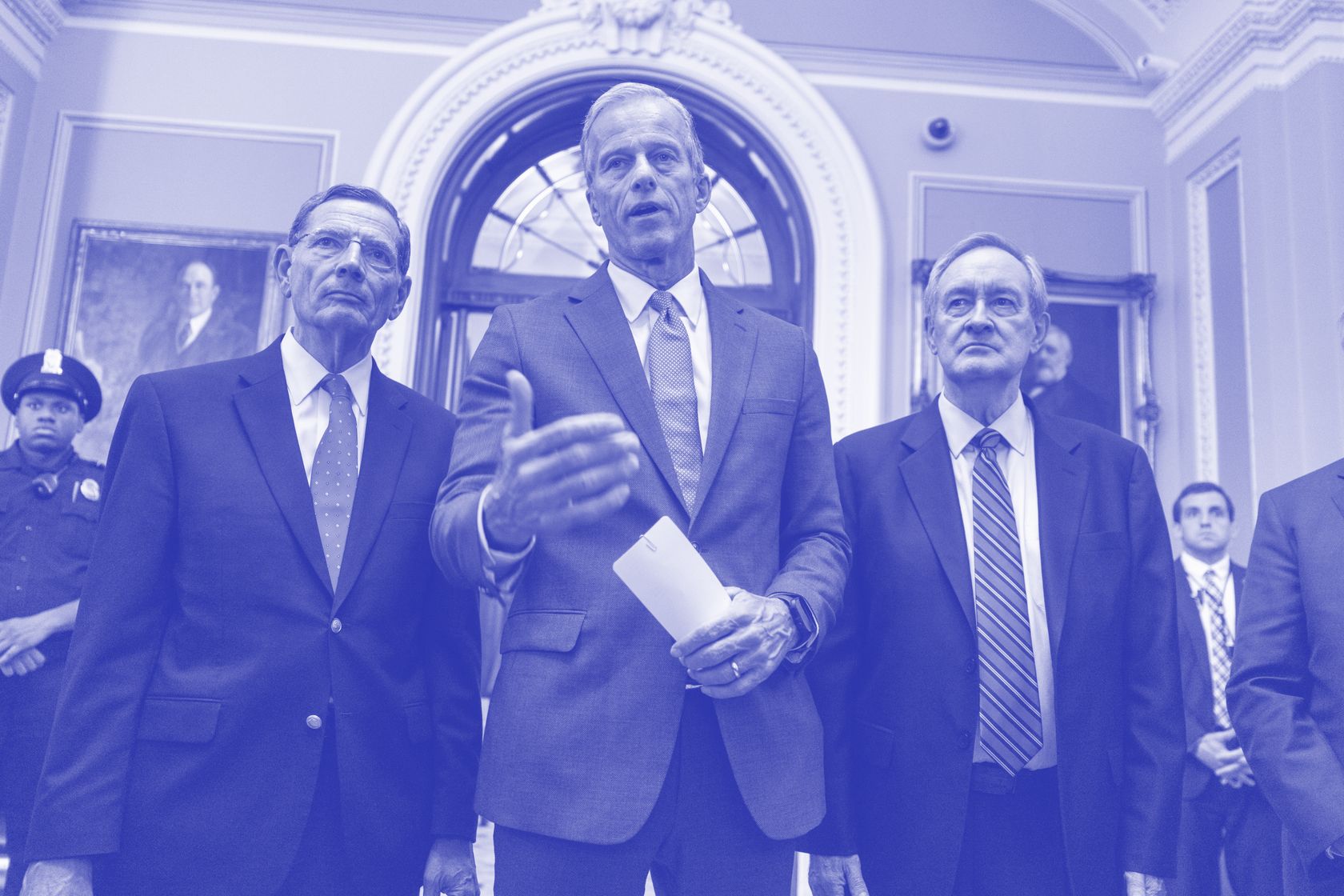
Vote-a-rama: US Senate Republicans passed President Trump’s sweeping tax and spending bill Tuesday on a 51-50 vote, with Vice President JD Vance casting the tie-breaking vote after an all-night session. Three Republicans – Susan Collins, Thom Tillis and Rand Paul – joined Democrats in opposition. The 940-page bill includes USD4.5 trillion ($6.85 trillion) in tax cuts and USD1.2 trillion in spending cuts, and now returns to the House after Senate changes, particularly to Medicaid. The bipartisan Congressional Budget Office estimates it would add USD3.3 trillion to the national debt by 2034 and leave 11.8 million Americans uninsured. In a separate vote, senators struck a proposed 10-year ban on state regulation of AI, 99-1. Big Tech backed the ban, but concerns over child safety and artist protections led Republicans to oppose it. (FT)(Reuters)(WSJ)(Capital Brief)
2.
NRF defence: Industry Minister Tim Ayres has pledged to ensure the National Reconstruction Fund is delivering on its mandate after revelations the $15 billion fund deployed hundreds of millions in taxpayer funds without adopting formal investment or financial strategies. Capital Brief this week reported that the Australian National Audit Office had released its first performance report for the NRF and found that its governance arrangements were "largely sound". But the ANAO also rebuked the NRF for several missteps, including failing to adopt a formal financial strategy and for not obtaining conflict of interest disclosures from its external investment advisers. Shadow Industry Minister Alex Hawke said on Tuesday it was "deeply concerning that hundreds of millions of dollars in taxpayer funds have been splashed around without there being an investment strategy in place" and requested a meeting with the auditor-general to obtain more detail. (Capital Brief)
3.
Musk muscled: US President Donald Trump threatened to withdraw US government subsidies from Elon Musk’s Tesla and said he would “take a look” at deporting the billionaire as the former allies’ feud restarted. Trump said, “without subsidies, Elon would probably have to close up shop and head back home to South Africa.” Trump added the DOGE “monster… might have to go back and eat Elon,” suggesting the department initially formed and headed by Musk, DOGE, should assess US funding for rocket launches, satellites and EV production as areas to save money. Meanwhile, Tesla’s sales across Sweden and Denmark fell for a sixth consecutive month in June according to data released Tuesday, while Tesla’s Q2 deliveries are expected to fall 8% in 2025, 11% year-on-year, according to Reuters. It comes as Musk said he has assumed oversight of sales in the EU and US following the departure of Omead Afshar. (Reuters)(FT)(Politico)(Reuters)(Capital Brief)
4.
Habit(ual) investors: An unlikely trio – Burwood RSL Club, Sheike and Sargents Pies – have invested $7 million into La Trobe’s newly listed private credit fund, ranking them as three of the 20 largest unitholders in the vehicle, according to ASX disclosures. They, along with a string of Catholic and philanthropic organisations, have become some of the most unusual and prolific backers of an estimated $200 billion market which, according to its supporters, offers investors higher yields than comparable investments such as term deposits, but with attractive levels of risk and volatility. “Private credit wasn't even part of the discussion five years ago. Today there's significant interest from clients,” Kieran Berry, managing director of wealth advisory RiverX, which advises RSL clubs on their investments, told Capital Brief. Yet as a growing number of listed private credit funds crop up on the ASX, the same surprising investors are popping up again and again. (Capital Brief)
5.
DOGE move: Trump’s Department of Government Efficiency (DOGE) pushed the US Securities and Exchange Commission (SEC) to ease rules on blank-check companies and confidential reporting by private investment funds, Reuters reported, citing unnamed sources. DOGE officials at the SEC, who had so far focused on cutting costs, in recent weeks have sought meetings with staff to revisit Biden-era rules on Special Purpose Acquisition Companies (SPACs) and private fund disclosures. The push is part of a broader deregulatory effort by the administration to cut oversight and spur economic growth. Reuters sources said DOGE’s role has raised concerns within the SEC over political involvement in the agency’s work. The SEC has already been in talks with US exchanges to ease SPAC rules and recently delayed new private fund reporting requirements. (Reuters)
6.
Copilot kicks: Microsoft signed a five-year strategic partnership with the English Premier League to bring Copilot to the league’s digital platforms, offering quick facts and statistics about matches. The deal will result in the migration of the league’s “core technology infrastructure” to Microsoft’s Azure cloud-computing service. The league’s mobile apps, website and fantasy games will feature an artificially intelligent chatbot powered by Microsoft’s AI services. The AI companion will pull information from over 30 seasons of stats, 300,000 articles and 9,000 videos. The deal replaces Oracle’s previous cloud-computing services arrangement, which expired at the end of the season earlier this year. Financial terms were not disclosed. (Reuters)(Bloomberg)
7.
Graduate hack: Personal information from 2.5 million Columbia University applications, including citizenship status and university-issued ID numbers, was stolen by a person who provided Bloomberg with some of the data hacked from the school in June. Columbia confirmed data was stolen and is working with cybersecurity firm CrowdStrike, which described the attacker as “highly sophisticated” and “very targeted.” The alleged hacker, claiming to work alone, said they sought information about university applications that would suggest a continuation of affirmative action policies, following a 2023 Supreme Court decision that effectively barred the practice. A Columbia official said the school’s admissions processes are compliant with the ruling. The hacker told Bloomberg they spent more than two months building access to Columbia’s servers and eventually attained the most privileged access, extracting 460GB of data including financial aid details, employee pay and at least 1.8 million Social Security numbers. Bloomberg verified data with eight students and alumni. (Bloomberg)
8.
Tech wave: Surge AI, a data-labelling firm that competes with Scale AI, hired advisors to raise as much as USD1 billion ($1.52 billion) in the first capital raising in the firm's history, Reuters reported citing unnamed sources. The San Francisco-based company is targeting a valuation of over USD15 billion and raked in over USD1 billion in revenue last year, bigger than its better-known competitor Scale AI, which reported USD870 million in the same period. Meanwhile, Genesis AI, a startup working on software for robots, raised USD105 million in a funding round with both US and Chinese backers. The company, incorporated last December and based in Paris and Palo Alto, said it will build robotics systems “to make it possible to automate all manual tasks.” Elsewhere, Grammarly signed a deal to acquire email efficiency tool Superhuman, which was last valued at USD825 million in 2021. And hardware startup Nothing unveiled its USD799 Phone 3 and USD299 Headphone 1, both featuring transparent designs.(Bloomberg)(Reuters)
