Trump sends mixed signals on Iran deal as deadline looms
Plus: Trump ‘surprised’ by Australia on Iran; Brent crude nears biggest monthly rise since 1990 as Iran talks stall; OECD warns Australia of Iran war-fuelled inflation.

Good morning. Here’s what happened overnight and what you need to know today.

1.
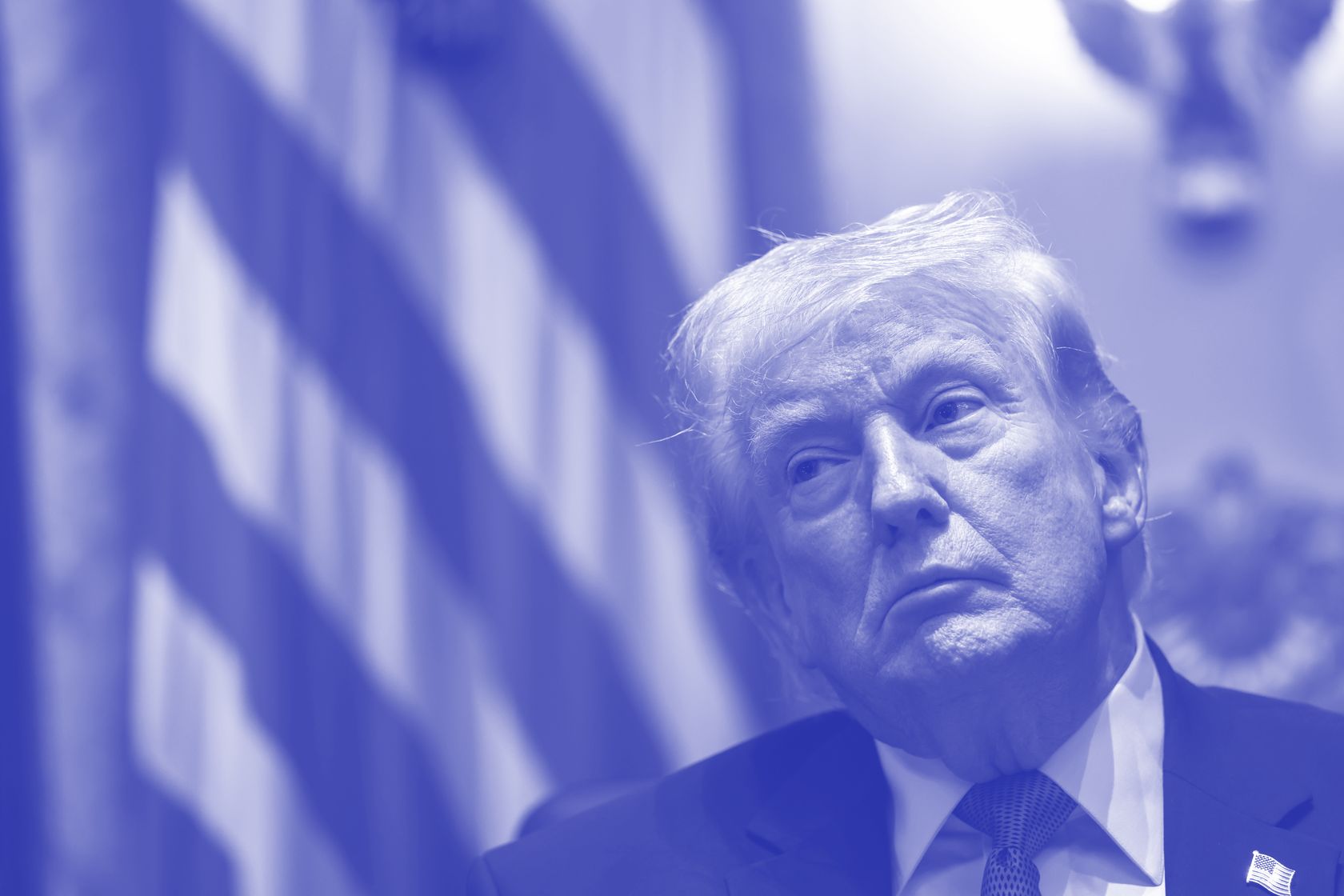
Off ramp: Donald Trump sent contradictory signals on the Iran war overnight, claiming Tehran was “begging” to end the conflict while admitting he did not know if the US was willing to make a deal. During his first cabinet meeting since the war began, the US president threatened to keep “blowing away” Iran if it failed to get serious before his Friday deadline to reopen the Strait of Hormuz, though he hedged on whether that deadline would hold. “They now have a chance to permanently abandon their nuclear ambitions and to join a new path forward. We’ll see if they want to do it” Trump said. “In the meantime, we’ll just keep blowing them away unimpeded, unstopped, when there’s not a thing they can do” he added. Special envoy Steve Witkoff confirmed the US had sent Iran a 15-point peace framework via Pakistan, describing “strong and positive messaging” in response. Iran formally replied with five counterdemands, including war reparations, a halt to assassinations and international recognition of its sovereignty over the strait. A senior Iranian official told Reuters the US proposal was “one-sided and unfair.” Meanwhile EU foreign affairs chief Kaja Kallas told Bloomberg that European countries were discussing a joint coalition to keep Hormuz open after the fighting stops, and the WSJ reported the UK and France would co-chair military talks involving about 30 nations toward that goal. Separately, Israel said it killed IRGC navy commander Alireza Tangsiri, the man it said was directly responsible for mining and blocking the strait. Iran did not confirm his death. (Capital Brief)(The Guardian)(WSJ)(AP)
2.
Friendly fire: Trump also took aim at Australia, the UK and NATO during the cabinet meeting, singling out allies he said had failed to support the US-Israel war against Iran. The US president said that Australia “was not great” and that he was “a little surprised” by its response, building on comments the previous week in which he said Australia had said no to requests for help. At the time, Prime Minister Anthony Albanese pushed back, saying Australia had “done what we have been asked to do.” Trump was harsher on UK Prime Minister Keir Starmer, saying “He’s a lovely man but I think he did something that was shocking. He didn’t want to help us,” citing Britain’s initial refusal to allow US access to Diego Garcia. He dismissed Starmer’s offer to send aircraft carriers as “toys compared to what we have.” Both countries had provided some support. On NATO, Trump warned the alliance’s refusal to help secure the Strait of Hormuz was a test he would remember, adding he was no longer sure whether the US would come to NATO’s aid in future. In a pointed rejoinder to Germany, Trump said that when he heard Berlin declare Iran “not our war,” he had responded, “well, Ukraine’s not our war.” NATO secretary general Mark Rutte, speaking at NATO headquarters in Brussels, said European allies needed time to organise because they had not been consulted before the 28 February strikes on Iran. (AFR)(FT)(Bloomberg)(NYT)
3.
War toll: Global markets extended losses as hopes for a swift end to the Iran war faded, with oil surging. The S&P 500 was trading about 1.5% lower in New York afternoon trading, with the Dow 0.88% lower and the Nasdaq down 2% and approaching correction territory. Brent crude climbed around 6.5% to approximately USD109 a barrel and on pace for a monthly gain of almost 50%, according to Bloomberg. That is its biggest monthly rise since 1990. The US Treasury sold USD44 billion of seven-year notes at a yield of 4.255%, above expectations and with soft demand across the board, the WSJ reported. The weak auction pushed the benchmark 10-year Treasury yield up eight basis points to 4.41%, approaching its highest level since July. Gold fell almost 3% to USD4,384 an ounce, weighed down by a firmer dollar and higher rate expectations. (Bloomberg)(WSJ)(Reuters)
4.
Economic fallout: Australia will face one of the highest rates of inflation across advanced economies and will be hit particularly hard by fertiliser price rises as a result of the conflict in the Middle East, the OECD warned in its interim economic outlook. The body said that Australia was showing signs of a resurgence in inflation prior to the war, and forecast Australian inflation to reach 4.1% over 2026, a 1.4% increase on the figures the group predicted in December. While global growth is expected to moderate as the conflict impacts economies across the world, Australia’s growth rate is forecast to grow at 2.3% this year and 2.4% in 2027. The OECD cautioned that Australia is particularly exposed to a spike in fertiliser prices as the conflict threatens the product’s supply chains. Treasurer Jim Chalmers said: “From an economic point of view, it’s clear that the end of the war can’t come soon enough.” (Capital Brief)(OECD)
5.
Musk’d up: Elon Musk’s X quietly shed its chief marketing officer and more than 20 nontechnical staff in recent weeks as it restructures ahead of SpaceX’s potential USD1 trillion-plus IPO, the WSJ reported. The paper noted that comes even as the platform’s US ad revenue is forecast at just USD1.27 billion this year, a fraction of the USD4.51 billion Twitter generated in 2021. The cuts follow the xAI-SpaceX merger and a shift in focus toward growing revenue, with xAI’s new chief revenue officer Jon Shulkin now overseeing commercial operations across both X and xAI. The restructuring came on a bruising day in court for Musk. A Texas federal judge dismissed X’s antitrust lawsuit against an advertising industry group and brands including CVS Health, Mars and Lego, ruling X had failed to show antitrust harm after advertisers pulled spending following his 2022 takeover. Separately, Musk’s lawyers urged a San Francisco judge to review a verdict finding Musk liable for defrauding Twitter investors, after jurors wrote one entry on the verdict form that estimated how much Musk’s tweets deflated Twitter’s share price on 9 August 2022 at USD4.20, in blue ink while every other entry was in black, which his legal team called a deliberate marijuana joke targeting a billionaire who has used the number 420 so often in business it once drew an SEC lawsuit. And the Journal also reported Sheryl Sandberg’s Lean In nonprofit shed about a quarter of its staff and appointed a 25-year-old CEO to refocus on combating the “tradwife” and manosphere movements. (WSJ)(Bloomberg)(Reuters)
6.
Captain Claude: When Dario Amodei lands in Australia next week, he won’t be arriving quietly. The chief executive of USD380 billion ($547 billion) AI company Anthropic is heading to Canberra and Sydney for a visit that signals how seriously one of the world’s most powerful AI labs is taking Australia as both a market and a political statement. A meeting with Treasurer Jim Chalmers is on the cards and a sit-down with Prime Minister Anthony Albanese is still unconfirmed. Assistant Minister for Science, Technology and the Digital Economy Andrew Charlton is also finalising a meeting with Amodei, Capital Brief has confirmed, but the AI founder is not expected to meet with the Attorney-General Michelle Rowland, whose department is currently considering consultation submissions on a potential revamp of the copyright licensing system. Anthropic has publicly stated it is exploring local compute capacity through third-party partners — a priority driven by consistent demand from Australian enterprises and government agencies with data residency requirements. (Capital Brief)
7.
Gon’ get paid.com: CEO of ASX hopeful Pay.com.au, Ed Alder, expressed confidence in his company’s business model ahead of an anticipated IPO next month, as the Reserve Bank prepares to finalise long-awaited payment reforms that could upend corporate loyalty programs. Next Tuesday, the RBA will release decisions on its proposed ban on surcharging, caps on interchange fees charged by banks and other measures to increase payment fee transparency. While those original proposals are subject to consultation, the thrust of them is widely recognised as a threat to loyalty programs, removing the interchange fees that ultimately fund them. Alder hit back at speculation his business — allowing customers to earn points on business expenses — would be put under pressure, telling Capital Brief it may instead be in a position to capitalise on the changes if they “lead to a lower points earn rate” on credit cards. Some in the industry expect the RBA could extend its purview to B2B fees in the future and scrutinise corporate cards which are outside of the current inquiry. (Capital Brief)
8.
Memory lane: A Google algorithm that could cut AI memory requirements sixfold sent memory chip stocks extending their losses overnight, wiping gains from a sector that had soared more than 50% this year on surging AI demand. Samsung Electronics and SK Hynix both fell over 4% and 6% respectively in Seoul. Micron Technology, Western Digital and Sandisk were all over 6% in New York afternoon trading. Google’s TurboQuant algorithm, originally published in research last year but publicised this week, can cut the memory required to run large language models by at least a factor of six, reducing the overall cost of AI training. Analysts cautioned not to overreact. Morgan Stanley analyst Shawn Kim said the impact should ultimately be positive, arguing that lower memory costs per query would lead to more profitable AI deployment and higher product adoption. Quilter Cheviot’s Ben Barringer told CNBC the sell-off reflected profit-taking after sustained gains in a cyclical market, adding TurboQuant “does not alter the industry’s long-term demand picture.“(Google Research)(Bloomberg)(Quartz)
