Trump signals more tariff relief for carmakers
Plus: Aussie VC is waking up to foreign risks; Pricey compulsory legal training under fire for poor value; Harvard rejects Trump’s governance demands.

Good morning. Here's what happened overnight and what you need to know today.

1.
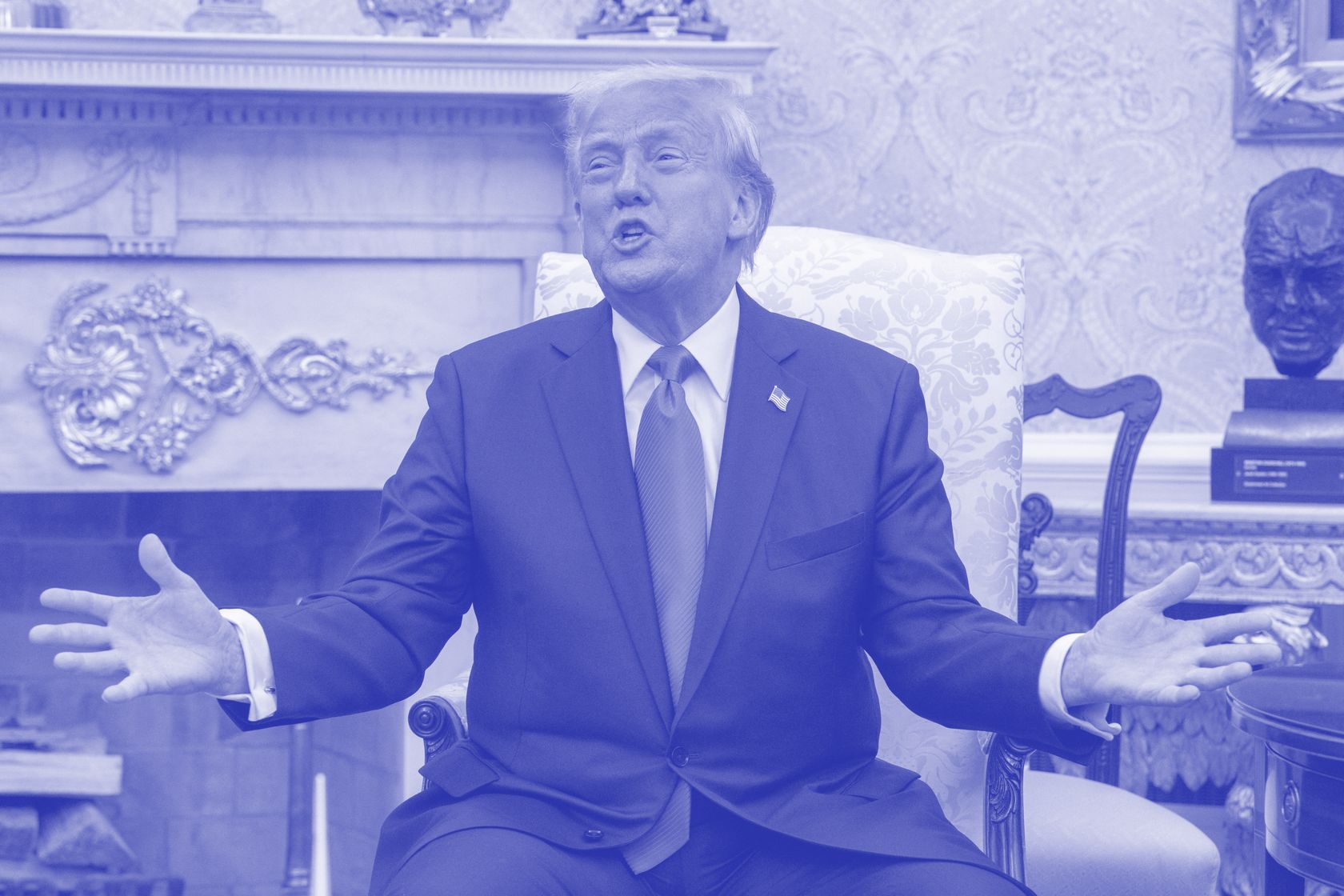
Trump parts: Donald Trump said he is “looking at something to help car companies” by possibly offering short-term exemptions from tariffs on imported vehicles and parts, saying they “need a little bit of time” because “they’re going to make them here.” His comments follow weekend exemptions for smartphones, laptops, memory chips and other electronics from steep “reciprocal” tariffs. Trump imposed a 25% tariff on fully built vehicles, with duties on parts set to take effect no later than 3 May. They have drawn criticism from automakers, who argue that stacked tariffs make it more difficult to assemble vehicles in the US. Shares of General Motors, Ford and Stellantis rose following Trump’s remarks. The president also said he anticipated rolling out tariffs on pharmaceutical imports in the “not too distant future” and described himself as a “very flexible person.” (Bloomberg)(WSJ)(Reuters)
2.
Healthy VC: Sovereign risk is back in focus for Australian VCs. Cut Through Venture’s latest investor sentiment survey points to rising concern over exposure to foreign capital, hardware and AI training data, alongside growing sensitivity to tariffs, supply chains and reliance on US-backed research funding. Research from the firm also shows Q1 2025 delivered Australia’s strongest venture capital quarter since 2022, with $993 million raised across 100 deals. Biotech, climate tech and hardware outpaced enterprise software, signalling a broader investor appetite. AI-first companies topped the deal count, and 62% of funded startups referenced an AI-related product benefit – a sign of how embedded AI has become, or how keen founders are to say it has. HSBC’s Alan Watters said the innovation economy faces both opportunities and risks under the new Trump administration. While deregulation could support investment, renewed focus on tariffs is creating uncertainty with key trading partners, complicating capital deployment decisions. (Capital Brief)(Cut Through Venture)
3.
Reform Bell: NSW Chief Justice Andrew Bell has intensified his push to reform practical legal training (PLT) after more than 4500 lawyers described it as an “expensive and irrelevant ‘box-ticking exercise’”. A survey commissioned by Bell and conducted by Urbis found only 13 per cent of recent graduates considered PLT reasonably priced, and just 40 per cent found the teaching satisfactory. PLT fees of about $10,000 were not “always seen as providing value”. Bell said large firms often cover the cost, steering graduates away from public or community legal work. Respondents reported “normalised cheating”, recycled assessments, “unbelievably simple” workloads and tutors providing answers to failing students. The College of Law, used by 83 per cent of graduates, was criticised for “excessive surpluses”, with a $180 million reserve and $18 million surplus in 2024. It offers only two full scholarships. A working group led by Court of Appeal Justice Tony Payne will consider reform proposals. (SMH)(AFR)
4.
Crimson pushback: Harvard University rejected demands from the Trump administration that it says place “unprecedented” conditions on the institution and go “beyond the lawful authority of this or any administration.” The administration is pressuring elite universities to address alleged antisemitism, targeting them for governance and policy changes following pro-Palestinian protests, and cancelling or freezing funding at institutions including Columbia, Princeton and Cornell. In a letter released Monday, it directed Harvard to eliminate diversity, equity and inclusion programs, report foreign students who commit conduct violations, bring in an outside party to ensure “viewpoint diversity” and reduce the power of students and faculty in university affairs. Compliance is tied to nearly USD9 billion ($14.2 billion) in federal funding. As part of changes made over 15 months to address antisemitism, Harvard has placed the Undergraduate Palestine Solidarity Committee on probation, removed faculty leaders from the Center for Middle Eastern Studies, and suspended a partnership with Birzeit University. President Alan Garber called the demands unconstitutional and overreaching. (Capital Brief)(Bloomberg)(WSJ)(NYT)
5.
Golden trade: Equities traders at Wall Street giant Goldman Sachs posted their highest quarterly revenue on record, rising 27% from a year earlier to USD4.19 billion ($6.63 billion). The bank’s revenue rose 6% to USD15.06 billion in the first three months of the year, while profit climbed 15% to USD4.74 billion, amounting to USD14.12 per share, which was ahead of the USD12.33 per share expected by analysts. The record quarter for equities traders rounded out just before US President Donald Trump’s tariffs began wreaking havoc on global markets. Despite ranking first on announced and completed M&A deals, investment banking at the firm has been hit by global volatility, with fees falling 8% to USD1.9 billion for the quarter, and the number of new deals unveiled since the start of January at the lowest level in over a decade. CEO David Solomon said that “we are entering the second quarter with a markedly different operating environment than earlier this year.” (Capital Brief)(WSJ)(Goldman)
6.
United States of AI: Nvidia revealed plans to spend USD500 billion on building AI infrastructure in the US over the next four years, alongside partners including Taiwan Semiconductor Manufacturing Corporation (TSMC). Nvidia said that it has already started producing its Blackwell chips at TSMC’s plants in Arizona. The company also vowed to produce AI supercomputers entirely in the US, commissioning more than one million square feet of manufacturing space to build and test chips and AI supercomputers. Production will ramp up in the next 12-15 months. The announcement comes after Trump denied a tariff break for certain electronics including smartphones and semiconductors imported from China, saying that levies will be applied to the goods under a more specific tariff regime for semiconductors. Trump has repeatedly called for the revival of US manufacturing, and has been imposing steep tariffs on tech firms with supply chains outside of the US. (Nvidia)(Reuters)(Capital Brief)
7.
Broken alliance: US-bound staff from the European Commission are being issued burner phones and laptops to avoid the risk of espionage, according to sources cited by the FT. Commission staff and officials heading to the IMF and World Bank spring meetings next week were given the new guidance, which replicates the instructions given to Commissioners for trips to Ukraine and China. Standard IT equipment is not used on such trips by EC staff for fear of Russian or Chinese surveillance. The news marks a step change in the EU’s treatment of the US as a potential security risk, underscoring the deterioration of relations between the western powers since US President Donald Trump took office. Trump has said the EU was set up to “screw the US” and imposed 20% reciprocal tariffs on the bloc, which he later walked back to 10% for 90 days. “The transatlantic alliance is over,” an EU official said. (FT)
8.
Slanging match: Jim Chalmers and Angus Taylor’s second Treasurer’s debate of the election campaign descended into a series of attacks centred on the parties’ respective housing policies. The accusations began when 7.30 host Sarah Ferguson asked Chalmers if Labor's $10 billion plan to build 100,000 homes for first home buyers was included in the budget. Chalmers clarified it was not, and will be funded with $2 billion in grants and $8 billion in loans. He said houses would start being built in 2026 and finished in 2027, and that “tens of thousands of homes” are already in the pipeline from Labor policies. Taylor suggested that no houses had been completed and asked if a single person had moved into one of the houses, to which Chalmers replied, "we've built a couple of thousand homes." The Coalition’s housing scheme would allow first home buyers of newly built properties to receive a tax deduction on the interest paid on their mortgages. Earlier on Monday, housing ministers from both parties insisted that the first home pledges will not increase property prices. (ABC)(ABC)
