Trump tells Davos he’ll demand lower rates
Plus: Chip stocks fall after warning from Nvidia supplier; ByteDance pondering non-sell options for TikTok; Albanese pays tradie apprentices $10,000 to build Australia.


Good morning. Here's what happened overnight and what you need to know today.
1.
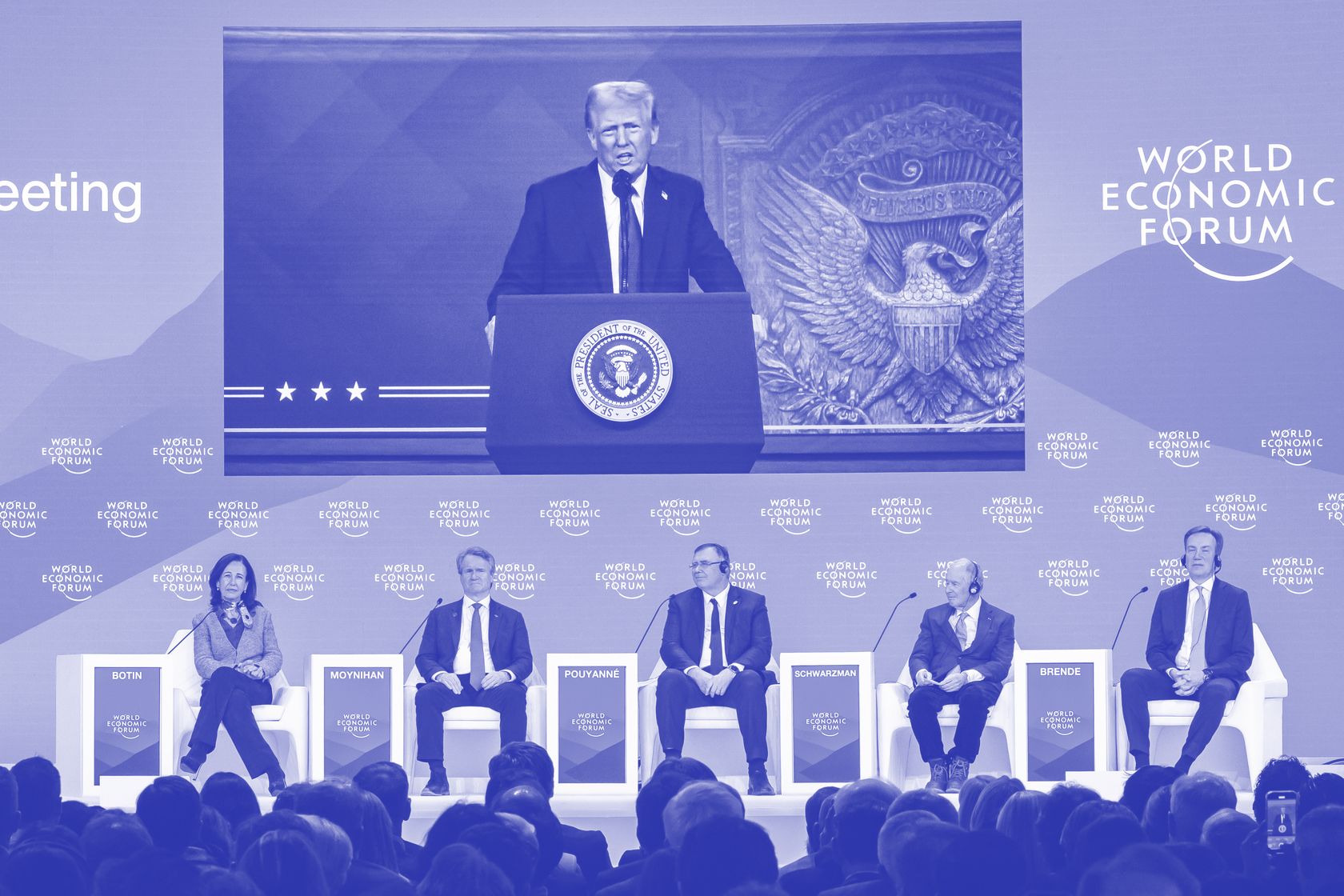
Davos Q&A: US President Donald Trump reignited his “America First” agenda during a virtual address to the World Economic Forum (WEF) in Davos, urging lower oil prices to curb inflation, saying he will mandate the Fed to lower interest rates and that central banks globally should follow suit. “I’ll demand that interest rates drop immediately. And likewise, they should be dropping all over the world,” he said. Trump also reiterated threats to impose tariffs on companies manufacturing outside the US and promised to slash corporate taxes to 15% for domestic producers. He hailed Crown Prince Mohammed Bin Salman’s recently announced USD600 billion ($954.05 billion) investment pledge, but pressed his country to lower oil prices – blaming those for prolonging Russia's war on Ukraine. Trump also criticised the EU for “unfair taxation” of American tech firms through billion-dollar fines and said he would ask all NATO members to increase defence spending to 5% of GDP. During the Q&A, Trump accused major banks, including Bank of America and JPMorgan, of discriminating against conservatives. “I hope you open your banks to conservatives because what you’re doing is wrong,” he told Bank of America CEO Brian Moynihan, who did not respond to the accusation. (Capital Brief))(CNBC Television)(Bloomberg)
2.
Chip warning: Chip stocks including Nvidia fell on Thursday (Friday AEDT) after South Korean memory-chip maker SK Hynix warned of sluggish demand, despite the sector’s prospects linked to Donald Trump’s USD500 billion ($794.93 billion) Stargate AI initiative. Nvidia shares traded over 2% lower after a record profit report from supplier SK Hynix failed to impress investors, as it warned of slowing demand for smartphones and said a potential slowdown in AI spending could weigh on demand for its products. Shares of SK Hynix, Advanced Micro Devices, Broadcom and Micron Technology were all lower. A day earlier, Nvidia had seen a 4.4% rise amid a broad AI stock rally fuelled by the announcement of the USD500 billion Stargate Project partnership between the White House, Oracle, OpenAI and SoftBank. Despite concerns over delays in its Blackwell GPU rollout, analysts estimate that between 25% and 50% of Stargate’s investment could be spent on advanced chips, a market Nvidia dominates. (Barron’s)(Bloomberg)(Capital Brief)
3.
TikTok talks: TikTok’s parent company, ByteDance, is exploring ways to maintain US operations without selling the platform, board member and General Atlantic CEO Bill Ford told Bloomberg. “We are optimistic we will find a solution,” Ford said. “There are alternatives we can discuss with President Trump and his team that stop short of selling the company but could involve a change of control.” TikTok briefly went offline last weekend after the US Supreme Court upheld a national security law requiring ByteDance to sell or cease operations. President Trump extended the sale deadline by 75 days via executive order, but the popular app’s future in the US remains uncertain. While the company has publicly refused to sell TikTok, Ford expressed optimism about constructive engagement between Presidents Trump and Xi, suggesting it could help resolve the issue. Meanwhile, in an interview with Fox News, Trump downplayed TikTok’s national security risk, questioning China’s interest in spying on users of the social media app. (Capital Brief)(Bloomberg)
4.
Labor incentive: Prime Minister Anthony Albanese will unveil a $10,000 cash incentive to attract more workers to the residential construction sector and address chronic labour shortages. Due to be announced at the National Press Club on Friday and starting 1 July, the initiative involves five staggered payments of $2,000 throughout an apprenticeship, beginning at six months and concluding upon completion. Costing $626.9 million over four years, the program is expected to support around 62,600 apprentices, covering key trades such as bricklaying, plumbing, carpentry and electrical work. The federal allowance for apprentices living away from home will also be increased for the first time since 2003, providing additional relief for those entering the workforce. The incentive forms part of the government’s 'Homes for Australia Plan', which targets the construction of 1.2 million new homes by mid-2029. (Capital Brief)
5.
Opioid deal: Purdue Pharma and the Sackler family have agreed to a USD7.4 billion ($11.76 billion) settlement to address opioid-related lawsuits in the US. The deal includes USD6.5 billion from the Sacklers over 15 years and USD900 million from Purdue as a one-time payment. Unlike a previous settlement struck down by the US Supreme Court in 2023, this agreement does not provide the Sacklers with blanket immunity from future lawsuits. However, claimants – including states, municipalities and individuals – must set aside up to USD800 million in a defence fund for the billionaires to fight those possible cases, the NYT reported citing sources. Purdue filed for bankruptcy in 2019 after facing numerous lawsuits over its role in the opioid crisis, including allegations of deceptive marketing of OxyContin. The agreement requires approval from claimants and a bankruptcy court to proceed. (WSJ)(NYT)
6.
Jobless claims: US jobless claims rose marginally last week, but ongoing claims rose to the highest in over 3 years, with initial applications increasing by 6,000 to 223,000, slightly higher than expected. Economists polled by Reuters had forecast 220,000 claims for the week ending 18 January. The four-week moving average of new claims rose to 213,500. Despite these increases, new applications remain near pre-pandemic levels, suggesting a stable labour market overall. Continuing claims climbed to 1.9 million, the highest level since November 2021, showing more individuals are struggling to find work. Economists are monitoring labour data closely due to recent wildfires in California, adverse weather conditions, and President Donald Trump’s cuts to federal-government jobs possibly impacting employment figures. Data earlier this month showed job growth remained robust in December, with nonfarm payrolls increasing by 256,000 jobs and the unemployment rate falling to 4.1%. (Capital Brief)
7.
News switch: CNN is cutting about 6% of its staff, or 216 jobs, and overhauling its operations as it confronts plummeting TV audiences and the challenge of adapting to a digital-first future for news. Under CEO Mark Thompson, the network is pivoting from traditional television to digital platforms, backed by a USD70 million ($11.29 million) investment from its parent Warner Bros Discovery. Traditional roles are being eliminated, the company said, but an equivalent number of digital-focused positions will be created, including data scientists and product engineers. CNN is developing a subscription-based streaming service and lifestyle content offerings targeting USD1 billion in digital revenue by 2030. It’s digital strategy prioritises vertical videos, which saw a 20% engagement increase last year, and experiments with new formats such as swipeable video news. It comes after CNBC reported rival network NBC News is also planning layoffs this week, although at a smaller scale than CNN. (CNBC)(FT)(NYT)
8.
Puma shock: Puma shares plunged after the shoemaking company reported disappointing earnings and announced a cost-cutting program. The German sportswear brand's net income for 2024 dropped to €282 million ($467.99 million), down from €305 million the previous year, missing analysts' expectations. Shares plummeted by as much as 21.59%, marking their steepest decline in over two decades. Despite a 4.4% increase in full-year sales to €8.8 billion, Puma attributed the profit drop to higher interest expenses and partial consolidation of profits from a US joint venture. The decline contrasts with rival Adidas's strong performance earlier this month, with strong sales and profitability for the holiday shopping period. CEO Arne Freundt said the cost cutting program will help the company reach an EBIT margin of 8.5% by 2027, up from 7.1% in 2024 but pushing back its previous target of 2025. (Capital Brief)
