Trump threatens tariffs on countries opposed to Greenland plan
Plus: China, Canada break from US with trade agreement; Markets seesaw as Hassett scrapped from Fed running; JPMorgan forms private markets specialty team.

Good morning. Here's what happened overnight and what you need to know this weekend.

1.
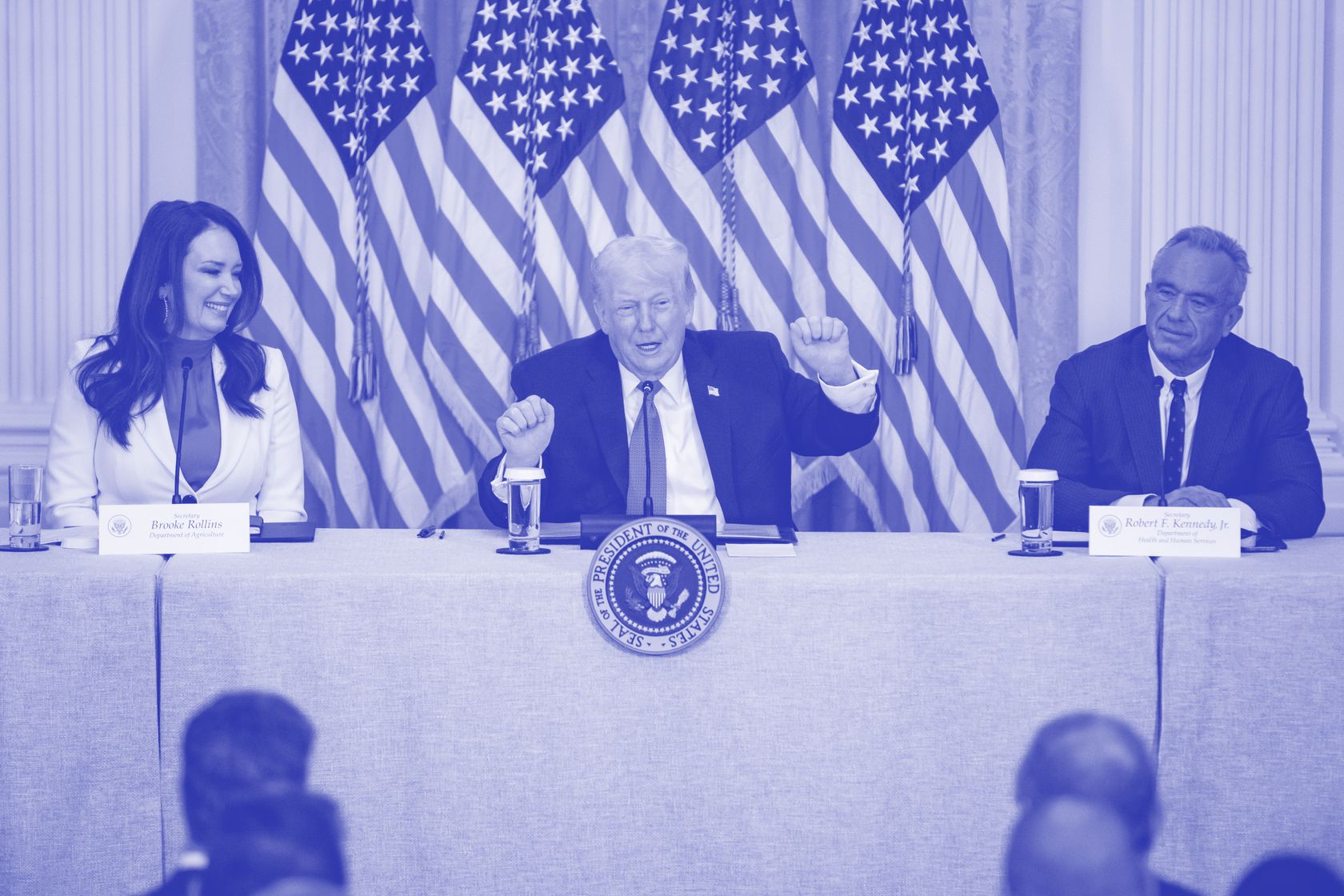
51st state?: US President Donald Trump threatened to impose tariffs on countries that oppose efforts by his administration to take control of Greenland. “I may put a tariff on countries if they don’t go along with Greenland because we need Greenland for national security. So I may do that,” the President said at the White House on Friday. Speaking at an event on healthcare, Trump said that the threat of tariffs against countries including France and Germany had helped him push down high prices of prescription drugs, adding that the same approach could help his efforts to take control of the territory. The news comes as a bipartisan group of US Congress members visited Denmark on Friday to showsupport in the face of increasing pressure from Trump to annex the region. Earlier this week, Trump said that the US needs Greenland for national security purposes and that NATO should be “leading the way for us to get it.” The Kremlin called Trump’s threats to take over Greenland “extraordinary” and that it would continue monitoring the situation. (WSJ)(ABC)(BBC)(The Guardian)(Capital Brief)
2.
Enemy of my enemy: Canada's Prime Minister Mark Carney and Chinese President Xi Jinping agreed to a suite of measures on Friday, in the first meeting held between the nations’ leaders in China since 2017. A joint statement from the countries’ leaders said that Canada agreed to lower tariffs on Chinese electric cars in return for reduced tariffs on Canadian farm products. Canada will allow up to 49,000 Chinese EVs into the local market under a 6.1% preferential tariff – significantly lower than the current 100% rate Canada imposed in 2024 at the request of the US. China is set to reduce tariffs on Canadian canola seed to a combined rate of roughly 15%, down from about 85%, and will remove its 100% tariffs on canola meal. The two countries hailed a new “strategic partnership”, with Canada’s tariff reductions marking a meaningful break from the US as it seeks to diversify trading partners away from the US. (Joint Statement)(FT)(NYT)(AP)(CNN)(The Australian)
3.
Musical chairs: US President Donald Trump indicated that he may keep National Economic Council Director Kevin Hassett, a frontrunner to replace Fed chair Jerome Powell, in his current position. Praising Hassett at a healthcare roundtable at the White House on Friday, Trump said: “I actually want to keep you where you are.” Investors took the comments to mean that former Fed governor Kevin Warsh is now more likely to get the top job at the Federal Reserve. Trump’s comments prompted the three major averages to hit session lows and saw the 10-year US Treasury note push above 4.2% for the first time since September. After ending the previous session near record-closing highs, the S&P 500 was relatively unchanged on Friday, closing down 0.06%, as did the Nasdaq, while the Dow Jones dropped off 0.2%, or 82 points. The small-cap Russell 2000 close up 0.13% following Thursday’s rally. (CNBC)(WSJ)(FT)(Bloomberg)
4.
Money Chase(r): JPMorgan Chase is bulking out its investment bank with a new team to help companies raise money from private markets, as the US’ biggest lender deepens its involvement in the alternative asset class. The bank told the Wall Street Journal that the new team, private capital advisory and solutions, will be helmed by Keith Canton, who was most recently co-head of equity capital markets in the Americas. “The private markets have just dwarfed the public markets lately,” Canton, co-head of equity capital markets in the Americas, who will helm the new team told the masthead. The new team will be a hybrid group offering M&A advice while working with the capital-markets division. Meanwhile, Bloomberg reported that JPMorgan Asset Management has become the world’s largest issuer of actively managed exchange-traded funds. Controlling nearly USD257 billion ($384.6 billion) in active ETFs worldwide the bank’s asset management arm is now narrowly ahead of Dimensional Fund Advisors commanding around USD255 billion. (WSJ)(Reuters)(Capital Brief)(Bloomberg)
5.
Ads chatbot: OpenAI will start testing ads in ChatGPT for the first time, marking a major pivot in its strategy as it looks to boost revenue streams ahead of a potential IPO. OpenAI said on Friday that it will begin showing ads in the free version of the chatbot and a new subscription tier, ChatGPT Go in the US. The ‘Go’ tier will be available for users globally at USD8 ($12) per month (or equivalent in other currencies). It said via a blog post that the ads will appear at the bottom of answers in ChatGPT where there is a relevant sponsored product or service based on the user’s current conversation. OpenAI says it will not share data about conversations with advertisers. The move is a major shift for the company, which has relied on a subscription model. CEO Sam Altman previously said that advertising on the platform would only be a “last resort.” (OpenAI ChatGPT Go)(OpenAI)(WSJ)(Bloomberg)(BBC)(The Guardian)(Capital Brief)
6.
Ripple effect: TikTok said that it will roll out new age-detection technology across Europe in the coming weeks, as the ByteDance-owned company comes under increasing pressure from regulators to remove accounts of children under 13. TikTok said via a blog post that the new technology, which was piloted in the EU over the past year, analyses profile information, videos posted and behavioural signals to predict whether a user is underage. Accounts flagged by the system are reviewed by human specialist moderators rather than automatically banned. For appeals against bans, TikTok will use facial-age estimation from verification provider Yoti. European Parliament is currently pushing for age limits on social media platforms, with Denmark wanting to ban social media for under 15-year-olds. Earlier this week, Australia’s eSafety Commissioner said social media platforms have removed 4.7 million accounts held by under-16s in the first month of Australia’s world-first age restriction law. (TikTok)(Reuters)(The Guardian)(Capital Brief)
7.
Political Capital: From the moment Opposition Leader Sussan Ley took a partisan line after the Bondi terror attack, she risked having the politics blow up in her face. After a month of vitriolic politics, a two-day sitting period intended for unity now looks set to devolve into squabbling as the Coalition now faces the prospect of strengthening hate speech laws. Ley’s Thursday press conference set off internal alarms, not least because her pledge to unveil the Coalition’s own package within days blindsided colleagues. One MP, granted anonymity to speak freely, described the process as “completely shambolic”. “We’ve been relentless in criticising the government, while offering no coherent alternative,” the MP told Capital Brief. Ley demanded the full adoption of antisemitism envoy Jillian Segal’s contentious recommendations, which include tougher hate speech laws, (a tough sell for many Coalition MPs), while the Nationals are vehemently opposed to tighter gun control. The Coalition must now justify voting down tougher gun laws after weeks of demanding tangible action. (Capital Brief)
8.
Waste recovery: The federal government will invest $24.7 million in a national pilot for recycling solar panels to reduce landfill and increase the availability of minerals that are crucial to the energy transition. The program will be funded over three years and establish up to 100 pilot collection sites across the country. The government also said it is considering the other recommendations made in the Productivity Commission’s circular economy report released on Friday morning. The Smart Energy Council said the announcement comes after a joint statement calling for the scheme, and signed by more than 60 organisations, was released in September 2025 following a decade of advocacy from the renewable energy industry group. The industry group said the national pilot will build on its solar panel recycling pilot conducted over 2024-25 in Queensland with state government support. “Recycling solar panels and reusing the essential components will reduce costs and make our economy more productive and efficient”, Treasurer Jim Chalmers said. (Capital Brief)(Productivity Commission)(Smart Energy Council)
