Trump threatens to destroy Iran ‘in one night’ as Tehran rejects ceasefire
Plus: Stocks edge higher but oil climbs amid looming Iran deadline; Washington luring ASX miners to Wall St; Firmus launches IPO roadshow in Asia: AFR.

Good morning. Here’s what happened overnight and what you need to know today.

1.
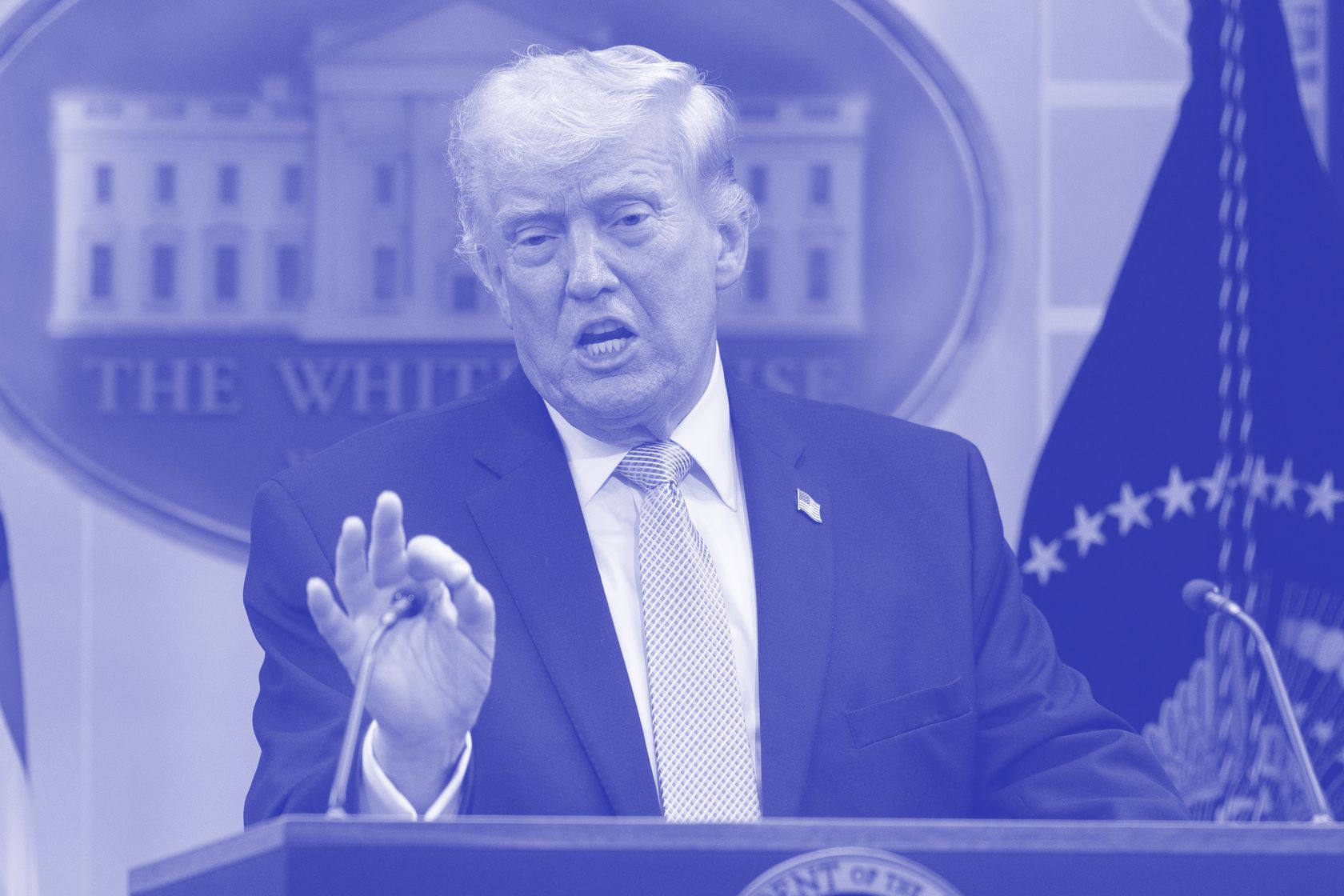
Bridge burning: Iran rejected a US ceasefire proposal and demanded a permanent end to the war, as Donald Trump warned “the entire country can be taken out in one night and that night might be tomorrow night,” as his deadline for Tehran to reopen the Strait of Hormuz by Tuesday 8pm local time (10am Wednesday AEST) fast approached. At a White House press conference, Trump called Iran’s counter-proposal “a significant step” but “not good enough”, adding it was “highly unlikely” he would extend the deadline again. “We want free traffic of oil and everything else,” he said. If tomorrow’s deadline passes without that, he said “they’re going to have no bridges,” and “no power plants. Stone ages.” Iran’s state news agency IRNA reported that Tehran had submitted a 10-clause response through mediator Pakistan, rejecting a ceasefire and calling for a permanent end to the war, an end to conflicts in the region, a protocol for safe passage through the Strait of Hormuz, the lifting of sanctions and reconstruction. Trump opened the press conference celebrating what he described as one of the most complex and harrowing search-and-rescue missions ever attempted by the US military, the weekend retrieval of a downed F-15E weapons systems officer who had hidden in a mountain crevice in Iran for nearly 48 hours while Iranian forces hunted for him. The mission involved 155 aircraft and a CIA deception campaign to draw Iranian forces away from the airman’s location, military officials told reporters. Defence secretary Pete Hegseth said Monday would bring the largest volume of strikes yet, with Tuesday to bring even more. Israel separately killed Islamic Revolutionary Guards Corps intelligence chief Major General Seyed Majid Khademi in an overnight airstrike on Tehran, Israel’s defence minister said in a statement. (Capital Brief)(Reuters)(NYT)(FT)(BBC)
2.
War price: Oil pushed higher, while US stocks also edged higher as traders weighed Trump’s ultimatum against tentative signs of diplomacy. US crude was up 0.78% at USD112.41 a barrel, up 68% since the US and Israel began bombing Iran late February, while Brent was up 0.68% at USD109.77. The S&P 500 was trading 0.41% higher in late afternoon in New York at the time of writing. The dollar fell slightly against a basket of currencies while bond yields were little changed. In his annual shareholder letter, JPMorgan CEO Jamie Dimon warned the war risked triggering prolonged oil and commodity price shocks and higher inflation than markets expected. The Bank of Japan separately warned the oil shock was already hitting company profits and consumer spending across Asia, while the IMF’s managing director Kristalina Georgieva said the war would result in higher prices and slower global growth. Back home, Energy Minister Chris Bowen yesterday said fuel shipments to Australia had been secured “well into” May, up from a previous guarantee through April, and that the number of service stations out of diesel had fallen to 274 nationally from more than 400 on Good Friday. Australia’s fuel stockpile stood at 39 days of petrol, 29 days of diesel and 30 days of jet fuel. (ABC)(Bloomberg)(Reuters)(WSJ)
3.
Process of assimilation: In the age of Donald Trump 2.0, the ASX’s status as arguably the pre-eminent bourse for speculative mining stocks is under threat from an unlikely destination: Wall Street. The Trump administration has unveiled a swathe of measures this year to strengthen the US’ supply chain in critical minerals — key materials like rare earths used in everything from semiconductors to weaponry. These support measures have included providing low interest loans or even equity funding for emerging explorers and producers and building a USD12 billion ($17 billion) critical minerals stockpile. The upshot is that many of Australia’s biggest and most promising critical minerals names now have considerable financial backing from the US government. Two Australian corporate advisers with direct knowledge of live discussions told Capital Brief a host of ASX miners were actively considering listing in the US off the back of Washington support: “They’re openly pushing Australian groups that they should list in the US and hire some US directors in a process of assimilation,” one said. (Capital Brief)
4.
Firmus ground: Firmus is finalising the third and final tranche of its $1 billion-plus pre-IPO raising, with Nvidia doubling its investment and the company’s valuation approaching $7 billion, The Australian Financial Review reported citing unnamed sources close to the company. Co-chief executives Oliver Curtis and Tim Rosenfield were set to make their maiden pitch to potential IPO investors in Asia today, according to the report. Nvidia and other strategic investors were expected to buy new shares at $144 each, a 15% increase on its USD550 million November raising, which valued the business at $6 billion, and four times the value of its $330 million September round. The company, which did not comment publicly on the plans, is expected to raise up to $3 billion in its IPO, with BofA, JPMorgan, Morgans and Morgan Stanley introducing it to potential investors. The seven-year-old Tasmanian company, founded by cousins Curtis and Rosenfield and Curtis’ ex brother-in-law Jonathan Levee, counts Blackstone, Temasek, James Packer and former treasurer Joe Hockey among its backers. Curtis was convicted of insider trading in 2016 and jailed for a year, but has been informally cleared to remain a director post-listing following high-level ASX discussions, though final approval awaits prospectus lodgement, three of the sources said. Curtis has told investors he is seeking to sign a third large customer before the IPO, following a $600 million contract with an unnamed tech giant widely speculated to be Meta. (AFR)
5.
Cockroach warning: JPMorgan chief Jamie Dimon warned that losses for lenders to indebted companies are likely to be higher than feared in his annual letter to shareholders. Dimon wrote that while the sector “probably does not” pose a systemic risk, when a credit cycle eventuates, “which will happen one day, losses on all leveraged lending in general will be higher than expected, relative to the environment.” Weakening credit standards and the sector’s lack of “great transparency or rigorous valuation ‘marks’ of their loans” increase the chance that people will sell should the environment worsen, he wrote, with actual losses currently higher than they should be relative to the environment. On geopolitical risks, he said the potential for significant ongoing oil and commodity price shocks, along with the reshaping of global supply chains, could lead to stickier inflation and higher interest rates than currently anticipated. Dimon argued investment in AI is not a “speculative bubble” but “we cannot predict the ultimate winners and losers in AI-related industries.” (Jamie Dimon annual letter)(Capital Brief)(FT)
6.
Curbed redemptions: US investment management firm Barings capped redemptions at one of its private credit funds after investors sought to pull over 11% of shares during the first quarter. A regulatory filing published by Barings Private Credit Corp on Monday said that it capped withdrawals at 5%, after investors requested to pull 11.3% of shares earlier this year. Barings is the latest in a series of private credit funds to cap redemptions, as investors increasingly seek to pull money from the market amid concerns over exposure to software businesses threatened by AI and loan quality. Meanwhile, Goldman Sachs’ USD15.7 billion Goldman Sachs Private Credit Corp fund said investors sought to withdraw just under 5% of their cash during the first quarter. In a filing published Monday, the bank said that its reliance on institutional capital rather than retail investors differentiated its performance from peers, “which means we can be patient”. (Capital Brief)(Barings)(Bloomberg)
7.
Uber battle: Uber’s six-year battle over state payroll tax goes before the High Court on Wednesday in a case with wide ramifications across the gig economy. NSW hit the rideshare operator with an $81.5 million assessment for 2015 to 2020, based on amounts paid to its drivers. Other states are poised to follow if the court rules against Uber. Uber won the first round in the NSW Supreme Court, where Justice David Hammerschlag found it was acting as a “payment collection agent” for drivers. Matthew Cridland, a tax partner at law firm K&L Gates, said: “If the decision goes against Uber, there would be nothing to prevent other states and territories (excluding WA) from initiating their own payroll tax audits, potentially going back five years, with assessments to follow for the relevant payroll tax years.” Cridland said the decision could also affect doctors in medical centres, financial planners and mortgage brokers. (Capital Brief)
8.
Twine time: SafetyCulture is acquiring Sydney-based sales analytics startup Twine, The Australian Financial Review reported. Founder Luke Anear, who returned to running day-to-day operations last month after the sudden departure of former chief executive Kelly Vohs, said the company had also submitted a term sheet on another potential buyout and entered final stages of talks with a third. Anear declined to confirm deal terms. Twine, which uses AI to analyse sales and customer service calls to improve service and sign-ups, raised $2.3 million from Airtree Ventures and local angel investors last year. Its co-founder Brian Swift, formerly of SafetyCulture, will join as AI vice president, alongside co-founders Bec Lourey and Chris Manouvrier. Last valued at $2.5 billion in 2024, SafetyCulture has suffered writedowns over the past 12 months. Separately, Riverside-backed Virtual IT Group closed its acquisition of Sydney cybersecurity firm Security Centric in a deal slated to scale the managed services provider into a $200 million-plus annual revenue business, the AFR’s Street Talk column reported. (AFR)
