Trump threatens to destroy Iran’s power plants, Tehran vows to wreck region’s energy
Plus: Iran war hits Australia’s fuel supply; Canva investors unfazed by AI-powered software sell-off, says co-founder; Australian tech hits $248b GDP contribution, second to mining.


Good morning. Here’s what happened overnight and what you need to know today.
1.
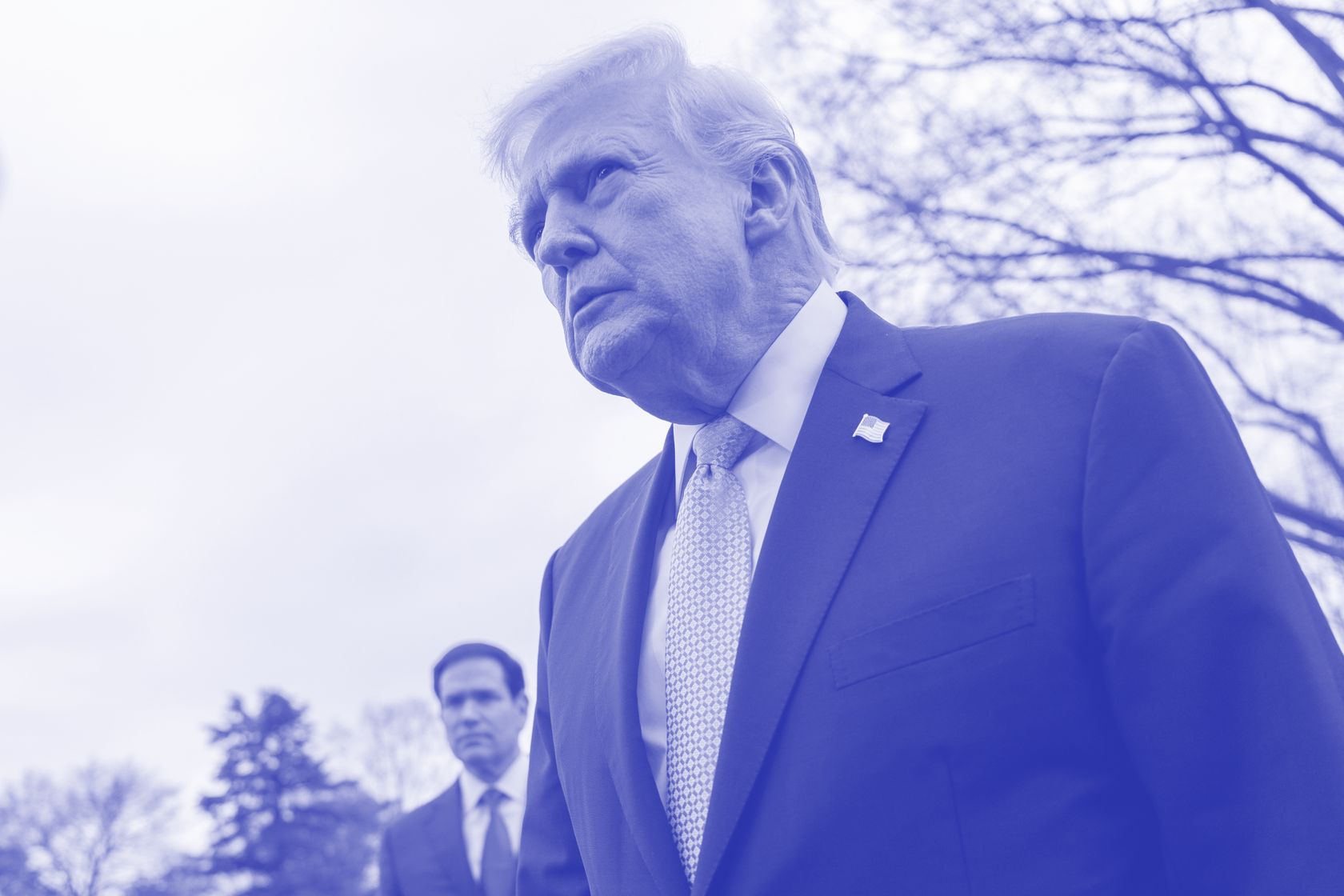
Iran war: The US-Israel war on Iran lurched into a dark new phase as Iran threatened to destroy energy and water infrastructure across the Middle East if the US strikes its power plants. The threat came after Donald Trump gave Tehran until Monday evening Washington time (Tuesday AEDT) to fully reopen the Strait of Hormuz or face US strikes on Iranian power plants. Trump posted the ultimatum on Truth Social saying that if Iran didn’t reopen the waterway, “the United States of America will hit and obliterate their various POWER PLANTS, STARTING WITH THE BIGGEST ONE FIRST!” Iran’s military joint command, Khatam al-Anbiya, warned that if power plants were struck, the strait would be “fully closed” and would not reopen until damaged plants were rebuilt. Iran’s parliament speaker Mohammad Bagher Ghalibaf warned on X that regional energy facilities would be “irreversibly destroyed” if Iran’s power plants were struck, and separately threatened that buyers of US treasury bonds were “purchasing a strike” on their assets. Meanwhile, when asked whether Trump planned to slow the war in Iran, US Treasury Secretary Scott Bessent told NBC the US must “escalate to de-escalate.“ The ultimatum followed Iranian missiles breaching Israeli air defences Saturday, striking the southern cities of Dimona and Arad and injuring around 175 people. Earlier, Iran fired two long-range ballistic missiles toward the US-UK base at Diego Garcia in the Indian Ocean. One failed in flight and one was shot down by a US warship. (WSJ)(FT)(NYT)(Reuters)
2.
Oil shock: Australia’s fuel supply chain is showing its first tangible cracks from the Iran war, with the government appearing to scramble to guarantee fuel stocks as six oil ships are cancelled and Asian suppliers begin prioritising their own needs. Prime Minister Anthony Albanese has been personally phoning regional counterparts to lobby for steady supply and will step up those efforts this week, The Sydney Morning Herald reported citing unnamed government sources. A separate anonymous government source told The Australian Financial Review that Canberra was approaching those talks from “a position of leverage” due to its extensive coal and gas exports to the region. Energy Minister Chris Bowen told the ABC’s Insiders on Sunday that six of the roughly 80 ships expected next month had been cancelled or deferred from Malaysia, Singapore and South Korea, warning of “bumps in supply” ahead, though he said some had already been replaced. Australia holds 38 days of petrol and 30 days of diesel and jet fuel, with both onshore refineries running at full capacity, Bowen said. Reuters last week reported ExxonMobil, BP and Vitol were shipping a record 240,000 metric tonnes of fuel from the US to Australia, the most in over three decades. The journey from the US takes 30 to 40 days, however, compared to 10 to 20 days from Asia. Bowen said the government was not currently contemplating invoking the 1984 Liquid Fuel Emergency Act, though he acknowledged the powers existed “in extremis, if necessary.” Meanwhile, Australia joined 22 nations in signing a joint statement signalling readiness to help secure the Strait of Hormuz, while the Coalition called for Russian fertiliser sanctions to be lifted if the strait remains blocked. (Chris Bowen)(SMH)(AFR)
3.
All good: Canva co-founder Cliff Obrecht says investors have kept faith in the company despite Google’s new AI design tool Stitch and a broader global sell-off in software stocks, with its USD42 billion ($60 billion) valuation reportedly intact. Obrecht was cited by the AFR saying Canva is “growing revenue at over 40% at rare scale, and this is our eighth consecutive year of profitability on a free-cashflow basis, something only a handful of software companies in the world have achieved.” The AFR also said that “a Canva insider” told the publication shares were still trading privately at the USD42 billion valuation. Obrecht added Canva will launch what he called the biggest product in its history in a few weeks, “moving from a design platform with AI tools, to an AI platform with design tools.” Google’s Stitch lets companies build high-end websites and apps by describing the look and feel they want. Its launch triggered a sell-off in shares of listed rivals Adobe and Figma. Adobe shares are down 36% in the last year, while Figma shares are down over 70% since listing last July. Obrecht’s comments also come as Anthropic’s Cowork, which lets anyone ‘vibe code’ software using plain language prompts, has wiped billions from the market values of public software companies including Atlassian and WiseTech. The Information last week reported Canva now plans to IPO next year, with revenue rising to over USD4.7 billion in 2025. “My guess is they will IPO north of the last round valuation and I think it made sense to delay the IPO,” Airtree Ventures co-founder Daniel Petre said. Blackbird Ventures partner Rick Baker said conviction in the company had only grown. (AFR)(Capital Brief)(The Information)
4.
Tech tonic: The tech sector contributed an estimated $248.5 billion to the Australian economy in FY25, the second largest contributor behind mining, according to a report by the Tech Council of Australia. The figure includes $126.2 billion directly from technology companies and $122.3 billion from indirect tech-enabled activity, equating to 8.9% of GDP, up from 7.5% in FY20 and 6.1% a decade ago. The direct sector ranked second for labour productivity at about $317,000 per hour worked. Tech exports reached $13.7 billion, or 2.7% of total Australian exports, which was up from just over $8 billion in 2017, growing at about 5.5% annually. With 43.8% now going to the US, the report flags a strategic exposure and calls for market diversification. Released ahead of the Tech Council’s Parliament House showcase today, the report comes after Treasurer Jim Chalmers said the May federal budget will include a reform package to boost productivity. (Capital Brief)
5.
Bear hugs: Challenger’s move to cut its Pepper Money takeover offer may be just the beginning. With the ASX down over 7% in the last month, dealmakers say depleted valuations are handing well-funded buyers a rare window to strike. Harvest Lane chief investment officer Luke Cummings told Capital Brief that while some deals have paused, opportunistic buyers were “rubbing their hands together,” pointing to the SGH and Steel Dynamics bid for BlueScope Steel as a live situation ripe for re-engagement. BlueScope shares have drifted to $27.30, well below the consortium’s $34-per-share “best and final offer” made a month ago. King & Wood Mallesons M&A partner Will Heath also noted that rising Australian interest rates (with US rates on hold) made local companies prime targets for US bidders. However, Credit Corp boss Thomas Beregi said short-term market moves were “not a factor as yet” in the company’s $385 million due diligence on Humm Group. And with Koala and Pay.com.au pressing ahead with imminent IPOs, Heath says the picture is “not all negative news.” (Capital Brief)
6.
Grid grief: Australia’s net-zero energy transition could cost households up to $600 more a year in electricity bills, according to new research showing the program’s construction costs have blown out from an initial $30 billion estimate to as much as $85 billion. Policy Institute Australia’s report finds several major projects have spiralled well beyond budget. Most strikingly, the VNI West interconnector between Victoria and NSW, which has ballooned from $2.4 billion to as much as $11.4 billion. The Central-West Orana transmission project in regional NSW has risen from $650 million to $5.5 billion, and Marinus Link Stage One from $1.8 billion to $4.9 billion. PIA chief executive Amy Auster said there was still time to act, with only seven of 26 major projects contracted, but warned “windows are closing.” The think tank attributes the blowout to inexperience in large-scale greenfield transmission, land access difficulties and surging materials and labour costs. Cable prices have nearly doubled since 2019. PIA is calling for reforms including stripping AEMO of its power to designate projects, competitive procurement, state-based Infrastructure Delivery Agencies and an expanded remit for Infrastructure Australia. (Capital Brief)
7.
Piqued interest: A High Court ruling expected within three months will determine how broadly Australia’s financial services laws apply, with consequences reaching well beyond crypto, Capital Brief reports. The case centres on ASIC’s bid to overturn a 3-0 Full Federal Court ruling that cleared fintech Block Earner of needing an Australian Financial Services Licence for its fixed-yield crypto product, Earner. Heard on 12 March before all seven justices, the bench pressed both sides hard on whether ASIC’s core argument — that any scheme offering a return on investment is a financial product under the Corporations Act — stretches far beyond digital assets. ASIC itself acknowledged the outcome applies to all financial products and services, not just crypto. The decision will likely shape how ASIC regulates digital asset products and services, and potentially much more. Full analysis here. (Capital Brief)
8.
ICE screening: Immigration enforcement agents are set to join airport security lines across the US from Monday (Tuesday AEDT), as Donald Trump’s response to a 36-day funding standoff shifts from negotiation to deployment. With roughly 50,000 TSA officers working without pay since mid-February and absence rates at some major airports approaching 40%, wait times have stretched to three hours at some airports including Houston and New York’s JFK, disrupting travel for anyone flying through the US during peak spring-break season. The US president announced Saturday that ICE agents would be sent to airports, with border czar Tom Homan telling news outlets on Sunday they would guard exit lanes and check passenger IDs to free up TSA officers for screening duties. He said ICE agents will not operate X-ray machines. That position differed from Transportation Secretary Sean Duffy, who told ABC the agents could also run X-ray machines. Meanwhile, the American Federation of Government Employees president Everett Kelley said TSA workers “deserve to be paid, not replaced by untrained, armed agents.” No deal between Republicans and Democrats on restoring DHS funding appeared imminent, with Congress facing a scheduled two-week recess from 27 March, the same date TSA officers are set to miss another paycheck. (Reuters)(Donald Trump)(AP)
