Trump to decide on Iran in two weeks
Plus: Productivity flat in March quarter, down over year; Defence startup Anduril to expand Aussie workforce by 50%; Musk downplays latest Starship explosion: ‘just a scratch’.

Good morning. Here's what happened overnight and what you need to know today.

1.
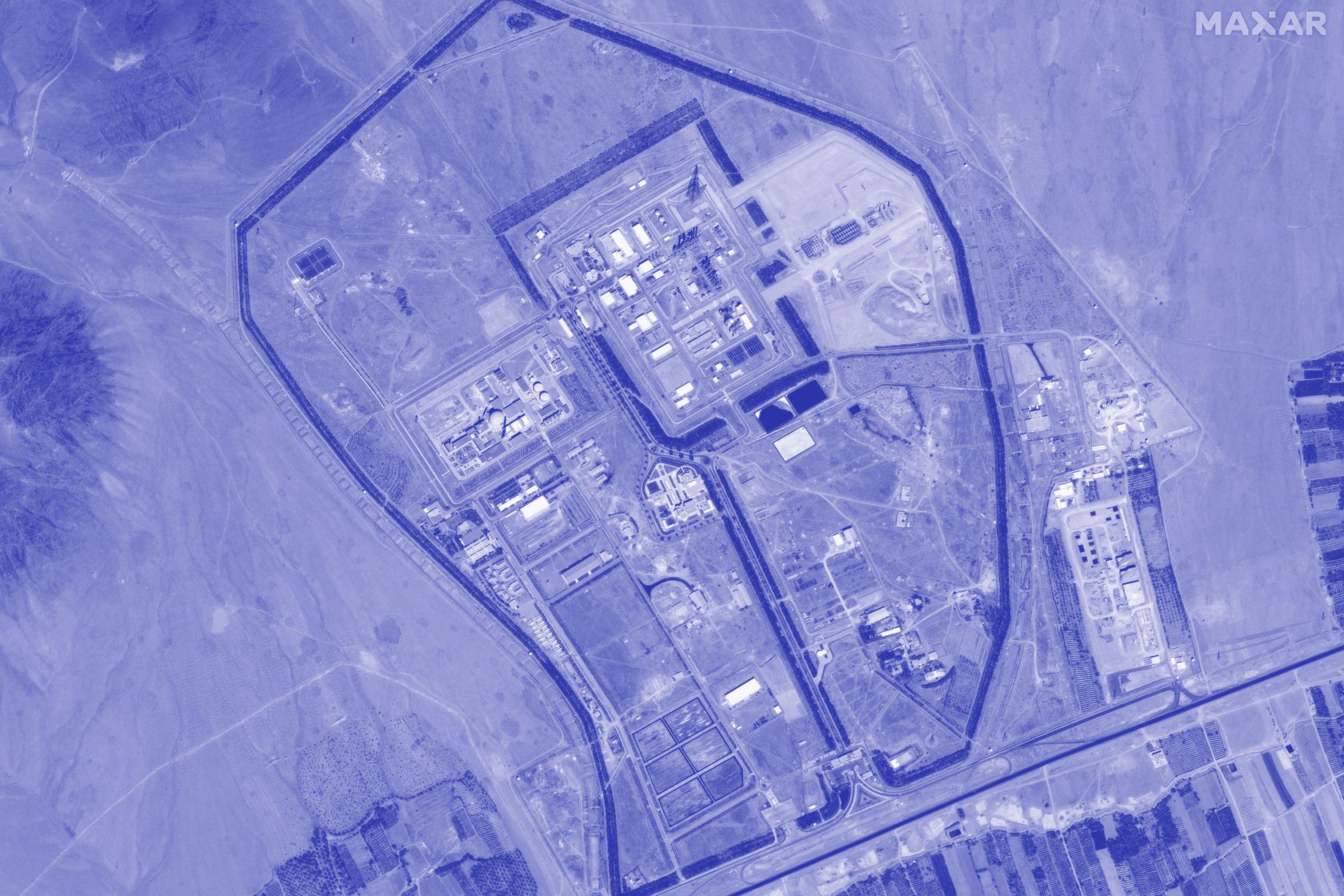
Two weeks: As Israeli airstrikes intensified on the seventh day of fighting with Iran and Iranian missiles hit civilian targets, President Donald Trump said he will decide “within the next two weeks” whether the US will join Israel’s military campaign against Iran. The White House said there remains a “substantial chance” of negotiations with Iran, even as Trump demands an end to uranium enrichment. On Thursday, an Iranian missile struck Soroka Medical Center in Beersheba, wounding at least 80. Israel’s response included fresh strikes on Iran’s Arak reactor and a site near Natanz. Defence Minister Israel Katz said Supreme Leader Ali Khamenei “should not continue to exist.” Since the war began, 639 people have been killed in Iran and 24 in Israel, according to reported numbers. European foreign ministers will meet their Iranian counterpart in Geneva on Friday. (AP)(NYT)(WSJ)(Reuters)
2.
Feeble productivity: Labour productivity gains have continued to elude the Australian economy, remaining flat in the March quarter and declining 0.9% over the year. The Productivity Commission's latest quarterly bulletin for June 2025 found a 0.2% increase in output over the three months to March 2025 but a 0.3% rise in hours worked resulting in stagnant overall productivity. In annual terms, output increased 1.3% but hours worked jumped 2.4%. The Albanese government has made productivity growth its focus for the second term of government, though Treasurer Jim Chalmers has warned there is no short-term fix to the problem. The Productivity Commission is currently working through submissions to an inquiry focused on five pillars of the economy that is expected to form part of the discussions at a roundtable in Canberra led by Chalmers in August. This includes a focus on economic dynamism, corporate tax and skills. (Capital Brief)
3.
Armed growth: Palmer Luckey’s defence startup Anduril is on an Australian hiring spree, aiming to grow its local headcount by 50% to over 200 by year’s end. It’s recruiting software engineers, supply chain experts and product designers to scale production of its Ghost Shark autonomous submarines and support upcoming defence projects, Capital Brief reported. Anduril launched in Australia in 2022 under former ADF adviser David Goodrich. Its Ghost Shark, co-developed with the Royal Australian Navy and DSTG, received $70 million each from Anduril and the Defence Department, plus an additional $20 million after a prototype went to sea last year. With the prototype contract ending July 1, Anduril wants to begin manufacturing at scale in NSW later this year. It also holds a $30 million RAAF contract to trial anti-drone technology. The hiring push follows a USD2.5 billion Series G raise, led by Founders Fund, valuing Anduril at USD30.5 billion. (Capital Brief)
4.
‘Just a scratch’: SpaceX’s Starship spacecraft exploded on its stand during a test, marking the latest setback for Elon Musk’s goal to one day reach Mars. SpaceX said the vehicle had “experienced a major anomaly” as it was preparing for its 10th flight test and asked the public not to approach the site as it worked with local officials to secure the area. “Just a scratch,” Musk said via X, before explaining that a specialised bottle that holds nitrogen likely failed during a routine “static fire test” of its engines. Local media reports said the huge explosion which happened shortly after 11pm Texas time on Wednesday night, reportedly shook windows and rattled dishes. The explosion prolongs a period of mishaps for the SpaceX program which is pivotal to NASA’s plans to put US astronauts on the moon – just last month Starship broke into pieces mid-flight after losing control. (SpaceX)(Bloomberg)(WSJ)(WaPo)
5.
Banking moves: Central banks responded to mixed signals on inflation and growth with a blend of rate holds and surprise cuts amid heightened global uncertainty. The Bank of England held interest rates at 4.25% in a six-to-three vote (although three members called for an immediate cut) and signalled a possible reduction in August amid signs of a weakening labour market. Continental European central banks meanwhile moved ahead with cuts. Norway’s central bank unexpectedly reduced its rate by 25 basis points to 4.25%, its first cut since 2020. The Swiss National Bank also cut rates by 25 basis points to 0%, the lowest among its peers, following a dip in inflation to -0.1% and a strong franc. It did not rule out going negative again. Sweden’s Riksbank lowered its policy rate to 2% and signalled the possibility of another cut later this year, citing weak growth and inflation. A day earlier the US Fed, by contrast, held rates steady. (Capital Brief)(FT)(Reuters)(Bloomberg)(WSJ)
6.
Sh*tcoin townhall: Linda Yaccarino, CEO of X, said that users will soon be able to make investments or trade on the social media platform, as owner Elon Musk pushes to build it into an “everything app,” the FT reports. Speaking to the masthead at the Cannes Lions advertising festival, Yaccarino said: “You’ll be able to come to X and be able to transact your whole financial life on the platform…And that’s whether I can pay you for the pizza that we shared last night or make an investment or a trade. So that’s the future.” X has previously said it plans to introduce ‘X Money,’ a digital wallet and peer-to-peer payment service with Visa as its first partner later this year. Yaccarino said that the features would likely launch in the US before being rolled out elsewhere and that the company is also exploring the introduction of an X credit or debit card. (FT)
7.
Zuck’s r(AI)d: Meta is in talks to poach AI investors Nat Friedman and Daniel Gross to drive its AI efforts, as well as partial buyouts of their venture capital fund NFDG, The Information reports. If successful, Gross would leave his firm Safe Superintelligence (SSI) to work mostly on AI products while Friedman’s remit is expected to be broader. The news comes as Meta bought Scale AI for USD14.3 billion ($22.2 billion) as part of a deal to onboard CEO Alexandr Wang to push Meta chief Mark Zuckerberg’s AI ‘superintelligence’ ambitions. Both Gross and Friedman would be expected to work closely with Zuckerberg and Wang. Meta is reportedly considering buying a substantial portion of NFDG’s holdings for upwards of USD1 billion, and cashing out the fund’s limited partners in the process. Meta would hold minority stakes in the startups that NFDG has invested in, which could include SSI. Elsewhere, Donald Trump granted a third 90 day extension for ByteDance to sell TikTok’s US operations. (The Information)
8.
Antitrust appeal: Advocate-general of the European Court of Justice (ECJ), Juliane Kokott, dealt Google’s efforts to overturn a record fine a major blow after agreeing with Brussels regulators that the tech player’s conduct constituted a form of market abuse. Kokott said that the €4.12 billion ($7.32 billion) fine issued against the US company in 2022 should be upheld, as Google’s practice of imposing restrictions on Android device manufacturers and mobile network providers was part of a broader strategy by the tech giant to preserve its dominant position in search. "Very few undertakings achieve such renown that their name gives rise to a verb. This alone attests to the importance that Google has acquired in everyday life," Kokott wrote. The opinion cements the European Commission’s position and while her comments are not binding, judges often follow advice handed down by advocates general. Kokott asked the ECJ to dismiss Google’s appeal. (ECJ) (FT)(Politico)(Reuters)(Capital Brief)
