Trump unveils Saudi deals as US tech and arms flow to Gulf
Plus: Coinbase, set for S&P 500 inclusion in crypto milestone, surges; April US price inflation lower than expected; Trump announces end to Syria sanctions.

Good morning. Here's what happened overnight and what you need to know today.

1.
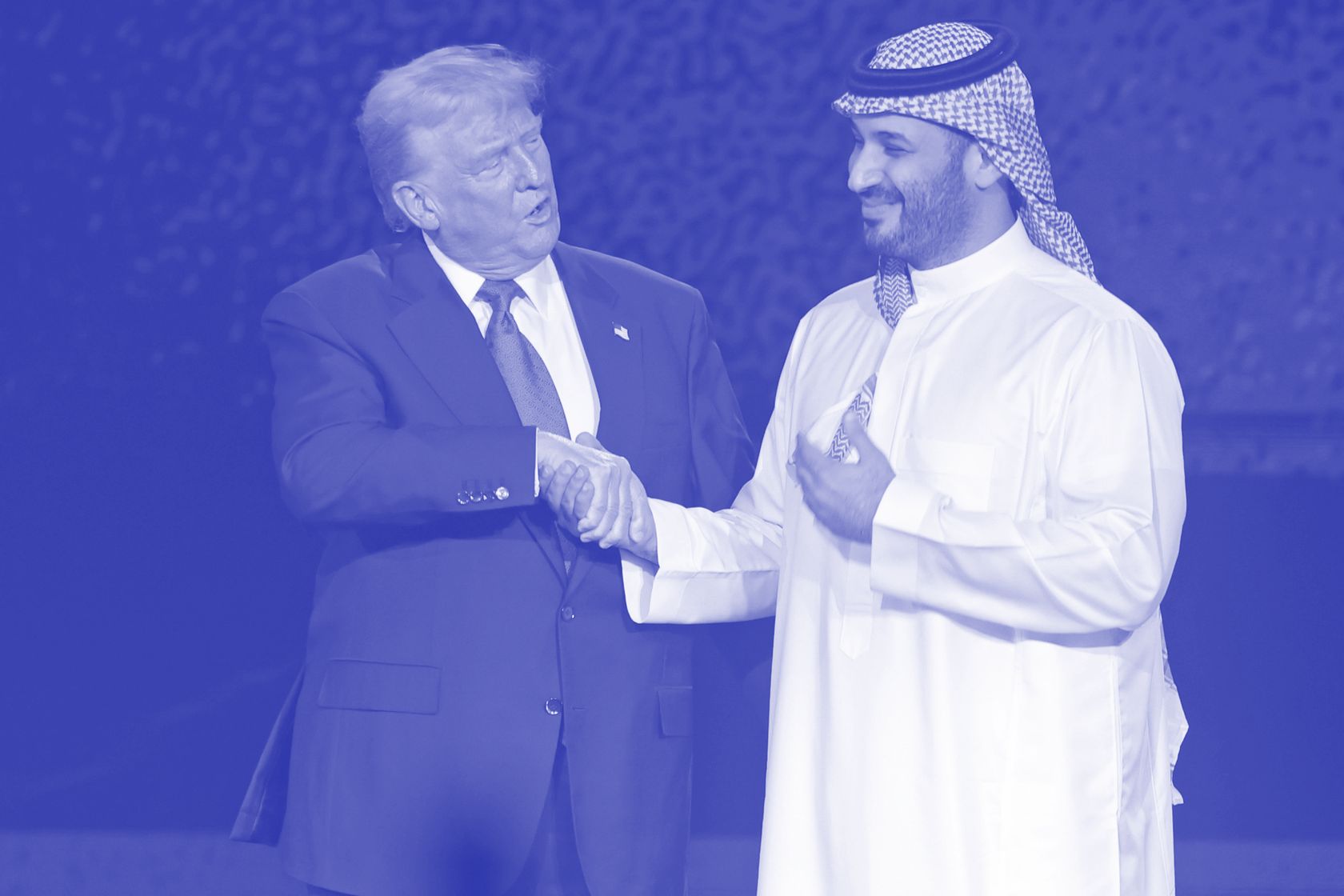
Gulf course: US President Donald Trump kicked off his tour de Mideast on Tuesday, claiming to have secured USD600 billion ($933 billion) in investment commitments from Saudi Arabia. The White House said that the first deals under the announcement “strengthen our energy security, defence industry, technology leadership, and access to global infrastructure and critical minerals.” The deal includes US defence sales amounting to almost USD142 billion to provide Riyadh with “state-of-the-art warfighting equipment” from US defence firms, USD80 billion investment from Google, DataVolt, Oracle, Salesforce, AMD, and Uber into tech in both countries, as well as energy, healthcare, and aircraft commitments. Earlier on Tuesday reports emerged that Trump was preparing to unveil a deal granting Saudi Arabia greater access to advanced semiconductors from the likes of Nvidia and AMD, boosting the Gulf state’s ability to increase its data centre capacity, despite concerns about Riyadh’s China links. (White House)(Capital Brief)
2.
Crypto milestone: Coinbase shares jumped more than 20% on Tuesday, heading for their sharpest rally since the day after Trump’s 2024 election win, after S&P Global said it will become the first crypto firm to join the S&P 500. Coinbase will replace Discover Financial, which is being acquired by Capital One, before trading on 19 May. The move added over USD8 billion to its market value. Last week, Coinbase reported Q1 net income of USD65.6 million, down from USD1.18 billion a year earlier, after accounting for the fair value of its crypto investments. It also announced a USD2.9 billion deal to acquire Dubai-based Deribit, a major crypto derivatives exchange. Meanwhile, Elon Musk, part of the executive entourage travelling with Trump to Saudi Arabia, said the kingdom approved SpaceX’s Starlink for aviation and maritime use. In Riyadh, Musk promoted Tesla robotaxis and Optimus robots. (Reuters)(CNBC)(Bloomberg)
3.
Tough business: The US consumer price index (CPI) eased to 2.3% in the 12 months through April, the slowest annual rate since early 2021 and came in short of forecasts that it would sit steady at 2.4%. While the data is the first CPI report that captures the Trump tariffs (20% on fentanyl-related imports from China and 25% auto levies) the hit from Trump’s ‘reciprocal tariffs’ are expected to show from May. Core CPI (excluding food and energy) rose more slowly than expected at 2.8%. Food prices were down 0.1%, with grocery costs dropping 0.4% - the biggest drop since September 2020. Among groceries, egg prices dropped 12.7% on the month, the biggest fall since 1984. US small business confidence fell for the fourth month in April, with labour quality, taxes, inflation and insurance costs cited as the most pressing concerns for small business owners. (Capital Brief)(Capital Brief)(BoLS)(NFIB)
4.
Syria pivot: US President Donald Trump said he would lift all US sanctions on Syria following the toppling of Bashar al-Assad by a rebel alliance led by Ahmed al-Sharaa. He said the decision came after talks with Saudi Crown Prince Mohammed bin Salman and Turkish President Recep Tayyip Erdogan. Trump, touring Saudi Arabia, Qatar and the UAE, made the announcement at a Saudi-US investment forum in Riyadh, declaring: “It’s their time to shine. We’re taking them all off.” The White House confirmed he would briefly meet Syrian President Sharaa in Riyadh on Wednesday. Sharaa, a former al-Qaeda commander who spent five years in a US prison, led the December uprising. His rise marks a shift for a country shattered by over a decade of war and economic collapse. Syria’s Foreign Minister called the move a “turning point.” Trump is using the Gulf tour to secure up to USD1 trillion in investment and showcase his regional influence. (NYT)(Bloomberg)
5.
Jetting off: Webjet has received a non-binding proposal from BGH Capital to acquire a controlling interest in the group, after BGH, corporate raider Gary Weiss and Ariadne Australia built a 10.76% stake in the online travel group. Webjet on Tuesday said BGH proposed a cash offer of $0.80 per Webjet share for a controlling interest and has requested due diligence ahead of making a binding proposal. Webjet also confirmed BGH Capital was the mystery investor seeking to acquire up to 5% of shares in the group late last week. An ASX notice published Monday explains that in addition to BGH’s 5.89% stake, Portfolio Services Pty Ltd, an entity associated with Ariadne and Weiss, controls 4.87% in Webjet stock, and that cooperation agreement will see the trio cooperate on their joint 10.76% stake. BGH wants a seat at the Webjet table, indicating that it’s open to existing shareholders staying onboard, as well as holding on to liquidity options via its listing. (Capital Brief)(Webjet ASX)
6.
Parcel cut: The US will cut the “de minimis” tariff on low-value parcels from China to 54% from 120%, effective 14 May, according to a White House executive order. The move came after Washington and Beijing agreed to slash tariffs on each other’s goods for 90 days. The revised order affects items valued at up to USD800 ($1,235) sent from China via postal services, including Hong Kong, and retains a flat fee of USD100 while shelving a planned increase to USD200. President Trump had suspended the de minimis exemption in February, imposing a 120% tax, which led to confusion among e-commerce retailers and a temporary halt on China-bound parcels by the US Postal Service. Use of the provision surged to 1.36 billion shipments in fiscal 2024, with about 60% coming from China. The Geneva deal also cut US base tariffs on most Chinese goods to 30% from 145%, and China’s levies on US goods to 10% from 125%. (WSJ)(Reuters)
7.
Unhealthy financials: The CEO of the world’s largest healthcare insurance company, UnitedHealth, abruptly stepped down on Tuesday, with chairman Stephen Hemsley set to return to the CEO post effective immediately. The company said Andrew Witty is stepping down for “personal reasons” without detailing the decision. Witty has helmed the company during a tumultuous period since 2021, overseeing a tech hack, the shooting of executive Brian Thompson in December, and growing scrutiny from Justice Department probes. Under his leadership UnitedHealth has seen shares plummet by almost one third, slashing almost USD190 billion (USD295.5 billion) from the company’s market capitalisation. The company also suspended its reduced 2025 earnings guidance on Tuesday, after earnings fell short of Wall Street expectations. In April Witty blamed federal policy changes around Medicare enrolment expenses and rising medical costs for United’s weak performance. (WSJ)(Reuters)(UnitedHealth)
8.
Trimming tech: Microsoft will lay off 3% of its employees across the globe, which would impact over 6,000 of its 228,000-strong workforce. The tech giant confirmed to CNBC on Tuesday that the cuts will occur across geographies, employee levels and includes LinkedIn. “We continue to implement organisational changes necessary to best position the company for success in a dynamic marketplace,” Microsoft said. The cut is set to be Microsoft’s largest cull since it slashed 10,000 roles in 2023. Microsoft said that the cuts are aimed at reducing layers of management, with the company under pressure to keep a lid on costs and spending in recent years. The company reported better-than-expected results in April, with USD25.8 billion ($39.9 billion) in quarterly net income and an upbeat forecast. Last week CrowdStrike announced plans to cut 5% of its workforce, with CEO George Kurtz stating the cuts reflect advances in AI. (CNBC)(CNBC)(Bloomberg)
