Trump warns NATO of a ‘very bad future’ over Hormuz
Plus: Oil retreats, Wall Street rallies as tankers trickle through Hormuz; Denholm calls for Australian R&D overhaul; Nvidia’s Huang sees USD1 trillion 2027 AI chip revenue.

Good morning. Here’s what happened overnight and what you need to know today.

1.
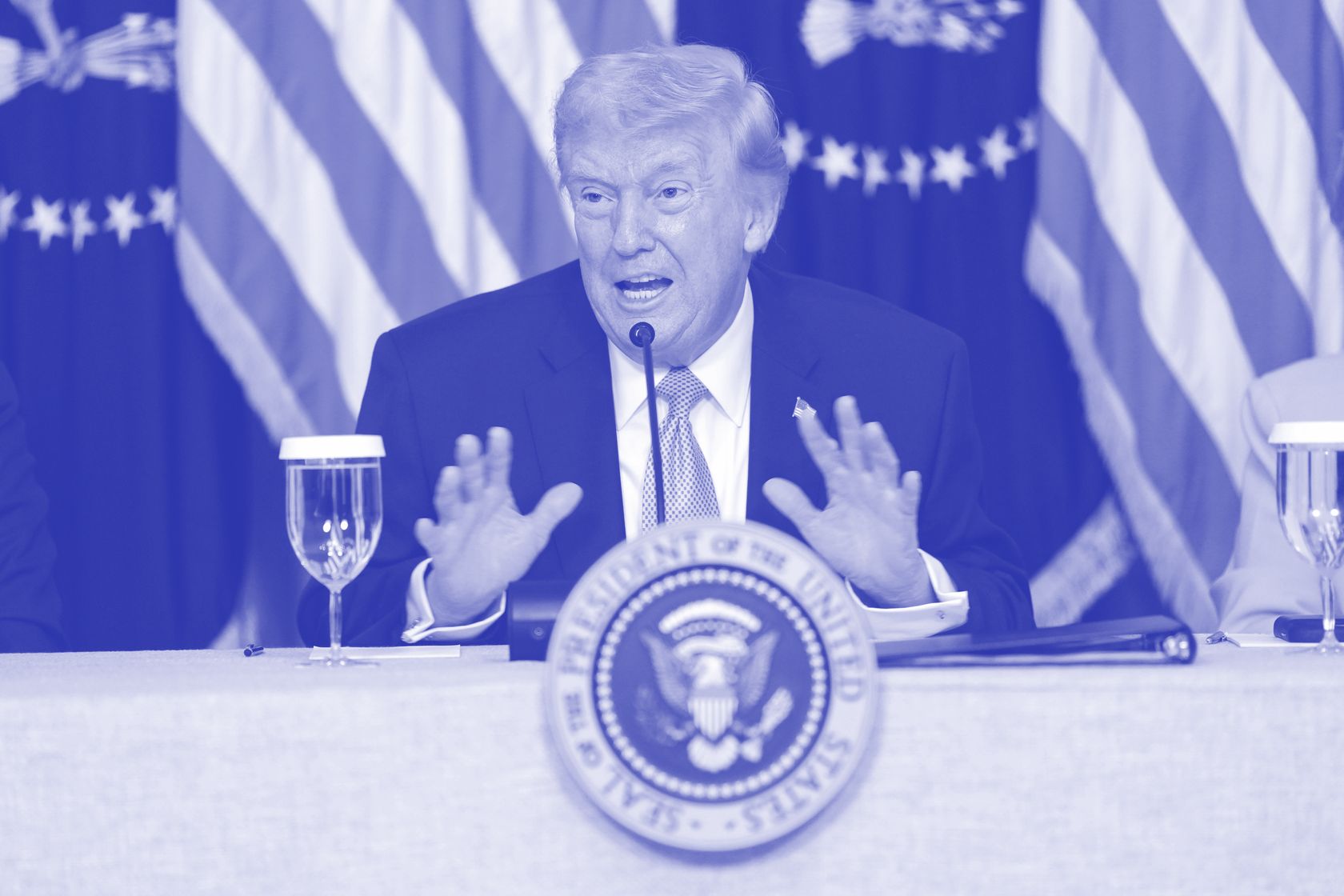
Strait matters: With no ally yet willing to commit warships to the Strait of Hormuz and the war with Iran now in its third week, Donald Trump ramped up pressure on allies and NATO members, warning of a “very bad future” for the alliance if they failed to reopen the strait, while saying his administration was "shocked” by the breadth of Iran’s retaliation across the Gulf. The US president framed his demands as a loyalty test, saying he was asking partly “because I want to find out how they react”, then mocked the responses he had received putting on a cartoonish voice to mimic leaders telling him “we would rather not get involved, sir.” He added, “You mean for 40 years we’re protecting you and you don’t want to get involved in something that’s very minor?” Trump noted Europe, Japan, South Korea and others depended on oil from the Gulf far more than the US does. Even so, he said “numerous countries” had told him they were on their way to help reopen, suggesting France and possibly the UK could get involved. He said US forces had struck more than 7,000 targets across Iran, destroyed more than 30 mine-laying ships and achieved a 90% reduction in Iranian ballistic missile launches. He said the US did not know who was in charge of Iran and that it was unclear whether the new supreme leader was “dead or not,” calling Iran a “paper tiger” that no longer had many missiles left. Germany, Japan, Australia and Greece all rejected his calls for military support, with German Chancellor Friedrich Merz saying at a press conference in Berlin that NATO was “not an intervention alliance.” (WSJ)(Bloomberg)(Reuters)(FT)(CNN)
2.
Petro allies: Oil prices eased and Wall Street rallied as Trump intensified his push to build a coalition to escort ships through the Strait of Hormuz. Signals from the IEA that further emergency reserve releases were on the table, and reports of a handful of tankers actually making it through the waterway, added to the lift in sentiment. Brent crude pulled back to around USD100 a barrel after briefly topping USD105, while US crude sank below USD95. The S&P 500 was 1.17% higher in late trading in New York, the Nasdaq up 1.46% and the Dow 0.97% higher. The dollar fell 0.6%, moving in tandem with energy prices. US Treasury Secretary Scott Bessent told CNBC the US was “fine” with some Iranian, Indian and Chinese ships moving through the strait for now. A Pakistani-flagged tanker became the first non-Iranian vessel to transit while broadcasting its location since the conflict began, though overall transits remain down 95% on the prior 11-day period, according to S&P Global Market Intelligence. Bessent also said the planned Trump-Xi summit in late March could be delayed as Trump monitors the war effort. Meanwhile, IEA executive director Fatih Birol said the agency’s record release of 400 million barrels of emergency reserves had a “calming effect” on markets, and that 1.4 billion barrels remained in combined government and industrial stocks. “We can do more later, as and if needed,” he said.(Capital Brief)(WSJ)(Reuters)(Bloomberg)
3.
Innovation agenda: A year-long review of Australia’s research, development and innovation (RD&I) ecosystem led by Tesla-chair Robyn Denholm called for deregulation and more investment incentives for large businesses, startups, superannuation funds and VC funds. In a letter addressed to government ministers, Denholm said “a revitalised RD&I system is the catalyst Australia needs to secure sustainable growth for the next generation”. The report notes that R&D spending peaked at 2.24% of GDP in 2008-09, falling to 1.69% in 2023-24. Making 20 key recommendations, the ‘Ambitious Australia’ report proposes new research grant programs, new manufacturing tax credits, a new governance framework, requiring super funds to offer an Australian high growth RD&I firms investment option and expanding the early stage venture capital limited partnerships scheme. It also recommends an overhaul of the R&D Tax Incentive, including the removal of the $150 million expenditure R&D expenditure cap, raising the threshold for R&D tax offset from $20 million to $50 million as well as introducing unique streams for startups, SMEs and scaleups. (Capital Brief)
4.
Chip money: Nvidia CEO Jensen Huang kicked off his keynote at the chipmaker’s annual GTC developer conference in San Jose, with investors watching closely for signs that its strategy of ploughing profits back into the AI ecosystem is paying off. The world’s most valuable listed company with a market capitalisation above USD4.3 trillion, saw its shares temporarily spiking almost 5% intraday on the day, after Huang said it was targeting USD 1 trillion in revenue from its Blackwell and Rubin chips through 2027. Huang opened by arguing Nvidia’s Cuda chip programming software was a core competitive advantage, telling the audience at the more-than-18,000-capacity hockey arena the company is “in every cloud” and serves “just about every single industry.” Huang was also expected to cover a next-generation chip called Feynman, Nvidia’s USD17 billion Groq licensing deal (around fast, cheap inference computing) and its investments each in laser firms Lumentum and Coherent. Separately, The Wall Street Journal reported that Nvidia-backed startup Reflection AI and Korean conglomerate Shinsegae Group were set to announce a several-billion-dollar partnership to build a 250-megawatt AI data centre in South Korea. (Bloomberg)(Reuters)(WSJ)(Nvidia)
5.
Settled scores: Bank of America has agreed to settle a class action lawsuit accusing it of helping fund Jeffrey Epstein’s sex-trafficking operation, becoming the third major bank to settle over its ties to the late financier. According to reports, the same legal team secured settlements of USD290 million from JPMorgan Chase and USD75 million from Deutsche Bank in 2023. Terms were not disclosed. A hearing to consider approving the deal is scheduled for 2 April. It stemmed from a proposed class action filed by Jane Doe, an anonymous plaintiff who accused BofA of ignoring suspicious transactions and prioritising profit over reporting them to law enforcement. District Judge Jed Rakoff had in January dismissed several claims against BofA but allowed the victims to proceed with claims that the bank knowingly benefited from Epstein’s sex trafficking and obstructed enforcement of the federal Trafficking Victims Protection Act. The settlement averts a 26 March deposition of Apollo co-founder Leon Black, who according to the lawsuit, transferred USD170 million to Epstein from BofA accounts. Black stepped down as Apollo CEO in 2021, after a review found he paid Epstein USD158 million, including for tax and estate planning. Black has denied wrongdoing and was not named as a defendant. (Reuters)(Bloomberg)(FT)
6.
AI outlay: Shares in Nebius surged over 17% on Monday after the Dutch neocloud provider inked a long term AI infrastructure supply agreement with Meta. The social media giant committed to spend up to USD27 billion ($38.31 billion) on infrastructure from Nebius over the next five years. Nebius said that it will provide Meta with USD12 billion of dedicated capacity starting in early 2027, while Meta also committed to buy as much as USD15 billion in additional capacity that the Dutch company is building for third-party clients. Nebius said it currently intends to sell this capacity to third-party customers of its AI cloud business, with remaining capacity to be purchased by Meta. A Meta spokesperson told Bloomberg that the move is part of its strategy to diversify partnerships and Meta’s technology stack for AI. The agreement follows a separate USD3 billion deal Meta signed with Nebius in November to deliver AI infrastructure to Meta over the next five years. (Capital Brief)(Nebius)(Bloomberg)
7.
Big mistake: US Department of War-backed IperionX saw its market capitalisation plummet by almost $400 million after correcting a “typographical error” in its half-year accounts on Friday evening. The dive extended the critical minerals firm’s losses to more than 40% since the release of its financials. The titanium miner and alloy maker told the market it had made a typographical error in its half-year accounts relating to the value of its ‘right-of-use’ assets. The business saw its Nasdaq-listed shares fall 14% on Friday. On Monday, IperionX’s ASX shares finished more than 20% lower. Rather than a carrying amount of USD3,752,600 ($5,354,547.41) at 30 June 2025, the correct value should have been USD21,445,038. Neither the half-year accounts release nor the subsequent correction were marked by the company as price sensitive. Cyan Investment Management founder and portfolio manager Dean Fergie, who does not hold shares in IperionX, told Capital Brief: “This stuff is just outrageous!” (Capital Brief)
8.
Taste of downunder: Australia’s financial advice and wealth management industry used to be heavily controlled by the big four banks. Now, large chunks of the industry have been scooped up by US private equity firms. And with the latest entrant openly tipping industry consolidation in the space, there could be more deals to come. The retreat by the big banks is not difficult to understand. Speaking to Capital Brief, Padua Solutions Wealth Data manager Colin Williams said after the Hayne Royal Commission in 2019 — the big four banks, AMP and Insignia Financial — “found it all too hard” and exited wealth management. So why are America’s top private equity firms so eager to get into the industry? Williams said there are powerful tailwinds for the industry. AG NZA chief executive Paul Barrett said Australian wealth management is increasingly coming up as an area of interest for PE given the country has the fourth largest asset pool in the world and a stable regulatory environment. (Capital Brief)
