Trump weighs Iran uranium raid as Australia considers Gulf defence
Plus: Oil prices surge towards USD100 as Hormuz crisis deepens; OpenAI hardware boss quits over Pentagon AI deal; Trump blasts Starmer, says US does not need UK carriers.


Good morning. Here’s what happened overnight and what you need to know today.

1.
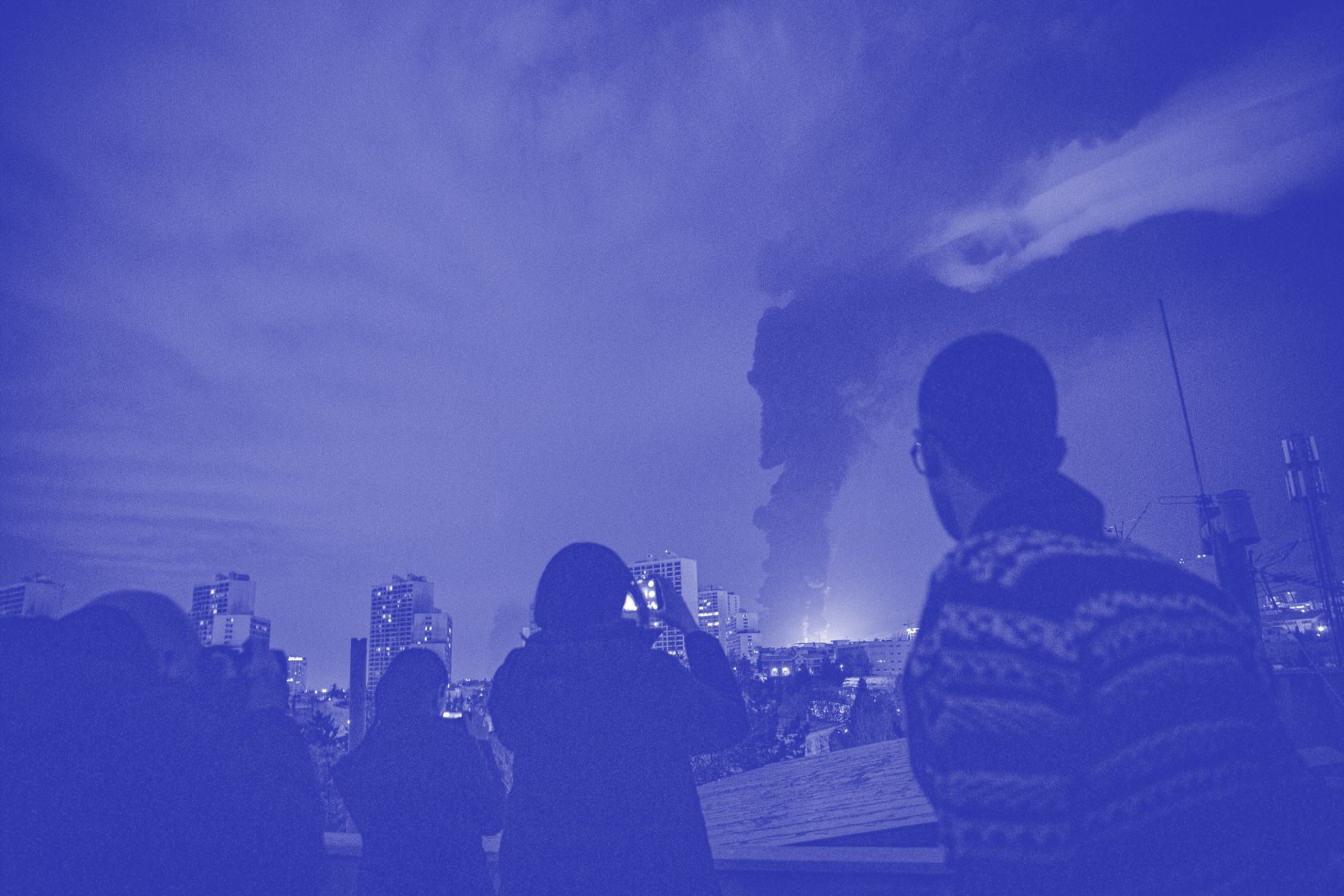
US-Israel Iran war: Iranian missiles claimed their first civilian lives on Saudi soil, killing an Indian and a Bangladeshi national in central Saudi Arabia, in the ninth day of the US-Israel war. Israel struck Tehran’s fuel depots for the first time, sending fires through city streets and toxic smoke across millions of homes, while Iranian drones reached a Bahrain desalination plant in the conflict’s first attack on Arab water infrastructure. US crude futures ended the week above USD90/barrel, more than USD20 higher than the previous Friday and their biggest weekly gain on record, according to Bloomberg data going back to the 1980s. Iran’s Revolutionary Guard said it had targeted radar systems in al-Kharj, where the deaths were reported, according to the AP and Al Jazeera. Earlier, Iran’s Assembly of Experts declined to reveal the identity of the new supreme leader it had chosen, though several news outlets identified Mojtaba Khamenei, the slain ayatollah’s second son, as the frontrunner. Israel has threatened to target any successor. Foreign Minister Penny Wong told ABC’s Insiders that Australia was considering requests from Gulf countries for defensive support against Iranian strikes, but ruled out direct offensive action against Iran or ground troops. Meanwhile, Kuwait’s Public Institution for Social Security headquarters was set ablaze and two fuel tanks at Kuwait International Airport were struck by drones. And two IDF soldiers were killed in a Hezbollah ambush in southern Lebanon, the first Israeli military fatalities of the war. Also, Trump is reportedly weighing deploying special forces to seize Iran’s near-bomb-grade uranium stockpile, amid growing concern among officials that it may have been moved from its last known location, Bloomberg reported.(FT)(Reuters)(AP)(NYT)(Bloomberg)
2.
Oil shock: With the Strait of Hormuz showing no sign of reopening and Gulf storage tanks filling fast, oil traders are warning there is effectively no ceiling on crude prices in the short term. With more producers expected to cut output in the days ahead, oil prices are on the brink of crossing the USD100 a barrel threshold for the first time in years. The UAE and Kuwait started reducing production over the weekend, joining Iraq, whose output is down about 60%. ADNOC said it is managing offshore production to address storage requirements, while Kuwait Petroleum Corp declared force majeure citing Iranian threats to shipping, Bloomberg reported. US Energy Secretary Chris Wright told CNN’s State of the Union on Sunday US time that the market is pricing in a fear premium that won’t last, and that the timeline to normalise “in the worst case,” is weeks not months. Meanwhile, the US announced a USD20 billion maritime reinsurance facility on Friday and issued a 30-day sanctions waiver last week allowing India to buy Russian oil to ease market pressure, Reuters reported. Petrol prices and higher headline inflation are the clearest immediate impacts for Australia, putting pressure on the federal government ahead of the May budget. Westpac estimates a three-month Hormuz disruption could lift Australian CPI by 1.5 percentage points and cut GDP growth by 0.5 percentage points. (Bloomberg)(Reuters)(Capital Brief)(FT)
3.
Rushed lines: OpenAI hardware leader Caitlin Kalinowski resigned citing concerns about the company’s agreement to deploy its AI models on the Pentagon’s classified cloud networks without sufficient deliberation. In posts on X, Kalinowski wrote that OpenAI announced the deal “without the guardrails defined" and that surveillance of Americans without judicial oversight and lethal autonomy without human authorisation were “lines that deserved more deliberation than they got.” She called it “a governance concern first and foremost.” OpenAI confirmed the resignation, saying the agreement with the Defense Department creates “a workable path for responsible national security uses of AI while making clear our red lines, no domestic surveillance and no autonomous weapons.” It added: “We recognize that people have strong views about these issues and we will continue to engage in discussion with employees, government, civil society and communities around the world.” The deal was struck after talks between the Trump administration and OpenAI’s archrival Anthropic collapsed. Anthropic had sought assurances its technology would not be used for mass surveillance or autonomous weapons. The Pentagon designated Anthropic a supply-chain risk last week, while still using its technology for its ongoing war in Iran. (Bloomberg)(Reuters)(Caitlin Kalinowski post)
4.
Stale Mates: Donald Trump kept up his public feud with Keir Starmer, posting on Truth Social that the US did not need British aircraft carriers in the Middle East and would “remember” Britain’s hesitation, a dig at the UK Prime Minister’s initial refusal to allow the US to use British bases for the opening strikes on Iran. Starmer later granted permission for US forces to use British bases for what he described as defensive strikes against Iranian missile depots and launchers, and HMS Prince of Wales was placed on advanced readiness for possible deployment to the Middle East, though no final decision had been taken, Reuters reported citing an unnamed British official. UK Foreign Secretary Yvette Cooper, speaking on Sky News, pushed back on Trump’s social media attacks, saying it was “not in the UK’s national interest to unquestioningly agree with the US” and that Starmer’s job was to act in Britain’s national interest, not any other country’s. Cooper also confirmed the UK was providing defensive support in the conflict. Starmer last week said that while Trump had expressed disagreement with Britain’s decision to stay out of the initial strikes, it was his “duty to judge what is in Britain’s national interest.” (FT)(Reuters)
5.
Drone on: Canberra-based counter-drone company Electro Optic Systems has seen its share price rocket more than 700% in the past year, but not everyone is convinced. Days after rebuffing an aggressive short report alleging a “multitude of issues”, New York-based Grizzly Research’s allegations had knocked 16% off EOS shares in a single morning. The decline was quickly recovered. Grizzly described the company’s USD80 million conditional contract with South Korean customer Goldrone as “a smoke and mirrors show to mislead investors” and called out an “untrustworthy” management team and a “dire” financial situation. EOS issued a 15-page rebuttal, but short positions have since climbed to place it among the 75 most shorted stocks on the ASX. Clive Cuthell, chief financial and operating officer, told Capital Brief a three-year turnaround had lifted the market cap from $80 million to $2 billion after the company “basically went bust” in 2022. It comes as last week EOS announced a $100 million Soul Patts loan, a $17 million remote weapon station order from a Middle Eastern government and its first Indian defence contract. But fund managers remain divided on whether EOS can convert its order book into hard revenue. (Capital Brief)
6.
Pill palls: Novo Nordisk has gone from suing Hims & Hers Health to selling drugs through its platform, all within a matter of weeks. Bloomberg reported the two companies plan to announce the partnership as soon as Monday, citing an unnamed source familiar with the matter, in a move that signals the pressure the Danish drugmaker is under to regain its footing in the competitive obesity market. It comes roughly a month after Novo sued Hims over its launch of a short-lived USD49 copycat version of its Wegovy weight-loss pill. It accused Hims of breaching US patents on the ingredient behind Ozempic and Wegovy. The FDA had also threatened action against Hims. Novo already sells its weight-loss drugs through other telehealth platforms including Ro and Weight Watchers. A Novo spokesperson told media the company is “always in conversation with companies that can help improve patient access to FDA-approved medicines.” It comes as Hims is acquiring Sydney-based telehealth firm Eucalyptus for up to USD1.6 billion. (Bloomberg)
7.
Cell raise: Longevity platform TMRW has closed its first VC round, raising approximately $7 million in seed funding to expand its clinical footprint and refine the patient experience, backed in large part by its own members, Capital Brief reported. The round was led by Sydney-based Tidal Ventures, with participation from Melbourne fund Capital Zed and a cohort of high-net-worth entrepreneurs and family offices. Founded by former iflix CEO Mark Britt, TMRW also announced an exclusive Australian partnership with TruDiagnostic, the US-based global leader in epigenetic and biological age testing, already used by high-profile longevity fans Bryan Johnson and Kim Kardashian. At the core of TMRW’s model is the idea that your cells have an age distinct from your birthday. Where most health platforms hand patients a PDF with 30 data points, TMRW builds on 1,700 biomarkers across three distinct ageing metrics: biological age via OmicAge (a Harvard-TruDiagnostic collaboration), organ age via SymphonyAge (developed with Yale) and pace of ageing via DunedinPACE, built from more than 50 years of longitudinal research at Duke and the University of Otago. (Capital Brief)
8.
Cartel blanche: With the US already at war with Iran and having conducted military operations in several other countries in his second term, Donald Trump over the weekend signed a proclamation launching the Americas Counter Cartel Coalition, a 17-nation military alliance targeting drug cartels across Latin America and the Caribbean that reflects the most aggressive US posture in the region in decades. The proclamation was signed at the US president’s Doral golf resort in Florida on Saturday, flanked by leaders from Argentina, Bolivia, Costa Rica, Chile, the Dominican Republic, Ecuador, El Salvador, Guyana, Honduras, Panama, Paraguay and Trinidad and Tobago. Brazil, Colombia and Mexico were not invited. Trump said the group would employ military force to eradicate cartels, offering US missiles to partner nations. He singled out Mexico as the epicentre of cartel violence and mocked president Claudia Sheinbaum’s refusal to allow US military operations on Mexican soil. When asked for her response, Sheinbaum told reporters she was keeping “a cool head”. Trump said Cuba was “very much at the end of the line,” brought to its knees after being cut off from Venezuelan oil supplies, and that the US would “soon be coming” for it, but that Iran was the immediate focus. (FT)(NYT)(Reuters)
