Trump-Xi discuss Iran as nuclear talks reportedly collapse
Plus: Software rout in second day as Huang calls AI panic 'illogical'; WaPo cuts 30% of staff, slashes sports section, international desk; Bitcoin sliding as Bessent rules out bailout.

Good morning. Here's what happened overnight and what you need to know today.
1.
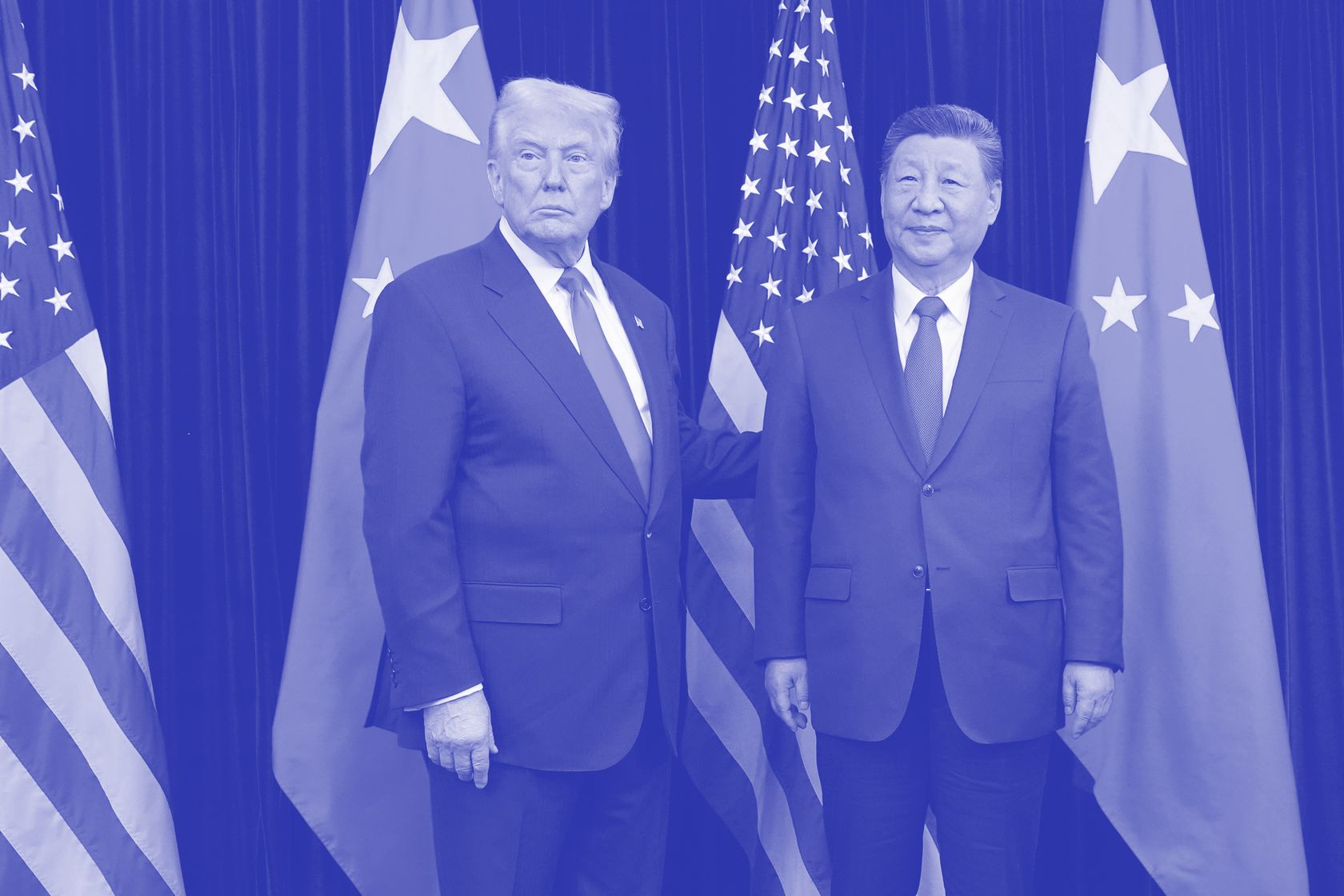
Tehran tension: Amid escalating tensions with Iran, Donald Trump said he had a “long and thorough” call with Chinese President Xi Jinping, covering Iran, trade, Ukraine, Taiwan and his planned visit to Beijing in April. The US president described the conversation as “excellent” and said it included Chinese purchases of US oil and gas, as well as soybean imports (20 million tonnes this season and a commitment for 25 million next season) plus airplane engine deliveries. China’s official readout confirmed the leaders discussed upcoming summits and meetings, but did not mention the April visit or specific trade pledges. Instead, Beijing reaffirmed its position that Taiwan “will never be allowed to separate” and urged the US to handle arms sales to Taipei with “utmost caution”. Xi spoke with Russian President Vladimir Putin the same day, with both governments focused on the tensions surrounding Tehran. Trump is pressing China and others to break from Iran and has threatened tariffs on countries doing business with it. Axios reported nuclear talks between the US and Iran are now off, after Washington rejected Tehran’s push to change the location and format of the meeting. Oil prices jumped over 3.5% on the news. (Bloomberg)(Axios)(WSJ)(AP)(Bloomberg)(Donald Trump)
2.
Software shock: US tech stocks suffered their steepest drop in months as a fresh wave of selling sparked a day earlier by fears over new AI tools from Anthropic, intensified across software and chipmakers. The Nasdaq 100 was 2.4% lower in afternoon trading, and the S&P 500 down 1%, Palantir was 13% lower as AMD plunged almost 18%, before recovering slightly. That came after it issued a revenue forecast that disappointed investors. The selloff deepened after Anthropic unveiled new Claude AI tools for legal, marketing and finance tasks, triggering a broad retreat from software stocks and drawing comparisons to 2025’s DeepSeek-driven decline. Nvidia, Broadcom and Intel all fell, while Apple bucked the trend, as investors seemed to find a safe haven from AI disruption, helped by its recent strong results. Nvidia CEO Jensen Huang called AI-doom fears “the most illogical thing in the world”. The pressure has extended well beyond equities, with software loan prices falling sharply in recent weeks and nearly USD25 billion trading at distressed levels by the end of January, the Wall Street Journal reported citing PitchBook data. Amid the tech rout, investors rotated into value and small caps. (FT)(Bloomberg)(WSJ)(Reuters).
3.
Byline bloodbath: The Washington Post laid off about one-third of its staff, shutting down its sports and books sections, slashing its international and metro desks, and cutting jobs across nearly all departments. Executive editor Matt Murray, who said the Post “too often write[s] from one perspective, for one slice of the audience,” described the move as a “significant restructuring” to strengthen the paper’s footing and refocus on journalism that has authority, impact and distinctiveness. The Post did not specify how many roles were eliminated but reports estimated hundreds would be impacted and Bloomberg reported the plan involved as many as 300 people. Staffers were told to stay home while receiving emails with subject lines confirming whether their roles were retained. Cairo bureau chief Claire Parker was one of several who confirmed their exits publicly, posting on X that she and all Middle East correspondents and editors had been laid off. "I was just laid off by The Washington Post in the middle of a warzone,” The Kyiv-based Ukraine correspondent, Lizzie Johnson posted on X. “I have no words. I'm devastated.” A Post spokesperson said in a statement the decisions were “difficult but decisive actions” to help deliver journalism that “engages our customers” and secures the outlet’s future. The layoffs follow a turbulent 18 months at the Jeff Bezos-owned paper, marked by leadership changes and a backlash over Bezos’ decision to kill a 2024 editorial endorsing Kamala Harris over Donald Trump. (AP)(AFP)(Bloomberg)(The Atlantic)
4.
Bitcoin spiral: Bitcoin tumbled to around USD72,000 ($103,140), its lowest level since November 2024, extending a slide that has erased nearly 40% from its October peak. It comes as the broader crypto market has shed USD467.6 billion since 29 January, and more than USD1.7 trillion since October, according to CoinGecko data. The downturn has been fuelled by a combination of crypto-specific liquidations, macro stress and fading confidence in Bitcoin’s role as a safe haven, with Bloomberg noting over USD6.67 billion in leveraged positions wiped out since late January. It comes as Michael Burry warned yesterday the plunge could evolve into a “death spiral”, triggering forced selling and value destruction across the crypto ecosystem. He said Bitcoin has been revealed as a speculative asset and lacks an organic use case to halt its fall. Similarly, Deutsche Bank analysts said the market is moving beyond the “Tinkerbell Effect”. Meanwhile, US Treasury Secretary Scott Bessent told the US Congress he supports Fed independence and a strong dollar, and rejected any Bitcoin bailout, saying he lacks the authority to mandate purchases or use taxpayer funds to support the asset. (Bloomberg)
5.
Square peg, round hole: Last month, something rare went down at one of Australia’s “big three” venture capital firms. Melbourne-based Square Peg Capital quietly announced that partner James Tynan was no longer with the firm. While Square Peg thanked Tynan for his contribution and wished him well, no further explanation was given. So to many on the outside, Tynan's exit seemed curious. But it ultimately came down to differences over investment strategy. Capital Brief can reveal that Tynan’s departure was driven by a growing divergence between his investment interests and the firm’s core focus on SaaS, fintech and, increasingly, AI as it applies to those sectors. Two sources with direct knowledge of the matter who requested anonymity to speak freely said Tynan, who joined the firm in 2020 after running the Startmate accelerator, brought a different sensibility to the firm. He had an appetite for emerging and frontier areas such as climate tech and cellular agriculture. (Capital Brief)
6.
Appealing decision: An appeals tribunal ruled Bunnings had the right to use facial recognition technology (FRT) to combat retail crime in its stores, overturning a 2024 decision in which the Privacy Commissioner found Bunnings had breached privacy laws. Bunnings’ FRT photographed every person who entered Bunnings stores in VIC and NSW between November 2018 and November 2021, comparing images against a database of banned customers. If there was no match, the information was deleted after 4.17 milliseconds. Bunnings appealed the ruling, with the Review Tribunal finding that Bunnings faced a “very real and serious problem of violence and theft” and that the hardware retailer was “entitled to use FRT for the limited purpose of combating very significant retail crime and protecting their staff and customers from violence, abuse and intimidation within its stores.” The Tribunal also found that Bunnings failed to take the necessary measures to comply with privacy principles, particularly by failing to properly inform customers about the information it was collecting. (OAIC)(Capital Brief)(The Australian)(The West Australian)
7.
Opaque secondaries: Private credit secondaries could be the next frontier for the booming asset class in Australia as the local sector matures and institutional investors seek more flexibility. While secondaries are common in PE and VC, the market is not yet developed in Australian private credit. PGIM head of European private credit Josh Shipley said secondaries were a natural progression for the asset class, and in other markets such as the US and Europe the secondary market has more than doubled over the past two years. Currently, all the private credit secondary funds available in Australia are from large global fund managers with most investments in European and US debt. While PGIM and Coller Capital have launched forays into private credit secondaries over the past 12 months, Shipley said that despite the advantages, secondaries were opaque — possibly even more opaque than direct lending — and conflicts of interest were inherent. (Capital Brief)
8.
Quantum Quality: Quantum machine learning company Silicon Quantum Computing launched a molecule and materials discovery simulator, Quantum Twins, designed to enable the simulation of quantum physics and chemistry. Quantum Twins aims to enhance the understanding of quantum interactions by analysing magnetism, atomic interactions and superconductivity. This aims to pave the way for novel information storage, low-power electronics and broader materials discovery. The launch follows Silicon Quantum Computing's advances in manufacturing capability, including the ability to pattern 250,000 qubit registers in eight hours. The company said it can design, produce and test new quantum chips in under a week. "Quantum Twins represents a window into the quantum world that customers can use for materials discovery today. The enabler is that we can engineer hundreds of thousands of qubit registers with atomic precision”, Silicon Quantum Computing CEO Michelle Simmons said. (Capital Brief)
