US drafts rules to control every AI chip sale worldwide: Bloomberg
Plus: Wall Street tumbles as Hormuz near-closure sends oil above USD80; US states take Trump back to court over his 10% global tariff; Trump ousts homeland security chief Kristi Noem in first second-term cabinet casualty.
Good morning. Here’s what happened overnight and what you need to know today.
1.
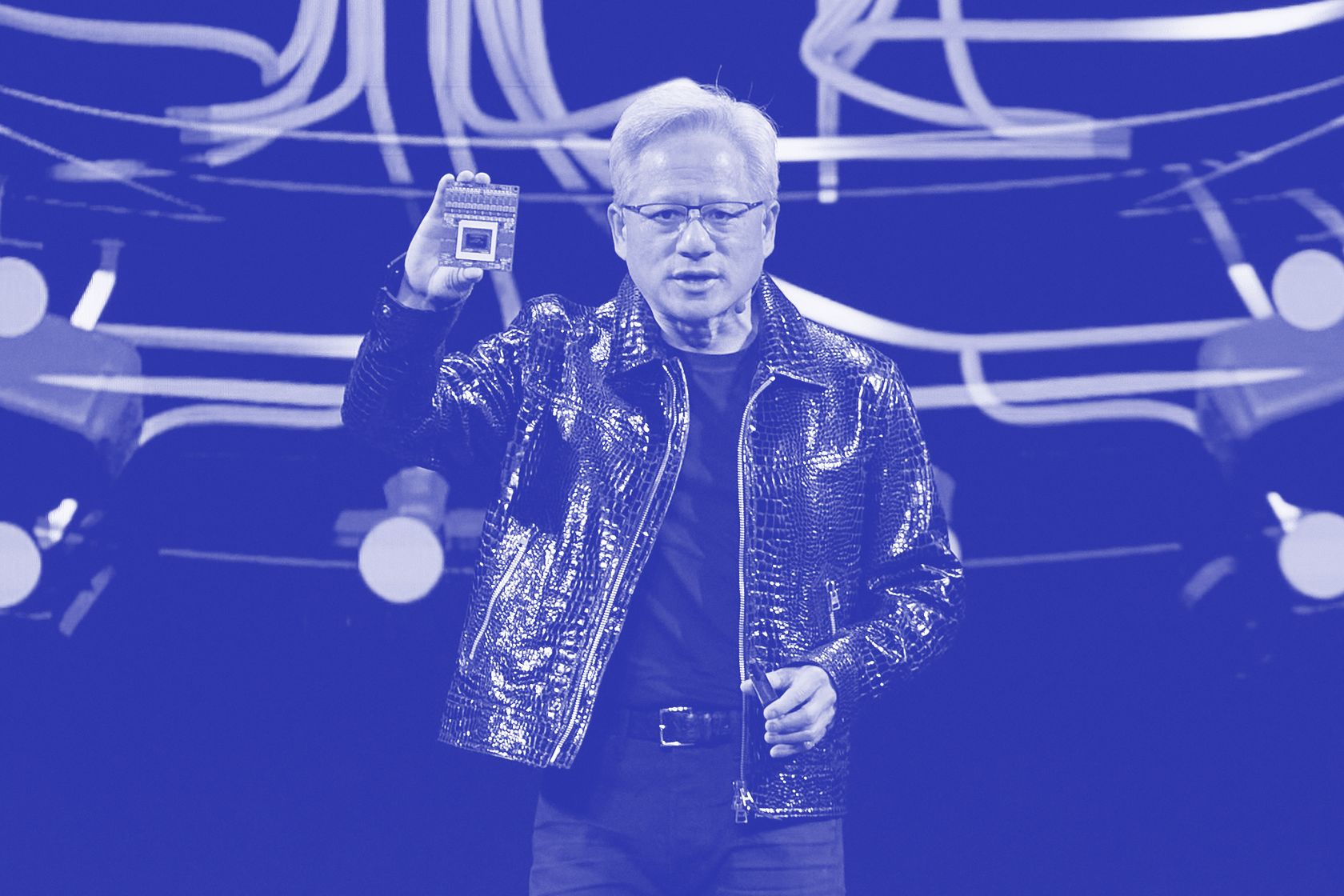
Chip check: The US has drafted rules that would restrict AI chip exports to anywhere in the world without American approval, giving Washington sweeping control over who can build AI infrastructure globally, Bloomberg reported, citing unnamed sources. The proposed rules would expand curbs currently covering around 40 countries and set up the US Commerce Department as gatekeeper for the global AI industry. The rules would not be framed as an Nvidia export ban, but as a licensing regime governing virtually all sales of AI accelerators from the likes of Nvidia and AMD, according to the report. The framework is not yet finalised and could change substantially or be shelved, it said. According to the news agency, the approval process would scale with computing power. Shipments of up to 1,000 of Nvidia’s latest GB300 GPUs would undergo a fairly simple review, while companies building bigger clusters would need preclearance and could face conditions such as disclosing their business models or allowing US government site visits. For deployments exceeding 200,000 GB300 GPUs owned by one company in a single country, the host government would need to get involved. The US would only approve the latter exports to allies making stringent security commitments and matching investments in American AI, though no investment ratio has been specified. Nvidia shares fell about 2% after the report, AMD was also over 2% lower on the news. The Commerce Department’s Bureau of Industry and Security, Nvidia and AMD have not commented. (Bloomberg)
2.
Hormuz hurt: US markets were pricing in a war with no end in sight, with oil rising above USD80 a barrel and Wall Street experiencing one of its sharpest falls of the year. The Dow Jones Industrial Average was skidding more than 2% in the New York afternoon session, the S&P 500 was down 1.3% and the Nasdaq shedding 1.2%. WTI crude surged more than 7%, breaching USD80 for the first time since January last year. Brent rose above USD85. The Strait of Hormuz’s near-closure has trapped roughly 300 tankers, Reuters reported citing ship tracking data from Vortexa and Kpler that excludes some of the smallest tankers. Iraq cut output by 1.5 million barrels per day for lack of storage and an export route, officials told Reuters, while Qatar declared force majeure on LNG exports on Wednesday. Meanwhile, Saudi Aramco began rerouting crude exports via the Red Sea. With higher energy costs fuelling inflation worries, swaps are now pricing less than 40 basis points of Fed cuts in 2026, down sharply from 60 basis points the prior week. Chipmakers dragged down stocks further after Bloomberg reported the US has written draft regulations that would restrict AI chip shipments to anywhere in the world without American approval, with Nvidia and AMD falling over 2% each. Broadcom bucked the trend, rising 5% after CEO Hock Tan said the company expects AI chip sales to top USD100 billion next year. (Bloomberg)(WSJ)(Reuters)(FT)(AP)
3.
Tariff trouble: Twenty-four US states sued to block Donald Trump’s global tariffs, in the second major legal challenge to the US president’s trade agenda in weeks. The mostly Democratic-led coalition, including New York, California and Oregon, filed the suit in the Court of International Trade after Trump replaced duties the Supreme Court struck down last month with a fresh 10% global levy under a different law. Led by New York Attorney General Letitia James, the states contend Trump is misusing Section 122 of the Trade Act of 1974, a law never before used to impose tariffs, according to reports. They argue the section is meant to address short-term monetary emergencies, not routine trade deficits. The states also allege the 10% Section 122 tariffs violate the Constitution’s separation-of-powers principle and the act’s requirement for consistent application across countries. “After the Supreme Court rejected his first attempt to impose sweeping tariffs, the president is causing more economic chaos and expecting Americans to foot the bill,” James told CNBC in a statement. “President Trump is ignoring the law and the Constitution to effectively raise taxes on consumers and small businesses.” Trump announced the Section 122 tariff late last month, the same day the Supreme Court struck down his previous global tariffs imposed under the International Emergency Economic Powers Act. The 10% rate took effect February 24. It also comes after US Treasury Secretary Scott Bessent yesterday said those rates would likely be officially raised to 15% this week. (Capital Brief)(Reuters)(CNBC)(Bloomberg)
4.
Noem replaced: Donald Trump ousted his homeland security secretary Kristi Noem after she told senators under oath that he had approved a USD220 million government ad campaign featuring herself (a claim he denied) making her the first cabinet casualty of his second term. Trump posted on Truth Social that Oklahoma Republican senator Markwayne Mullin would replace her effective 31 March, with Noem moving to a newly created role as special envoy for the Shield of the Americas. The final straw, according to advisers who spoke to The Wall Street Journal, was Noem’s combative appearance before the Senate Judiciary Committee this week, which showed bipartisan frustration with her leadership. The USD220 million advertising campaign featuring Noem urging migrants to self-deport had already rankled Trump for months over its self-promotional style and became the flashpoint when Noem told senators the president had signed off on it, according to reports. In an interview with Reuters Thursday (Friday AEDT) Trump said, “I never knew anything about it.” Before the announcement, NBC News reported White House officials had already discussed potential replacements. (WSJ)(Bloomberg)(NYT)(Donald Trump)
5.
Gambling with lives: Gambling companies are contacting addicts who sign up to the National Self-Exclusion Register the moment the exclusion period ends and encouraging them to continue betting, according to the Report of the Statutory Review of BetStop — the National Self-Exclusion register, tabled in Parliament. The report emerged on Tuesday as a group of crossbenchers attacked the Albanese government for failing to respond to more than 130 reports prepared by parliamentary committees on important policy issues, including the controversial You Win Some, You Lose More report. ACT independent Senator David Pocock said parliamentary committee inquiries were a practical manifestation of the democratic process and the government was disrespecting Australians by failing to respond to important reports. News that betting companies are seeking ways to circumvent BetStop self-exclusion rules will anger some Labor MPs who want the government to act on the You Win Some, You Lose More report. (Capital Brief)
6.
Zero cents: A private loan BlackRock valued at full price just three months ago is now worthless, in the second sudden wipeout to hit its private-credit division in recent months. The roughly USD25 million loan to Infinite Commerce Holdings, an Amazon aggregator, was marked at 100 cents on the dollar in the third quarter before BlackRock TCP Capital zeroed it in fourth-quarter filings released last week, Bloomberg reported. In November, BlackRock’s publicly traded middle-market private debt fund had also slashed the full value of loans to struggling home improvement company Renovo Home Partners. Fellow lender Victory Park fully wrote off its Infinite Commerce position as of 31 December, blaming poor performance on depressed demand and higher inventory costs from tariffs, Bloomberg noted. BlackRock TCP also partially wrote down its position in SellerX, according to the fourth-quarter filing, and last week cut its dividend from 25 cents to 17 cents a share, causing shares to tumble. The fund said in the filing that 91% of portfolio valuation cuts stemmed from deals underwritten in 2021 or earlier, challenged by “sustained higher interest rates.” The moves add to mounting concerns over defaults and underwriting standards in the USD1.8 trillion private credit market. Earlier this week, Apollo CEO Marc Rowan warned a “shakeout” is coming for private credit firms, while Ares boss Mike Arougheti dismissed UBS analysts’ forecast that default rates could reach 15% as “absolutely wrong.” (Bloomberg)
7.
Waxing Lee-rycal: Justice Michael Lee’s judgments — at least the big ones — are never boring. And the Federal Court judge snuck in some pearlers across the 500 pages of his reasons in the ASIC v Star Entertainment case, reflecting his penchant for historical and biblical references. Lee found former Star CEO Matt Bekier and former general counsel Paula Martin breached their duties under the Corporations Act but seven other non-executive directors did not. From referencing the “staggeringly wealthy” Marquess of Bute, quoting Danish and Greek philosophers to former US president Richard Nixon, Lee did not disappoint. Meanwhile, Rebecca Maslen-Stannage, chair of Herbert Smith Freehills Kramer and a gun corporate lawyer, said the decision was “a huge relief for non-executive directors”, adding that after Lee’s judgment, “directors will be applying more pressure to management teams to provide insight rather than volume in board papers going forward”. (Capital Brief)
8.
Not-not normal: Charlie Viola’s profile has been a crucial factor in the rise of his own wealth management business, Viola Private Wealth, which in the space of 18 months has amassed $3 billion in assets under management and is now on the hunt for acquisitions. Speaking to Capital Brief in a wide-ranging interview alongside co-founders Sean Ward and Andrew Levi, Viola says the business has now transcended his personal profile. In his words, all the founders of Viola Private Wealth are “super normal” and “not from the eastern suburbs [of Sydney]”. “[We’re] not from private schools. We grew up normal and that’s still at the heart of who we are and what we do,” he said. Some in the industry may question that sentiment. After all, Viola, who News Corp described as the “millionaire’s main man”, is also known for his fondness of expensive cars (he owns a Porsche 911 GT3). (Capital Brief)