US Fed cuts rates for third time
Plus: Australia to reopen embassy in Ukraine; Altman-backed Oklo signs nuclear power deal with data centre operator Switch; US Supreme Court to hear TikTok plea in January.
Good morning. Here's what happened overnight and what you need to know today.
Get Standup in your inbox Signed up to Standup
1.
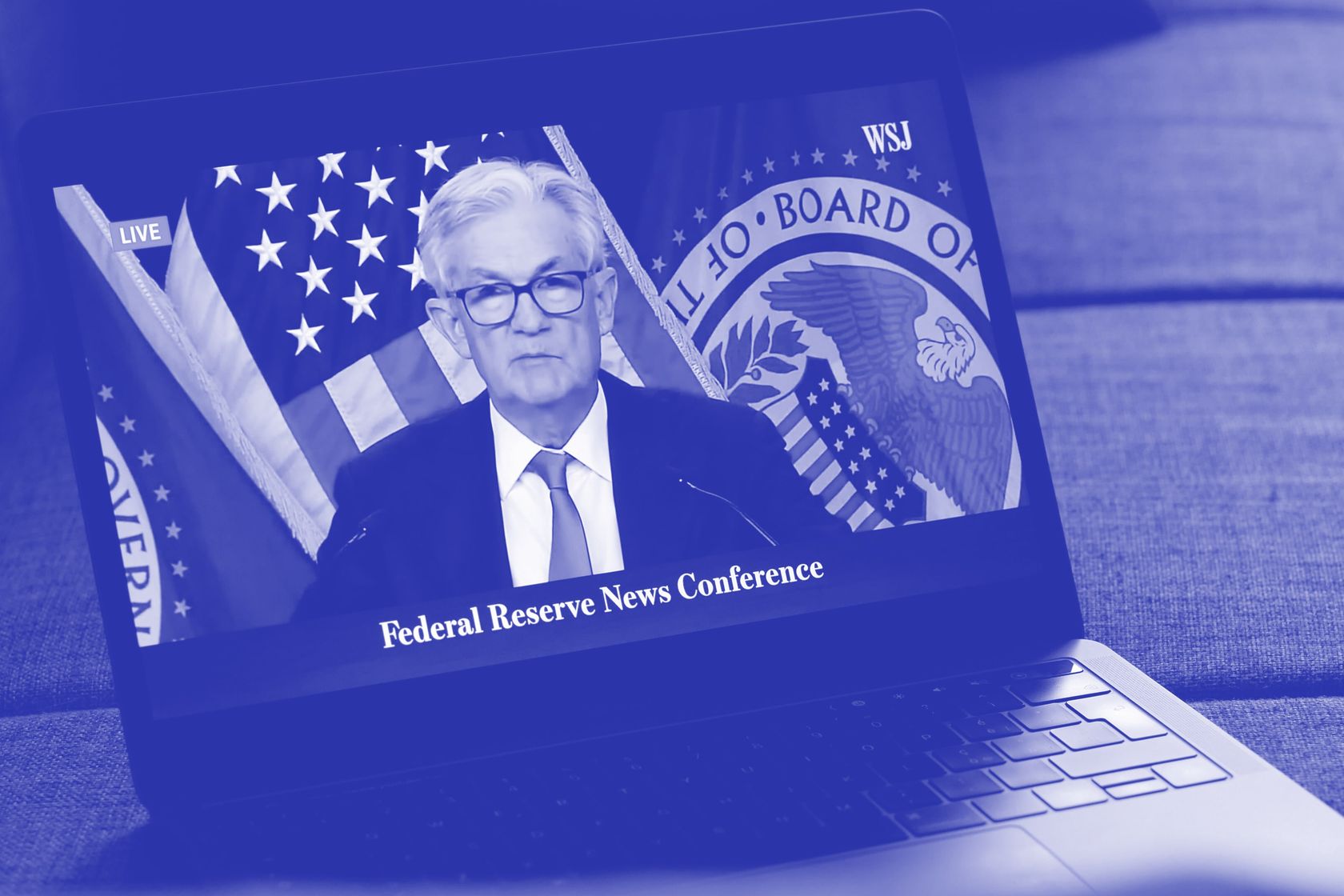
Fed cut: The US Federal Reserve delivered its third consecutive rate cut this year, lowering its benchmark by a quarter-percentage-point to a range of 4.25%-4.50%. The decision reflects the central bank’s cautious approach amid stronger-than-expected economic resilience and stalled progress on inflation, which remains above the 2% target. Projections released alongside the cut show policymakers now expect 50 basis point worth of cuts in 2025, or two quarter-point reductions, down from the four previously forecast. The median PCE inflation forecast also rose to 2.5%, up from 2.1%. In a statement ahead of a news conference by Fed Chair Jerome Powell, the bank said it would keep a cautious approach to setting monetary policy. “In assessing the appropriate stance of monetary policy, the Committee will continue to monitor the implications of incoming information for the economic outlook,” it said. The cut comes amid uncertainty brought by the potential economic impact of President-elect Donald Trump’s proposed policies including tariffs, tax cuts and a migration crackdown. (US Fed)(Bloomberg)
2.
Mission Kyiv: Australia will reopen its Kyiv embassy next month, nearly three years after closing it during Russia’s invasion. Foreign Minister Penny Wong announced the decision during her visit to Ukraine, the first by an Australian minister since July 2022. Ambassador Paul Lehmann and staff will return from Poland. Wong also pledged $66 million to the European Bank for Reconstruction and Development, $10 million to the Ukraine Energy Support Fund, and $80,000 to a charity aiding Ukrainian families. Reaffirming support for Ukraine’s sovereignty, Wong said the war had global implications, threatening Europe’s security and Indo-Pacific stability. The government had faced pressure from critics arguing the delay made Australia an international outlier. Opposition foreign affairs spokesperson Senator Simon Birmingham, during an August visit, had promised the coalition would reopen the embassy if elected. Wong said: “The Albanese Government has always said we would reopen our Embassy in Kyiv when it is safe to do so.” (Capital Brief)(Foreign Minister statement)(ABC)

3.
Atomic JV: Sam-Altman-backed nuclear energy startup Oklo signed a non-binding agreement with data centre operator Switch to supply power using small modular nuclear reactors. The deal, described by the companies as “one of the largest corporate clean power agreements ever signed,” involves Oklo developing Aurora Powerhouse reactors with a combined capacity of up to 12 gigawatts by 2044, with each reactor capped at 15 megawatts. Listed in May via a SPAC merger, Oklo shares rose over 20% to USD22.94 ($36.39) after the announcement, before paring back most of the gains in afternoon trading. It has a market valuation of about USD2.5 billion and Chris Wright, Donald Trump’s nominee for US energy secretary, currently serves as a director at the company. Privately-owned Switch operates renewable energy-powered data centres and counts companies like Nvidia, FedEx and Alphabet's Google among its clients. (Oklo/Switch statement)(FT)(Reuters)(Barron’s)
4.
TikTok tangle: The US Supreme Court will hear TikTok’s appeal against a federal law that could ban the app unless its Chinese parent, ByteDance, sells it to a US entity, according to media reports. Arguments were scheduled on an unusually expedited basis for 10 January, as the law, which could remove TikTok from app stores and block new users, is set to take effect on 19 January. TikTok argues the law, passed by Congress and upheld by an appeals court, violates free speech rights. The Biden administration defends the law on national security grounds and risks of data access and content manipulation by the Chinese government. Meanwhile, President-elect Donald Trump, who takes office the day after the law’s enforcement date, this week expressed a “warm spot” for TikTok, crediting its role in swaying young voters in the recent election. (Capital Brief)(Bloomberg)(WSJ)
5.
Reel revenue: Instagram is projected to contribute more than 50% of Meta’s US ad revenue in 2025, according to an Emarketer report, while a US ban on TikTok could redirect 20% of redirected users’ revenues to Facebook’s sister app. Boosted by a focus on short-form video formats like Reels, Instagram’s ad revenue is forecast to reach USD32 billion ($50.66 billion) in 2025, a 24% increase from 2024. Reels, Instagram’s competitor to TikTok and YouTube Shorts, makes up over half the time users spend on the app, while two-thirds of overall time on Instagram is spent watching videos. In 2024, Feed and Stories contributed most to Instagram’s ad revenue, at 53.7% and 24.6% respectively. If a TikTok ban is implemented in the US, Instagram could capture over 20% of TikTok’s reallocated ad spend, according to Jasmine Enberg, principal analyst at Emarketer. (Bloomberg)(Reuters)
6.
Orbital ambition: Australian startup Gilmour Space Technologies plans to raise $150 million after its late-January attempt to launch the Eris rocket, a milestone that could make Australia the 11th nation with orbital rocket capability. The launch follows 13 years of development and delays due to CASA permit approvals, which have allowed time to fix issues like faulty valves. Founder Adam Gilmour acknowledges the risks, noting no aerospace company has succeeded on its first attempt, but considers any liftoff a validation. Japanese satellite clients, struggling with limited global launch options, are already eyeing Gilmour Space as a key provider, Gilmour told Capital Brief. Current funds cover three launches, with the $150 million Series E round intended to capitalise on demand in the Asia-Pacific. (Capital Brief)
7.
Italian gambit: Italian lender UniCredit increased its stake in Germany’s Commerzbank to 28%, comprising 9.5% direct ownership and 18.5% via derivatives. The bank said the move to capture the “substantial value” in Commerzbank will not affect its €10.1 billion ($16.76 billion) bid for Italian rival Banco BPM. UniCredit is seeking regulatory approval from the ECB and Germany’s BaFin to raise its Commerzbank stake to 29.9%. CEO Andrea Orcel’s strategy to extract value from Commerzbank, either through a sale or a merger, has faced resistance in Berlin since UniCredit became the bank’s largest private investor in September. BPM, meanwhile, has rejected UniCredit’s bid, claiming it undervalues the bank and blocks its acquisition of local asset manager Anima. On Tuesday, BPM urged Italy’s regulator to investigate the approach, claiming it did not respect certain rules, the FT reported. (Capital Brief)(UniCredit statement)(FT)
8.
AI sandbox: Silicon Valley startup SandboxAQ, whose chairman is former Google CEO Eric Schmidt, raised over USD300 million ($476.11 million) at a pre-money valuation of USD5.3 billion. The Palo Alto-based company, spun out of Alphabet less than three years ago, focuses on quantum and AI technologies. New investors include Fred Alger Management and AI scientist Yann LeCun, joining existing backers such as T Rowe Price, Breyer Capital, In-Q-Tel and Schmidt. CEO Jack Hidary said the funds will help expand its team of over 80 PhDs and 70 engineers. SandboxAQ develops large quantitative models trained on molecular and sensor data, running simulations using AI chips from Nvidia. Its quantum-inspired algorithms assist in drug and material development. It partners with Accenture and Deloitte and draws revenue from sectors including biopharma, life sciences and chemicals. (SandboxAQ statement) (Bloomberg)